Home Blog Page 48

CARE OF PRESSURE PONTS / BED SORE

CARE OF PRESSURE POINTS/BEDSORE

A bedsore or pressure sore decubitus ulcer is an ulcer occurring on the skin of any bed-ridden patient, particularly over bony prominences or where two skin surfaces press against each other

Bedsore is a term applied to the local gangrene or ulcer caused by certain conditions associated with the confinement of bed. Due to constant pressure, circulation becomes slow and finally death of tissues occurs

Definitions

Pressure injury: a localized injury to the skin and/or underlying tissue usually over a bony prominence, as a result of pressure, shear and/or friction, or a combination of these factors

pH: a measure on a scale from 0 to 14 of the acidity or alkalinity of a solution, with 7 being neutral, greater than 7 is more alkaline and less than 7 is more acidic

Blanching erythema: reddened skin that blanches white under light pressure

Risk assessment scale: a formal scale or score used to help determine the degree of pressure injury risk. At the Royal Children’s Hospital the Glamorgan Risk Assessment Scale is currently used

Shear: it is a mechanical force created from parallel loads that cause the body to slide against resistance between the skin and a contact surface. The outer layers of the skin (the epidermis and dermis) remain stationary while deep fascia moves with the skeleton, creating distortion in the blood vessels between the dermis and deep fascia. This leads to thrombosis and capillary occlusion

Friction: it is a mechanical force that occurs when two surfaces move across one another, creating resistance between the skin and contact surface that leads shear

Extrinsic factors: originating outside of the body

Intrinsic factors originating within the body

Moisture: alters resilience of the epidermis to external forces by causing maceration, particularly when the skin is exposed for prolonged periods. Moisture can occur due to split fluids, incontinence, wound exudates and perspiration

Aims: the primary objectives are to promote prevention of pressure injuries and provide optimal care to patients at risk of, or with existing pressure injuries. The guideline specifically seeks to assist health professionals to:

  • Improve knowledge of the underlying physiology of pressure injury formation
  • Recognize factors which contribute to pressure injuries
  • Identify high risk patients
  • Implement and document intervention and prevention strategies
  • Prevent or delay complications associated with pressure injuries
  • Optimize management of pressure injuries
  • Provide adequate parent and care education

Purpose

  • To improve circulation
  • To facilitate healing
  • To prevent infection
  • To prevent further damage
  • To treat bedsores

Clients Susceptible to Bedsores

  • Actually ill clients, whose general condition is rapidly deteriorating
  • Elderly bedridden clients who make very little movements in bed
  • Obese clients
  • Very thin and emaciated clients, having very little subcutaneous tissue to pad the bony prominences
  • Sedated clients who have suffered spinal cord injuries
  • Paralyzed clients, who have suffered spinal cord injuries
  • Neurologic clients with lack of sensations that they cannot feel any irritation of the skin
  • Edematous clients especially those with edema of the sacrum and buttocks
  • Malnourished clients with protein and vitamin deficiencies
  • Agitated clients in restraints
  • Surgical clients with limited movements
  • Clients on complete bed rest or with limited movements

Cause of Pressure Sores

  • Direct or immediate cause: the pressure is caused by the weight of the body continuously remaining in one position, splints, casts and bandages
  • Friction: friction of the skin with rough bedding causes injury to the skin. The friction is caused by wrinkles in the bed cloths, cramps of food in the bed, chipped or rough bed pans and hand surfaces of plaster casts and splints
  • Moisture: the skin contact with moisture for a prolong period can lead maceration of the skin
  • Pressure of pathogenic organisms due to unhygienic condition pathogenic organism multiplies and infection settles on the skin

Predisposing Factors

  • Patient with long term illness, fracture patients
  • Patients with spinal injury
  • Paralysis and limited movements
  • Emaciated and malnourished patients
  • Elderly with circulatory problems
  • Obese patients
  • Edematous patients
  • Patients with incontinence
  • Diabetic patients with ulcers (diabetic foot)

Common Sites Liable to Get Bedsore

  • In supine position: occiput, scaptula, sacral region, hips and elbow
  • In side lying position: ears, acromion process of shoulder, ribs, greater trochanter of hips medial and lateral condyles of knee and malleolus of ankle joint
  • In prone position: ears cheeks acromion process, breast in female genitalia, knees and toes

Clinical Manifestations of Pressure Sore

  • Redness, heat, tenderness, and discomfort in the area
  • The area becomes cold to touch and insensitive
  • Local edema
  • Later, the area becomes blue, purple of mottled
  • Due to continued pressure that circulation is cut off, the gangrene develops and affected area is sloughed

Preventive Measures of Bedsores

  • Confirm the high-risk patients and daily examination for the signs and symptoms
  • Relieve pressure by using special mattress, beds and comfort devices
  • Change position and giving back care four times a day for all bedridden patients
  • Loosening tight bandages and restraints
  • Avoid friction by providing smooth, firm and wrinkle free bed, keep  the bottom clothes free from crumbs and foreign bodies
  • Prevent moisture by changing linen when, it is wet or soiled. Giving back care to patients immediately following micturition and defecation
  • Avoid mechanical or physical injury to the skin from improper fitting of prosthesis or from burns caused by excessively hot or cold applications
  • Use a bed cradle to lift the weight of bed linen off the patient to enable him or her to move in bed freely
  • Supply well-balanced diet and adequate fluids to maintain general health of the patient

Stages/Degree of Pressure Sores Based on

The early symptoms of pressure sore are redness, tenderness, discomfort, and smarting. The area becomes cold to touch and insensitive. There is local edema. Later the area becomes blue, purple or muted. Due to continued pressure, the circulation is cut off, the gangrene develops and the affected area is sloughed off

Clinical Manifestations

First degree: the skin is red, tender, inflamed and painful

Second degree:  the skin is blue or mottled insensitive, circulation cut off, gangrene develops and epidermis breaks

Third degree: suppuration and sloughing occurs which may burrow right down to the bones

Curative Measures Based on Degrees of Pressure Sores

First degree: detect the early signs and symptoms of bedsore and report them to the sister in charge and the doctor

Carry out all the preventive measure with special care to prevent extension of bedsore and further occurrence of pressure sores

While giving back care/massage, do not over the reddened or inflamed area itself but start just outside the affected area and move outwards in a circle using circular motion

Consult the doctor for further treatment

Second degree: if the pressure sore is blue or mottled insensitive, circulation cut off gangrene develops or epidermis breaks

The treatment included:

  • Inform and report to the ward sister and physician
  • Prevent and ulcerated area from infection
  • Use normal saline for cleaning the area
  • Sloughing is more; use hydrogen peroxide solution also for cleaning, cut off the slough
  • Apply heat for healing of the wound. Use 100 watt electric bulb for 10 minutes
  • Apply zinc oxide ointment on the surface of the wound

Third degree: if the bedsore is suppuration and sloughing occurs which may burrow right down to the bones

  • Inform and report to the ward sister and physician
  • To treat infection, apply soframycin ointment locally and give systemic antibiotics after culture and sensitivity
  • Provide nutritious diet (high in protein and vitamins) sunlight and fresh air
  • If slough is present, clean the wound with hydrogen peroxide twice daily if the slough is loose, it may be cut off
  • If there is delay in wound healing, skin grafting can be done

After Care

  • Place the patient in comfortable position
  • Use proper and adequate comfort devices
  • Change the patient’s position at frequent intervals
  • Remove the articles from the bedside and replace it in a proper place
  • Hand washing

Recording and reporting-date time, type  of pressure sore and treatment in the nurses record

CARE OF PRESSURE PONTS / BED SORE - Definition, Purpose, Cause, Prevention, Clinical Manifestations, After care
CARE OF PRESSURE PONTS / BED SORE – Definition, Purpose, Cause, Prevention, Clinical Manifestations, After care

HYGIENE – CARE OF PERINEUM

CARE OF THE PERINEUM

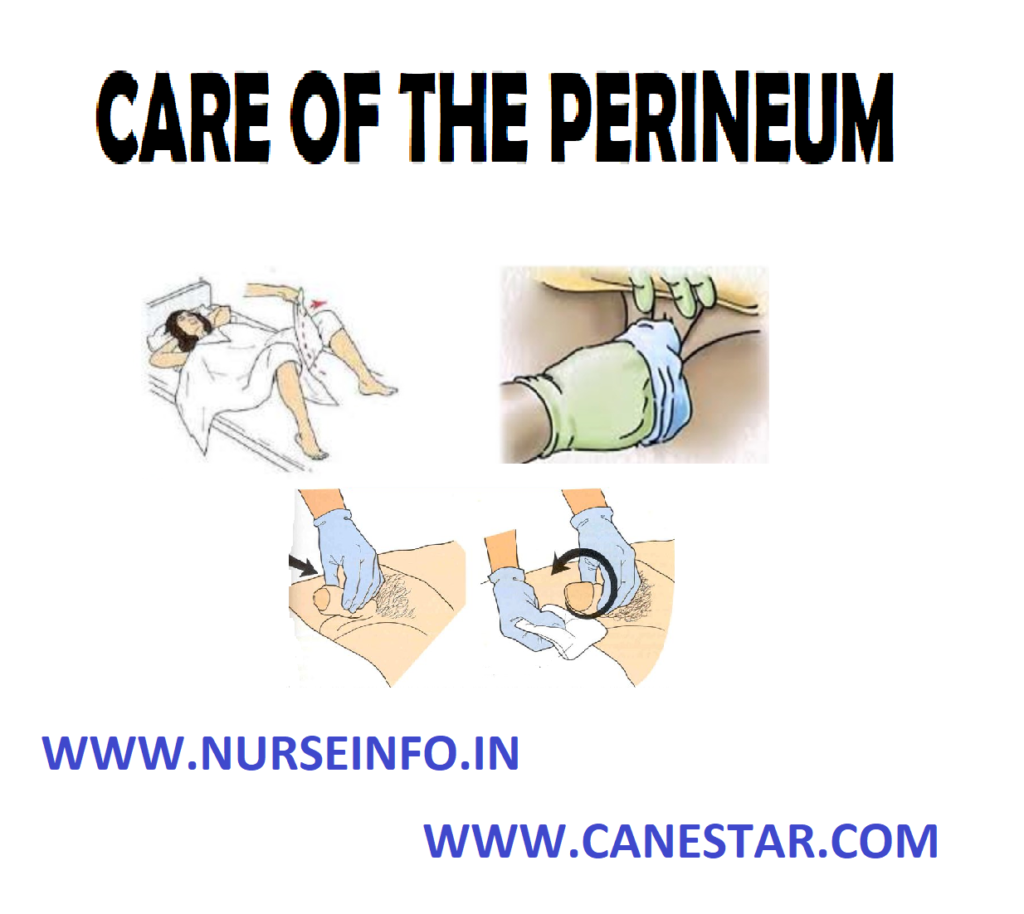
Perineal care defined as clean the perineum from the cleanest to the less clean area, the urethral orifice to the anal orifice

Perineal care includes the external genitalia and surrounding area. During perineal care, clean the area around the urinary meatus before cleaning the area around the anus

Purpose

  • To prevent sepsis
  • To remove discharges and prevent bad odor
  • To relieve itching
  • To promote healing of stitches
  • To promote comfort

Washing a Woman’s Perineum

Fill the basin with clean warm water. Fold the towel in hair. Ask or help the woman to lift her buttocks. Put the towel under the buttocks. Ask the woman to bend her knees and spread her legs. With a soapy washcloth in one hand, separate the labia (“lips” of the vagina) with the other hand. Wash the labia from front to back. Do not touch the anus with the washcloth. Germs from the anus could get into the vagina and cause an infection

Rinse the washcloth and remove the soap from the perineum. It is important to remove all the soap because it can irritate the skin. Dry the area with a dry towel. Do not put powder on the perineum because the powder may harden

Wash the anus next. Ask the woman to turn onto her side so that she is facing away from you. Ask her to rise up her top leg. This will let you see and clean the skin around the anus. Slide the towel under the woman’s buttocks. Use toilet paper or a paper towel to remove BM that may be on the skin. You need to wet the toilet paper or paper towel if the BM has dried. Throw the toilet paper or paper towel away in a trash bag. Wash, rinse, and dry the anal area.

Washing a Man’s Perineum

Empty the dirty water into the sink. Fill the basin with clean warm water. Ask or help the man to lie on his back. Fold the towel in half and put in under the man’s buttocks. Ask the man to bend his knees slightly and spread his legs. Hold the penis with one hand. With the other hand, wash the tip of the penis with a soapy washcloth. Rinse the washcloth and remove the soap from the penis

If the man has a foreskin, gently push it back. The foreskin is the skin that covers the rounded end of the penis. Wash the end of the penis. Rinse the washcloth and remove the soap from the end of the penis

Using a soapy washcloth, wash the rest of the penis and the scrotum. The scrotum is the bag of skin that hangs under the penis. Rinse and dry well

The anus should be washed next. Ask the man to turn onto his side with the top leg raised. This will let you see and clean the anal area easier. Fold the towel in half and put it under the man’s buttocks. Use toilet paper or a paper towel to remove BM that may be on the skin. You may need to wet the toilet paper or paper towel if the BM has dried. Throw the toilet paper or paper towel away in a trash bag. Wash, rinse and dry the anal area

Perineum Care for Special Group of Patients

  • Unable to do self-care or bedridden patients
  • After surgery on the genitourinary system
  • Patients with indwelling catheters
  • Patients with excessive vaginal discharges
  • Postpartum patients
  • Incontinence of urine and stool
  • Genitourinary tract infections

Preliminary Assessment

Check

  • Doctors order for any specific instruction
  • Assess the condition of the perineal skin-itching, irritation, ulcers, edema, drainage, etc
  • Assess the need and frequency of care
  • Assess the self-care ability of the patients
  • Mental state to follow instructions
  • Articles available in the patients unit

Preparation of the Patient and the Environment

  • Explain the sequence of the procedure
  • Provide privacy
  • Arranged the needed articles at the bed side
  • Place the Mackintosh under the buttocks, over the draw sheet
  • Place a clean bedpan on the bed on your working side
  • Unite the pads – if any, and observe the discharges its color, odor, amount, etc

Equipment

A tray containing:

  • Mackintosh
  • A jug with warm water or antiseptic solution
  • Wet cotton balls or rag pieces in a bowl
  • Gauze or rag pieces in a container
  • Long artery forceps in the kidney tray
  • Paper bag
  • Clean (personal and bed linen) dressing pads, etc. as needed
  • Soap, soap dish, towel and wash cloth of the patient is able to do himself
  • Bed pain

Procedure

  • Wash hands thoroughly to prevent cross infection
  • Pour water over the perineum to wash off the discharges from the perineal area
  • Hold the swabs with forceps and clean from above downwards towards the anal canal
  • Use one swab for one swabbing

Clean the perineum from the midline outward in the following order – vulva, the labia minora on both sides, inside of the labia majora on both sides (start cleaning from more clean area to less clean area)

Clean the perineal region and the anus thoroughly

  • Remove the bed pan by supporting the hip. Turn the patient to one side and dry the buttocks with a dry rag pieces

After Care

  • Apply the medicine and pad if necessary
  • Remove the Mackintosh if an extra one is used
  • Change the linen if necessary
  • Provide comfortable position to the patient
  • Clean the articles and replace it in a proper place
  • Wash hands thoroughly
  • Record and report the procedure in a nurses record sheet
HYGIENE - CARE OF PERINEUM - Purpose, Care, Preliminary Assessment, Equipment, Procedure, After Care
HYGIENE – CARE OF PERINEUM – Purpose, Care, Preliminary Assessment, Equipment, Procedure, After Care

HYGIENE – PATIENT CLOTHING, EXERCISE & HABITS

CLOTHING

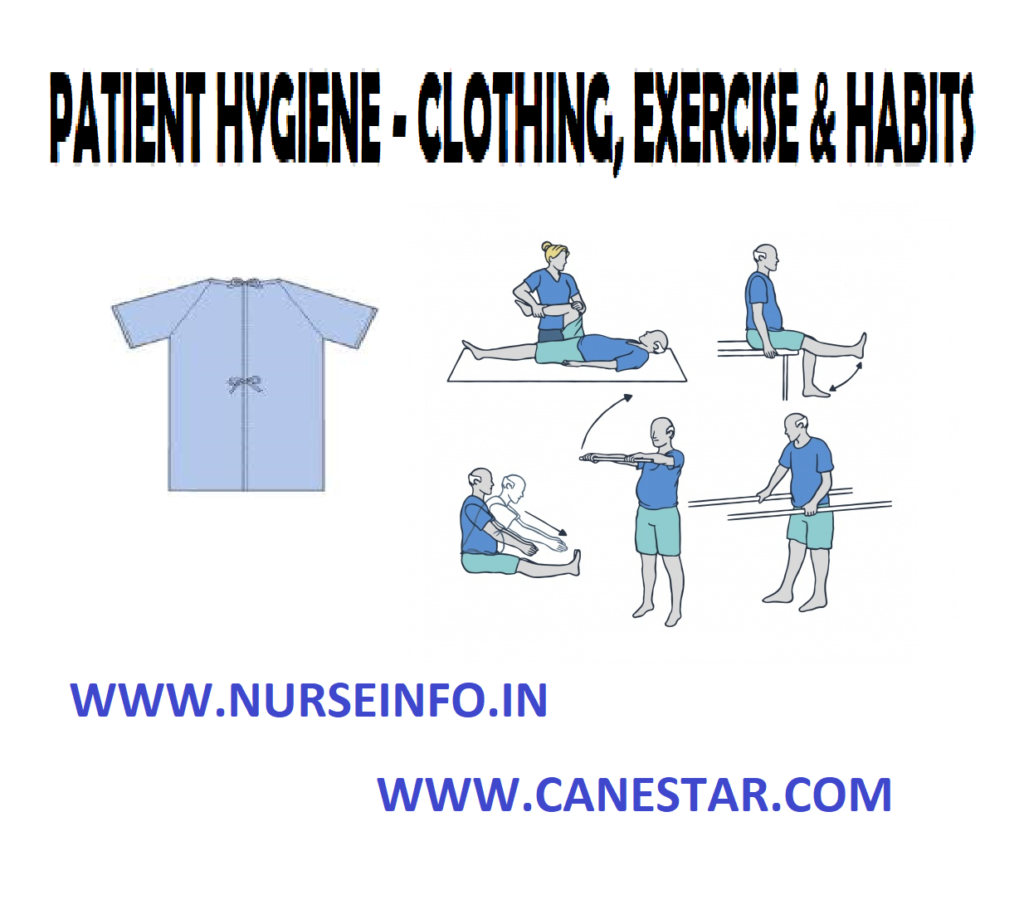
Clothes are closely associated with the personality of a person and whenever possible, while he is cared for in bed, he should be encouraged to wear the kind of clothes he would normally wears. When a person is very sick or disabled, he may have difficulties with dressing and undressing. In these circumstances, you will either undertake these activities for the person or, at least, assist him to perform them. The nurse should always encourage the person to regain the maximum amount of independence as quickly as possible and the act of dressing is one step towards independence

A person who is unwell usually feels cold more than anyone due the decrease of activities. It is your duty to ensure that he is dressed appropriately to keep warm. This is especially so in comatose person who cannot express his needs. Those who are alert could be quite embarrassed in the process of been dressed or undressed

In choosing clothes, the following points should be considered durability, comfort and cheapness. Moreover they should be easily washable, attractive in appearance and simple. The choice of materials for clothes is important. Light weight, loosely woven materials are bad conductors of heat and so are used to conserve the body heat

Cotton is good in warm weather as it easily absorbs perspiration and quickly dries, so cooling the body. It is reasonably inexpensive and easy to wash. The choice of colors for clothing is important. White and light colors are cool whereas darker colors particularly red and black are warm

Step-wise Procedure for Assisting a Dependent Patient in Dressing

Step 1: perform initial tasks: wash hands and wear gloves. Wish the patient. Explain him that you are going to assist him in dressing

Step 2: teach the correct way to change clothes: in order to trim down th risk of injuries and falls, guide your patient the right procedure to change clothes. It will also help in increasing his level of independence

Step 3: assist in undressing: start undressing the patient on his weaker side. Allow him to remove his clothes at his own. Support him when he asks for your assistance or when you feel the requirement. Put the dirty clothes to the side. Put the clean clothes in such a way that the client can reach them easily

Step 4: monitor carefully: you need to keep a watch on your client minutely in order to prevent him from falling. Ensure that he is able to dress safely. In case, he feels dizzy or fatigued, be prepared to help him/her either to lie or sit down instantly

Step 5: assist in dressing: guide the patient to begin dressing with the strongest side first. Say if, the patient is stronger on the right portion of the body; ask him to put his right arm in the right sleeve, first. Let the client to perform maximum of the task without your help

Step 6: perform final task: put dirty clothes at proper place. Dispose the gloves and rinse your hands

Points to Remember

  • Ensure that clean clothes should be within the reach of the patient. Even if your client is able to reach his clothes, do not allow him to stretch
  • Begin undressing on the weaker side of the patient’s body. Dressing must be started with the strongest side first
  • When the patient completes the task, put dirty clothes in a proper holder or receptacle
  • The design of clothes is also important. They should be well fitting easy to put on and take off. Any necessary elastic should be sufficiently wide to be comfortable and not too tight. Underclothing should be frequently changed. Boys and girls as they grow older should learn to choose their own clothes, should be allowed to develop their own styles and use colors to suit their own personalities
  • The most effective teaching is done by teachers and parents who should get a good example. Damp clothes whether wet from rain or perspiration should be changed immediately to prevent excessive chilling of the body

EXERCISE

Physical exercise plays an important part in the maintenance of health especially in the growing child. The extends of exercise must be suitable to the age of the individual. Exercise should form a regular part of the daily program

Importance of Physical Exercise

  • Physical exercise requires muscle activity, which in turn needs greater supplies of oxygen and sugar. It results in the creation of the excessive heat
  • The demands made by the muscle for more oxygen and sugar stimulate the respiratory and cardio vascular systems, generally speeding up activity and so increasing the ventilation of the lungs and improving the circulation throughout the body
  • This stimulation enables the brain to work more efficiently and increases the general resistance of the body to disease. Proper ventilation of the lungs prevents respiratory infections

Types of Exercise

  • Active exercises
  • Passive exercises

General Instruction for Exercise

  • Regular exercise is necessary
  • Selection of exercise should be according to the physical condition
  • Early morning is the best time for exercise
  • Place of exercise should be peaceful, ventilated and well lit
  • Duration of the exercise should be increased gradually but fatigue should be avoided
  • Laughing is a good and an effective exercise

HABITS

Habit is a simple form of learning – a change of behavior with experience. It is defined as “an automatic response to a specific situation, acquired normally as a result of repetition and learning”. When behavior is developed to the extent that it is highly automatic, it is called habit. Generally, habit does not require our conscious attention. The term, habit is strictly applicable only to motor responses, but often applied more widely to habits of thought, perhaps more correctly termed attitudes. Many habits are formed as a result of inborn tendency of young children to copy others, especially their parents. Good habits can be of use but a person should not be entirely controlled by habit. It may be necessary to change certain habits, to cultivate new ones.

Important of Habits

Habits play important role in our daily life. All of us acquire different habits. They are the part of our life. Habits may be good or bad. Hard working, writing, reading, regular exercise, meditation, etc. are examples of good habits. Alcoholism, drug addiction, lethargy, procrastination, telling lies, dishonesty, stealing, deceiving others, escapism, etc. are examples of bad habits

Definition of Habit

A habit is defined as an action, at first requiring attention which comes to be performed without attention if repeated many times – under similar condition

Types of Healthy Habits

Habits training begin soon after birth. They are best taught by examples. Some of the important habits which should be taught are, bladder and bowel control, sleep and rest, dental care, feeding and meal time behavior, care of the skin, hair and nails, clothing, use of cosmetics, good manners and general courtesy. While habits may be encouraged, they should never be forced

Basis of Habit Formation

Habit formation may be explained in two terms – physiological and psychological. The physiological basis is related to our nervous system. According to this, when an act is repeated more number of times, a clear nervous connection is formed, leading to a path way. This makes smooth shifting of nerve energy, may be from sensory to motor.

According to Hull, when a stimulus is repeated and response is elicited, the connection becomes strengthened. Eventually it brings about an organization in the nervous system known as habit, otherwise called learning

The psychological theories explain that habits are acquired dispositions. According to these theories, any learning process or experience gained by an individual is retained. When this learning experience is repeated, it is firmly retained. This ability to retain helps us to get a strengthened and becomes a habit

Common Problems of Bad Habits

Irregular bowl habits results in constipation. A routine, allowing sufficient time to go the lavatory after breakfast is a good useful habit, convenient especially when the child starts to go to school

Periodic attacks of constipation, should not give rise to undue roughage, plenty of fresh fruits and adequate amounts of water will prevent occasional constipation. Plenty of exercise and fresh air are also advised.

Regular uses of laxatives are not advisable. Children should be taught to use them properly. There should be facilities for washing hands. r

HYGIENE - PATIENT CLOTHING, EXERCISE & HABITS - Definition, Purpose, Points to Remember
HYGIENE – PATIENT CLOTHING, EXERCISE & HABITS – Definition, Purpose, Points to Remember

HYGIENE – PATIENT SEX HEALTH AND MENTAL HEALTH

SEX AND HEALTH

The word sex denotes whether a person is male or female or the sex difference, but it is used for sexuality. Sexuality is the quality or state of being sexual. Sexuality is not merely the difference in sex. It is an emotion expressing human nature or character

Definition of Sexual Health

  • Adequate and appropriate knowledge is essential for healthy practices in sexuality
  • It helps to adopt and modify suitable behavior with reference to biological sex, gender identity and gender behavior.
  • It helps to understand and get conscious about one’s own sexual feeling and qualities
  • It helps to keep the health in comfortable attitude towards different types of sexual behavior
  • It helps to develop effective interpersonal relations with both sexes
  • It protects and prevents the occurrence of sexually feeling and qualities
  • It helps to keep the health in comfortable attitude towards different types of sexual behavior
  • It helps to develop effective interpersonal relations with both sexes
  • It protects and prevents the occurrence of sexuality transmitted diseases

MENTAL HEALTH

Definition

  • Mental health is defined as a successful adaptation to stressors from the internal or external environment, evidence by thoughts, feelings and behaviors that are age appropriate and congruent with local and cultural norms
  • Mental health is the balanced development of a person’s personality and attitude, which makes him capable of living in harmony with himself and his relatives
  • According to WHO, mental health defined as “the capacity in an individual to form harmonious relations with others and to participate in, or contribute constructively to the changes in his social a physical environment

Mental Exercise

Small children usually get plenty of mental exercise when they are learning to do many things for the first time which requires a good deal of mental and physical coordination. During this period mental growth, we must see that plenty of rest is possible. All grades of intelligence need mental exercise

Principles Contributing Mental Health

  • One should respect his own on others personality
  • One should be aware of the limitations of the self and others and should also have the knowledge of others abilities
  • The individual should be evaluated according to his total behavior

Purposes of Mental Hygiene

  • Good mental health practices helps to prevent mental disorders
  • It helps in preservation of the mental health of the individual and group
  • It helps in the discovery and utilization of therapeutic measures to cure mental illness

Approaches of Mental Hygiene

  • The preventive approach to adjustment problems
  • The therapeutic and preservative approach
  • The curative approach

Characteristics of Mentally Healthy Person

  • Ability to accept oneself others and human nature
  • Independence, autonomy and resistance to enculturation
  • Ability to achieve satisfactory interpersonal relationship
  • Democratic character structure and strong sense of ethics
  • Balanced life of work, rest and recreation
  • Self-confident and optimistic
  • The capacity to socially adjust with others and get along with them in different situations
  • Mentally healthy will express his emotions in a desirable and controlled manner
HYGIENE - PATIENT SEX HEALTH AND MENTAL HEALTH - Definition, Characteristics, Purpose
HYGIENE – PATIENT SEX HEALTH AND MENTAL HEALTH – Definition, Characteristics, Purpose

TYPES OF WARDS IN PATIENT UNIT & PRINCIPLES OF CLEANLINESS

TYPES OF WARDS IN-PATIENT UNIT

  • Private room: bed room with all other toilet facilities
  • Cubicles: small or large, the partition may be a wall or curtains
  • General ward: where several patients are placed

Principles of Cleanliness

  • Plan your work for cleanliness, to avoid waste of your energy and time
  • Do dusting after sweeping
  • Dust with a clean duster
  • Use a damp dusting for collecting dust
  • Soap and water or phenol 1:60
  • Dusting should be done from top to bottom
  • Dusting should be done with firm and even stroke
  • Use covered dustbin to collect the dust and waste material
  • Growth of bacteria is high in dark, moist and unclean places. So care should be taken while cleaning the congested places
  • Use brush when cleaning grooved surfaces
  • Replace all the equipments used for cleaning
  • Wash hands after dusting

Types of Cleaning

  • Daily cleaning: two to three times a day (floor, articles, furniture, dustbin and cupboards)
  • Weekly: roof, walls, ceiling fans, cobwebs
  • Annually: the ward should be emptied, repaired, white washed, painted, cleaned and washed

Equipment

  • Mops/Rags
  • Brooms/Brushes
  • Lotions (Detergents and disinfectants)
  • Vim and glass cleaner
  • Newspapers
  • Basins

Cleaning Activities

  • Sweep and mop the floor at least twice a day
  • Clean the floor with antiseptic solution
  • Keep the unit well ventilated and do not close the top ventilating windows
  • Dust the walls and roof from time to time in order to remove cobwebs
  • Clean the windows and doors regularly

Furniture

  • Bed steads: dust everyday while making the bed. Carbolize or wash with soap and water and dry well after discharge of the patients
  • Lockers: dust every morning and evening when tiding the ward. Keep the bed side locker always clean and neat
  • Cupboards: keep clean and tidy. Arrange the supplies after drying absolutely. Use naphthalene balls to protect
  • Bed cradles, back-rests, over bed tables, chairs and stools are to be cleaned every day. Iron furniture is cleaned with a dry duster to prevent rusting
  • Bathrooms: scrub and wash the floors every day. Avoid stagnation of water on the floors. Dispose the waste material properly in dustbins
  • Lavatories: check the flushing system is in working condition. Clean it with cleaning powder using a brush scrub and wash the floors daily. Teach the patients and relatives regarding the proper use of lavatory
  • Wash basins: clean them twice a day with cleaning powder using a brush. Remove the spots with some spot removing agent. Pour boiling water down the wash basin drains every day
  • Cabinet for sanitary wares: keep the racks clean, neat and tidy. Store the sanitary wares in racks neat and tidy and ready for use

Vermin and Insects

  • Clean the patients unit regularly. Eliminate all the breeding places. Keep garbage well covered and dispose of all refuse

Store food properly. Use fly screens on windows and doors

CARE OF PATIENT UNIT

DISINFECTION OF THE PATIENT UNIT

TERMINAL CLEANING OF PATIENT CARE UNIT

TYPES OF WARDS IN PATIENT UNIT & PRINCIPLES OF CLEANLINESS - Types of cleaning, activities
TYPES OF WARDS IN PATIENT UNIT & PRINCIPLES OF CLEANLINESS – Types of cleaning, activities

TERMINAL CLEANING OF PATIENT CARE UNIT

TERMINAL CLEANING OF PATIENT CARE UNIT

  • The sanitation of the bed, bedside cabinet, and general area of the patient care unit with a detergent/germicidal agent after the patient is discharged or transferred from the nursing care unit
  • Performed at every patient care unit before the area is prepared for the next patient

Reasons for Terminal Cleaning of the Patient Care Unit

  • Prevention of the spread of microorganisms
  • Removal of encrusted secretions from framework or bedside rails
  • Removal of residue of body wastes from the mattress
  • Deodorizing of the bed frame, mattress, and pillow

Guidelines for Terminal Cleaning

  • Review wards standard operating procedure (SOP) for specific procedures
  • Use only authorized disinfectant/detergent or germicidal solution for cleaning
  • Check to ensure the bedside cabinet is cleared of any valuables belonging to the patient
  • Check bed linens for personal items (dentures, contact lenses, money, jewelry, etc.) belonging to the patient
  • Prevent spread of microorganisms by carefully removing linen from the bed
  • Use caution when cleaning the under frame and bedsprings
  • Replace any torn mattress or pillow covers
  • Allow the mattress and pillow to air-dry thoroughly before remaking the bed

Rules for use of disposal or non-reusable items:

  • Do not attempt to reuse (for another patient) or re-sterilize disposables
  • Sterile disposables are considered sterile providing the wrapper is not broken or torn or the expiration date has not passed
  • Sterile disposables with torn or broken wrappers must be discarded

Use disposables for the specific purpose(s) for which they were designed

Follow manufacturer’s directions when using disposables

Terminal Cleaning Procedure

  • Assemble the equipment in the utility room and take it to the patient unit
  • Clear the bedside cabinet (and over bed table if used). Check for any personal articles left by the patient and turn them into the ward master. Place all utensils and any reusable treatment equipment on the cart. Discard waste in the waste bucket. Place any unused linen in the unit in the laundry hamper.
  • Strip the bed. Remove the pillow, placing the pillow on the chair and the pillowcase in the hamper. Lower the Gatch bed. Loosen the bedding all around, walking around the bed and lifting the mattress edge to release the linens without snagging it on the bedsprings
  • Check to see that no articles are concealed in the linen folds. Roll each piece toward the foot of the bed. Check the pocket of discarded pajamas and bathrobe. Place all linens in the hamper. Fold woolen blankets, if used, and place them on the cart for special laundry
  • Clean the bed. Wash the top of the plastic mattress cover and inspect it for any tears. Rinse the cloth frequently and use it damp but not dripping wet. Replace any damaged cover. Turn the clean surfaces of the mattress together, toward the head of the bed. Wash the bottom half of the bed frame and all crevices. Lower the Gatch bed at the knee. By grasping the clean fold of the mattress, lift and swing its clean side crosswise on the clean half of the spring and wash the exposed surface
  • Place the pillow on the unwashed upper half of the spring. Wash the top surface of the pillow. Place the pillow clean side down on the clean mattress surface and wash the other side. Wash the upper spring, raising the head portion of the bed, to complete bed cleansing.
  • Wash the cabinet, inside and out. Complete the unit cleaning by washing the chair, bed lamp (cord unplugged), signal cord, and over bed table.
  • If you responsible for the floor, sweep and mop it and wash the windowsills. Wash hands when the cleaning is completed and remake the bed for a new occupant
  • Discard the waste. If cleaning cloths are to be reused, place them in the laundry hamper
  • Wash the collected utensils and place them in the utensil boiler (sanitizer) for a 30-minute boiling period. Wash the utility cart and return it to the storage place
  • Wash hands
  • Remove the clean utensils from the utensils boiler. Dry and return them to the storage shelf

CARE OF PATIENT UNIT

TYPES OF WARDS IN PATIENT UNIT & PRINCIPLES OF CLEANLINESS

DISINFECTION OF THE PATIENT UNIT

TERMINAL CLEANING OF PATIENT UNIT - NURSING PROCEDURE - Reason, Rules & Procedure
TERMINAL CLEANING OF PATIENT UNIT – NURSING PROCEDURE – Reason, Rules & Procedure

BINDERS

BINDER – Purpose, Types, Equipment, Preparation, Arm Sling, Abdominal Binder and Breast Binder

NURSING PROCEDURES LIST CLICK HERE

A binder bandage is designed for a specific body part for example; the triangular binder (sling) fits the arm. Binders are used to support large areas of the body, such as the abdomen, arm or chest.

Binders are special wide bandages used for supporting specific parts of body and large dressings.

Binder (abdominal) is also called many tailed bandage. It is a rectangular piece of strong cloth with many tails attached to either sides of its. It is commonly used as abdominal binder for the support of the abdominal musculature

PURPOSE

It is applied after paracentesis and childbirths in order to maintain the intra-abdominal pressure and to prevent shock and collapse

  • To hold dressing in place
  • To support abdomen and prevent would dehiscence following abdominal surgery

TYPES

T-binders: they are used to secure dressing on the rectum and perineum and in the groin. The single T-binder is used for female patients and the double T-binder is used for male patients. Select the appropriate binder according to the patient’s gender. Place it underneath the patient smoothly, with the waistband at waist level and the tails pointing down the midline of the back. Bring the waist tails around the patient and overlap. Bring the center tail or tails up between the patient’s legs and over perineal dressings. Make sure the two tails of the double T-binder are on either side of the scrotum and penis.

Sling: a sling is used to support and arm. Most healthcare agencies use commercial strap slings or sleeve slings.

Straight binders: a straight binder is a straight piece of material, usually about 15-20 cm (6-8 inches) wide and long enough to more than circle the torso. It is used for the chest and the abdomen.

Breast binder: to provide pressure on the breast (e.g. when drying up the milk flow after childbirth) or to support the breasts (e.g. after surgery)

EQUIPMENT

  • Tape measure
  • Binder of appropriate size
  • Safety pin/clips
  • Gloves, if necessary
  • Dressing materials

Commercial elastic binders are now commonly used instead of standard cotton straight and Scultetus binders that require pins. Disposable T-binders are available, and scrotal supports typically replace binders for male patients, except after abdominal-perineal resection.

PREPARATION

  • Check the doctor’s order
  • Perform hand hygiene and put on gloves, as needed
  • Confirm the patient’s identity using at least two patient identifiers according to your facility’s policy
  • Provide privacy and explain the procedure to the patient
  • Raise the patient’s bed to a comfortable working height to avoid muscle strain when applying the binder
  • Position the patient in a supine position, with his head slightly elevated and his knees slightly flexed to decrease tension on the abdomen
  • Assess the patient’s condition
  • Remove the dressing and inspect the wound or suture line, if appropriate
  • Redress the wound and then remove and discard your gloves

ARM SLING

To make an arm sling from muslin, fold of cut a 36-ich square of fabric diagonally. Slings are applied in two ways:

Method 1: with the patient facing you, place one end of the triangle over the unaffected shoulder and the long straight border under the hand of the injured side. Loop upward, positioning the other ends of the triangle over the affected shoulder. Tie or pin the ends to one side of the neck, using a square not, or pin smoothly, using a safety pin. Do not secure a sling at the back of the neck because this could exert pressure. Fold the corner flat and neatly at the elbow, and pin.

Method 2: with the patient facing you, place the sling across the body and underneath the arms. Bring the corner of the sling that is under the unaffected arm to the back. Bring the lower corner up over the affected shoulder to the back, and tie. Fold the sling neatly at the elbow, and pin.

ABDOMINAL BINDER

An abdominal binder is a wide compression belt that encircles your abdomen. Abdominal binders come in many sizes and widths. Most are made from elastic and have Velcro or hook and loop closures. Some abdominal binders offer secondary lumbar support. Others have straps that hold surgical drainage tubes in place. An abdominal binder may be used to speed-up the recovery process after abdominal surgery. Your doctor may recommend that you wear an abdominal binder after:

  • Cesarean section
  • Bariatric surgery
  • Exploratory laparotomy
  • Hysterectomy
  • Tummy tuck
  • Spinal surgery

Uses

A carefully-positioned abdominal binder may be used in people with spinal cord injury to help:

  • Support the abdomen
  • Maintain abdominal pressure
  • Improve respiratory function

An abdominal binder is an important surgical body garment used in the early postoperative phase of surgeries like an abdominoplasty (tummy tuck) or an abdominal liposuction. An abdominal binder serves many important functions, especially in the early postoperative stages of an abdominal surgical procedure. An abdominal binder provides compression and support to both the upper and lower abdomen. It helps improve blood circulation and oxygen levels at the operative site, increases healing and reduces swelling. With all these improvements, the patient is able to get out of bed sooner and walk around more easily. This further improves breathing and promotes the healing process and a speedy recovery.

Other Uses

An abdominal binder may be indicated and prescribed in other surgical procedures and situations, such as during pregnancy in certain situations, after the delivery of a baby and to support weak abdominal muscles due to aging. It may also be used for obesity or paralysis. Abdominal binders come in sizes from extra-small to small and medium, large and extra large and extra-extra large.

How to Use

An abdominal binder is usually applied in the operating room immediately after surgery. The physician prescribes instruction as to the length of time it should be worn. Usually for the first two weeks, it is worn constantly, after which it may only be removed for showers and then replaced. After three weeks, it may need to be worn only in the daytime. The physician will give instructions based on your progress. Having two abdominal binders is highly recommended so they can be interchanged when one is being laundered.

Types

Straight abdominal binder: place the patient in a supine position. Ask the patient to lift upward, using the legs, or roll the patient onto the binder. It should be smooth so that wrinkles do not cause pressure on the patient’s skin. Overlap the edges of the binder snugly over the abdomen. Holding it in place, fasten the binder with safety pins or Velcro.

Scultetus abdominal binder: place the binder underneath the supine patient, being careful to check for underlying wrinkles. Lace the lower tail in a slightly oblique direction up the abdomen. Lace the tail on the opposite side in a similar way. Continue lacing in this interlocking fashion until all the tails have been neatly and securely placed.

Elastic net binder: elastic net binders are used to hold dressings in place and not for support. These binders come in a variety of circumferences. Begin by gathering the net in your hands, stretch it and slip it upward over the feet and legs to the position around the abdomen.

How to Measure

The proper measurement of the abdominal binder for a comfortable fit that applies the right amount of compression is important. The measurements and sizing must be done prior to having the surgical procedures. Measurements are taken next to the skin without clothing. A stage 1 garment is worn for the first two weeks postoperatively. It is bigger and less tight to accommodate any initial swelling. A second stage garment is worn 2-8 weeks postoperatively or longer; it is a smaller and tighter binder.

Precautions

Individuals who are allergic to latex should use a latex-free abdominal binder. This will prevent an allergic reaction, which can include a rash, itching or swelling of the face, tongue and throat, and shortness of breath and difficulty breathing. This is a medical emergency. Immediate medical care must be administered if any of these symptoms occur.

BREAST BINDER

  • Wash and thoroughly dry under pendulous breasts. Place 4” multiply 4” gauze pads under breasts, as necessary, to prevent skin irritation.
  • Slip the binder under the patient’s chest so that its lower edge aligns with the waist
  • Straighten the binder to distribute it evenly on either side
  • Place the binder so that the patient’s nipples are centered in the breast tissue. This position ensures proper breast alignment and support and produces faster tissue involution.

CONCLUSION

Bandages and binders protect an underlying wound or dressing, provide pressure, warmth, support, or immobilization. Most bandages are of a gauze material; binders are often made of muslin. Bandages or binders need not be sterile when there are underlying sterile dressings to protect the wound.

Avoid bandaging over wrinkled dressings, which can produce pressure on the wound or skin. Also do not apply bandage or binder over a dressing that appears soiled because this can lead to infection. Approximately after you applied bandage or binder, check the patient for comfort. A bandage or binder that is too tight can interfere with circulation, causing swelling, numbness, tingling, or color changes in the distal are. Bandages are applied on parts from distal to proximal, to facilitate venous return.

BANDAGING

WOUND CARE

BINDER – Purpose, Types, Equipment, Preparation, Arm Sling, Abdominal Binder and Breast Binder

OXYGEN TENT

OXYGEN TENT

Fact tents can replace oxygen mask when masks are poorly tolerated by clients. When a face tent alone is used to supply oxygen, the concentration of 2 varies, therefore, if is often used in conjunction with a venture system. Face tents provide varying concentration of O2 at 8-10 L/minute

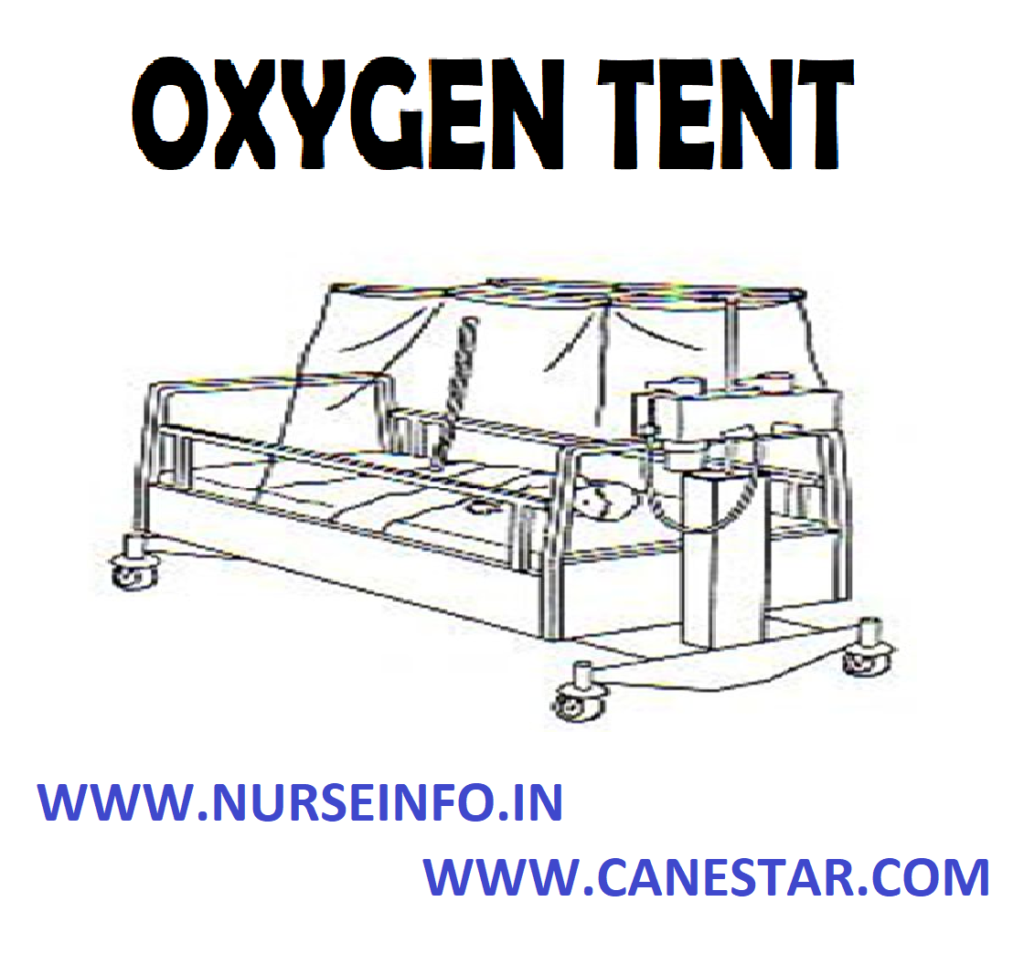
An oxygen tent consists of canopy over the patient’s bed that may cover the patient fully or partially and it is connected to a supply of O2 the canopies are transparent and enables the nurse to observe the patient. The lower part of canopy is tucked under the bed to prevent the escape of O2. There are some advantages and disadvantages for using oxygen tent these are:

  • If provides an environment for patient with controlled concentration, temperature regulation and humidity control
  • It allows freedom for free movement in bed
  • It creates feeling of isolation
  • There is an increased chance of fire
  • It requires much time and effort to clean and maintain a tent
  • Loss of desired concentration occurs each time the tent is opened to provide care for patient
  • Since it requires high volume of oxygen, it cannot be made available ordinarily

General Instructions

  • Since oxygen acts as a drug. It must be prescribed and administered in specific dose in order to avoid oxygen toxicity. The dosage of O2 is started in terms of concentration and rate of flow
  • When using oxygen cylinder uses a regulator and humidifiers. The purpose of the regulator is to reduce the pressure of the O2 in the cylinder to a safer level. The humidifier helps to saturate the oxygen with water vapor to prevent the drying of the mucus membranes of respiratory tract
  • The glass tube should be summered under the water so that oxygen is bubbled through the water
  • Every water of the apparatus should be clean to prevent infection
  • Use disposable  nasal catheters or sterilized rubbed catheters
  • Change the nasal catheters at least every 8 hours or more often
  • Lubricate the nasal catheter sparingly while the O2 is flowing. Then hold tip of the catheter in a glass of H2O to make sure that the terminal holes are not plugged with lubricant
  • During the administration of O2 the valve controlling the rate of flow should not be handled if any alternation is to be made in the flow of O2 first take out the catheter from the nose and then adjust the valve
  • Oxygen administration must never be stopped until the factors that caused hypoxia are reversed
  • When oxygen therapy is disconnected, it should be done gradually. The patient is weaned from dependence on oxygen by reducing the dosage and then administrating it intermittently
  • For all patients receiving oxygen inhalation, the temperature should be taken rectally to get an accurate record of body temperature
  • When the nurse leaves the patient even for a short period, she should leave a calling signal near the patient
  • Pay attention to conditions that can interfere with the flow of oxygen from the source to the patient. This may include kinks in the tubing loose connection and faulty humidifying apparatus. Remember that it is not unusual therapy is generally getting less oxygen than he would get under normal circumstances
  • To prevent the deprivation of oxygen resulting from the depletion of oxygen from the cylinder the nurse should get a new one ready at hand when the gauge shows about ¼ level of in the pressure
  • For fear of retrolental fibroplasia the premature babies are given oxygen inhalation only for a short period at a very low concentration
  • Watch the patients receiving oxygen therapy continuously to detect the early signs of oxygen toxicity
  • When oxygen is administered through the nasal catheters, the catheter is not directed distension of abdomen
  • Since oxygen supports combustion, fire precautions are to be taken when the oxygen is a flow

Preparation of Patient and Environment

  • Explain the procedure to the patient to win his confidence and cooperation. Answer his questions and allay the anxiety. Explain the sequence of the procedure and tell him how he can cooperate in the procedure. Explain the purpose of the procedure to the relatives also
  • Instruct the patient the family members and the visitors, if any about the safety precautions required during the oxygen therapy
  • Put-up the instructions regarding fire precautions in the unit
  • Remove the cigars matches, electric appliances and other inflammable articles from patient’s unit
  • Assemble the equipment and arrange them conveniently in the unit
  • Place the patient in a comfortable position (Fowler’s position) to help in the expansion of the lungs
  • Clear the nostrils, if there is crust formation
  • Protect the bed and garments by spreading the Mackintosh and towel

EQUIPMENT

  • Oxygen cylinder with its stand and accessories
  • Nasal cylinder
  • Water soluble lubricating jelly
  • Adhesive tapes
  • Bowl of water
  • Flash light and tongue depressor
  • Normal saline in a container
  • Kidney tray
  • Paper bag
  • Mackintosh
  • Towel rag pieces in a container

Procedure

  • Explain the procedures to the patient and relatives to get the cooperation and win the confidence. What you are going to do and reassure him. Explain the purpose of procedure.
  • Put the instructions regarding the fire precautions in the ward or unit. Instruct the relatives or visitors regarding safety measures required during the oxygen inhalation
  • Observe vital signs and breathing pattern
  • Collect the necessary articles at the bedside
  • Give comfortable position of the patient
  • Screen the bed of the patient
  • Wash hands to prevent cross-infection
  • Measure catheter from the tip of the nose to ear label for distance to enter, mark the length with ink
  • Check the apparatus for working condition. Open the main valve in an anti-clockwise direction. Observe for pressure reading on the gauge. Open the wheel valve on the regulator and see the reading on the meter adjust the flow of O2 2-4 L for adults or as desired. When the wheel valve is opened the oxygen will start bubbling through the water in the Wolf’s bottle. Attach the catheter to the connecting tube oxygen will start bubbling through the water in the Wolf’s bottle. Attach the catheter to the connecting tube and check the flow of O2 through the catheter to prevent by dipping it under the water in the bowl
  • Lubricate the tip of catheter with water soluble jelly
  • Bring catheter across cheek and scope securely with adhesive tape

After Care of the Patient

  • Be with the patient fill he is at case
  • Keep the patient warm and comfortable
  • Observe the patient’s progress by assessing vital signs and color
  • Observe patient’s progress at specified intervals to make sure that the state of anoxemia is treated
  • When the O2 is discontinued. Unscrew regulator liter flow disconnect the catheter and put it in kidney tray
  • Clean the catheter, fist with cold water, then with warm soapy water and finally with clears water bill it for, 3-5 minutes, dry it and store in a cool dry place
  • All other articles must be cleaned with soap and clean water dried and then replaced to their usual places
  • Wash hands

Patient Education

  • Educate the client and visitors about the hazard of smoking with oxygen in use
  • Request other clients in the room and visitors to smoke in areas provided elsewhere in the hospitals
  • Educate the patients about the short-circuit spark of electrical equipment
  • Educate the patient, about safety precautions

Complications

  • The use of contaminated equipment can spread infection in the patient
  • Fire is a potential hazard when oxygen is administered
  • If there is no sufficient humidity, there is a chance of drying and irritation of mucus membrane
  • Prolonged exposure to a high concentration causes damage to the lung tissue and atelectasis
  • If there are increased oxygen concentration in inspired air, there is a chance of collapse of alveoli
  • The oxygen therapy may affect eyes
  • Ulceration, edema and visual impairment, etc, result from the toxic effects of O2 on the cornea and lens of adult

OXYGEN ADMINISTRATION

HOME OXYGEN THERAPY

OXYGEN COMPLICATIONS & SAFETY

OXYGEN TENT - Definition, General Instructions, Preparation of Patient, Equipment, Procedure, After Care, Education, Complications
OXYGEN TENT – Definition, General Instructions, Preparation of Patient, Equipment, Procedure, After Care, Education, Complications

HOME OXYGEN THERAPY

HOME OXYGEN THERAPY

Home oxygen therapy is available to clients who require continuous oxygen therapy at home. It is usually delivered by nasal cannula

Purpose: to provide continuous oxygen therapy for patients

Preparation

  • Explain the procedure step by step to the patient and their relatives to confidence
  • Explain about the safety precautions

Classification

In this therapy, 3 types of oxygen is used:

  1. Compressed oxygen
  2. Liquid oxygen
  3. Oxygen concentrations

Equipment

  • Nasal cannula equipment
  • Primary and portable liquid oxygen source for ambulation

Procedure

  • Explain the procedure to client and family
  • Wash hands
  • Demonstrate steps for preparation ad completion of oxygen therapy
  • Prepare primary and portable oxygen
  • Place primary oxygen source in clutter free environment
  • Check oxygen level of both sources by reading gauge on top
  • Check oxygen gauge to determine fullness of portable source
  • Select prescribed rate
  • Connect nasal cannula and O2 tubing to oxygen
  • Have client and family perform each step with guidance from the nurse

Patient Education

  • Explain or teach about the home oxygen therapy
  • The nurse coordinates the efforts of the client and family, home call nurse, home respiratory therapist, and home oxygen equipment vendor
  • The nurse must assist the client and family in learning about home oxygen and ensure their ability to maintain the oxygen delivery system

Complication: bulky, possibly unsightly, frequent refilling, necessary with continuous use

CONSIDERATIONS

  • Supplemental oxygen relieves hypoxemia but does not improve ventilation or treat the underlying cause of the hypoxemia. Monitoring the SpO2 indicates oxygenation not ventilation. Therefore, beware the use of high FiO2 in the presence of reduced minute ventilation
  • Many children in the recovery phase of acute respiratory illnesses are characterized by ventilation/perfusion mismatch (e.g. asthma, bronchiolitis, and pneumonia) and can be managed with SpO2 in the low 90’s as long as they are clinically improving, feeding well and do not have obvious respiratory distress
  • Normal SpO2 values may be found despite raising the blood carbon dioxide levels (hypercapnia). High oxygen concentrations have the potential to mask signs and symptoms of hypercapnia
  • Oxygen therapy should be closely monitored and assessed at regular intervals. Therapeutic procedures and handling may increase the child’s oxygen consumption and lead to worsening hypoxemia
  • Children with cyanotic congenital heart disease normally have SpO2 between 60-90% in room air. Increasing SpO2 >90% with supplemental oxygen is not recommended due to risk of over circulation to the pulmonary system while adversely decreasing systemic circulation. However, in emergency situations with increasing cyanosis supplemental oxygen should be administered to maintain their normal level of SpO2

OXYGEN ADMINISTRATION

OXYGEN TENT

OXYGEN COMPLICATIONS & SAFETY

HOME OXYGEN THERAPY - Purpose, Preparation, Classification, Equipment, Procedure, Patient Education, Considerations
HOME OXYGEN THERAPY – Purpose, Preparation, Classification, Equipment, Procedure, Patient Education, Considerations

OXYGEN COMPLICATIONS & SAFETY

COMPLICATIONS OF OXYGEN

CO2 Narcosis: this occurs in patients who have chronic respiratory obstruction or respiratory insufficiency which results in hypercapnia (i.e. raised PaCO2). In these patients the respiratory center relies on hypoxemia to maintain adequate ventilation. If these patients are given oxygen this can reduce their respiratory drive, causing respiratory depression and a further rise in PaCO2

Monitoring of SpO2 or SaO2 informs of oxygenation only. Therefore, beware of the use of high FiO2 in the presence of reduced minute ventilation

Pulmonary Atelectasis

Pulmonary oxygen toxicity: high concentrations of oxygen (>60%) may damage the alveolar membrane when inhaled for more than 48 hours resulting in pathological lung changes

Retinopathy of prematurity (ROP): an alternation of the normal retinal vascular development, mainly affecting premature neonates (<32 weeks gestation or 1250 g birth weight), which can lead to visual impairment and blindness. Substernal pain-due: characterized by difficulty in breathing and pain within the chest, occurring when breathing elevated pressures of oxygen for extended periods

OXYGEN SAFETY

Oxygen is not a flammable gas but it does support combustion (rapid burning). Due to this, the following rules should be followed:

  • Do not smoke in the vicinity of oxygen equipment
  • Do not use aerosol sprays in the same room as the oxygen equipment
  • Turn off oxygen immediately when not in use. Oxygen is heavier than air and will pool in fabric making the material more flammable. Therefore, never leave the nasal prongs or mask under or on bed coverings or cushions whilst the oxygen is being supplied
  • Oxygen cylinders should be secured safely to avoid injury
  • Do not store oxygen cylinders in hot places
  • Keep the oxygen equipment out of reach of children
  • Do not use any petroleum products or petroleum byproducts, e.g. petroleum jelly/Vaseline whilst using oxygen.

OXYGEN ADMINISTRATION

OXYGEN TENT

HOME OXYGEN THERAPY

OXYGEN COMPLICATIONS & SAFETY - CO2 Narcosis, Pulmonary Atelectasis
OXYGEN COMPLICATIONS & SAFETY – CO2 Narcosis, Pulmonary Atelectasis

Nurse Info