Home Blog Page 29

CHEMICAL DISINFECTION AND DISINFECTANTS

Chemical disinfection is a process that involves the use of chemical agents to eliminate or reduce the number of microorganisms on surfaces, objects, or in the environment. Disinfectants are chemicals specifically designed to destroy or inhibit the growth of harmful microorganisms, including bacteria, viruses, and fungi. Here are key aspects of chemical disinfection:

Types of Chemical Disinfectants:

  1. Alcohols:
    • Common Types: Ethanol, isopropyl alcohol.
    • Applications: Used for disinfecting skin, surfaces, and small medical devices.
  2. Quaternary Ammonium Compounds (Quats):
    • Common Types: Benzalkonium chloride, cetylpyridinium chloride.
    • Applications: Widely used in healthcare settings, surface disinfection, and as antiseptics.
  3. Chlorine Compounds:
    • Common Types: Sodium hypochlorite (bleach).
    • Applications: Disinfecting surfaces, water treatment, and decontamination.
  4. Phenols:
    • Common Types: Phenol, cresols.
    • Applications: Used in healthcare settings, laboratories, and general disinfection.
  5. Iodine Compounds:
    • Common Types: Povidone-iodine, iodophors.
    • Applications: Skin disinfection, wound care, and surgical site preparation.
  6. Hydrogen Peroxide:
    • Common Types: Hydrogen peroxide.
    • Applications: Used as a general disinfectant for surfaces and skin.
  7. Aldehydes:
    • Common Types: Formaldehyde, glutaraldehyde.
    • Applications: Used in healthcare for high-level disinfection of medical instruments.
  8. Biguanides:
    • Common Types: Chlorhexidine.
    • Applications: Used as antiseptics and for skin disinfection.

Factors Influencing Chemical Disinfection:

  1. Concentration:
    • The effectiveness of a disinfectant often depends on its concentration. Higher concentrations may be more effective but can also be more corrosive or irritating.
  2. Contact Time:
    • The duration for which the disinfectant is in contact with the surface or material influences its efficacy. Longer contact times generally improve disinfection.
  3. pH Level:
    • The pH of the solution can affect the activity of certain disinfectants. Some disinfectants are more effective under specific pH conditions.
  4. Temperature:
    • The temperature at which the disinfection occurs can impact the effectiveness of certain chemical agents.

Applications of Chemical Disinfection:

  1. Healthcare Settings:
    • Disinfection of surfaces, medical instruments, and healthcare environments to prevent healthcare-associated infections.
  2. Laboratories:
    • Decontamination of equipment, benches, and workspaces to maintain aseptic conditions.
  3. Food Industry:
    • Disinfection of food preparation surfaces, utensils, and equipment to ensure food safety.
  4. Water Treatment:
    • Use of disinfectants to treat water supplies and ensure the elimination of waterborne pathogens.
  5. Home Disinfection:
    • Disinfectants are commonly used for cleaning and disinfecting surfaces in households.

CHEMICAL DISINFECTANTS

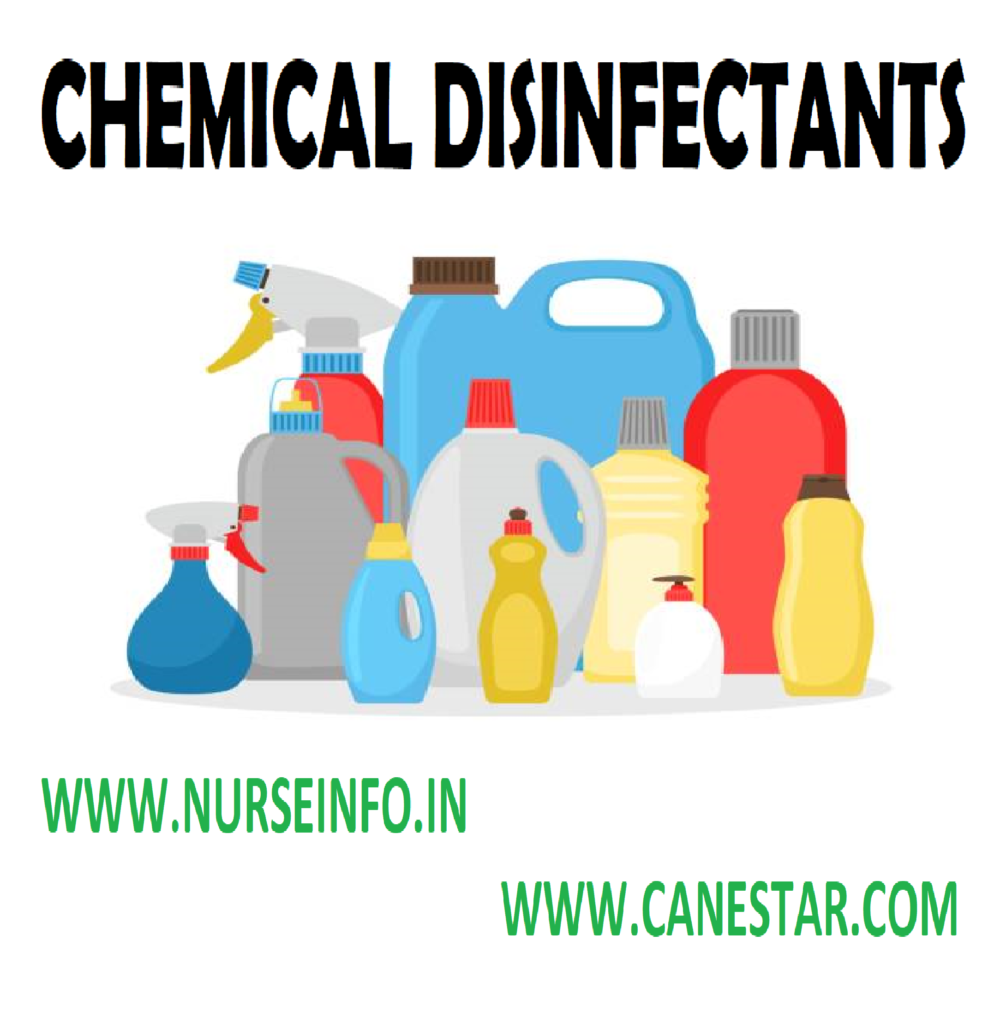
The chemical substances known as disinfectants are used to kill pathogenic organism.

Mechanism of Chemical Disinfectants

A chemical disinfectant acts by coagulating the bacterial protein or by changing the composition of protein so that is no longer exist in the same form

Commonly Used Disinfectants

  • Phenol
  • Lysol
  • Formalin
  • Dettol
  • Alcohol

The Choice of Disinfectant Based on

  • The strength of the solution
  • Type of bacteria to be killed
  • Type of articles
  • Length of exposure
  • The articles should be fully immersed in the lotions

Chemical Agent, Mechanism and Uses

  • Alcohols (ethanol, isopropanol)

Mechanism: denaturation of bacterial proteins

Uses: skin antiseptics, surface decontamination of incubators and cabinet interiors, disinfection of clinical thermometers

  • Aldehyde  (formaldehyde and glutaraldehyde)

Mechanism: inactivation of bacterial proteins

Uses: preservation of biological specimens, destroying anthrax spores in wool, fumigation.

Cold sterilant and fixative, surface decontamination, disinfection of hospital instruments, equipment, glasswares

  • Biguanides (chlorhexidine)

Mechanism: damage plasma membranes

Uses: skin and mucous membrane disinfection

  • Dyes (aniline dyes, malachite green, acridine dyes, acriflavine, proflavine)

Mechanism: react with acid group in cell

Impair DNA and destroy reproductive capacity

Uses: selective agents in culture media, e.g. LJ media

Skin antiseptic

  • Beta propiolactone

Mechanism: damage DNA, RNA and cause alkylation

Uses: fumigation, sterilization of biological products

  • Halogens (chlorine and iodine)

Mechanism: oxidizing agent and protein denaturation

Uses: surface decontamination, emergency spills clean-up, disinfectant

  • Metallic salts (silver, mercury)

Mechanism: combine with sulfhydryl groups, coagulate proteins and inactivate enzymes

Uses: antiseptic to prevent against gonorrheal infections in infants

  • Phenolic compounds (phenol, cresol)

Mechanism: damage to cell membranes, inactivation of proteins, oxidases and dehydrogenases

Uses: disinfectant in hospitals

  • Perioxides (hydrogen peroxide)

Mechanism: oxidizing agent

Uses: disinfectant

  • Quaternary ammonium compounds (zephiran, triclosan)

Mechanism: surface active agents (cationic detergent)

Uses: surface decontaminant and disinfecting equipment

  • Surfactants (soaps and detergent, sodium lauryl sulphate, benzalkonium chloride, cetrimide)

Mechanism: disruption of cell membrane

Uses: detergents and wetting agents

Advantages

  • This method is used to sterilize instruments which are damaged by heat and metallic objects prone to corrosion
  • It is an easy method

Disadvantages

  • A disinfectant cannot destroy the spores
  • Disinfectants are injurious to skin and the articles

General Instruction

  • The disinfectant chosen should destroy the pathogens
  • It should be used in correct strength
  • The article should be fully submerged it
  • The article should be kept in the disinfectant for sufficient time
  • The disinfectant should not be injurious to the skin and the article
  • The disinfectant should be cheap
  • Before dipping the article into the disinfectant clean it properly to free it from organic material
CHEMICAL DISINFECTANTS - Mechanism, Disinfectants, Chemicals uses & mechanism, Advantages, Disadvantages, General instruction
CHEMICAL DISINFECTANTS – Mechanism, Disinfectants, Chemicals uses & mechanism, Advantages, Disadvantages, General instruction

CENTRAL STERILE SUPPLY DEPARTMENT (CSSD) IN HOSPITAL

CENTRAL STERILE SUPPLY DEPARTMENT (CSSD)

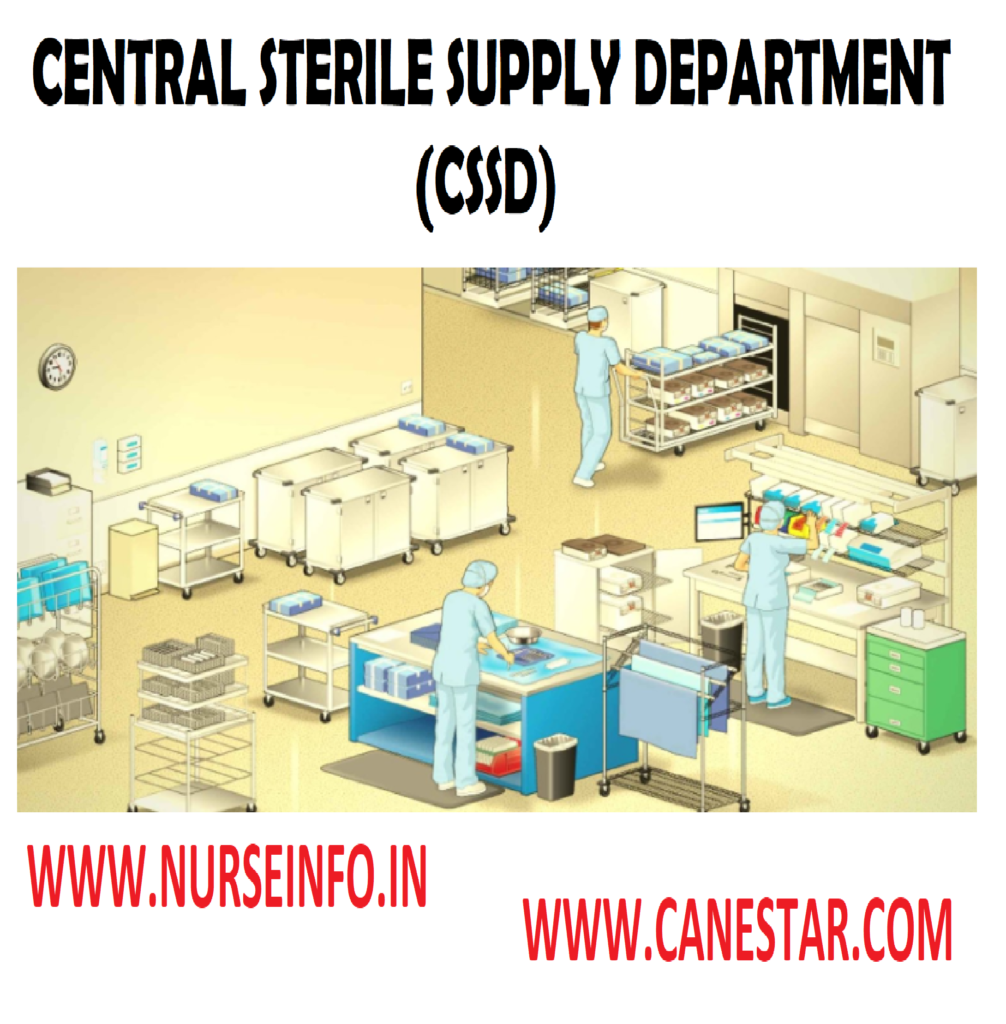
CSSD stands for Central Sterile Services Department, also known as Sterile Processing Department (SPD) or Central Sterile Supply Department. This is a crucial department within healthcare facilities, responsible for the sterilization, processing, storage, and distribution of medical and surgical instruments and equipment. The primary goal of the CSSD is to ensure that medical instruments are properly cleaned, sterilized, and maintained to prevent the spread of infections.

Functions of CSSD

  • Sterile processing departments are typically divided into four major areas to accomplish the functions of decontamination, assembly and sterile processing, sterile storage, and distribution
  • In the decontamination area, reusable equipment, instruments, and supplies are cleaned and decontaminated by means of manual or mechanical cleaning processes and chemical disinfection
  • Clean items are received in the assembly and packaging area from the decontamination area and are then assembled and prepared for issue, storage, or further processing (like sterilization)
  • After assembly or sterilization, items are transferred to the sterile storage area until it’s time for them to be issued
  • Several major functions are carried out in the distribution area: case cart preparation and delivery; exchange cart inventory; replenishment and delivery; telephone-order and requisition-order filling; and sometimes, patient care equipment delivery

Importance of CSSD:

  1. Infection Control:
    • Proper sterilization and processing of instruments in the CSSD are critical for preventing healthcare-associated infections (HAIs).
  2. Patient Safety:
    • Sterile instruments are essential for surgical procedures and various medical interventions, ensuring patient safety and reducing the risk of postoperative complications.
  3. Regulatory Compliance:
    • CSSD must adhere to regulatory guidelines and standards set by health authorities to ensure the quality and safety of sterilization processes.
  4. Efficiency in Healthcare Delivery:
    • A well-functioning CSSD contributes to the efficient delivery of healthcare services by providing healthcare units with sterile instruments in a timely manner.
  5. Cost-effectiveness:
    • Proper maintenance and reprocessing of reusable instruments in the CSSD can be cost-effective compared to the continuous purchase of disposable instruments.

CSSD Work Flow in Hospital

Unsterile things — collection area — packaging area — process area — sterile area — collection area

The workflow in a Central Sterile Services Department (CSSD) involves a series of systematic steps to ensure the proper cleaning, decontamination, sterilization, and distribution of medical instruments and equipment. The workflow may vary slightly among different healthcare facilities, but here is a general overview of the typical CSSD workflow:

1. Receiving and Sorting:

  • Incoming Instruments: Receive used instruments and equipment from various healthcare units.
  • Sorting: Sort instruments based on type, material, and contamination level.

2. Cleaning and Decontamination:

  • Pre-Cleaning: Remove gross debris and organic materials from instruments.
  • Cleaning: Use mechanical or automated cleaning equipment to thoroughly clean instruments.
  • Decontamination: Employ disinfectants or detergent solutions to eliminate remaining microorganisms.

3. Assembly and Packaging:

  • Sorting and Inspection: Sort cleaned instruments and inspect them for damage or wear.
  • Assembly: Assemble instrument sets according to standard protocols.
  • Packaging: Package instruments in materials suitable for sterilization, ensuring proper labeling and documentation.

4. Sterilization:

  • Method Selection: Choose an appropriate sterilization method based on the type of instruments.
  • Load Preparation: Arrange packaged instruments in sterilization trays or containers.
  • Sterilization Process: Perform sterilization using methods such as autoclaving (steam sterilization), ethylene oxide (ETO), or other approved methods.
  • Monitoring: Monitor sterilization processes with chemical and biological indicators.

5. Quality Control:

  • Inspection: Inspect sterilized instruments for signs of damage or inadequate sterilization.
  • Testing: Conduct periodic testing of sterilization equipment and perform routine checks on instruments.
  • Record Keeping: Maintain detailed records of sterilization processes, including load contents, dates, and results of monitoring.

6. Storage:

  • Storage Conditions: Store sterilized instruments in designated areas under controlled environmental conditions.
  • Inventory Management: Monitor inventory levels, ensuring an adequate supply of sterile instruments for various departments.

7. Distribution:

  • Order Processing: Receive requests for sterile instruments from healthcare units.
  • Packing and Transport: Pack requested instruments and distribute them to the appropriate departments.
  • Documentation: Maintain accurate documentation of distributed instruments.

8. Education and Training:

  • Staff Training: Provide ongoing education and training for CSSD staff on proper procedures, infection control, and equipment use.
  • Communication: Collaborate with healthcare units to provide information on proper handling and care of instruments.

9. Continuous Improvement:

  • Performance Evaluation: Regularly evaluate the performance of the CSSD, including efficiency, quality, and compliance with standards.
  • Feedback Mechanism: Establish a feedback mechanism for continuous improvement based on staff input, audits, and regulatory updates.
CENTRAL STERILE SUPPLY DEPARTMENT (CSSD) - Functions, Workflow
CENTRAL STERILE SUPPLY DEPARTMENT (CSSD) – Functions, Workflow

STERILIZATION IN HOSPITAL – OVERVIEW

STERILIZATION IN HOSPITAL

Sterilization in a hospital is a critical process aimed at eliminating or destroying all forms of microbial life on surfaces, instruments, and equipment to prevent the spread of infections. Proper sterilization is crucial in maintaining a safe and sanitary healthcare environment. Here is an overview of how sterilization is typically carried out in hospitals:

1. Central Sterile Services Department (CSSD):

  • Hospitals have dedicated departments known as Central Sterile Services Departments or Sterile Processing Departments (CSSD/SPD). These departments are responsible for sterilizing, processing, and distributing medical instruments and equipment.

2. Instrument Collection:

  • Used instruments from various departments, such as surgery, intensive care, and clinics, are collected and transported to the CSSD.

3. Decontamination:

  • In the CSSD, instruments go through a decontamination process. This involves cleaning and disinfecting to remove organic and inorganic contaminants.

4. Sorting and Inspection:

  • Instruments are sorted based on type, size, and usage. They undergo visual inspection to identify any damage or wear.

5. Assembly and Packaging:

  • Sterile processing technicians assemble instrument sets and package them appropriately for sterilization. Packaging materials must be suitable for the chosen sterilization method.

6. Sterilization:

  • Various sterilization methods may be used in hospitals, including:
    • Autoclaving (Steam Sterilization): Commonly used for heat-resistant instruments.
    • Ethylene Oxide (ETO): Suitable for items sensitive to heat and moisture.
    • Low-Temperature Hydrogen Peroxide Gas Plasma: Used for heat-sensitive items.
    • Gamma Radiation: Applicable for certain disposable items.

7. Quality Control:

  • Regular monitoring and quality control measures are implemented to ensure the effectiveness of the sterilization process. This includes the use of chemical and biological indicators.

8. Storage:

  • Sterilized instruments are stored in designated areas under controlled environmental conditions, ready for distribution.

9. Distribution:

  • Upon request from various hospital departments, sterile instruments are distributed in a timely manner. This process involves proper documentation and tracking.

10. Education and Training:

  • Staff in the CSSD undergo specialized training on infection control, sterilization techniques, and proper handling of instruments.

11. Record Keeping:

  • Detailed records are maintained for each sterilization cycle, including information on load contents, sterilization parameters, and monitoring results.

12. Regulatory Compliance:

  • The hospital’s sterilization practices must adhere to regulatory guidelines and standards set by health authorities to ensure the safety and quality of healthcare services.

13. Continuous Improvement:

  • The CSSD regularly evaluates and improves its processes through audits, feedback mechanisms, and ongoing training.

Steam/Autoclaving

  • It involves exposure of microorganisms to saturated steam under pressure in an autoclave achieves their destruction by the irreversible denaturation of enzymes and structural proteins
  • The temperature at which denaturation occurs varies inversely with the amount of water present. Sterilization in saturated steam thus requires precise control of time, temperature and pressure
  • As displacement of the air by steam is unlikely to be readily achieved, the air should be evacuated from the autoclave before admission of steam. This method should be used whenever possible for aqueous preparations and for surgical dressings and medical devices
  • The recommendations for sterilization in an autoclave are 15 minutes at 121 – 124 degree celcius (200 kPa). The temperature should be used to control and monitor the process; the pressure is mainly used to obtain the required steam temperature

Dry Heat

  • Dry heat can be used to sterilize items, but as the heat takes much longer to the transferred to the organism, both the time and the temperature must usually be increased, unless forced ventilation of the hot air is used
  • The standard setting for a hot air oven is at least two hours at 160 degree celcius (320 degree F). A rapid method heats air to 190 degree celcius (374 degree F) for 6 minutes for unwrapped objects and 12 minutes for wrapped objects
  • Dry heat has the advantage that it can be used on powders and other heat-stable items that are adversely affected by steam (for instance, it does not cause rusting of steel objects)

Chemical (Ethylene Oxide/Other Chemicals)

  • The active agent of the gas sterilization process can be ethylene oxide or another highly volatile substance
  • The highly flammable and potentially explosive nature of such agents is a disadvantage unless they are mixed with suitable inert gases to reduce their highly toxic properties and the possibility of toxic residues remaining in treated materials
  • The whole process is difficult to control and should only be considered if no other sterilization procedure can be used. It must only be carried out under the supervision of highly skilled staff
  • The sterilizing efficiency of ethylene oxide depends on the concentration of the gas, the humidity, the time of exposure, the temperature and the nature of the load
  • After sterilization, time should be allowed for the elimination of residual sterilizing agents and other volatile residues, which should be confirmed by specific tests

Radiation

Sterilization of certain active ingredients, drug products, and medical devices in their final container or package may be achieved by exposure to ionizing radiation in the form of gamma radiation from a suitable radioisotopic source such as cobalt 60 or of electrons energized by a suitable electron accelerator. Laws and regulations for protection against radiation must be respected

Gamma radiation and electron beams are used to effect ionization of the molecules in organisms. Mutations are thus formed in the DNA and these reactions after replication

  • These processes are very dangerous and only well-trained and experienced staff should decide upon the desirability of their use and should ensure monitoring of the processes. Specially designed and purpose-built installations and equipment must be used
  • It is usual to select an absorbed radiation level of 25 kGy (2.5 Mrad), although other levels may be employed provided that they have been validated

Plasma Sterilization

  • Plasma is basically ionized gas. When applied by an electric field, it gets ionized into electrons and ions
  • These free radicals and ions interact with living organisms and destroys them
  • Most of the research in plasma sterilization pertains to volume experiments. The process involves UV irradiation, photo-desorption and chemical etching
  • The spores are basically made up of simple atoms like C, O, N, H and the like. The radicals react with these atoms to form simple compounds like CO2, which can subsequently be flushed out. When the organism loses such atoms that are intrinsic to its survival, it dies

Phases of Plasma Sterilization

  • Vacuum: medical instruments are placed in the sterilization chamber (4 cubic feet in capacity). The chamber is sealed and air is pumped out to create a strong vacuum
  • Injection: a solution of 59% hydrogen peroxide and water (from a cassette inserted by the operator at the beginning of every 10 cycles) is automatically injected into the sterilization chamber
  • Diffusion: the solution vaporizes and diffuses throughout the chamber, surrounding the items to be sterilized. Hydrogen peroxide exhibits antimicrobial activity and is capable of inactivating microorganism that it encounters in the sterilization chamber
  • Plasma: radio frequency (RF) energy is applied to create an electrical field, which in turn initiates the generation of the low-temperature plasma, i.e. a cloud of reactive and unstable species. These unstable particles collide with one another to produce a variety of new species, including free radicals that, like the hydrogen peroxide vapor, are capable of inactivating any microorganism, viruses, or spores that may be encountered within the sterilization chamber. In the plasma phase, the activated components ultimately lose their high energy and recombine to form primarily oxygen and water vapor. The combination of the diffusion pretreatment and plasma phases acts to sterilize while eliminating harmful residuals
  • Vent: the RF energy is turned off, the vacuum is released, and the chamber is filled with filtered air, returning it to normal temperature atmospheric pressure. After 10 sterilization cycles, the cassette self-ejects into an internal receptacle for future disposal

SUMMARY

Sterilization is necessary for the complete destruction or removal of all microorganisms (including spore-forming and non-spore forming bacteria, viruses, fungi and protozoa) that could contaminate pharmaceuticals or other materials and thereby constitute a health hazard. Since the achievement of the absolute state of sterility cannot be demonstrated, the sterility of a pharmaceutical preparation can be defined only in terms of probability. The efficacy of any sterilization process will depend on the nature of the product, the extent and type of any contamination, and the conditions under which the final product has been prepared

STERILIZATION IN THE HOSPITAL - steam or autoclaving, dry heat, chemicals, radiation, plasma sterilization
STERILIZATION IN THE HOSPITAL – steam or autoclaving, dry heat, chemicals, radiation, plasma sterilization

ESIC NURSING OFFICER (STAFF NURSE) JOBS RECRUITMENT AND SALARY

ESIC NURSING OFFICER (STAFF NURSE) JOBS RECRUITMENT AND SALARY

ESIC Staff Nurse earns average 43,500 INR per Month. According to 7th Pay commission, the staff nurse with Pay Level (7) will get INR 44,900 to INR 1, 42,400 per Month.

Staff Nurse comes under Pay Band PB-2 earns INR 9300 to 34800 INR per month.

ABOUT ESIC

ESIC (Employees State Insurance Corporation) is the Central Government Sector which focuses the well being of labors in India. ESIC constitute hospitals which is run by ESIC, State run ESIC hospital and ESIC Medical Education institution.

Every state own ESIC hospitals, each hospital recruit staff nurses. ESIC Staff Nurse earns salary according 7th pay commission, along with Basic Pay; they get DA, HRA, Transport Allowance and HPCA/Nursing Allowance.

ESIC recruitment board announces vacancies for staff nurses every year. Approximately, 400 to 500 staff nurse recruited every year in ESIC hospital.

Book for All India Nursing Officer/Staff Nurse Exams/AIIMS/NORCET/ESIC/DSSSB/PGI/JIPMER/ Complete Theory of all Subjects/First English Edition-2021

List of States and Union Territories (ESIC HOSPITAL)

Every states and union territories in India have ESIC hospital and Medical education institution.

Andhra Pradesh, Andaman and Nicobar Islands,  Arunachal Pradesh, Assam, Bihar, Chandigarh, Chhattisgarh, Dadra and Nagar Haveli, Daman and Diu, Delhi, Goa, Gujarat, Haryana, Himachal Pradesh, Jammu and Kashmir, Jharkhand, Karnataka, Kerala, Lakshadweep, Madhya Pradesh, Maharashtra, Manipur, Meghalaya, Mizoram, Nagaland, Odisha, Pondicherry, Punjab, Rajasthan, Sikkim, Tamil Nadu, Telangana, Tripura, Uttar Pradesh and West Bengal.

After selection for staff nurse or related nursing jobs, the nurse will be posted in ESIC Model Hospital and Medical College of ESIC Corporation. Staff nurse will be transferred to any region or state for Promotional Post.

From the date of appointment, it will require 3 years of service to request for inter regional transfer.

EDUCATIONAL QUALIFICATION AND AGE LIMIT
Staff nurse should have completed (GNM) General Nursing and Midwifery or B.Sc. (Nursing). They need to be registered as nurse in state and Indian Nursing Council. Both male and female nurse is eligible for staff nurse vacancies. Nurse should be below 37 years of age and not exceeding 37 years of age. Age relaxation will be
for OBC, SC and ST categories as well as minority.

ONLINE APPLICATION
Nurse can apply online through ESIC official site. Before applying, read guidelines carefully, if application is incomplete, the application will be rejected.

Candidates should have necessary documents before filling Online Application. Necessary documents are scanned photograph, signature and thumb impression.
After completion of registration, note down the registration number for future reference. After completion of online registration, confirmation email will be sent to the applicant email id.

JP Nursing Today (A Way to Success) For AIIMS, JIPMER, DSSSB, ESIC, PGI, RPSC, RAILWAY, MNS, RUHS & All Other Staff Nurse Competitive Examinations

EXAMINATION AND ADMIT CARD

Admit card will be sent to the applicant email id.
Exam will be conducted for 2 hours. Maximum marks will be 125 (100 Marks will be based on Technical professional/subject) (25 Marks questions on Aptitude/General Awareness/General Intelligence/Arithmetic Ability)

Written test contain objective type questions, the question come from subjects of nursing course.
Test contains multiple choice questions with negative marking. For each wrong answer, 0.33 marks will be deducted.

Follow the ESIC website for staff nurse recruitment –

http://esic.nic.in/recruitment.php

ESIC NURSING OFFICER (STAFF NURSE) JOBS RECRUITMENT AND SALARY

NURSE SALARY IN INDIA

RAILWAY NURSE SALARY IN INDIA

MILITARY NURSING SERVICE SALARY IN INDIA

NURSE SALARY IN SAUDI ARABIA

NURSE SALARY IN UAE

INDIAN MILITARY NURSING SERVICE – BSC COURSE

INDIAN MILITARY NURSING SERVICE – BSC COURSE INFORMATION AND MNS SALARY

Indian Military Nursing Service is considered as a prestigious work to serve the nation. Indian military offers 4 years B.Sc., Nursing course for female candidates in India. The nursing course is conducted in College of Nursing of Armed Forces Medical Services.

INDIAN MILITARY NURSING SERVICE (MNS) SALARY

Military Nursing Salary is considered upon Pay Band, Grade Pay and Levels. Average Military Nurse earns 57800 INR per month.

Pay Band – (PB – 3) earns between 15600 to 39100 INR and 5400 INR (Grade Pay)

Existing Basic Pay for nurse is 5400 + 16880.

Grade Pay – 5400 INR and Existing Pay – 16880 INR

Final Revised Pay for Military Nurses is 57800 INR per month.

SALARY STRUCTURE

LEVELS 10 10 A 10 B
1 56100 59000 64100
2 57800 60800 66000
3 59500 62600 68000
4 61300 64500 70000
5 63100 66400 72100
6 65000 68400 74300
7 67000 70500 76500
8 69000 72600 78800


Selection of candidates is based on the merit cum choice. Selection is subject to medical fitness and the vacancies in each college. The selected candidates will be allowed to serve in the Military Nursing Service based on Agreement/Bond.

After completion of nursing course (4 years), the candidates will be granted Permanent/Short Service Commission in the Military Nursing Service, under the terms and conditions laid down for grant of such commission.

If the candidate withdraws from the course, termination of training or refusal to accept Commission in the MNS, the candidate needs to pay the Agreement/Bond money as per the Agreement/Bond executed. During training, the candidates will be provided with free ration, accommodation, uniform allowance and monthly stipend as per terms and conditions.

After passing the final year University examination for B.Sc., (Nursing) Course, the candidates will be offered Commission in the Military Nursing Service which is subject to medical fitness. On the date of declaration of results from respective Universities, the candidates will be commissioned in Indian Military Nursing Service.

The date of seniority in service is determined by the date of commission (declaration of result from respective Universities). As the candidates have joined the course in same year, their seniority will be decided only by date of commission.

Serial No Name of Institution No of seats available Tentative date of declaration of Result
1 CON, AFMC Pune 40 Aug
2 CON, CH (EC) Kolkata 30 Sep/Oct
3 CON, INHS Asvini 40 Aug
 4 CON, AH (R&R) New Delhi 30 July/Aug
5 CON, CH (CC) Lucknow 40 Nov/Dec
6 CON, CH (AF) Bangalore 40 Jan/Feb (of Subsequent year of exam)

Total number of seats offered for B.Sc., Nursing course is 220. For each college of nursing (CON), the declaration of Result will be different. For instance, CON (AF) Bangalore offers 40 seats and result of examination will be declared during Jan/Feb (of subsequent year of exam).

 CON, AFMC Pune offers 40 seats and tentative date of declaration of Result during Aug. CON, CH (EC) Kolkata offers 30 seats and date of declaration of Result during Sep/Oct. CON, INHS Asvini Institution offers 40 seats and date of Result during Aug. CON, AH (R&R) New Delhi Institution offers 30 seats and declaration of Result during Jul/Aug. CON,  CH (CC) Lucknow Institution offers 40 seats and date of declaration of Result during Nov/Dec.

ELIGIBILITY CONDITIONS FOR BSC NURSING COURSE

  1. Female candidates who are unmarried/divorced/legally separated/widow without encumbrances
  2. Nationality – Citizen of India
  3. Date of Birth – it’s important for application for B.Sc., Nursing Course
  4. Educational Qualification – Candidates must have passed in the first attempt, Senior Secondary Examination (10+2) or equivalent (12 Years schooling) examination with Physics, Chemistry, Biology (Botany & Zoology) and English with not less than 50% aggregate marks as a regular student from a Statutory /Recognized Board/University/Examination Body. Candidates who will be appearing for final year of qualifying examination during the current academic session may also apply provisionally. The candidates finally selected for the course will have to submit proof of passing the qualifying examination with requisite subjects and marks before joining the course.
  5. Physical standards – Medical fitness will be determined as per standards applicable for Commission in the Armed Forces as amended from time to time. X-ray examination of Chest and USG (of abdomen and pelvis) will be done. Minimum height required for entry into Armed Forces for female candidates is 152 cm. Gorkhas and candidates belonging to North Eastern region of India, Garhwal and Kumaon will be accepted with a minimum height of 148 cm.

SELECTION PROCESS

  1. Computer Based Examination: Eligible applicants will be called for an objective type Computer Based Examination of 150 marks for 90 minutes duration likely to be held in the month of April, every year.
S No Subject No of questions Max. Marks
1 General English 50 50
2 General Intelligence 50 50
3 Science (Biology, Physics and Chemistry) 50 50

TARGET HIGH ONE NATION ONE BOOK ON NURSING OFFICER STAFF NURSE RECRUITMENT EXAM 4ED PREMIUM COLORED EDITION (PB 2019)

 Note: 1. there shall be no negative marking. 2. If the Computer Based Examination is held in multiple shifts, the process of normalization will be adopted for generation of the merit list.

2. Interview and Medical Examination – the candidates qualified in the Computer Based Examination will be called for interview and Medical Examination in the month of June at selected centre. The interview has a maximum weightage of 100 marks. Final selection will be based on the combined merit of Computer Based Examination and Interview, subject to medical fitness of the candidate, choice and vacancy in each College.

3. Reservation of Seats – Reservation of seats for admission as per the existing policy

SC/ST candidates – 15 seats

NCC candidates possessing “C” Certificates – 25 seats

The reserved seats will be in addition to any vacancies secured by SC/ST/NCC “C” candidates on the basis of their position of the General Merit List. To the extent SC/ST/NCC “C” candidates are not available to fill the reserved vacancies; the same will be filled up by the candidates from the General Merit List.

Important Note: The reservation of seats will be applied while preparing the Combined Merit List only.

TEST CENTRES

The candidates are required to choose 3 examination centres in order of preference from the list of centre provided while filling the online application form. Allotment of centers will be on “first apply-first allot basis”.

HOW TO APPLY

Candidates may apply and pay the application fee online through www.joinindianarmy.nic.in

The candidate’s E-mail ID is the user ID for this website and the candidate will select her own password. Candidates must remember their username and password for further correspondence.

Only the Eligible candidates will be able to pay the online application processing fee of INR 750 (Rupees seven hundred and fifty only).

The Admit cards for Computer Based Examination will be made available on www.joinindianarmy.nic.in

No Admit card will be sent by Post.

List of Documents

The selection of the candidate for B.Sc., (Nursing) will however be subject to producing of the original Mark sheet/Certificate of the qualifying examination i.e. 10+2 or equivalent before final selection.

INDIAN MILITARY NURSING SERVICE – BSC COURSE INFORMATION AND MNS SALARY

NURSE SALARY IN INDIA

RAILWAY NURSE SALARY IN INDIA

NURSE SALARY IN SAUDI ARABIA

NURSE SALARY IN QATAR

ISOLATION TECHNIQUE IN NURSING or BARRIER NURSING

DEFINITION

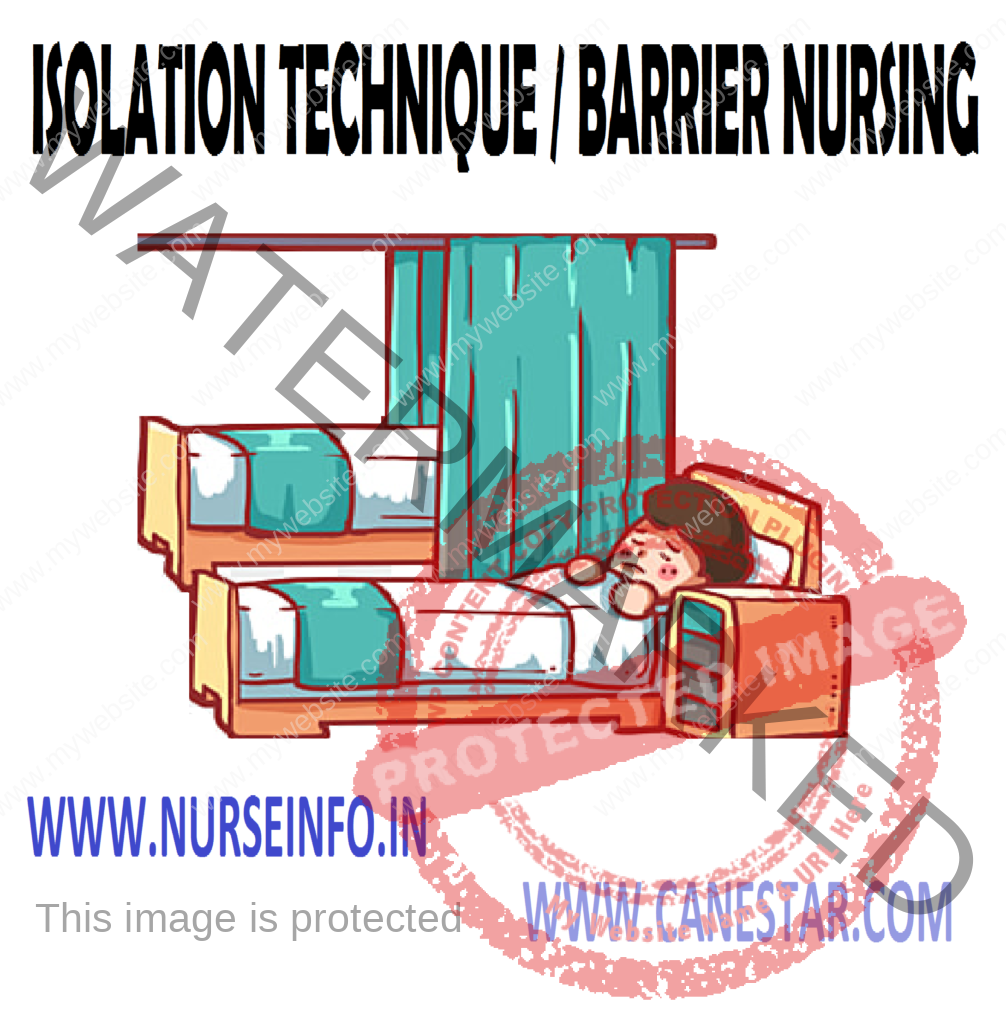
  • Isolation is the separation of infected person from the non-infected person for the period of communicability under conditions which will prevent the transmission of infection to others
  • Isolation technique means observing all those practices that are designed to prevent the transmission of specific pathogens from one person to another directly or indirectly. It is also called barrier nursing technique
  • Isolation is the separation of the patient and his unit from others to prevent the direct or indirect contact of infectious agent to susceptible person, e.g. droplet infection, clothing, etc
  • Barrier nursing or isolation technique is intended to confine the microorganisms within a given and recognized area

PURPOSE

  • To confine the pathogens within a given and recognized area
  • To prevent direct contract with the infectious person
  • To protect the hospital staff and other patients from infection
  • To prevent cross infection on different diseases
  • To protect nurses and others from possible communication of diseases by protecting nurses uniform from contamination

GENERAL INSTRUCTIONS

  • Isolation technique is synonym for communicable disease technique and is required to be maintained to prevent the transmission of communicable diseases between the individuals
  • Keep the patient in isolation room which may be a unit type or disease type according to physical set-up
  • Receive necessary immunization before nursing the patient
  • Inform your supervisor when you have skin lesions, sore throat or other evidence of lowered resistance
  • Maintain proper aseptic practices

Isolation techniques in nursing, also known as infection control precautions, involve practices and measures to prevent the spread of infectious diseases among patients, healthcare workers, and visitors. These techniques are crucial in maintaining a safe healthcare environment. Different types of isolation precautions are used based on the mode of transmission of the infectious agent. The main types include:

1. Standard Precautions:

  • Standard precautions are the baseline practices used for the care of all patients, regardless of their infectious status. They include:
    • Hand hygiene.
    • Use of personal protective equipment (PPE) like gloves, gowns, masks, and eye protection.
    • Safe injection practices.
    • Proper handling and disposal of contaminated equipment.

2. Transmission-Based Precautions:

  • Transmission-based precautions are implemented based on the mode of transmission of a specific infectious agent. There are three types:
    • Contact Precautions:
      • Used for patients with known or suspected infections spread by direct or indirect contact.
      • Examples include Clostridioides difficile (C. diff), methicillin-resistant Staphylococcus aureus (MRSA), and multidrug-resistant organisms.
    • Droplet Precautions:
      • Used for patients with known or suspected infections transmitted through respiratory droplets.
      • Examples include influenza, pertussis, and bacterial meningitis.
    • Airborne Precautions:
      • Used for patients with known or suspected infections transmitted via small respiratory particles.
      • Examples include tuberculosis, chickenpox, and measles.

3. Protective Environment:

  • Protective environment is a specialized form of isolation used for immunocompromised patients, such as those undergoing bone marrow transplantation. It includes measures to minimize exposure to environmental pathogens.
    • Use of positive-pressure rooms.
    • Restricted visitation.
    • Strict hand hygiene and infection control measures.

Key Practices in Isolation Techniques:

  1. Hand Hygiene:
    • Handwashing with soap and water or using alcohol-based hand sanitizers is a fundamental practice in preventing the spread of infections.
  2. Personal Protective Equipment (PPE):
    • Proper use of PPE, including gloves, gowns, masks, and eye protection, is essential when providing care to patients in isolation.
  3. Environmental Cleaning:
    • Regular and thorough cleaning and disinfection of patient rooms and equipment to prevent the transmission of infectious agents.
  4. Patient Placement:
    • Assigning patients to appropriate rooms or areas based on their infection status and the type of precautions required.
  5. Educating Patients and Visitors:
    • Providing education to patients and visitors on infection prevention practices and the importance of adherence to precautions.
  6. Respiratory Hygiene/Cough Etiquette:
    • Encouraging patients and healthcare workers to practice proper respiratory hygiene, including covering the mouth and nose when coughing or sneezing.
  7. Waste Disposal:
    • Proper disposal of contaminated materials and waste to prevent the spread of infectious agents.
  8. Restricted Movement:
    • Limiting the movement of patients within the healthcare facility to prevent the potential spread of infections.
CONCURRENT & TERMINAL DISINFECTION
GLOVING TECHNIQUE
SURGICAL GOWNING
SURGICAL HANDWASHING
HANDWASHING
BARRIER NURSING
ASEPSIS
CROSS INFECTION

BARRIER NURSING

Barrier nursing is a set of infection control practices aimed at preventing the transmission of infections, particularly highly contagious diseases, between healthcare workers, patients, and the environment. The primary goal of barrier nursing is to create physical barriers that reduce or eliminate the risk of direct or indirect contact with infectious agents. This approach is crucial in protecting both healthcare providers and patients. Here are key components of barrier nursing:

1. Personal Protective Equipment (PPE):

  • Healthcare workers use appropriate PPE to create a barrier between themselves and potentially infectious materials. Common PPE includes:
    • Gloves: to protect hands.
    • Gowns: to protect clothing and skin.
    • Masks: to prevent the inhalation of infectious respiratory droplets.
    • Eye protection: such as goggles or face shields, to shield the eyes.

2. Hand Hygiene:

  • Strict hand hygiene practices are maintained, including regular handwashing with soap and water or the use of alcohol-based hand sanitizers. Hand hygiene is crucial before and after patient contact and after removing PPE.

3. Isolation Techniques:

  • Patients may be placed in isolation based on the type of infection and its mode of transmission. This could involve contact isolation, droplet isolation, or airborne isolation, each requiring specific PPE and precautions.

4. Environmental Controls:

  • Strict cleaning and disinfection protocols are followed to ensure the cleanliness of the patient’s environment and prevent the spread of infectious agents.

5. Patient Placement:

  • Patients with contagious diseases may be placed in separate rooms or areas to limit the risk of transmission to other patients and healthcare workers.

6. Restricted Visitation:

  • Limiting or restricting visitor access to prevent the spread of infections. Visitors may be required to wear PPE and follow specific infection control measures.

7. Education and Training:

  • Healthcare workers receive education and training on proper barrier nursing techniques, including the correct use of PPE, hand hygiene, and isolation protocols.

8. Respiratory Hygiene/Cough Etiquette:

  • Encouraging patients and healthcare workers to practice proper respiratory hygiene to prevent the spread of respiratory infections.

9. Waste Management:

  • Proper disposal of contaminated materials and waste to prevent the transmission of infectious agents.

10. Strict Adherence to Protocols:

  • Healthcare workers adhere strictly to established infection control protocols and guidelines to minimize the risk of cross-contamination.
Isolation Technique / Barrier Nursing - Definition, Purpose, General Instructions
Isolation Technique / Barrier Nursing – Definition, Purpose, General Instructions

CROSS INFECTION IN HOSPITAL

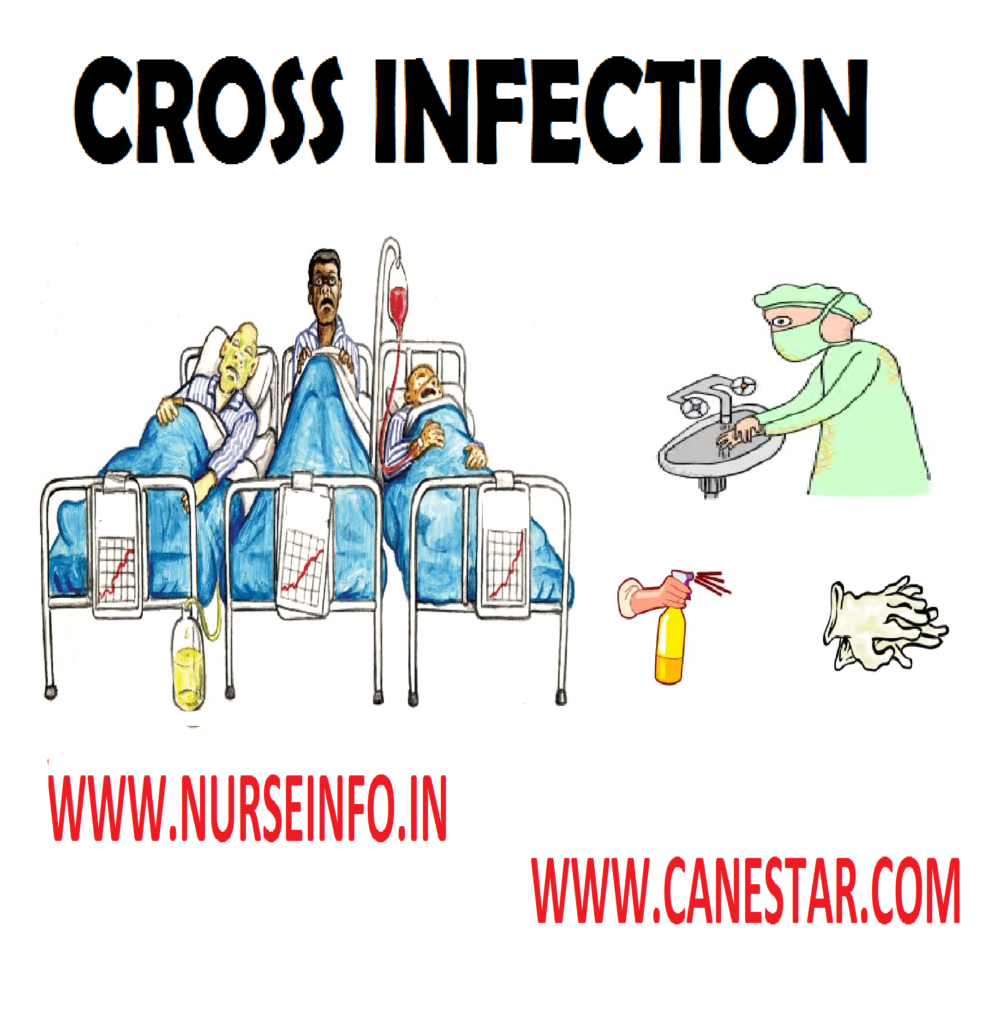
CROSS INFECTION

Cross infection in hospitals, also known as nosocomial or healthcare-associated infection (HAI), refers to infections that are acquired by patients during their stay in a healthcare facility. These infections can be caused by a variety of pathogens, including bacteria, viruses, fungi, and other microorganisms. Cross infection can occur through direct or indirect contact with contaminated surfaces, healthcare workers, or other patients. Several factors contribute to the risk of cross infection in hospitals:

1. Compromised Immune Systems:

  • Patients in hospitals often have weakened immune systems due to underlying medical conditions, surgeries, or treatments. This makes them more susceptible to infections.

2. Invasive Procedures:

  • Procedures such as surgeries, catheterizations, and intubations create opportunities for microorganisms to enter the body, increasing the risk of infections.

3. Use of Medical Devices:

  • The use of medical devices like catheters, ventilators, and intravenous lines can introduce pathogens into the body, leading to infections.

4. Proximity of Patients:

  • Patients in close proximity to each other may share common areas, increasing the risk of transmission of infections.

5. Contaminated Hands and Surfaces:

  • Healthcare workers and visitors may inadvertently transfer microorganisms from one patient to another through contaminated hands, clothing, or surfaces.

6. Overcrowding:

  • Overcrowded conditions in hospitals can contribute to the spread of infections due to limited space and increased contact between patients and healthcare workers.

7. Antibiotic Resistance:

  • The overuse or misuse of antibiotics in hospitals can lead to the development of antibiotic-resistant strains of bacteria, making infections more challenging to treat.

8. Inadequate Hand Hygiene:

  • Poor hand hygiene practices among healthcare workers, patients, and visitors can contribute significantly to the transmission of infections.

9. Environmental Contamination:

  • Contamination of hospital surfaces, equipment, and air can contribute to the persistence and spread of pathogens.

Methods of Transmission of Cross Infection

Direct Contact: the organisms can be transmitted directly from person to person through droplet infection, infected hands, sexual contact, etc.,

Indirect Contact: contact with the secretions and excretions of the infected person through fomites (instruments and utensils), through contaminated food and water, through insects, through dust and through carriers

Prevention of Cross Infection

  • The hospital should be well ventilated
  • Maintenance of general cleanliness of the hospital
  • Safe food and water supply
  • Safe disposal of excreta, urine, stool and sputum
  • The bed pans, urinals, sputum cups are cleaned and disinfected before it is used for another patient
  • Discarded dressing and garbage should be collected daily and burnt to prevent the spread of infection

The Chain of Infection

  • Infectious agent
  • Source or reservoir of infectious agent
  • Portal of exit from the source
  • Mode of transmission for the infectious agent
  • Portal of entrance in to a susceptible host
  • Susceptible host

Prevention Strategies:

  1. Hand Hygiene:
    • Promote and enforce proper hand hygiene practices among healthcare workers, patients, and visitors.
  2. Infection Control Protocols:
    • Ensure strict adherence to infection control protocols, including the use of PPE, isolation precautions, and environmental cleaning.
  3. Antibiotic Stewardship:
    • Implement antibiotic stewardship programs to promote judicious use of antibiotics and prevent the development of antibiotic resistance.
  4. Education and Training:
    • Provide education and training to healthcare workers, patients, and visitors on infection prevention practices.
  5. Surveillance and Monitoring:
    • Implement surveillance systems to monitor and track HAIs, enabling early detection and intervention.
  6. Environmental Hygiene:
    • Maintain a clean and hygienic environment through regular cleaning and disinfection of surfaces and equipment.
  7. Patient Placement:
    • Properly segregate patients based on their infectious status to prevent the spread of infections.
  8. Respiratory Hygiene/Cough Etiquette:
    • Encourage patients and healthcare workers to practice proper respiratory hygiene to prevent the spread of respiratory infections.
Cross Infection - Methods of Transmission, Precautions, Chain of Infection
Cross Infection – Methods of Transmission, Precautions, Chain of Infection

ASEPSIS IN HOSPITAL

Asepsis in hospitals refers to the set of practices and techniques employed to prevent the introduction, growth, and spread of pathogenic microorganisms in the healthcare environment. The primary goal of aseptic techniques is to create and maintain a sterile or germ-free environment, reducing the risk of healthcare-associated infections (HAIs). Asepsis is critical in various healthcare settings, including operating rooms, patient care areas, and laboratories. Here are key components of asepsis in hospitals:

1. Hand Hygiene:

  • Proper Handwashing: Healthcare workers must perform thorough handwashing with soap and water or use alcohol-based hand sanitizers before and after patient contact, after handling potentially contaminated materials, and between different procedures.

2. Personal Protective Equipment (PPE):

  • Gloves, Masks, Gowns, and Eye Protection: Healthcare workers use appropriate PPE to protect themselves and patients from the transfer of microorganisms. The selection and proper use of PPE depend on the nature of the task and potential exposure.

3. Aseptic Techniques in Procedures:

  • Sterile Techniques: During invasive procedures, surgeries, and certain medical treatments, sterile techniques are employed. This includes using sterile instruments, drapes, and dressings to prevent the introduction of microorganisms into sterile areas.

4. Environmental Cleaning and Disinfection:

  • Regular Cleaning: Surfaces, equipment, and patient care areas are regularly cleaned to remove dirt and potential pathogens.
  • Disinfection: Disinfectants are used to kill or inhibit the growth of microorganisms on surfaces. High-touch surfaces and medical equipment are prioritized for disinfection.

5. Sterilization:

  • Autoclaving: Instruments and equipment that come into contact with sterile areas of the body or bloodstream are sterilized using autoclaves, ensuring the destruction of all microorganisms, including spores.

6. Isolation Precautions:

  • Contact, Droplet, and Airborne Precautions: Patients with known or suspected infections are placed under appropriate isolation precautions to prevent the spread of pathogens.

7. Patient Placement and Room Design:

  • Single-Patient Rooms: Hospitals may use single-patient rooms to minimize the risk of cross infection.
  • Ventilation: Adequate ventilation and air filtration systems are crucial in preventing airborne transmission of pathogens.

8. Hand Antisepsis before Invasive Procedures:

  • Pre-procedure Hand Antisepsis: Healthcare workers perform hand antisepsis using antiseptic solutions before engaging in invasive procedures to minimize the risk of introducing microorganisms.

9. Aseptic Technique in Intravenous (IV) Therapy:

  • Sterile IV Procedures: Ensuring the use of aseptic technique when inserting and maintaining intravenous lines to prevent bloodstream infections.

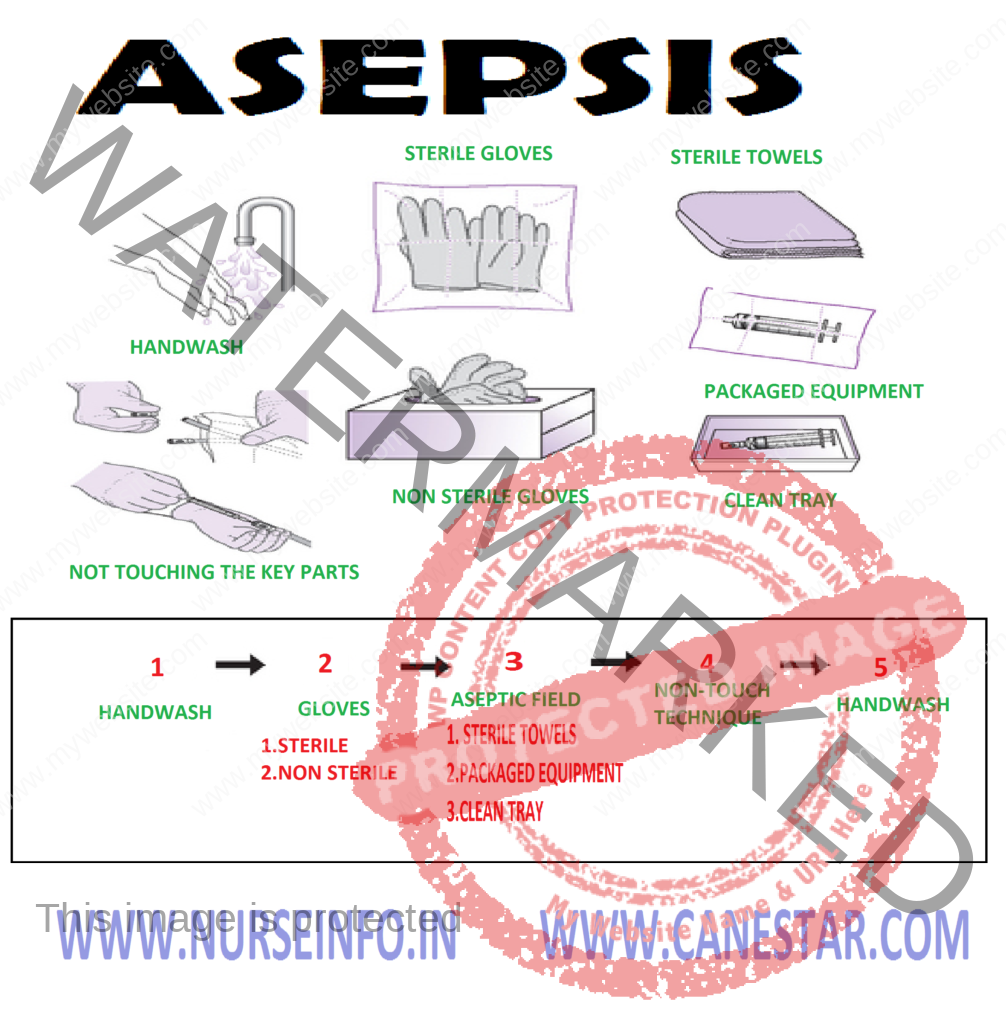
ASEPSIS

The practice of asepsis is designed to reduce the number of microorganisms present or reduce the risk of transmission from one person to another. It is also known as clean technique

Medical asepsis is the term used to describe the technique of preventing the transfer of disease by stopping the infection at its source or by reducing the number of pathogenic microorganisms after they have left the source

Medical Aseptic Technique Used to Break the Chain of Infection

  • Daily change of patient bed linen
  • Hand washing before and after each procedure
  • Infected patients are separated from the non-infected patients (isolation of the patient)
  • Hospital should be well ventilated
  • Maintenance of general cleanliness of the hospital
  • Safe food and water, water chlorination
  • Safe disposal of excreta and refuse
  • Destruction of rodents and insects
  • Disinfection and sterilization of supplies
  • Immunization – it is the act of creating immunity artificially against a particular disease
  • Maintenance of personal hygiene of the patient
  • Use of mask, gown and gloves in needed cases
  • Keeping toilet articles separate for each person
  • Minimizing the number of visitors
  • Health education to the patient and relatives

METHODS/TYPES OF ISOLATION

Strict isolation: it prevents spread by contact in case of rabies, tetanus, anthrax, scabies, leprosy and venereal diseases, nurses must wash hands frequently and thoroughly use disposable supplies and discard them properly. Send reusable supplies for disinfection and sterilization. Wear gown, mask and gloves

Respiratory isolation: it is indicated in situations where the pathogens are spread on droplets from the respiratory tract. In this type of infection nurses should wear mask and gown while caring for the patient. Use articles should be disinfected avoid the possibility of contamination. Handkerchiefs should be cleaned and disinfected before reuse. Maintain reasonable distance to prevent droplet infection, the diseases are whooping cough, influenza, diphtheria, measles, etc

Enteric isolation: it is indicated when the pathogens are transmitted in feces, for this type isolation, it is not necessary to wear a mask, but it is recommended that gloves and gowns be worn when handling soiled articles. Thorough hand washing should be emphasized both by the patients and nurses. The excreta may be disinfected by adding lime before its disposal. The soiled articles such as linen should be disinfected before sending to laundry

Wound and skin isolation: this type of isolation is for pathogens which are found in wound and can be transmitted by the contact with the wounds. Usually gowns and gloves are worn in this type of infection. Important point to remember is the safe disposal of dressing and discharges from the wounds and disinfection of articles. Strict isolation techniques should be followed when caring for patients with abscesses, boils, infected burns, gag gangrene, anthrax, rabies, etc. all the articles used for these patients should be kept separated

Great care should be taken by the nurses to prevent cuts or abrasions on their hands, frequent and thorough hand washing reduces the chance of infection

Blood isolation: this type of isolation is intended to prevent transmission of pathogens that are found in the blood. Therefore, any equipment that comes in contact with the patient’s blood should be carefully disinfected before touching another object or person. Use of mosquito nets also emphasized to prevent this type of infection.

Following Precautions to be Taken While Caring for Infectious patients

  • Yearly physical examination including chest X-ray
  • Well balanced diet
  • Proper hand washing after elimination, before eating, before and after every procedure
  • Proper immunization
  • Children below 12 years should not be allowed in to the ward
  • As far as possible maintain two bed to avoid cross infection
  • Restrict visitors
  • Proper health education to patient, visitor and relatives

Principle of Surgical Asepsis

Principles

  • Always face the sterile field. Do not turn back or side on a sterile field

Rationale: Sterile objects which are out of vision are considered questionable and their sterility cannot be guaranteed

  • Keep sterile equipment above your waist level or above table level

Rationale: Waist level and table level are considered margins of safety and will promote maximum visibility of the sterile field

  • Do not speak, sneeze and cough over a sterile field

Rationale: To prevent droplet infection

  • Never reach across sterile field

Rationale: when a non-sterile object is held above a sterile object, gravity causes microorganisms to fall into the sterile field

Types of Asepsis

Surgical asepsis: refers to procedures used to keep objects of areas sterile or completely free from all microorganisms. The techniques are used in the operating room and in some treatments where aseptic technique is to be followed

Medical asepsis: refers to all procedures used to protect the patient and his environment from the transmission of diseases producing organisms that can transmit from one patient to another. This involves strict sterilization of some articles and methods to maintain cleanliness of others. Correct hand washing is very important in carrying out medical asepsis

Types of Aseptic Practices

  • Cleaning: it includes dusting, sweeping and moping the unit, rinsing and washing the equipment and patient to remove pathogens
  • Hand washing: cleaning hands to remove pathogens
  • Capping and masking: capping is covering the head and masking is covering the nose and mouth to protect the nurse from inhaling pathogens when disease is air borne
  • Gowning: it means covering the uniform to protect the nurse from contaminating herself and others around her
  • Gloving: it means covering the hands to protect the nurse or patient with poor resistance from pathogens
  • Bagging: it means removing the contaminated materials and supplies in bags from isolation unit

DIFFERENCE BETWEEN MEDICAL AND SURGICAL ASEPSIS

Medical Asepsis

  • A clean technique is used
  • Transmission of pathogenic organisms is prevented, e.g. hair combing, mouthwash
  • Patient and his environment is protected from cross infection

Surgical Asepsis

  • Sterile technique is used
  • Pathogenic and non-pathogenic organisms are totally prevented, e.g. giving injections, dressing
  • Objects or articles are free from pathogenic and non-pathogenic pathogenic organisms
Asepsis - Technique, Methods, Precautions, Principles, Types of Asepsis, Difference
Asepsis – Technique, Methods, Precautions, Principles, Types of Asepsis, Difference
Nurse Info