Home Blog Page 27

Commissioned Corps

How to Join in Commissioned Corps of the U.S. Public Health Service as a Nurse

Commissioned Corps of the U.S. Public Health Service or USPHS Commissioned Corps.

USPHS Commissioned Corps are the front line workers of public health. They work under different fields like medical, health and engineering and they contribute to fight disease, research, and care for patients in underserved communities across the country (USA) and throughout the world.

It’s one of the nation’s uniformed services who serve in agencies across the government, as physicians, nurses, dentists, veterinarians, scientists, engineers and other professionals. These professionals works in CDC, FDA, Indian Health Service (PHS), NIH, Department of Justice (Federal Bureau of Prisons) and Department of Defense (USA)

TYPES OF PROFESSION OPPORTUNITIES FOR NURSES

  1. Nurse Practitioner
  2. Registered Nurse

NURSE PRACTITIONER AND REGISTERED NURSE

QUALIFICATION

  1. Master’s of science in nursing from a program accredited by the National League for Nursing Accrediting Commission or the Commission on Collegiate Nursing
  2. Passing score on the National Council Licensure Examination (NCLEX)
  3. Nurse need to have Current, unrestricted and valid Registered Nurse (RN) license from any U.S. state, Washington D.C., Puerto Rico, U.S. Virgin Islands, or Guam

QUALIFICATION TO BECOME PUBLIC HEALTH SERVICE OFFICER

  1. A Public Health Service officer must be a U.S. native or naturalized citizen
  2. Public Health Service Officers are adults with college degree (Minimum Age 18 and above)
  3. Educational Qualification (minimum) – Nursing (B.S. or higher)

HOW TO APPLY

PHASE ONE:

  1. Nurse need to submit their application.
  2. Application will be reviewed by a board of officers
  3. If application passes all criteria the nurse will be called for interview
  4. Along with board review, nurse need to pass a medical exam to be accepted in USPHS.

PHASE TWO:

  1. Nurse need to apply for job opportunities at any one of the partner agencies. There are 20+ partner agencies in USA.
  2. Security clearance has to be done by the nurse during job search and interview.
  3. If selected, nurse will be offered a position within an agency to begin his/her journey as an active duty officer.

WHERE NURSE CAN WORK

Nurse can work at one of 20+ partner agencies. List of agencies are

  • Agency for Healthcare Research and Quality
  • Agency for Toxic Substances and Disease Registry
  • Centers for Disease Control and Prevention
  • Food and Drug Administration
  • Centers for Medicare and Medicaid Services
  • Indian Health Services
  • National Institutes of Health
  • Health Resources and Services Administration
  • Office of the Assistant Secretary of Health
  • Office of the Secretary
  • Program Support Center
  • Substance Abuse and Mental Health Services Administration
  • Office of the Assistant Secretary for Preparedness and Response
  • Environmental Protection Agency
  • Federal Bureau of Prisons
  • National Oceanic and Atmospheric Administration
  • National Park Service
  • U.S. Department of Agriculture
  • U.S. Department of Defense
  • U.S. Department of Homeland Security
  • Division of Immigration Health Services
  • U.S. Coast Guard
  • U.S. Marshals Service

BENEFITS TO PUBLIC HEALTH OFFICER (NURSE OFFICER)

College Loan Repayment

The Indian Health Service awards up to $40,000 in loan repayment to health Professionals in exchange for at least two years of service in health facilities serving American Indian and Alaska Native communities

The National Health Service Corps (NHSC) offers select medical professionals $60,000 in loan repayment in exchange for two years of service at a community-based site in a high-need health professional shortage area. The recipients must apply to and accept a position at an NHSC website

The CDC Epidemic Intelligence Service (EIS) Program provides federal loan repayment in exchange for two years of service practicing epidemiology in CDC or state/local health departments.

Career Advancement and Payroll increases with years of service

Nursing Officers are grow professionally within their agencies, with pay increases based on promotions and years of service

Health and dental care at low or no cost

Nursing officers and their families receive medical and dental care at little or no cost through TRICARE insurance. Coverage begins on the first day of service

Mobility between government agencies

Nursing officers are encouraged to expand their knowledge base and pursue professional opportunities across agencies throughout their tenure in USPHS Commissioned Corps

Tax-free housing and meal allowances

The USPHS Commissioned Corps offers a Basic Allowance for Housing, a tax-free amount to cover rent or mortgage that is calculated by rank/grade, duty station location, and dependent status

Retirement pension plan

Public Health Service officers are enrolled in a Thrift Savings Plan, a retirement plan similar to a 401 (k), and a retirement pension plan with benefits eligibility beginning after 20 years of service

Flexibility to work in a variety of settings

The USPHS Commissioned Corps offers a variety of jobs in rural, urban, tribal and international communities. Nurse Officers serve in 800 different locations across all 50 states and numerous foreign duty stations

Long Term Care and Insurance

Nurses have the maximum of $40,000 of life coverage through Service Members Group Life Insurance (SGLI) plans. Nurses can access to low cost life insurance options for their family

Vacation and Leave Benefits

Nurse will receive thirty days of paid vacation per – beginning the first years. Nurse will be paid for federal holidays. Nurse can have paid sick leave as needed
How to Join in Commissioned Corps of the U.S. Public Health Service as a Nurse

U.S. Visa Information

U.S. Visa Information for Foreign or Non-citizen Nurses

Every nurse has a dream to work and settle in U.S. Increase in disease conditions and the need for healthcare centers has created plenty of opportunities for nurses in United States. It’s a complex and challenging process for every non citizen nurse to get entry in U.S healthcare industry.

Immigrant and non-migrant Visa

Before we get into full details, non citizen or foreign nurse (nurse come from outside U.S.) need to know the kind of visa offered for them. Here are two types of U.S. visa, namely immigrant visa and non-migrant visa. Only immigrant visa is given to noncitizens nurses, non-migrant visa isn’t available for foreign nurse. 

Physician can obtain either non-migrant or immigrant visa to work in U.S healthcare, but nurse has to submit certificate from USCIS – approved Credentialing Organization.

What is USCIS? – United States Citizenship and Immigration Services (USCIS)

An organization verifying that nurse has met the minimum requirements for education, training, licensure, experience and English Proficiency.

Certification verifies the following details of noncitizen:

  1. education, training, licensing and experience
  2. the necessary level of competence in oral and written English, ability to speak and write
  3. passed either:  A predictor test or occupation’s actual licensing or certification examination

TEMPORARY VISAS AND PERMANENT RESIDENCE (GREEN CARD)

U.S. Immigration law gives temporary work visas and permanent residence (green card). To work in United States, foreign nurse need to apply for either temporary visa or permanent residence (Green Card).

Non-immigrant Visas for Nurses

Two visa is available = O-1 Visa and H-1B Visa

O-1 Visa

To obtain an O-1 visa, a person must demonstrate extraordinary ability in education, business or science. An O-1 visa can be a good option for medical institutions looking to hire nurses. O-1 Visa requires a significant amount of top-level credentials. Nurse must demonstrate outstanding achievements through awards or publications in medical field

TEMPORARY BASIS – H-1B Visa

Temporary basis is given for foreign nurses to work in United States for 2 to 3 years. H-1B visa is temporary visa issued by U.S. Immigration, to get temporary work visa, foreign nurse need to have job offer from a U.S. employer to work in a “Specialty Occupation”

Flow Chart to Obtain H-1B Visa

  • Foreign Nurse needs minimum educational qualification recognized by United States Institution (BSC or MSC in Nursing)
  • Need to pass exams (NCLEX-RN) (English proficiency Test)
  • Need to apply for job in U.S.
  • U.S. employer (hospital) conducts interview and Select foreign Nurse for work
  • U.S. employer (hospital or medical clinic) would file an I-129 petition with USCIS. (USCIS – agency decides whether or not to approve the employer’s request for H-1B status for the worker
  • U.S. employer apply and get H-1 B Visa for worker
  • Foreign nurse need to attend interview in U.S. Embassy, embassy verify documents and certification to approve H-1 B visa
  • Once approval of H-1 B visa, foreign nurse can work in United States

(Note: U.S. Immigration issues limited number of H-1B visa every year)

U.S. employer would need to demonstrate that nursing position is in a specialty occupation

USCIS use a four-pronged test for selection of H-1B visa

  • A bachelor’s or higher degree or its equivalent is normally the minimum entry requirement for the position
  • The degree requirement for the job is common to the industry or the job is so complex or unique that it can be performed only by an individual with a degree
  • The employer normally requires a degree or its equivalent for the position
  • The nature of the specific duties is so specialized and complex that the knowledge required to perform the duties is usually associated with the attainment of a bachelor’s or higher degree

DOCUMENT TO BE VERIFIED DURING APPOINTMENT FOR AN IMMIGRANT VISA FOR NURSES

  • Applications for Immigrant Visas 
  • Police Clearances 
  • Birth Certificates 
  • Marriage Certificate, if any 
  • Divorce or Death Certificate of Spouse, if any 
  • Valid Passports 
  • Medical Examinations 
  • Photographs 
  • Recent job offer letter (or employment contract) 
  • Financial information regarding employer 
  • Government filing fees 
  • Visa Screen Certificate

U.S. Green Card (Permanent Residence)

Every foreign nurse has dream to get U.S. Green Card (Permanent Residence).

Advantage of being U.S. Green Card Holder

  • High Salary equivalent to U.S. Citizens
  • Avail benefits offered by U.S. Government

FLOW CHART TO GET U.S. GREEN CARD FOR FOREIGN NURSE

  • Employer need to offer permanent nursing position
  • U.S. employer needs to complete “labor certification” called PERM
  • Nurse Jobs Comes under “Schedule A” position (Green Card)
  • Employer file ETA Form 9089 and I-140 Petition to USCIS
  • USCIS approve I-140 petition
  • Foreign nurse can apply for green card by filing I-485

Employer has to offer full time permanent nursing position as it will aid to reduce the difficulty to obtain the U.S Green card. After providing full time permanent position the employer needs to complete “labor certification” on behalf of the nurse. This is called as PERM.

 “SCHEDULE A” POSITION

Health care workers especially nurse position is classified as a “Schedule A” position.

What is “Schedule A” Position?

U.S. government has recognized that U.S. needs more workers to fill (shortage of workers). Foreign nurse is eligible to apply for “Schedule A” position, as there is shortage of nurses.

Filing PERM, ETA Form 9089 and I-140 Petition to USCIS

U.S. employer will file PERM for a foreign nurse, complete ETA Form 9089, along with an I-140 petition, to USCIS. After approval of I-140 petition by USCIS, the foreign nurse can apply for the U.S. green card by filing the I-485.

CERTIFICATION SUBMISSION FOR U.S. VISA AND GREEN CARD BY FOREIGN NURSE

Foreign nurse needs to get approval from USCIS that nurse are certified to work in the medical field in the U.S. For this procedure, foreign nurse first need to certify by the CGFNS. Nurse need to submit all of their qualifications and educational credentials to CGFNS. After submission, CGFNS will certify credentials are true and genuine.

What is CGFNS? – Commission on Graduates of Foreign Nursing Schools (CGFNS) will look up documents, verify and certify educational credentials.

CGFNS certificate is very important and need to be included in every visa or green card petition filed on the nurse’s behalf by the U.S. employer. If employer forgets to include CGFNS, USCIS will remind the employer to submit them before approving the petition.

After reviewing these, the CGFNS will issue a certified statement confirming:

  1. The nurse has a valid and unrestricted license in the U.S. state in which he or she will work and the state has certified that the nurse’s foreign license is authentic
  2. The nurse has passed the NCLEX, which is the U.S. licensing examination for nurses
  3. The nurse is a graduate of an English-language nursing program
  4. The nurse’s program was located in a country designated by the U.S. as acceptable for medical training, and
  5. The nursing program was in operation on or before November 12, 1999

 “Schedule A” position – nurse does not require to obtain a labor certification because “Schedule A” come under shortage of nurses category

For Permanent Residency, the nurse must pass the TOEFL or IELTS exam, which evaluates the nurse’s English skills

TYPES OF GREEN CARD

U.S. Immigration issues three categories of employment based green cards such as the EB-1, EB-2 and EB-3. The EB-2 and EB-3 green cards generally require a PERM labor certification. U.S. Immigration law has special “Schedule A” category specially designed for Healthcare Practitioners (nurses). Schedule A is split into Group I and II.

Schedule A Group I Occupations

This occupation is specifically for the following health professionals:

  • Professional nurses who are licensed and possess certain educational qualifications

EB-1 Green Card

The EB-1 A category for those person with extraordinary achievement. People need to possess special skills mainly two skills. One with presenting qualification or by presenting an internationally recognized award (e.g., MacArthur Foundation Fellowship, Oscar, Nobel Prize etc)

A person who get EB-1 Green Card, need to continue to work in their area of expertise.

EB-2 NIW GREEN CARD

To get EB-2 NIW Green Card, nurse need to possess a graduate degree, special qualification and achievements.

  • Evidence that you command a salary or other compensation
  • Official transcript showing diploma, degree, certificate or similar award from school, university and college
  • Recognition of outstanding achievements and significant contributions
  • License to practice or certification for the medical specialty
  • Membership of professional associations

GREEN CARD FOR FIANCE OF U.S. CITIZEN

Flow Chart to Obtain Green Card for Fiancé of U.S. Citizen

Fiancé of U.S. citizen apply for K-1 nonimmigrant visa to the United States and seek admission to U.S.

Within 90 days, alien fiancé need to get marry with U.S. Citizen

U.S. citizen need to file the Form I-129F, petition for Alien Fiancé, on his or her behalf

After that, Alien spouse can apply for lawful permanent resident status in U.S.

Finally Alien spouse get Green Card

To get Green Card for Fiancé of U.S. citizen, U.S. immigration law allows a U.S. citizen to petition for an alien fiancé to obtain a K-1 nonimmigrant visa to the United States and seek admission. Within 90 days of admission as K-1 nonimmigrant, the alien must enter into a bona fide marriage with the U.S. citizen who filed the Form I-129F, petition for Alien Fiancé, on his or her behalf. After that, the alien spouse can apply for lawful permanent resident status in the United States, finally get Green Card.

U.S. Visa Information for Foreign or Non-citizen Nurses

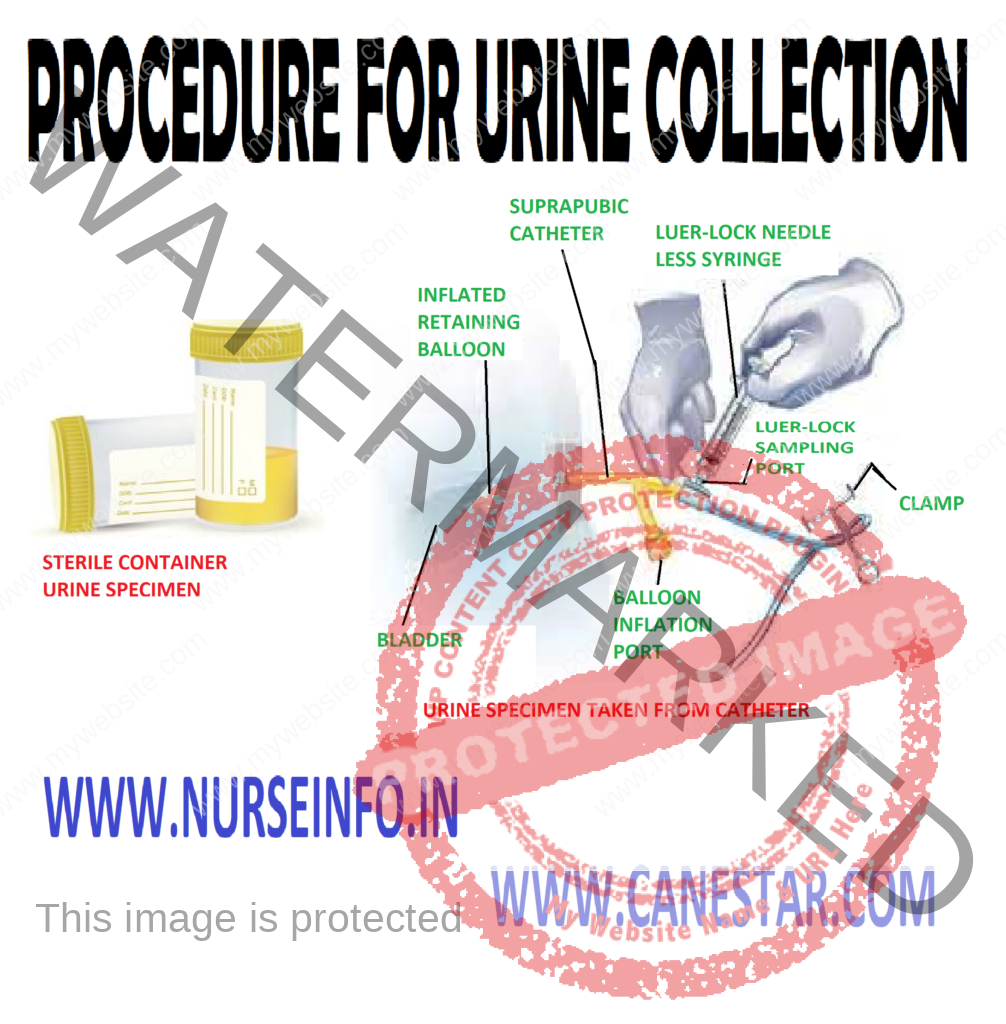
PROCEDURE FOR URINE COLLECTION

Collecting a urine specimen is a common medical procedure used for diagnostic testing and monitoring various health conditions.

PROCEDURE FOR URINE COLLECTION

  • Instruct patient to wash perineum
  • Instruct to avoid directly into clean, dry container or into bedpan and then transfer
  • Instruct not be contaminate outside of container
  • Instruct to collect 3/4th of container
  • Wear gloves while handling urine

Urine Collects from Catheter

  • Clamp tubing for about 15 to 30 minutes before obtaining sample
  • Wash hands thoroughly
  • Disconnect bladder drainage tubing
  • Cover distal end of drainage tube with sterile gauze till procedure is over
  • Clean tip of urinary catheter with antiseptic
  • Release clamp and collect urine in container
  • Remove gauze and discard in K-Basin
  • Reconnect tubing
  • Wear glove while handling urine

After Care

  • Clean the outer part of the container
  • Label the container
  • Send immediately to laboratory with laboratory request
  • Wash hands thoroughly
  • Record the procedure in nurse’s record sheet

24 Hours Urine Collection

Collection of 24 hours urine specimen means the collection of all the time voided in 24 hours, without any spillage of wastage

Purpose

  • To detect kidney and cardiac conditions
  • To measure total urine protein and creatinine
  • To measure total urine electrolytes, ketogenic steroid, oxalate, porphyrins, drugs and vitamins

Normal Characteristics of Urine

  • Volume: 1000-2000 ml excreted in 24 hours
  • Appearance – clear
  • Odor – aromatic color, if kept for some time, ammonia smell
  • Color – straw or amber in color
  • Reaction – acidic
  • Specific gravity – 1.010 to 1.020
  • Constituents of urine – 96 % water, 2% urea, and 2% uric acid. Urates, creatine chlorides, phosphates, sulfates and oxalates also may be present in minute’s quantities

Preliminary Assessment

Check

  • Doctor order for any specific instructions
  • General condition and diagnosis of the patient
  • Self care ability of the patient
  • Mental status to follow directions
  • Articles available in the unit

Preparation of the Patient and Environment

  • Explain the sequence of the procedure
  • Provide privacy
  • Keep the articles at the bedside
  • Obtain laboratory request and container

Equipment

  • Bedpan or urinal
  • Dry container (24 hours collection bottle)
  • Clean pouring (measuring) jar
  • Funnel

Procedure

  • Before beginning 24 hours urine collection, patient is asked to void
  • Discard the sample and note the time
  • Document the starting time of urine collection in the nurses record
  • Advise not to spill urine
  • All urine passed over next 24 hours is collected in large container
  • Exactly 24 hours after, patient is instructed to void and specimen is included

After Care

  • Send the sample immediately to the laboratory with laboratory request
  • Replace the articles after cleaning
  • Record the procedure in the nurse’s record sheet

General Instructions

  • The entire collected urine should be stored in a covered container in a cool place
  • Add preservatives to the urine to prevent decomposition and multiplication of bacteria, e.g. boric acid, formalin, chloroform, etc
  • The urine should be thoroughly mixed and all or part sent to the laboratory in a clean bottle
  • Requisition form must be duly filled and signed
 PROCEDURE FOR URINE COLLECTION -  Purpose,  Normal Characteristics of Urine,  Urine Collects from Catheter ,Preliminary Assessment,  Preparation of the Patient and Environment,  Equipment,  Procedure,  After Care,  Instructions
PROCEDURE FOR URINE COLLECTIONPurpose, Normal Characteristics of Urine, Urine Collects from Catheter , Preliminary Assessment, Preparation of the Patient and Environment, Equipment, Procedure, After Care, Instructions

URINE CULTURE

URINE CULTURE

Collection of midstream specimen of urine without contaminating container and urine specimen. A urine culture is a laboratory test used to detect and identify the presence of bacteria or other microorganisms in a urine sample. It is commonly ordered when a urinary tract infection (UTI) is suspected or to monitor the effectiveness of treatment.

Purpose

  • To collect uncontaminated urine specimen for culture and sensitivity test
  • To detect the microorganism causes urinary tract infection (UTI)
  • To diagnose and treat with specific antibiotic

General Instructions

  • Urine should be collected in sterile containers
  • Urine specimens for culture should be collected in the morning
  • After washing the perineal area and drying collect a midstream specimen of urine in a sterile bottle
  • For bedridden patients cauterized specimen of urine is taken

Preliminary Assessment

Check

  • The doctors order for specific instruction
  • The general condition and diagnoses of the patient
  • Self-care ability of the patient
  • Mental status to follow instructions
  • Articles available in the unit

Preparation of the Patient and Environment

  • Explain the procedure to the patient
  • Provide privacy
  • Arrange the articles at the bedside
  • Collect and arrange the culture bottle – from the laboratory
  • Keep the laboratory request ready

Equipment

  • Basin and soap
  • Towel and sterile gloves
  • Gauze pads 2-3 (if present on strict bed rest)
  • Sterile culture bottle
  • Laboratory request form
  • Sterile K-Basin

Procedure

  • Instruct patient to clean perineum with soap and water
  • Open container and leave cover facing inside up
  • Instruct patient to void into sterile K-Basin. If patient is unable to get out of bed
  • Instruct patient to void directly into sterile container
  • Collect 30-50 ml (1/2 – 3/4  of container) at mid-stream point of voiding
  • Emphasize first and last portions of voiding to the discarded
  • Cap container securely without touching inside of lid

After Care

  • Label container with patients name, hospital number and date
  • Send container to laboratory immediately with lab request
  • Record the procedure in nurse record sheet and register in microbiology laboratory notebook
 URINE CULTURE  -  Purpose,  Instructions,  Preliminary Assessment,  Preparation of the Patient and Environment,  Equipment,  Procedure,  After Care
URINE CULTURE Purpose, Instructions, Preliminary Assessment, Preparation of the Patient and Environment, Equipment, Procedure, After Care

STOOL SPECIMEN COLLECTION – GENERAL GUIDELINES

Collecting a stool specimen is a common diagnostic procedure used to analyze fecal matter for various reasons, such as detecting infections, parasites, or gastrointestinal disorders.

Here’s a general guide on collecting a stool specimen:

  1. Gathering Materials:
    • Use a clean, dry container with a tight-fitting lid. Healthcare providers often provide specific containers for stool collection.
    • Consider using disposable gloves to maintain hygiene during the collection process.
  2. Timing:
    • Collect the stool sample as soon as possible after it is produced to ensure the accuracy of the results.
  3. Avoid Contamination:
    • Make sure the stool does not come into contact with urine or toilet bowl water.
    • Some healthcare providers may recommend using a plastic wrap or disposable plastic container placed in the toilet bowl to catch the stool.
  4. Collection:
    • Using a clean plastic or wooden spatula, tongue depressor, or a similar device, collect a small amount of stool (about the size of a walnut) from different areas of the stool sample.
    • Place the sample into the container, ensuring that it is well-sealed to prevent leakage and contamination.
  5. Labeling:
    • Label the container with your name, date of collection, and any other information required by your healthcare provider.
  6. Transport to the Laboratory:
    • Deliver the stool specimen to the laboratory as soon as possible after collection. Some tests may require the sample to be delivered within a specific timeframe.
  7. Storage:
    • If immediate delivery is not possible, store the specimen in the refrigerator until you can transport it to the laboratory.
  8. Special Instructions:
    • Some tests may require additional instructions, such as collecting multiple samples over consecutive days or following a specific diet before collection. Follow any guidelines provided by your healthcare provider.
  9. Preservation Solutions:
    • In some cases, the healthcare provider may provide a preservative solution to mix with the stool sample. Follow the instructions for using any provided solutions.
  10. Documentation:
    • Document any relevant symptoms or information that may aid in the interpretation of the test results.

STOOL-ROUTINE TEST AND CULTURE

Collection of stool specimen for specific or routine tests (stool culture to detect abnormal characteristics)

Purpose

  • To identify specific pathogens
  • To determine presence of blood, ova and parasites
  • To determine presence of fat
  • To do gross examination of stool characteristics such as color, consistency and color

Normal Characteristics of Feces

  • Color: light to dark brown
  • Odor: pungent smell
  • Frequency: 1-2 times per day
  • Quantity: 4-5 ounces per day
  • Composition: 30% water, shed epithelium from the intestine, a considerable quantity of bacteria and a small quantity of nitrogenous matter
  • Stool of infants: at birth, the stool of infants is dark green and it is called “meconium”

Abnormal Characteristics of Feces

Color

  • Tarry black stools – bleeding in the upper gastro-intestinal tract
  • Black color stool – melena, administration of iron or charcoal
  • Clay colored stool – obstruction to the flow of bile
  • White colored stool – presence of barium salts after barium tests

Odor

Melana and dysentery – foul smell

Frequency

  • Diarrhea – increased frequency
  • Constipation – decreased in frequency and low residue diet

Consistency and Form

  • Watery stools – diarrhea
  • Rice water stools – cholera
  • Pea soup stools – typical of typhoid fever

Appearance

  • Fresh blood in large amounts – bleeding piles
  • Blood and mucus stool – amoebic or bacillary dysentery
  • Worm or segments or worms in stool – parasitic cysts, ova or larvae

General Instructions

  • Fecal specimens are collected for chemical bacteriological or parasitological analysis
  • Fecal specimens should be collected in the early stages of disease preferably before antibiotic treatment is given
  • Stool specimens should be collected in a sterile container (making use of the scoop provided in the container) with a tight-fitting leak proof lid
  • After collection, the lid should be immediately replaced tightly
  • After proper labeling, the collected stool should be handed over to the laboratory without delay

Preliminary Assessment

Check

  • The doctors order for any specific instructions
  • General condition and diagnosis of the patient
  • Assess the self-care ability
  • Mental status to follow instructions
  • Articles available in the unit

Preparation of the Patient and Environment

  • Explain the procedure to the patient
  • Provide privacy
  • Arrange the articles at bedside
  • Obtain laboratory request and container

Equipment

  • Appropriate specimen container
  • Spatula (clean for routine, sterile for culture)
  • Bedpan or portable commode
  • Gloves
  • Waste paper

Procedure

  • Instruct patient to defecate into clean dry bedpan or commode
  • Instruct not to contaminate specimen with urine
  • Nurse to wear gloves while collecting specimen
  • Collect stool specimen with clean spatula for routine stool test and with sterile spatula into culture container
  • Cover the container tightly

After Care

  • Remove the gloves
  • Wrap spatula in waste paper and discard appropriately
  • Label specimen container with name, hospital number, and date
  • Send to laboratory immediately (fresh specimen provides more accurate results)
  • Replace equipment and after cleaning
  • Record the procedure in nurse’s record sheet
 STOOL-ROUTINE TEST AND CULTURE -  Purpose,  Normal And Abnormal Characteristics of Feces,  Instructions,  Preliminary Assessment,  Preparation of the Patient and Environment,  Equipment,  Procedure,  After Care
STOOL-ROUTINE TEST AND CULTURE Purpose, Normal And Abnormal Characteristics of Feces, Instructions, Preliminary Assessment, Preparation of the Patient and Environment, Equipment, Procedure, After Care

SPUTUM SPECIMEN GUIDELINES AND CULTURE

Collecting a sputum specimen involves obtaining a sample of mucus and other respiratory secretions from the lower respiratory tract. This type of specimen is often used to diagnose respiratory infections, identify the presence of bacteria or fungi, and assess the effectiveness of treatment.

Here’s a general guide on collecting a sputum specimen:

  1. Timing:
    • Collect the sputum sample in the morning, if possible, as the respiratory secretions are usually more concentrated at this time.
  2. Patient Preparation:
    • Rinse your mouth with water to reduce contamination of the specimen with oral bacteria.
    • Take deep breaths to help bring up sputum from the lower respiratory tract.
  3. Collection Technique:
    • Cough deeply to produce sputum from the lungs.
    • Spit the sputum directly into a sterile, screw-capped container provided by the healthcare facility.
    • If the sputum is difficult to produce, inhaling steam or using a nebulizer with a saline solution may help.
  4. Avoid Contamination:
    • Minimize saliva contamination by making sure the sputum comes from the lungs, not the oral cavity.
  5. Quantity:
    • Collect an adequate amount of sputum (usually about 5-10 mL) to ensure accurate testing.
  6. Labeling:
    • Label the container with your name, date of collection, and any other information required by your healthcare provider.
  7. Transport to the Laboratory:
    • Deliver the sputum specimen to the laboratory as soon as possible after collection.
    • If immediate delivery is not possible, store the specimen in the refrigerator to prevent bacterial overgrowth.
  8. Documentation:
    • Document any relevant symptoms, such as coughing, shortness of breath, or fever, that may assist in the interpretation of test results.
  9. Special Instructions:
    • Some tests may require additional instructions, such as collecting multiple samples over consecutive days or following specific treatment protocols. Follow any guidelines provided by your healthcare provider.
  10. Preservation Solutions:
    • Your healthcare provider may provide a preservative solution to mix with the sputum sample. Follow the instructions for using any provided solutions.

SPUTUM CULTURE

Collection of coughed out sputum for culture studies to identify respiratory pathogens

Purpose

  • To detect abnormalities
  • To diagnose disease condition
  • To detect the microorganisms causes respiratory tract infections
  • To treat with specific antibiotics

Characteristics of Sputum

  • Quantity: normally, no sputum is expectorated the amount of sputum coughed up in 24 hours varies with the diseases
  • Consistency: the sputum may be classified into various types according to its consistency and appearances, e.g. serous, frothy, mucoid, purulent, seropurulent and hemorrhagic
  • Odor: normally the sputum is odorless in case of lung abscess; carcinoma and bronchiectasis the sputum will bed foul smelling
  • Color: sputum consists of mucus it may be:

Colorless and translucent

Yellowish color – presence of pus

Blackish sputum – excessive smoking

Blood – hemoptysis

Red and frothy sputum – freshly bleeding from lungs

Rusty color – altered hemoglobin as seen in pneumonia

Greenish color – bronchiectasis

Brown color – gangrenous condition of the lungs

  • If sputum examined microscopically, a few WBC and epithelial cells may be seen. Eosinophils are found in such conditions as asthma. RBC is found only when there is hemoptysis. The main organism that is looked for in stained sputum is tubercle bacilli (AFB)

General Instructions

  • Give water proof disposal sputum mug on the previous evening and instruct to raise the material from the lungs by coughing and not the saliva
  • Collect the sputum in the morning
  • Ask the patient to rinse the mouth with plain water. Do not use any antiseptic mouth washes
  • If sterile specimens are required sterile bottle with cover is given to the patient

Preliminary Assessment

Check

  • The doctors order for specific instructions
  • General condition and diagnosis of the patient
  • Self-care ability
  • Mental status to follow instructions
  • Articles available in the unit

Preparation of the Patient and Environment

  • Explain the procedure to the patient
  • Arrange the articles at the bedside
  • Provide privacy if needed

Equipment

  • Sterile sputum container
  • Sputum mug or cup
  • Tissue paper
  • K-basin

Procedure

  • Instruct to collect specimen early morning before brushing teeth, to obtain overnight accumulated secretions
  • Instruct to remove and place lid facing upward
  • Instruct not to contaminate inside of lid and container, as well as outside of container
  • Instruct to cough deeply and expectorate directly into specimen container
  • Collect at least 10 ml of sputum
  • Close the container immediately sputum is collected

After Care

  • Label the container with patients name date and hospital number
  • Send specimen to laboratory immediately along with request
  • Replace the equipment after cleaning
  • Wash hands thoroughly
  • Record the procedure in nurse’s sheets
 SPUTUM CULTURE  -  Purpose,  Characteristics of Sputum,  General Instructions,  Preliminary Assessment,  Preparation of the Patient and Environment,  Equipment,  Procedure,  After Care
SPUTUM CULTURE Purpose, Characteristics of Sputum, General Instructions, Preliminary Assessment, Preparation of the Patient and Environment, Equipment, Procedure, After Care

BLOOD SMEAR PREPARATION AND PROCEDURE

A blood smear, also known as a peripheral blood smear or peripheral blood film, is a diagnostic test used to examine the different types of blood cells under a microscope. It provides detailed information about the size, shape, and relative abundance of red blood cells, white blood cells, and platelets.

BLOOD SMEAR

It is a process of taking two to three drops of blood by pricking the fingertip by using a lancet. Thereby smearing the expressed drop of blood on the slide

Purpose

  • To diagnose blood-borne disease such as filarial and malaria
  • To detect carcinogenic cells
  • To detect abnormal blood cell counts

General Instructions

  • The lancet (needle) used for communicable disease, e.g. HIV. Patients discard after use
  • The slides should be clean and fresh
  • The procedure should do in an aseptic manner
  • The person doing blood smear should wear clean gloves

Preliminary Assessment

Check

  • Doctors order for specific instructions
  • General condition and diagnosis
  • Mental status to follow instructions
  • Articles available in the unit

Preparation of the Patient and Environment

  • Explain the procedure to the patient
  • Provide privacy if needed
  • Arrange articles at bedside
  • Obtain request from the doctor
  • Obtain slide from the laboratory or arrange technician from the laboratory
  • Make the patient to sit or lie in the bed comfortable

Equipment

A clean tray containing:

  • Clean slides – 2
  • Sterile needle in a container (lancet)
  • Methylated spirit in a bottle
  • Paper bag
  • Cotton swab

Procedure

  • Wear clean gloves
  • Clean the patient’s fingertip with spirit opposite side away from you
  • Press the fingertip and give a prick with the sterile needle
  • Allow a drop of blood to fall on each slide
  • Make the smear by taking one slide on your left hand and another with the right hand
  • Make the smear with the edge of the slide by spreading the blood. Make 2 or 3 slides
  • Provide spirit swab to apply gentle pressure
  • Wrap the dry slide in the patient’s record form and dispatch it to the laboratory as soon as possible
  • The second slide used for spreading the blood films may now be used for the next patient and another clean slide from the pack will be used as a spreader

After Care

  • Dry and send the slide to the laboratory for examination
  • Replace the articles after cleaning
  • Remove the gloves
  • Wash hands thoroughly
  • Record the procedure in the nurse’s record sheet

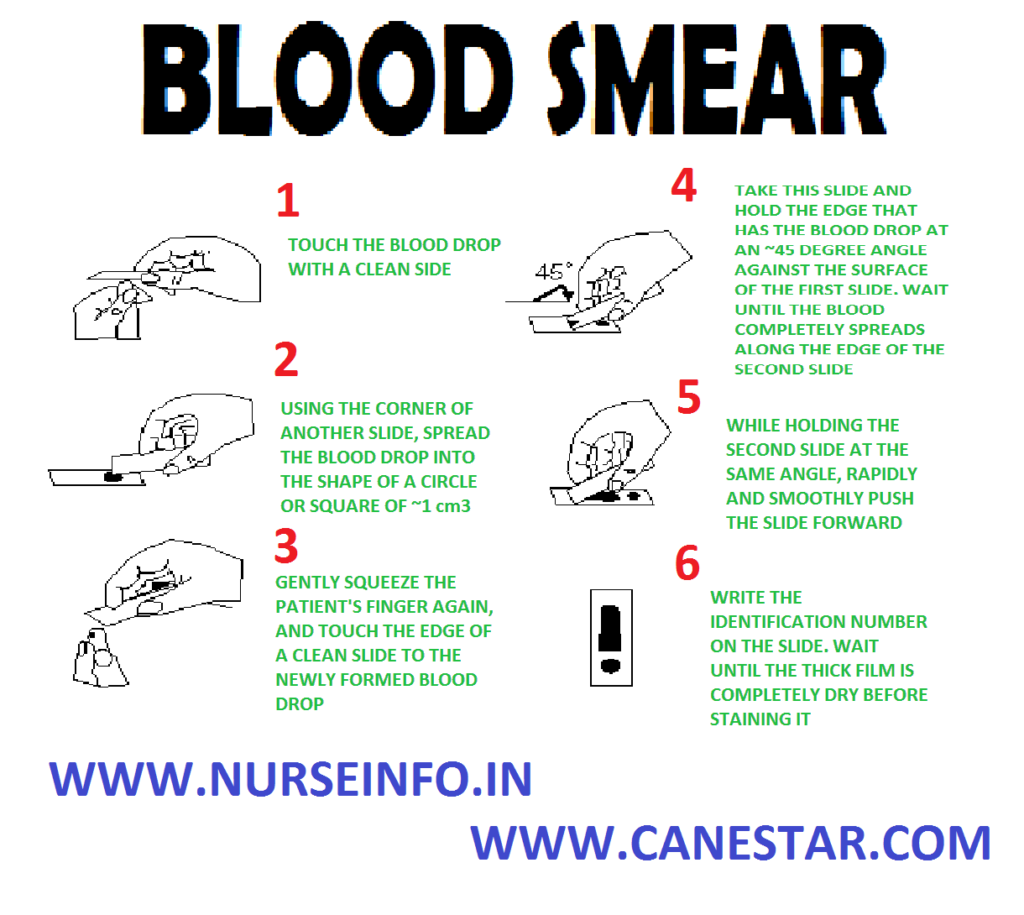
Blood Smear Collection Procedure

  1. Holding the patient’s left hand, palm upwards, select the third finger from the thumb. (the big toe can be used with infants. The thumb should never be used for adults or children)
  2. Puncture the ball of the finger with a sterile lancet, using a quick rolling action. Apply gentle pressure to the finger to express the first drop of blood and wipe it away with a dry piece of cotton wool. Make sure that no strands of cotton remain on the finger to be later mixed with the blood
  3. Working quickly and handling clean slides only by the edges, collect the blood as follows
  4. Apply gentle pressure to the finger and collect a single small drop of blood, about this size, on the middle of the slide. This is for the thin film
  5. Apply further pressure to express more blood and collect two or three larger drops, about this size, on the slide, about 1 cm from the drop intended for the thin film (see illustration). Wipe the remaining blood away from the finger with a piece of cotton wool
  6. Thin film. Using a second clean slide as a “spreader” and, with the slide with the blood drops resting on a flat, firm surface, touch the small drop with the spreader and allow the blood to run along its edge. Firmly push the spreader along the slide, keeping the spreader at an angle of 45 degree. Make sure that the spreader; is in even contact with the surface of the slide all the time the blood is being spread
  7. Thick film. Always handle slides by the edges or by a corner to make the thick film as follows. Using the corner of the spreader, quickly join the drops of blood and spread them to make an even, thick film. The blood stirred but can be spread in circular or rectangular form with 3 to 6 movements. The circular thick film should be about 1 cm (inch) in diameter
  8. Label the dry thin film with a soft lead pencil by writing across the thicker portion of the film the patient’s name or number and the date. Do not use a ballpoint pen for labeling the slide. Allow the thick film to dry with the slide in a flat, level position, protected from flies, dust and extreme heat
BLOOD SMEAR  -  Purpose,  Instructions,  Preliminary Assessment,  Preparation of the Patient and Environment,  Equipment,  Procedure,  After Care,  Blood Smear Collection Procedure
BLOOD SMEAR Purpose, Instructions, Preliminary Assessment, Preparation of the Patient and Environment, Equipment, Procedure, After Care, Blood Smear Collection Procedure

BLOOD CULTURE PROCEDURE

DEFINITION

A blood culture is a diagnostic test performed to detect the presence of bacteria, fungi, or other microorganisms in the bloodstream. It is a crucial tool in diagnosing bloodstream infections (bacteremia or fungemia), sepsis, and other systemic infections.

BLOOD CULTURE

Collection of blood for blood culture is a sterile procedure. Surgical (scrub) preparation and techniques are used in collection, storage, transport of blood sample

Purpose

  • To detect the microorganisms
  • To treat the disease condition with correct antibiotics
  • To detect the right antibiotic to kill the particular microorganism
  • When the patient has chills or a temperature hike

General Instructions

  • Special type of culture bottles are used for blood culture sample collection
  • All blood culture bottles should be carefully examined for clarity of media, any medium showing turbidity should not be used
  • Only disposable syringes and needles should be used for collection of blood
  • The top of the bottle must be carefully disinfected (with 70% alcohol) just before the bottle is inoculated
  • Blood should never be taken from an IV line or above the IV line
  • If blood culture bottles are available, blood should be immediately added to the culture medium (broth)
  • If blood culture bottles are not available blood may be transported in a sterile tube containing a sterile anticoagulant solution
  • The amount of blood collected is 10 ml for adult, 2-5 ml for children and 1-2 ml for infants and neonates
  • Blood for culture should be taken before antibiotics are administered

Preliminary Assessment

Check

  • The doctors order for specific instructions
  • General condition and diagnosis of the patient
  • Mental status to follow instruction
  • Self-care ability of the patient
  • Articles available in the unit such as culture bottles, etc

Preparation of the Patient and Environment

  • Explain the procedure to the patient
  • Arrange the articles at the bedside
  • Obtain laboratory request and culture bottles
  • Arrange extra help (if needed any)
  • Label and number the container in order wise

Equipment

  • Mackintosh and towel
  • Surgical gloves
  • Surgical dressing packs to clean the skin over the vein
  • Surgical spirit and betadine solution
  • Disposable syringe 10 ml with needles
  • Culture bottles – 3
  • Cotton swabs
  • Paper bag and K-basin
  • Tourniquet

Blood Sample Collection for Culture

  1. The area of blood culture sample is cleaned with anti-microbial agent
  2. Tourniquet applied for bleed sample collection and needle inserted
  3. Blood culture sample collected in aseptic technique
  4. Blood culture sample placed in the culture bottle

Procedure

  • Choose the vein to be drawn by touching the skin before it has been disinfected
  • Cleanse the skin over the venipuncture site in a circle approximately 5 cm in diameter with 70 % alcohol, rubbing vigorously
  • Starting in the center of the circle, apply 2% iodine (or povidone iodine)
  • Allow the iodine to remain on the skin for at least 1 minute
  • Insert the needle into the vein and withdraw blood
  • After the needle has been removed, the site should be cleaned with 70% alcohol again
  • Apply gentle pressure with cotton ball over the punctured site
  • Transfer the blood in the syringe in to the culture bottles

After Care

  • Clean the culture bottle led with spirit swab
  • Insert the needle and pour blood into culture bottle
  • Mix the solution and blood gently by moving sideways
  • Label the culture bottles and send immediately to the laboratories
  • Replace the articles after cleaning
  • Remove the gloves and wash hands thoroughly
  • Record the procedure in the nurse’s record sheet
 BLOOD CULTURE  -  Purpose,  Instructions,  Preliminary Assessment,  Preparation of the Patient and Environment,  Equipment,  Blood Sample Collection for Culture,  Procedure,  After Care
BLOOD CULTURE Purpose, Instructions, Preliminary Assessment, Preparation of the Patient and Environment, Equipment, Blood Sample Collection for Culture, Procedure, After Care

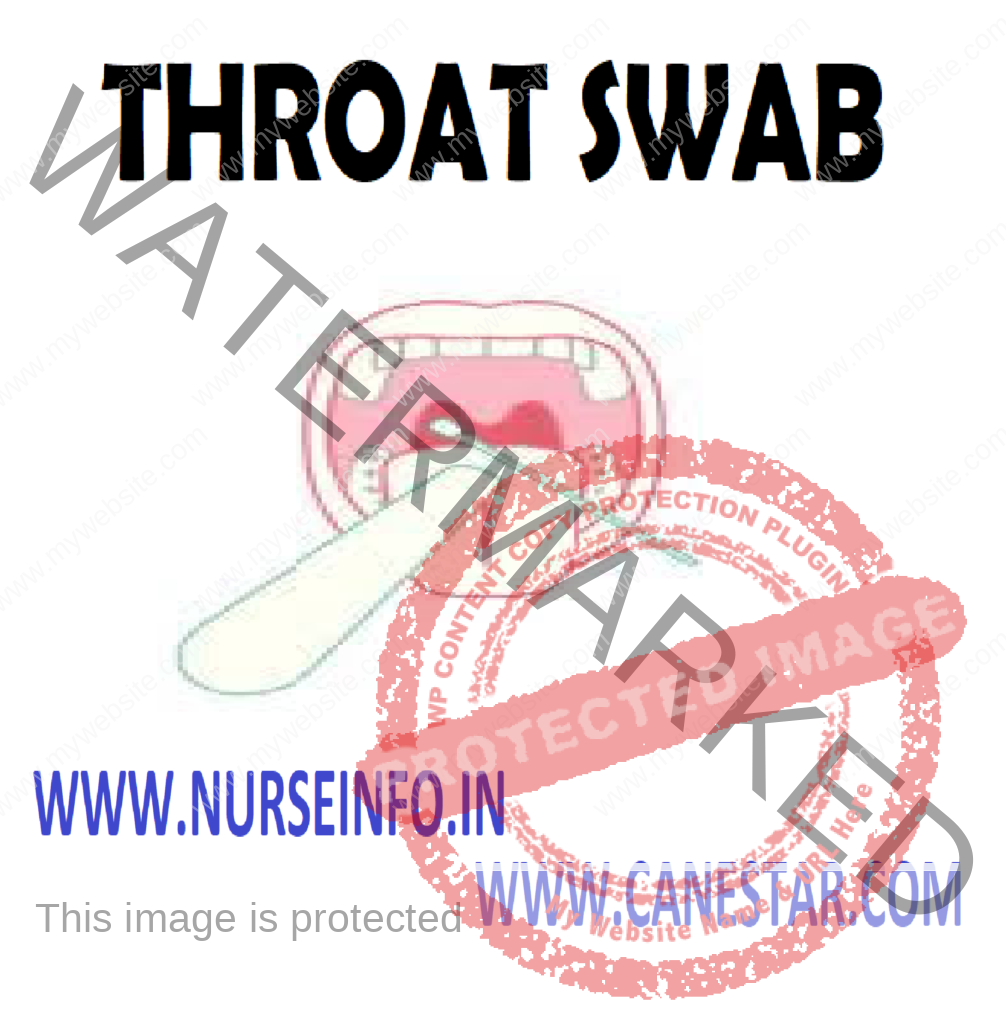
THROAT SWAB PROCEDURE

A throat swab, also known as a pharyngeal swab, is a common diagnostic test used to collect samples from the back of the throat for microbiological analysis. This procedure is often performed to identify the presence of bacteria or viruses causing throat infections, such as streptococcal bacteria (Streptococcus pyogenes) or respiratory viruses.

THROAT SWAB

The specimen is collected from the patients with upper respiratory tract infection. The upper respiratory tract can be the site of several types of infection

Purpose

  • To detect the causative microorganism
  • To diagnose the disease condition
  • To detect the correct antibiotics for effective treatment

Indications

  • Pharyngitis sometimes involving tonsillitis and giving rise to a “sore throat”
  • Nasopharyngitis
  • Otitis media
  • Sinusitis
  • Epiglottis

General Instructions

  • Pharyngitis is by far the most frequent one most cases of pharyngitis have a viral etiology and follow a self-limiting course
  • Approximately 20%  are caused by bacteria and usually require treatment with appropriate antibiotics
  • Specimen should be collect by a physician or other trained personnel
  • Swab can be collected after asking the patient to gargle with sterile saline

Preliminary Assessment

Check

  • The doctors order for any specific instructions
  • General condition and diagnosis
  • Mental status to follow instructions
  • Self-care ability of the patient
  • Articles available in the unit

Preparation of the Patient and Environment

  • Explain the procedure to the patient
  • Arrange the articles at the bedside
  • Provide privacy if needed
  • Obtain laboratory request and specimen container
  • Place the patient comfortably in sitting or semi-sitting position

Equipment

  • Sterile or clean gloves
  • Specimen container
  • Gauze pieces
  • Paper bag and K-basin
  • Torch light (if needed)
  • Tongue depressor

Procedure

  • The patient should sit in from of a light source
  • Tongue should be kept down with a tongue depressor and a cotton wool swab is rubber vigorously over each tonsil, over the back wall of the pharynx and over any other inflamed area
  • Care should be taken not to touch the tongue or buccal surfaces
  • It is preferable to take 2 swabs from the same area
  • One can be used to prepare a smear, while the other is placed into glass or plastic sterile container

After Care

  • Label and send the container immediately to the laboratory
  • Discard the disposable items used
  • Replace the articles after cleaning
  • Wash hands thoroughly
  • Record the procedure in the nurse’s record sheet
THROAT SWAB -  Purpose,  Indications,  Instructions,  Preliminary Assessment,  Preparation of the Patient and Environment,  Equipment,  Procedure,  After Care
THROAT SWAB – Purpose, Indications, Instructions, Preliminary Assessment, Preparation of the Patient and Environment, Equipment, Procedure, After Care

VAGINAL SWAB/SMEAR

A vaginal swab is a medical procedure in which a healthcare provider collects a sample of cells and/or discharge from the vagina for diagnostic purposes.

This sample can be used for various tests, including:

  1. Pap Smear: This is a common test used to screen for cervical cancer or detect any abnormalities in the cervical cells.
  2. Culture and Sensitivity: A swab may be taken to identify and determine the sensitivity of microorganisms, such as bacteria or fungi, in case of a suspected infection.
  3. STD Testing: Vaginal swabs can be used to test for sexually transmitted infections (STIs) like chlamydia, gonorrhea, and others.
  4. Vaginitis Evaluation: To diagnose and identify the cause of vaginal infections, such as bacterial vaginosis, yeast infections, or trichomoniasis.

VAGINAL SWAB/SMEAR

Vaginal specimen (swab) collected for cervical cytology to detect the abnormities

Purpose

  • To detect the abnormalities
  • To do routine examination
  • To diagnose and treat the infection
  • To identify carcinogenic cells
  • To do cytohormonal study, to know the progesterone status

Indications

Cervical: suspected cervix to exclude premalignant or malignant lesion

Vaginal: vaginitis – to know the specific pathogen and cytohormonal status

General Instructions

  • Smear means to make a fine film of vaginal discharge on a slide and send it for examination of the vaginal discharge
  • Minimum two slides with smear should be sent to the laboratory
  • When trichomonas vaginitis is to be tested the vaginal discharge is collected in a test tube or a hanging drop made on a slides

Preliminary Assessment

Check

  • The doctors order for any specific instruction
  • General condition and diagnosis of the patient
  • Self-care ability of the patient
  • Mental status to follow instructions
  • Articles available in the unit

Vaginal Swap Collection Procedure

Step 1: collect specimen prior to digital examination or manipulation of the cervix to avoid sample contamination

Step 2: during speculum exam, lightly rotate swab across posterior fornix of the vagina for 10 seconds to absorb cervicovaginal secretions

Step 3: remove swab and immerse tip in buffer. Break the shaft at the score even with the top of the tube

Step 4: insert the swab shaft into the hole inside the tube cap and push down tightly over the shaft, sealing the tube with a click. Ensure the shaft is inserted securely to avoid leakage. Label, and send fetal fibronectin sample to a laboratory near you

Preparation of the Patient and Environment

  • Explain the procedure to the patient
  • Arrange the equipment at the bedside
  • Provide privacy
  • Obtain laboratory request and specimen container and slides
  • Position the patient comfortably
  • Instruct the patient to empty bladder

Equipment

  • Draw Mackintosh and sheet
  • Sterile swab container or slides
  • Sterile gloves or clean gloves
  • Paper bag and K-basin
  • Torch light or spotlight
  • Sterile speculum and water soluble jelly

Procedure

  • Give dorsal positions
  • Wear clean gloves
  • Take the vaginal discharge with sterile swab stick
  • Smear it on one side of the slide and make thin film over the sides
  • Dry in the slides, then wrap in paper and send to the laboratory

After Care

  • Place the position comfortably
  • Label and send the specimen to the laboratory
  • Replace the articles after cleaning
  • Wash the hands thoroughly
  • Record the procedure in the nurse’s record sheet
VAGINAL SWAB/SMEAR - Purpose, Indications, Instructions,  Preliminary Assessment,  Preparation of the Patient and Environment,  Equipment,  Procedure,  After Care
VAGINAL SWAB/SMEAR – Purpose, Indications, Instructions, Preliminary Assessment, Preparation of the Patient and Environment, Equipment, Procedure, After Care
Nurse Info