
Insertion of a Flatus Tube: Procedure, Indications, Contraindications and Nursing Responsibilities
Definition
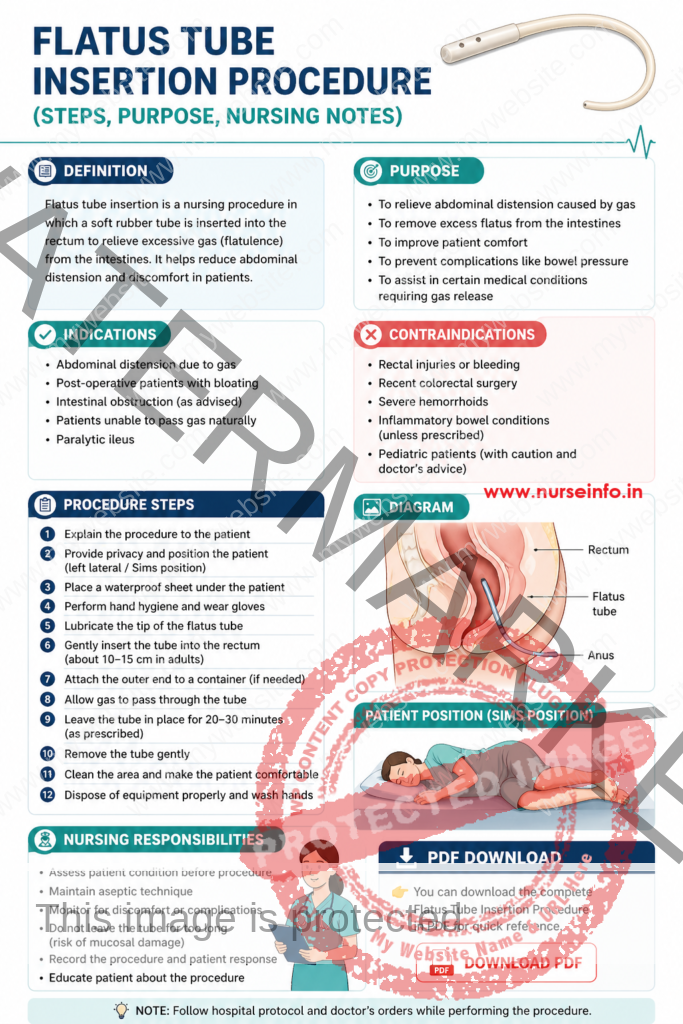
Flatus tube insertion is a nursing procedure in which a soft rubber tube is inserted into the rectum to relieve excessive gas (flatulence) from the intestines. It helps reduce abdominal distension and discomfort in patients.
Purpose
- To relieve abdominal distension caused by gas
- To remove excess flatus from the intestines
- To improve patient comfort
- To prevent complications like bowel pressure
- To assist in certain medical conditions requiring gas release
Indications
- Abdominal distension due to gas
- Post-operative patients with bloating
- Intestinal obstruction (as advised)
- Patients unable to pass gas naturally
- Paralytic ileus
Contraindications
- Rectal injuries or bleeding
- Recent colorectal surgery
- Severe hemorrhoids
- Inflammatory bowel conditions (unless prescribed)
- Pediatric patients (with caution and doctor’s advice)
Procedure Steps
- Explain the procedure to the patient
- Provide privacy and position the patient (left lateral / Sims position)
- Place a waterproof sheet under the patient
- Perform hand hygiene and wear gloves
- Lubricate the tip of the flatus tube
- Gently insert the tube into the rectum (about 10–15 cm in adults)
- Attach the outer end to a container (if needed)
- Allow gas to pass through the tube
- Leave the tube in place for 20–30 minutes (as prescribed)
- Remove the tube gently
- Clean the area and make the patient comfortable
- Dispose of equipment properly and wash hands
Nursing Responsibilities
- Assess patient condition before procedure
- Maintain aseptic technique
- Monitor for discomfort or complications
- Do not leave the tube for too long (risk of mucosal damage)
- Record the procedure and patient response
- Educate patient about the procedure
NURSING PROCEDURES LIST CLICK HERE
PDF Download

NURSING IMPORTANT QUESTIONS – CLICK HERE
Complications of Flatus Tube Insertion
- Rectal irritation or injury
- Mucosal damage if left too long
- Infection due to poor aseptic technique
- Discomfort or pain during insertion
- Bleeding in sensitive patients
Precautions During Procedure
- Always use proper lubrication
- Do not force insertion
- Maintain strict aseptic technique
- Limit insertion time (max 20–30 minutes)
- Monitor patient continuously
- Avoid repeated frequent insertion
Key Points to Remember
- Use left lateral (Sims) position
- Insert gently (10–15 cm in adults)
- Do not keep tube for long duration
- Ensure patient privacy and comfort
- Always document procedure
Documentation
After the procedure, the nurse should record:
- Date and time of procedure
- Indication for insertion
- Patient’s response
- Duration tube was kept
- Any complications observed
Conclusion
Flatus tube insertion is a simple yet effective nursing procedure used to relieve abdominal distension and improve patient comfort. Proper technique, patient care, and timely removal of the tube are essential to prevent complications and ensure safe outcomes.
Frequently Asked Questions (FAQ)
1. What is the purpose of flatus tube insertion?
The purpose of flatus tube insertion is to relieve abdominal distension caused by the accumulation of gas in the intestines. It helps remove excess flatus, reduce discomfort, and improve patient comfort. This procedure is commonly used in post-operative patients or those with intestinal conditions that prevent the natural passage of gas.
2. How long can a flatus tube be left in place?
A flatus tube is usually left in place for 20 to 30 minutes as prescribed. It should not be kept for a prolonged period because it may cause irritation or damage to the rectal mucosa. The nurse should monitor the patient and remove the tube as per medical guidelines.
3. What position is used for flatus tube insertion?
The left lateral (Sims’) position is commonly used for flatus tube insertion. In this position, the patient lies on the left side with the right knee flexed. This helps in easy insertion of the tube and facilitates the passage of gas.