

Back Care, Back Massage and Back Rub in Nursing
UPDATED 2026
Introduction
Back care is an important nursing procedure performed to maintain skin integrity, improve circulation, promote relaxation, and prevent pressure sores in bedridden patients. It includes cleaning the back, assessing the skin condition, and providing a gentle massage or back rub. Regular back care contributes to patient comfort and helps prevent complications associated with prolonged bed rest.
Definition of Back Care
Back care is a nursing procedure that involves cleaning, inspecting, and massaging the patient’s back to maintain hygiene, stimulate circulation, prevent skin breakdown, and promote comfort.
Definition of Back Massage
Back massage is the systematic manipulation of the muscles and soft tissues of the back using gentle strokes and movements to promote relaxation, relieve muscle tension, and improve blood circulation.
Definition of Back Rub
A back rub is a gentle massage of the back using lotion or oil to provide comfort, stimulate circulation, and help the patient relax.
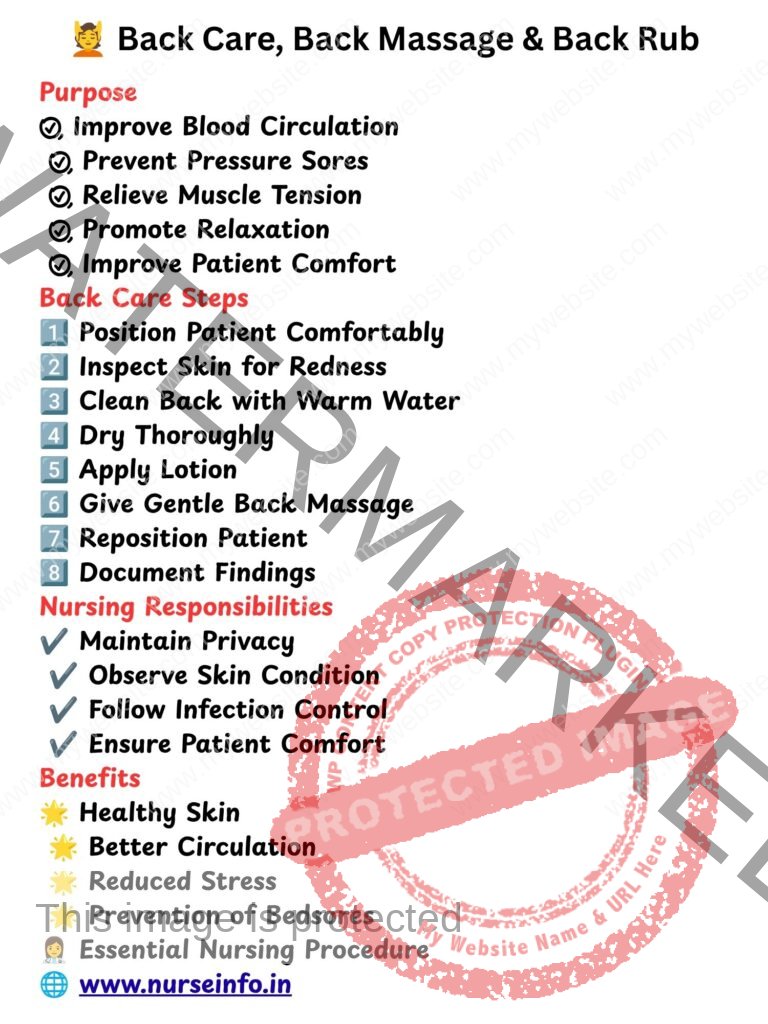
Purposes of Back Care
The purposes of back care include:
- Promoting blood circulation.
- Preventing pressure ulcers and bedsores.
- Relieving muscle tension and fatigue.
- Providing comfort and relaxation.
- Encouraging restful sleep.
- Maintaining skin cleanliness and integrity.
- Observing the condition of the skin.
- Enhancing patient well-being.
Importance of Back Care in Nursing
Back care is an essential component of nursing care, particularly for patients who are confined to bed. Regular back care helps identify early signs of pressure injury, improves circulation, prevents skin complications, and promotes patient comfort. It also provides an opportunity for nurses to assess the patient’s physical and emotional condition.
Indications for Back Care
Back care is commonly performed for:
- Bedridden patients.
- Elderly patients.
- Postoperative patients.
- Critically ill patients.
- Patients with limited mobility.
- Long-term hospitalized patients.
- Patients at risk of pressure ulcers.
Contraindications for Back Massage
Back massage should be avoided in patients with:
- Open wounds on the back.
- Skin infections.
- Burns.
- Recent spinal surgery.
- Spinal injuries.
- Fractured ribs.
- Severe skin irritation.
- Areas of redness or pressure injury.
Articles Required
- Basin with warm water.
- Soap or cleansing solution.
- Washcloth.
- Towel.
- Gloves.
- Lotion or massage cream.
- Mackintosh and draw sheet.
- Privacy screen.
- Waste container.
Preparation of the Patient
- Explain the procedure to the patient.
- Obtain consent if necessary.
- Ensure privacy.
- Perform hand hygiene.
- Assemble all required articles.
- Position the patient comfortably.
- Expose only the back area while maintaining dignity.
Procedure of Back Care
Step 1: Position the Patient
Place the patient in a side-lying or prone position according to comfort and medical condition.
Step 2: Inspect the Skin
Observe the back carefully for redness, pressure areas, rashes, wounds, bruises, or signs of skin breakdown.
Step 3: Clean the Back
Wash the back gently with warm water and mild soap. Use smooth strokes to remove dirt, sweat, and dead skin cells.
Step 4: Rinse Thoroughly
Remove all soap residue to prevent skin irritation.
Step 5: Dry the Back
Pat the skin dry gently with a clean towel, paying special attention to skin folds and pressure areas.
Step 6: Apply Lotion
Warm a small amount of lotion between your hands and apply it evenly over the back.
Step 7: Perform Back Massage
Use gentle massage techniques with smooth and rhythmic movements. Avoid applying excessive pressure.
Step 8: Observe Patient Response
Monitor the patient for comfort, pain, or any signs of discomfort during the procedure.
Step 9: Reposition the Patient
Place the patient in a comfortable position and ensure safety measures are maintained.
Step 10: Document Findings
Record observations regarding skin condition and patient response.
Massage Techniques Used During Back Care
Effleurage
Effleurage involves long, smooth, gliding strokes performed with the palms of the hands. It helps relax muscles and improve circulation.
Petrissage
Petrissage is a kneading movement that gently lifts and squeezes muscle tissues to stimulate deeper circulation.
Friction
Friction consists of small circular movements that help improve blood flow to specific areas.
Circular Motion
Circular movements are used over the shoulders and larger muscle groups to promote relaxation.
Nursing Responsibilities
The nurse should:
- Assess the patient’s condition before the procedure.
- Maintain privacy and dignity.
- Follow infection control measures.
- Use proper body mechanics.
- Observe skin condition carefully.
- Identify early signs of pressure ulcers.
- Ensure patient comfort throughout the procedure.
- Report abnormalities promptly.
- Document nursing observations accurately.
Advantages of Back Care
- Improves blood circulation.
- Prevents pressure sores.
- Promotes relaxation.
- Reduces muscle tension.
- Enhances patient comfort.
- Encourages restful sleep.
- Maintains healthy skin.
- Improves overall well-being.
Complications of Poor Back Care
If proper back care is not provided, patients may develop:
- Pressure ulcers.
- Skin breakdown.
- Local infections.
- Reduced circulation.
- Increased discomfort.
- Delayed recovery.
- Muscle stiffness.
Prevention of Pressure Ulcers
Back care is an important measure in preventing pressure ulcers. Additional preventive measures include:
- Repositioning patients every two hours.
- Using pressure-relieving mattresses.
- Maintaining skin hygiene.
- Ensuring adequate nutrition and hydration.
- Monitoring high-risk patients regularly.
Patient Education
Patients and caregivers should be educated about:
- The importance of regular skin care.
- Frequent position changes.
- Adequate hydration.
- Proper nutrition.
- Early reporting of redness or skin changes.
- Maintaining personal hygiene.
Conclusion
Back care, back massage, and back rub are fundamental nursing procedures that promote comfort, maintain skin integrity, improve circulation, and prevent pressure ulcers. Proper technique and regular assessment help ensure patient safety and contribute significantly to quality nursing care. Regular back care is especially important for bedridden and immobile patients to maintain health and prevent complications.
Frequently Asked Questions (FAQs)
What is back care in nursing?
Back care is a nursing procedure involving cleaning, inspection, and massage of the patient’s back to maintain hygiene, comfort, and skin integrity.
Why is back care important?
Back care helps prevent pressure ulcers, improves circulation, promotes relaxation, and enhances patient comfort.
What is a back rub?
A back rub is a gentle massage performed using lotion or oil to stimulate circulation and provide comfort.
Which patients require back care?
Bedridden patients, elderly patients, postoperative patients, and those with limited mobility commonly require back care.
What are the benefits of back massage?
Back massage improves circulation, reduces muscle tension, promotes relaxation, and helps prevent skin complications.
Keywords: back care in nursing, back massage procedure, back rub nursing notes, back care nursing procedure, nursing practical procedure, pressure ulcer prevention, bedridden patient care, fundamentals of nursing, nursing notes, patient comfort measures.