Home Blog Page 52

BOWEL ELIMINATION

BOWEL ELIMINATION – Factors Affecting and Common Problems in Bowel Elimination (Bristol Stool Chart and Color of Stool and its causes)

Defecation is the expulsion of feces from the anus and the rectum. It is also called a bowel movement. The peristaltic waves move the feces into the sigmoid colon and the rectum, the sensory nerves in the rectum are stimulated and the individual becomes aware of the need to defecate.

There are two centers governing the reflex to defecate. One is situated in the medulla and subsidiary one is in the spinal cord. When parasympathetic stimulation occurs, the internal anal sphincter relaxes and the colon contracts. The defection reflex is stimulated chiefly by the fecal mass in the rectum. When the rectum is distended the intrarectal pressure rises, the defecation reflex is stimulated by the muscle stretch, and the desire to eliminate results.

FACTORS AFFECTING BOWEL ELIMINATION

Age and Development: there is a marked difference between the stools of an infant and an older person. The very young are unable to control elimination until the neuromuscular system is developed, usually between the ages of 2 to 3 years.

Daily Patterns: most people have regular patterns of bowel elimination which include frequency, timing considerations, position and place changes in any of these may upset a person routine and actually lead to constipation

Lifestyles: many individual’s family and sociocultural variables influences a person’s usual elimination habits. The long-term effect of bowel training, the availability of toilet facilities, embarrassment about odors and need to privacy, also affect the fecal elimination patterns.

Fluids: both the type and amount of fluid digested affect elimination. Healthy fecal elimination is facilitated by a daily intake of 2000 to 3000 ml.

Activity and muscle tone: regular exercise improves gastrointestinal motility and muscle tone while inactivity decreases both. Adequate tone in the abdominal muscles, the diaphragm and the perineal muscles is essential to case in defecation.

Psychological factors: emotional stress affects the body in many ways. Persons with anxiety causes increased intestinal motility and persons with depression causes slower intestinal motility resulting in constipation

Pathological conditions: spinal cord and head injuries decrease sensory stimulation for defecation. Impaired mobility limits the patient’s ability to respond to the urge to defecate. Ribbon like stools in appearance due to tumor in the colon

Medications: narcotic analgesics cause constipation by decreased gastrointestinal mobility. Many medications have diarrhea as undesirable side effect

Diagnostic procedure: barium salts used in radiologic examinations. It hardens if allowed to remain in the colon, producing constipation and sometimes an impaction

Surgery and anesthesia: direct manipulation of the bowel during abdominal surgery inhibits peristalsis causing a condition termed as paralytic ileus. General anesthetic agents that are inhaled also inhibit peristalsis by blocking the parasympathetic impulses to the intestinal muscle

Irritants: spicy foods, bacterial toxins and poisons can irritate the intestinal tract and produce diarrhea and often large amounts of flatus

Pain: patients who are experience discomfort when defecating. E.g. following hemorrhoid surgery will often suppress the urge to defecate to avoid the pain

COMMON PROBLEMS IN BOWEL ELIMINATION

Constipation: it refers to the passage of small, dry hard stool or the passage of no stool for a period of time. The causes are irregular defecation habits, inappropriate diet, insufficient fluid, insufficient exercises and increased psychological stress

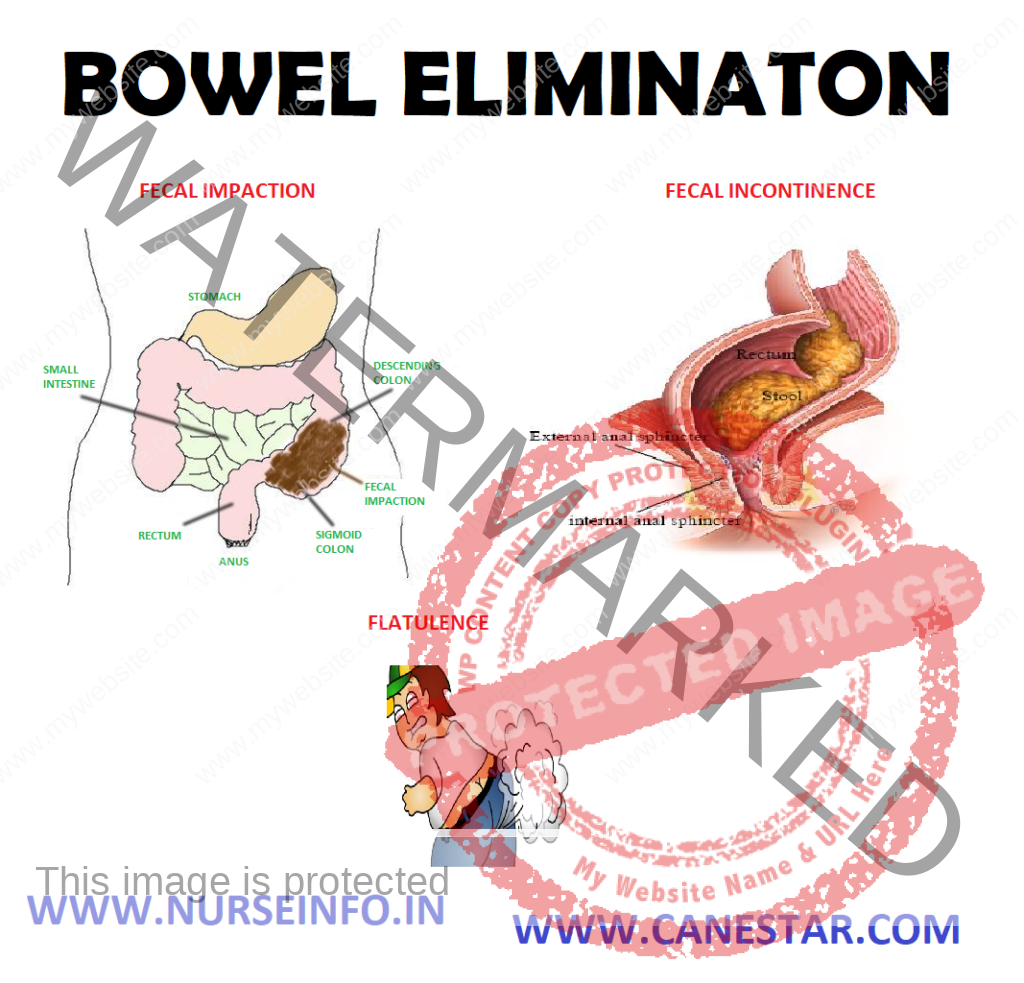
Fecal impaction: it is a mass or collection of hardened feces in the folds of the rectum. The causes are prolonged retentions and accumulation of fecal material, poor defecation habits and constipation and medication

Diarrhea: it refers to the passage of liquid feces and an increased frequency of defecation or it is the discharge of frequent loose stool to the rapid passage of content through the intestines. The causes are emotional stress and infection

Fecal incontinence: it refers to loss of voluntary ability to control fecal and gaseous discharge through the anal sphincter or inability to control the expulsion of feces.  The causes are spinal cord trauma and tumors of the external sphincter muscles

Flatulence: it is the presence of excess in the intestine and leads to stretching and inflation of the intestine (intestinal distension) air or gas in the gastrointestinal tract is called flatus

BRISTOL STOOL CHART

Type 1: separate hard lumps, like nuts (hard to pass)

Type 2: sausage-shaped, lumpy

Type 3: sausage shaped, cracks on surface

Type 4: sausage or snake-like, smooth and soft

Type 5: soft blobs with clear-cut edges (easy to pass)

Type 6: fluffy pieces with ragged edges, mushy

Type 7: watery, no solid pieces (entirely liquid)

TYPES OF STOOL COLOR AND ITS CAUSES

GREEN: it is proven that during this condition, food is moving through the large intestine too quickly, such as due to diarrhea. As a result, bile does not have time to break down completely

Dietary Causes: if someone eats more green leafy vegetables, green food coloring such as in Kool-Aid or popsicles, it is in high-risk of developing green stool

PALE OR CLAY-COLORED: there is commonly caused by a lack of bile. In most cases, it is indicating a bile duct obstruction

Dietary Causes: certain medications, such as large doses of kaopectate and other antidiarrhea drugs

YELLOW, GREASY, FOUL-SMELLING: excess fat in the stool, such as due to a malabsorption disorder

Dietary causes: sometimes the protein gluten, such as in celiac disease. But see a doctor for evaluation

BLACK: bleeding in the upper intestinal tract, such as the stomach

Dietary causes: iron supplements, pepto-bismol, black licorice

BRIGHT RED: bleeding in the lower intestinal tract, such as the large intestine or rectum

Dietary causes: red food coloring, beets, tomato juice or soup, red Jell-O

BOWEL WASH

ENEMA

USES OF BEDPAN

HOT APPLICATION & COLD APPLICATION

PATIENT POSITIONING , COMFORT DEVICES
BOWEL ELIMINATION – Factors Affecting and Common Problems in Bowel Elimination (Bristol Stool Chart and Color of Stool and its causes)

USES OF BEDPAN

USE OF BEDPAN – Bowel Elimination (Purpose, Indications, Types, Preliminary Assessment, Preparation of Patient and Environment, Equipment, Procedure and After Care)

NURSING PROCEDURES LIST CLICK HERE

USE OF BEDPAN

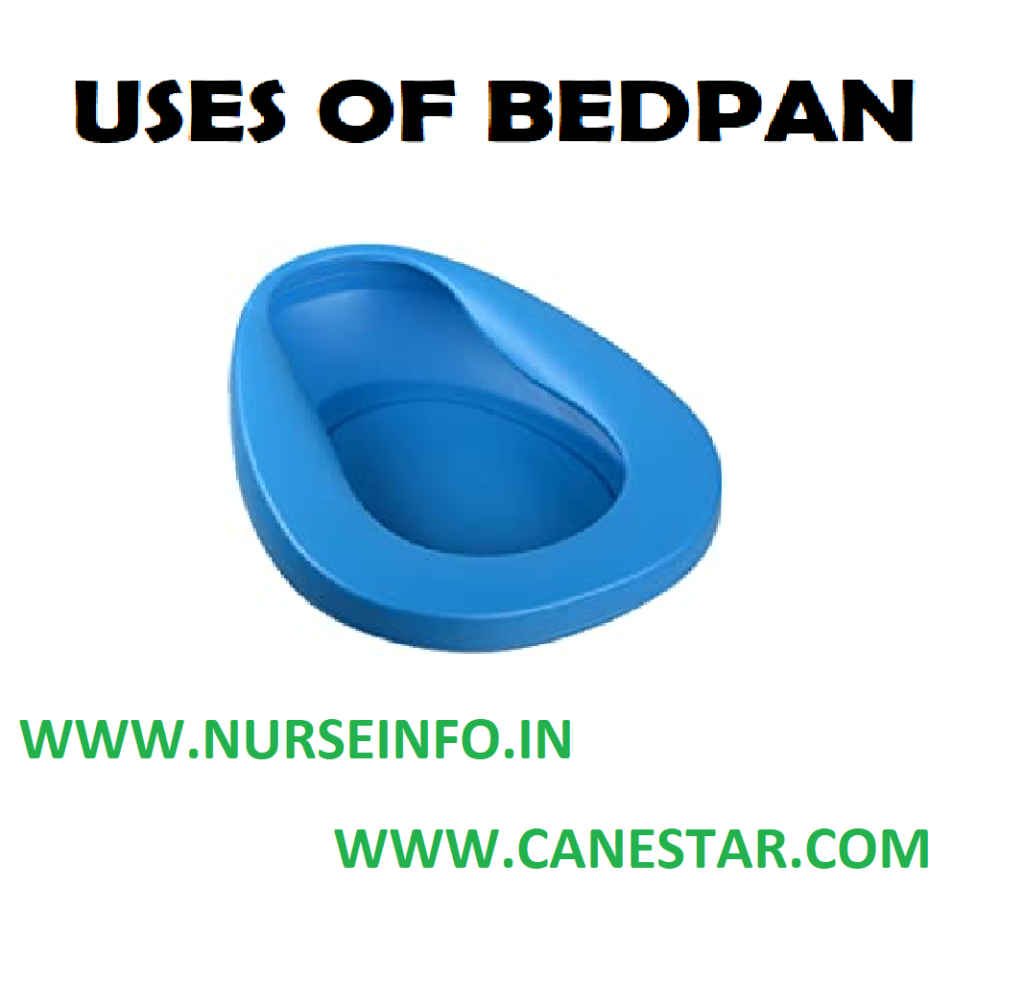
Bedpan is made from steel or plastic device to meet elimination need of patient confined to bed.

Bedpan may be used by a person who is unable to get out of bed. Bedpans used by females for elimination of urine and feces of by males for elimination of feces

PURPOSE

  • To provide comfort
  • To facilitate bowel and bladder elimination
  • To collect specimen for diagnostic purposes
  • To promote continence during bowel and bladder training
  • To give perineal wash

INDICATIONS

  • Patient with spinal injury
  • Postoperative patients
  • Patients with fracture and traction
  • Chronic bedridden patients
  • Patients those who are strict bed rest

TYPES OF BEDPANS

  • The regular high back pan
  • The slipper pan fracture pan

PRELIMINARY ASSESSMENT

Check

  • The doctors order for specific precautions such as movements of positions
  • General condition of the patient
  • Level of consciousness
  • Mentally healthy to follow instructions
  • Self-care ability
  • Articles available in the unit

PREPARATION OF PATIENT AND ENVIRONMENT

  • Explain to assist (hip to lift)
  • Arrange the article at the bedside
  • Provide privacy
  • Position the patient for easy lifting
  • Place Mackintosh under the buttocks to prevent soiling

EQUIPMENT

  • Bedpan with lid
  • Clean gloves
  • Draw Mackintosh if needed
  • Water and mug
  • Tissue paper
  • Soap with soap dish K-Basin and towel

PROCEDURE

  • Encourage patient to assume normal position for defecation (if possible)
  • Place the dry bed pan under patient’s buttocks
  • Assist patient to lift buttocks by supporting the back with left hand
  • Instruct and assist patient to raise hips or turn patient to side and place bed pan firmly close to buttocks
  • Provide adequate time to pass motion/urine
  • Check the well covered bed pan to avoid embarrassment
  • Once patient has passed, permit to clean self. Assist by pouring water
  • If patient is unable to clean, pour water and clean using long artery clamp and cotton balls rag pieces
  • Remove bedpan by lifting patient carefully

AFTER CARE

  • Cover bedpan immediately and try Mackintosh of wet
  • Secure draw sheet and position the patient comfortably
  • Provide water and soap to wash hands
  • Empty the articles into stop – hopper in sluice room
  • Replace the articles after cleaning
  • Wash hands thoroughly
  • Record the procedure in the nurse’s sheet

BOWEL ELIMINATION

BOWEL WASH

ENEMA

USE OF BEDPAN – Bowel Elimination (Purpose, Indications, Types, Preliminary Assessment, Preparation of Patient and Environment, Equipment, Procedure and After Care)

ENEMA

ENEMA – BOWEL ELIMINATION (Purpose, Contraindications, Classification, Methods of Giving Enemas, General Instructions, Preliminary Assessment, Preparation of the Patient and Environment, Equipment, Procedure and After Care)

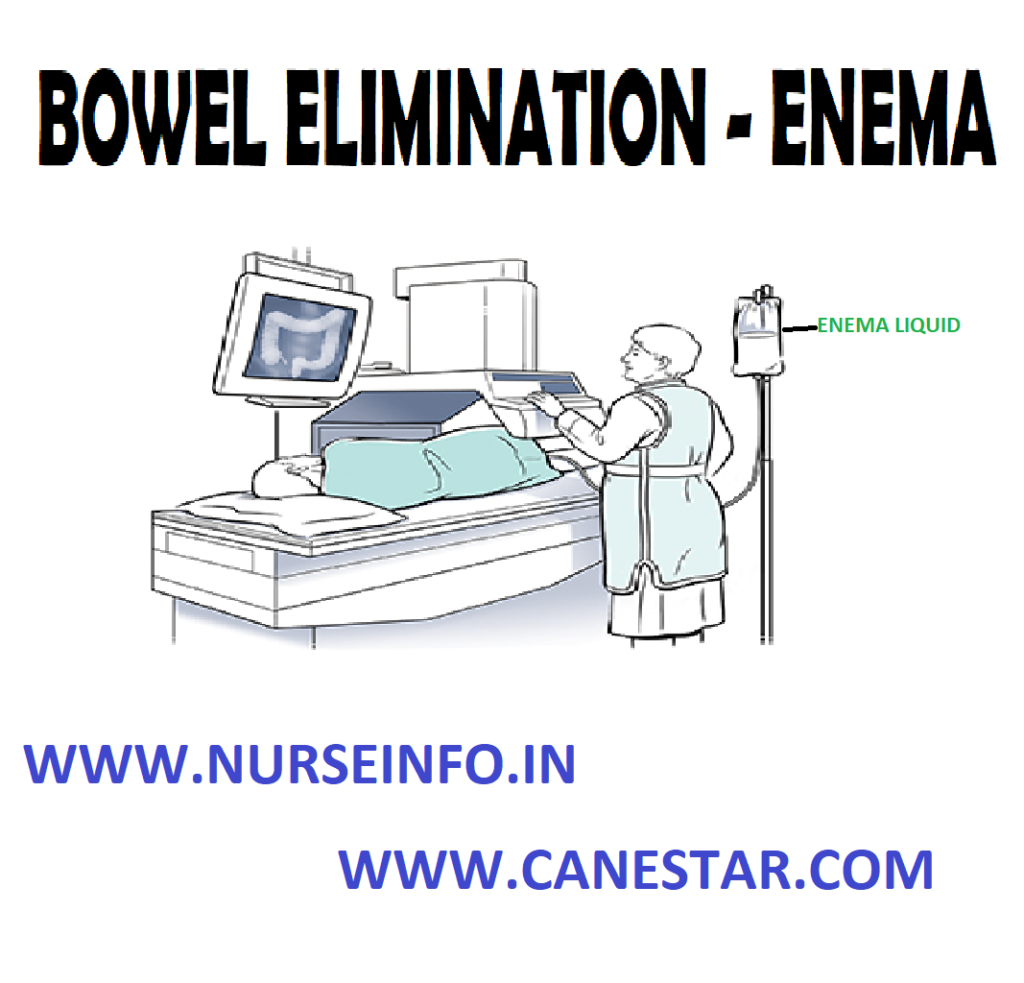
Enema (clysis) is defined as an introduction of the fluid into the rectum.

An enema is an introduction of fluid into the bowel through the rectum for the purpose of cleansing or to introduce nourishment

An enema is an introduction of fluid into the lower bowel through the rectum for the purpose cleaning, medicinal, diagnostic or such other purpose

PURPOSE

  • To remove fecal matter
  • To relieve flatulence
  • To relieve constipation
  • To prevent involuntary defecation during surgery
  • To reduce temperature, e.g. cold edema
  • To check diarrhea, e.g. starch opium enema
  • To stimulate peristalsis, e.g. purgative enema
  • To make diagnosis, e.g. barium enema
  • To cleanse the bowel before X-ray studies
  • To induce anesthesia, e.g. anesthetic enema
  • To administer medications
  • To destroy intestinal parasites, e.g. anthelmintic enema
  • To administer fluids and nutrients
  • To relieve inflammation
  • To establish regular bowel functions during bowel training program

CONTRAINDICATIONS

  • Acute myocardial infarction and cardiac problems
  • Acute renal failure
  • Appendicitis
  • Obstetrical and gynecological contraindications

CLASSIFICATION OF ENEMA

Soap water enema: it is otherwise called saline enema. In this normal saline (sodium chloride 1 teaspoon) to half liter of water

The amount of solution used for adult 500 to 1000 ml, children 250 to 500 ml and infants 250 ml or less. The temperature of the solution in adult 105 to 110 degree F and children 100 degree F

Oil enema: it is given to soften fecal matter in cases of serve constipation. The enema must be retained ½ or 1 hour to soften the feces

Carminative enema: It is also called antispasmodic enema. It is given to relieve gaseous distension of abdomen by increasing peristalsis and expulsion of flatus. The solution used is 8 to 16 ml of turpentine mixed thoroughly with 600 to 1200 ml of soap solution. Milk and molasses 90 to 230 ml well mixed with equal quantity of warm milk

Anthelmintic Enema: It is given to destroy and expel worms from the intestine cleansing enema must be given prior to anthelmintic enema so that the drug comes in direct contact with worms and the lining of intestine.

The solution used is infusion of quassia 15g of chips to 600 mL of water or hypertonic saline solution sodium chloride 60 mL with 600 mL of water. The amount of solution given is 250mL.

Cold Enema: Cold enema or ice-water enema is given to reduce body temperature in hyper pyrexia and heat stroke. It is given in the form of colonic irrigations. The temperature of the solution is 80 to 90 degree Fahrenheit (27 to 32 degree Celsius).

Glycerin Enema: Glycerin enema is given to children to fever patients and postoperative patient. Pure glycerin and water 1:2 are used.

Astringent Enema: Astringent enema contracts the tissues and blood vessels checks bleeding and inflammation lessens the amount of mucus discharge and gives a temporary relief in the inflamed area. It is usually given in colitis and dysentery.

The solution used are tannic acid – 25g to 600 mL water, alum 30g to 600 mL of water and silver nitrate 2% (silver nitrate is dissolved in the distilled water).

Sedative Enema: Sedative enema contains an anesthetic drug to produce anesthesia in the patient. The commonly used drugs are paraldehyde and over tin. Dose is given as per doctor’s order.

Stimulant Enema: Stimulant enema is given in the treatment of shock and collapse. Coffee enema is given in case of opium poisoning. Solution used are black coffee – 1 tables spoon coffee powder to 300mL of water and 15mL of brandy added to 120 to 180mL of glucose saline. The amount of solution used is 180 to 240mL and the temperature of solution used is 180 to 240mL and the temperature of solution is 108 to 110 degree Fahrenheit (42 to 43 degree Celsius).

Emollient Enema: Emollient enema or starch enema is given in case of diarrhea to relieve irritation in an inflamed mucus membrane. The solution used is starch and opium Tr. Opium 1 to 2mL added to 120 to 180mL of starch mucilage or rice water. The temperature of the solution is 100 to 105 degree Fahrenheit (37.8 to 40.5 degree Celsius).

Nutrient Enema: It is given to supply food and fluids to the body. Selection of the fluids depends upon the ability of the colon to absorb it. Nutrient enema is particularly useful in conditions like hemophilia.

The solution used is normal saline; Glucose saline 250mL 5% peptonized milk 120mL. The amount of solution used is 110 to 1700mL in 24 hours or 180 to 270mL at 4 hourly intervals. The temperature of solution is 100 degree Fahrenheit (37.8 degree Celsius). 

METHODS OF GIVING ENEMAS

  • Enema can and tube method – when large amounts of fluids are to be given, this method is used, e.g. soap and water enema
  • Funnel and catheter method – when a small quantity of fluids is to be given, this method is used, e.g. oil enema
  • Glycerin syringe and catheter method when a small quantity of fluid is to be given, this method is used, e.g. Purgative enema
  • Rectal drip method – when the fluid is to be administered very slowly in order to aid in its absorption, e.g. nutrient enema

GENERAL INSTRUCTION

  • The appropriate size of rectal catheter or rectal tube of cleansing enema is 22 French for adults, 12 French for infant and 14 to 18 French for children (School-age child)
  • The rectal tube need to be smooth and flexible
  • The rectal tube is lubricated with a water soluble lubricant or Vaseline to facilitate insertion and to decrease irritation of the rectal mucosa
  • The temperature of the solution needs to be adjusted according to the purpose of the enema
  • The amount of the solution to be administered depends up on the type of enema and the age and size of the person
  • The patient usually placed in left lateral position, when an enema is administered. In this position, sigmoid colon is below the rectum, thus facilitating instillation of the fluid
  • The distance to which the tube is inserted depends upon the age and the size of the patient. For an adult, it is normally inserted 7.5 to 10 cm (3 to 4 inches), for children it is 2.5 to 3.75 cm (into 1 ½ inches)
  • The height of the enema can should not be above 18 inches (20 cm) from the anus
  • The length of time that the enema solution is retained will depend up on the purpose of enema oil retention enema are usually retained for 2 to 3 hours. Other cleansing enemas are normally retained 5 to 10 minutes
  • Prepacked enema will have their own instruction which need to be followed
  • Prevent air from entering into rectum, by expelling air from the tube
  • If the rectum is impacted, attempt to remove the fecal matter with a gloved finger
  • Make sure the whole apparatus use for the administration of enemas is in a good working condition
  • Regulate the flow of fluid according to the type of enema
  • Listen to the complaints of the patients and should not ignore any discomfort however small they are

PRELIMINARY ASSESSMENT

  • Doctors order for any specific precautions
  • Diagnosis of the patient
  • Abilities and limitations concerning movements
  • Level of consciousness to follow directions
  • Availability of the articles
  • Extra help needed
  • Lesions on the rectal and perineal area
  • Nature of enema ordered

PREPARATION OF THE PATIENT AND ENVIRONMENT

  • Explain the sequence of the procedure
  • Arrange the articles at the bed side
  • Provide privacy
  • Cover the patient with bed sheet
  • Place the Mackintosh and towel under the patient’s buttocks
  • Place the patient in the left lateral position
  • Keep the bedpan under the bed over a stool
  • Adjust the IV pole to hold the enema can at the required height

EQUIPMENT

A clean tray containing:

  • Enema cans, rubber tubing, glass connection, screw clamp
  • Mackintosh and towel
  • Rectal tube (adjusts) or rectal catheter placed in a kidney tray
  • Vaseline
  • Pint measure
  • Soap jelly in a bottle
  • IV stand
  • Toilet tray
  • Bedpan – 2
  • Clean linen if needed
  • Bath thermometer
  • Rag pieces and K-basin

PROCEDURE

  • Wash hands thoroughly
  • Attach tubing to enema can and clamp tube
  • Prepare solution at required temperature and check temperature with bath thermometer
  • Attach rectal tube to tubing, expel air and clamp tube. Air entry into rectum may cause discomfort
  • Hang enema can with solution on IV stand and adjust height to 18 inches from bed
  • Lubricate tip of rectal tube
  • Use rag pieces to separate patients buttocks and visualize anus clearly. Insert rectal tube gently to a distance of 2-4 inches
  • Encourage patient to take a deep breath while inserting tube. Note level of fluid and make sure ther is free flow
  • Encourage patient to take deep breaths during administration of fluid
  • Clamp or pinch the rectal tube if the fluid is about to get over
  • Use rag pieces to remove the rectal tube

AFTER CARE

  • Instruct patient to hold solution for 10 to 15 minutes
  • Discard rag pieces in K-basin, detach rectal tube and place in same K-basin
  • Position the patient in supine and assist to toilet or provide a bed pan
  • Assist patient to wash perineal area if not able to do so
  • Remove the articles to utility room, clean and replace it
  • Keep the patient dry and comfortable
  • Wash hands
  • Record the procedure in the nurse’s record

BOWEL ELIMINATION

USES OF BEDPAN

BOWEL WASH

HOT APPLICATION & COLD APPLICATION

PATIENT POSITIONING , COMFORT DEVICES
ENEMA – BOWEL ELIMINATION (Purpose, Contraindications, Classification, Methods of Giving Enemas, General Instructions, Preliminary Assessment, Preparation of the Patient and Environment, Equipment, Procedure and After Care)

PATIENT POSITIONING – ROSE & RECOVERY POSITION

ROSE POSITION

Rose position is a position in which a patient is placed while undergoing a tonsillectomy, adenoidectomy or uvulopalatopharyngoplasty. In this position both the head and neck are extended. This is done by keeping a sand bag under the patient’s shoulder blade. For a patient with a kyphosis or a stiff neck, raise the head piece of the table so that the head ring really does support the head. Its contraindicated in patients with syndrome owing to atlanto-axial instability.

Rose position is used in

  • Tracheostomy
  • Bronchoscopy
  • Flexible esophagoscopy
  • Direct laryngoscopy

Rose position: patient lies supine with pillow under the shoulder for extention of the neck and head. This position is used for the tonsillectomy. Tracheostomy is also done in the same position. In direct laryngoscopy and bronchoscopy the head is extended but neck is flexed which is called as barking dog position. Rigid esophagoscopy is also done in the same position. However, flexible esophagoscopy is done in left lateral position.

Advantages of Rose Position

  • There is virtually no aspiration of blood or secretions into the airway
  • Both hands of the surgeon are free. This position helps in proper application of the Boyles Davis mouth gag
  • The surgeon can be comfortably seated at the head end of the patient

RECOVERY POSITION

The recovery position refers to one of a series of variations on a lateral recumbent or three-quarters prone position of the body, into which an unconscious but breathing casualty can be placed as part of first aid treatment. An unconscious person, a person who is assessed on the Glasgow Coma Scale at eight or below, in a supine position (on the back) may not be able to maintain an open airway as a conscious person would. This can lead to an obstruction of the airway, restricting the flow of air and preventing gaseous exchange, which then causes hypoxia, which is life-threatening. Thousands of fatalities occur every year in casualties where the cause of unconsciousness was not fatal, but where airway obstruction caused the patient to suffocate. The cause of unconsciousness can be any reason from trauma to intoxication from alcohol.

Six key principles to be followed:

  1. The casualty should be in as near a true lateral position as possible with the head dependent to allow free drainage of fluid
  2. The position should be stable
  3. Any pressure of the chest that impairs breathing should be avoided
  4. It should be possible to turn the victim onto the side and return to the back easily and safely, having particular regard to the possibility of cervical spine injury
  5. Good observation of and access to the airway should be possible
  6. The position itself should not give rise to any injury to the casualty

Purpose of Recovery Position

The recovery position is designed to prevent suffocation through obstruction of the airway, which can occur in unconscious supine patients. The supine patient is at risk of airway obstruction from two routes:

Mechanical obstruction: in this instance, a physical object obstructs the airway of the patient. In most cases, this is the patient’s own tongue, as the unconsciousness leads to a loss of control and muscle tone, causing the tongue to fall to the back of the pharynx, creating an obstruction. This can be controlled (to an extent) by a trained person using airway management techniques

Fluid observation: fluids usually vomit; can collect in the pharynx, effectively causing the person to drown. The loss of muscular control which causes the tongue to block the throat can also lead to the stomach contents flowing into the throat, called passive regurgitation. Fluid which collects in the back of the throat can also flow down into the lungs. Another complication can be stomach acid burning the inner lining of the lungs, causing aspiration pneumonia.

SUPINE & DORMANT  RECUMBENT

LITHOTOMY & PRONE

LATERAL & SIM’S

KNEE-CHEST/GENUPECTORAL & TRENDELENBURG’S

FOWLER’S & C-SHAPED

PATIENT POSITIONING

PATIENT POSITIONING – ROSE & RECOVERY POSITION - Purpose, Principles, Factors Involved, Types, General Instructions, Preliminary Assessment, Equipment and Procedure

PATIENT POSITIONING – ROSE & RECOVERY POSITION – Purpose, Principles, Factors Involved, Types, General Instructions, Preliminary Assessment, Equipment and Procedure

PATIENT POSITIONING – FOWLER’S & C-SHAPED POSITION

FOWLER’S POSITION

Fowler’s position is a sitting position in which the head is elevated, at least, a 45 degree angle. Back rest and two pillows are used for the back and head.

In fowler’s position, the main weight bearing areas of the patient are the heels, sacrum and the posterior aspects of the ileum.

Indications

  • To relieve dyspnea
  • To improve circulation
  • To prevent thrombosis
  • Postoperatively to assist drainage from abdominal or pelvic cavity
  • To relax the muscles of the abdomen, back and thighs
  • To relieve tension on the abdominal sutures
  • To promote comfort
  • To localize infection, e.g. priorities
  • To relieve edema of the chest and abdomen

Procedure

  • Explain the procedure of the patient
  • Arrange the articles needed at the bedside
  • Provide privacy
  • Place the patient in sitting position with arms at the sides and knees raised with pillow
  • Maintain this position; elevate the head of bed to an angle from 45-60 degree (semi-fowler) or 60-90 degree (high-fowler)
  • Elevate the knee rest to an angle of 15 degree or place a small pillow under the knees

C-SHAPED POSITION

  • Patient should be lying in the lateral decubitus position
  • Ensure the vertical plane of the patient’s back is perpendicular to the bed
  • Flex knees and hips so that knees are close to the chest
  • While flexion of the neck is often taught as important, evidence suggests that this has no effect of the size of the interspinous opening and may be uncomfortable for the patient

SUPINE & DORMANT  RECUMBENT

LITHOTOMY & PRONE

LATERAL & SIM’S

KNEE-CHEST/GENUPECTORAL & TRENDELENBURG’S

ROSE & RECOVERY

PATIENT POSITIONING

 PATIENT POSITIONING –  FOWLER'S & C-SHAPED POSITION - Purpose, Principles, Factors Involved, Types, General Instructions, Preliminary Assessment, Equipment and Procedure
PATIENT POSITIONING – FOWLER’S & C-SHAPED POSITION – Purpose, Principles, Factors Involved, Types, General Instructions, Preliminary Assessment, Equipment and Procedure

PATIENT POSITIONING – KNEE-CHEST/GENUPECTORAL & TRENDELENBURG’S POSITION

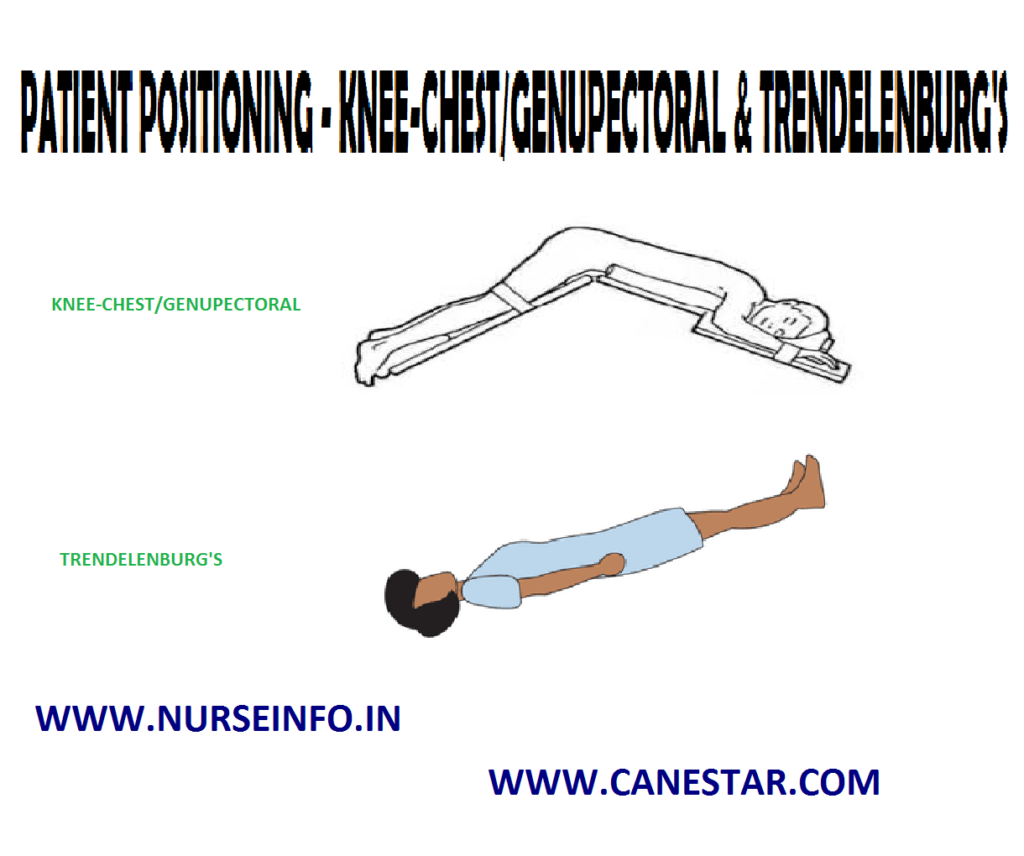
KNEE-CHEST/GENUPECTORAL POSITION

NURSING PROCEDURES LIST CLICK HERE

Patient is rest on the knees and the chest. The head is turned to one side with the cheek on a pillow. A pillow is placed under the chest. The weight is on the chest and knees.

Indications

  • This position is used for sigmoidoscopy
  • Used for vaginal and rectal examination
  • Used in first aid treatment in cord prolapse or retroverted uterus
  • As exercise for postpartum and gynecology patients

Procedure

  • Explain the procedure to the patient
  • Collect the needed articles at the bed side
  • Provide privacy
  • Make the patient rests on the knees and chest
  • The head is turned to one side with the cheek on a pillow
  • The arms should be extended on the bed and flexed at the elbows to support the patient partially
  • The weight should rest on the chest and knees which are flexed so that the thighs are at right angles to the legs

Contraindications

  • Patients with cardiovascular and respiratory problems cannot assume this position

TRENDELENBURG’S POSITION

In Trendelenburg’s position, the patient lies on his back. The patient’s head is low. The foot of the bed is elevated at 45 degree angle. The body is on an inclined place and the legs hang downward over the end of the table

Indications

  • Used in emergency situations like shock and hemorrhage
  • This position is used for vaginal surgeries
  • Used to displace intestines from pelvic cavity into upper abdomen
  • Used during operations on the pelvic organs
  • To arrest bleeding from lower limb

Procedure

  • Explain the procedure to the patient
  • Arrange the article need at the bed side
  • Provide privacy (if needed)
  • Place the patient lied on his back
  • Elevate the foot end at 45 degree angle
  • The body is on an inclined place with hips higher than the bed
  • The knees are flexed
  • The patient is carefully supported to prevent slipping
  • Draping done depends upon the kind of operation to be performed

SUPINE & DORMANT  RECUMBENT

LITHOTOMY & PRONE

LATERAL & SIM’S

FOWLER’S & C-SHAPED

ROSE & RECOVERY

PATIENT POSITIONING

 PATIENT POSITIONING – KNEE-CHEST/GENUPECTORAL & TRENDELENBURG'S POSITION - Purpose, Principles, Factors Involved, Types, General Instructions, Preliminary Assessment, Equipment and Procedure
PATIENT POSITIONING – KNEE-CHEST/GENUPECTORAL & TRENDELENBURG’S POSITION – Purpose, Principles, Factors Involved, Types, General Instructions, Preliminary Assessment, Equipment and Procedure

PATIENT POSITIONING – LITHOTOMY & PRONE POSITION

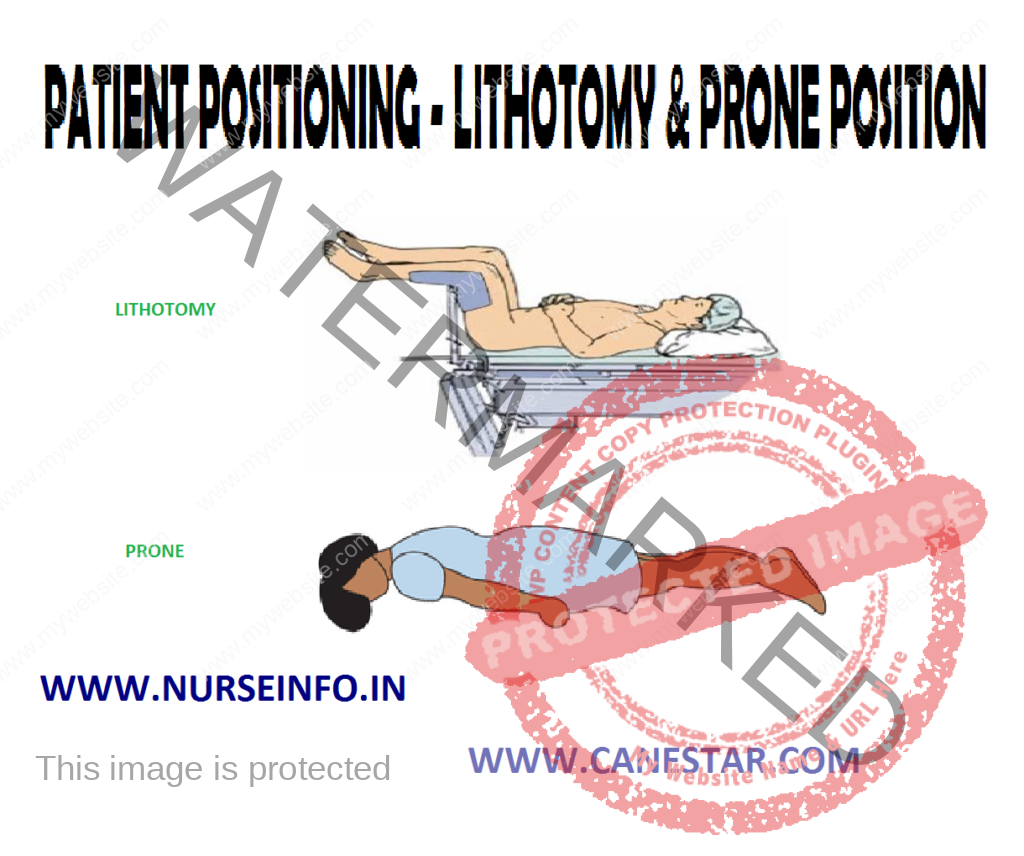
LITHOTOMY POSITION

The patient lies on her back. The legs are separated and thighs are flexed on the abdomen and the legs are on the thighs. The patient’s buttocks are kept the edge of the table and legs are supported by stirrups.

Indications

  • This position is given during gynecological examinations, treatments, and operations on genitourinary system
  • For delivery of baby
  • For rectal examinations and operations

Procedure

  • Explain the procedure to the patient
  • Provide privacy
  • Position the patient to lie on his back with one pillow under the head
  • Keep the legs well separated and the thighs are well flexed on the abdomen and the legs on the thighs
  • Buttocks are kept on the edge of the table and the legs are supported on stirrups

Contraindications

Contraindications of this position are, patients with arthritis or joint deformity may be unable assume this position

PRONE POSITION

A patient lies flat on abdomen. Head turned to sideways. One soft pillow is given under head. An extra pillow is given under the ankles to keep toes from touching the bed.

Indications

  • This position used postoperatively to prevent aspiration of saliva and mucus
  • Used in postoperative cases, tonsils, vesicovaginal fistula and spinal cases
  • To prevent bed sores
  • To relieve abdominal distention
  • Used for patients having injuries and burns on back

Procedure

  • Explain the procedure to the patient
  • Provide privacy
  • Place the patient flat on abdomen with one pillow under the head
  • Turn patients head to one side and align the patient in good position
  • Support the body parts in good alignment for comfort
  • Place both arms lies at the sides of the heads

Contraindications

This position is not well tolerated by the elderly or patient with cardiovascular or respiratory problems

SUPINE & DORMANT  RECUMBENT

LATERAL & SIM’S

KNEE-CHEST/GENUPECTORAL & TRENDELENBURG’S

FOWLER’S & C-SHAPED

ROSE & RECOVERY

PATIENT POSITIONING

PATIENT POSITIONING – LITHOTOMY & PRONE POSITION - Purpose, Principles, Factors Involved, Types, General Instructions, Preliminary Assessment, Equipment and Procedure
PATIENT POSITIONING – LITHOTOMY & PRONE POSITION – Purpose, Principles, Factors Involved, Types, General Instructions, Preliminary Assessment, Equipment and Procedure

PATIENT POSITIONING – SUPINE & DORSAL RECUMBENT POSITION

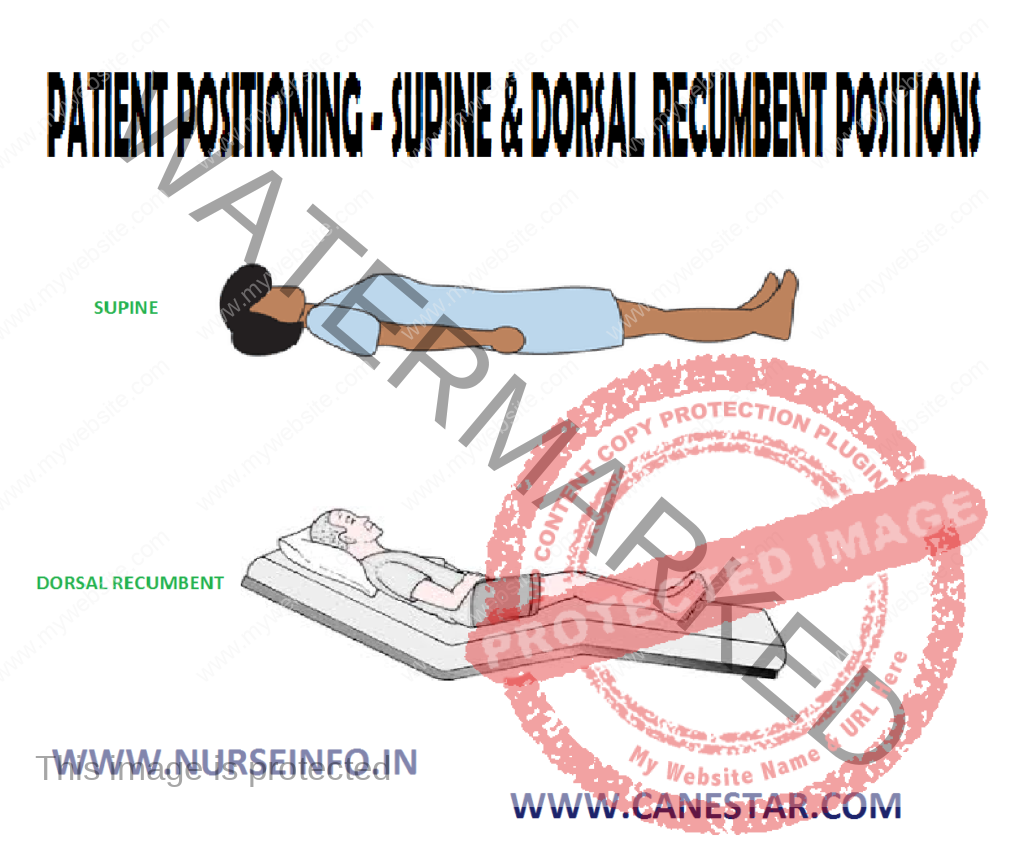
SUPINE/DORSAL POSITION

NURSING PROCEDURES LIST CLICK HERE

The patient lies on his back with his head and shoulders are slightly elevated. One pillow is given under the head. His legs should be slightly flexed. A small pillow is placed under his knees.

Indications

  • The usual position used by the patient
  • Used for examination of the chest and abdomen

Procedure

  • Place the patient on back with one pillow under the head, arms and hands at the sides, knees flexed and separated
  • Place the air ring under the hips and cotton rings or foam pads under the heels to reduce the pressure
  • Align the patient’s body in good position
  • Support the body parts in good alignment for comfort when the patient is paralyzed

Contraindications

  • Elderly patients
  • Patients with operation on abdomen, breast and thorax
  • Prone to hypostatic pneumonia
  • Patients with long standing illnesses and neurological conditions

DORSAL RECUMBENT POSITION

Patient lies on back, knees fully flexed, thighs flexed and externally rotated feet flat on the bed.

Indications

  • It is used for catheterization, vaginal douche, vulval, vaginal and rectal examination
  • It is also used for vaginal operations and insertion of tampons
  • Patients who are convalescent period
  • Patients with gastric conditions
  • Patients with chest conditions
  • Patients with abdominal or pelvic operations unless erect sitting position is indicated

Procedure

  • Place the patient on back in bed with two or more pillows under the head and one pillow under the knees or maintain his position by elevating the top of bed on blocks
  • Place the air ring under the hips and cotton rings or foam pads under the heels to reduce the pressure
  • Align the patient’s body in good position
  • Support the body parts in good alignment for comfort when the patient is paralyzed

LITHOTOMY & PRONE

LATERAL & SIM’S

KNEE-CHEST/GENUPECTORAL & TRENDELENBURG’S

FOWLER’S & C-SHAPED

ROSE & RECOVERY

PATIENT POSITIONING

PATIENT POSITIONING – Purpose, Principles, Factors Involved, Types, General Instructions, Preliminary Assessment, Equipment and Procedure

PATIENT POSITIONING – SUPINE & DORSAL RECUMBENT POSITION – Purpose, Principles, Factors Involved, Types, General Instructions, Preliminary Assessment, Equipment and Procedure

SOAK OR LOCAL BATH (Hot Application)

SOAK OR LOCAL BATH (Hot Application) – Purpose, Preliminary Assessment, Preparation of Patient and Environment, Equipment, Procedure and After Care

A soak refers to either immersing a body part (e.g. an arm) in a solution or to wrapping a part in gauze dressing and then saturating the dressing with a solution

Soak may employ wither ‘Clean technique’ or sterile technique. A sterile technique is indicated for any open wounds present on the area.

Purpose of Soaks

  • To apply heat to hasten suppuration
  • To apply medication
  • To cleanse the wound
  • To relieve edema
  • To relieve muscle spasm
  • To increase circulation

General Instructions

  • The body part to receive the moist heap application is submerged in a basin of warm water at 105 to 110 degree F (40.5 to 43 degree celcius)
  • The duration of the treatment is usually 20 minutes
  • Ideally the temperature of the solution should be checked frequently and additional solution added or the solution is replaced in order to maintain the appropriate temperature
  • The patient should be in a comfortable position and the limbs are supported with pillows
  • Dry the surface thoroughly all the end of the treatment

Preliminary Treatment

Check

  • The doctors order for any specific precautions
  • General condition and diagnosis of the patient
  • Assess any contraindication of hot application
  • Self-care ability to follow instructions
  • Articles available in the unit

Preparation of Tile Patient and Environment

  • Explain the procedure to the patient
  • Provide privacy if needed
  • Close the window and put off the fan
  • Arrange the article at the bed side
  • Position the patient comfortably according to the need of the procedure

Equipment

  • Bathtub
  • Solution, e.g. normal saline, magnesium sulfate and sterile water
  • Mackintosh
  • Extra towel
  • Piece of woolen blanket
  • Lotion thermometer

Procedure

  • Wash hands
  • Place the Mackintosh to protect bed linen
  • Keep bathtub on the Mackintosh
  • Allow the part to soak for prescribed length of time, usually 15 to 20 minutes
  • Check the temperature of the solution frequently and add additional solution to replace in order to maintain the appropriate temperature
  • Dry the area at the end of the procedure

After Care

  • Remove the bathtub from bedside
  • Observe the part for any skin changes
  • Make the patient comfortable in the bed
  • Replace the articles after cleaning
  • Wash hand
  • Record the procedure in the nurse’s record sheet
SOAK OR LOCAL BATH (Hot Application) - Purpose, Preliminary Assessment, Preparation of Patient and Environment, Equipment, Procedure and After Care
SOAK OR LOCAL BATH (Hot Application) – Purpose, Preliminary Assessment, Preparation of Patient and Environment, Equipment, Procedure and After Care

SITZ BATH (HOT APPLICATION)

SITZ BATH (HOT APPLICATION) – Purpose, Preliminary Assessment, Preparation of Patient and Environment, Equipment, Procedure and After Care

Sitz bath or hip bath is defined as a bath which is taken in a sitting position. The patient is usually immersed from the midthigh to the hips.

Sitz bath is bathing the perineal area in a sitting position. In this, the buttocks thighs and lower trunk also are immersed in water.

Purpose

  • To relieve pelvic congestion
  • To treat dysmenorrhea
  • To relieve pain, after operation, affecting the perineal area
  • To promote drainage of rectal abscess and hemorrhoids
  • To relieve pain following cystoscopy

General Instructions

  • When the patient takes sitz bath care has to be taken to prevent chills, burns and fainting
  • The temperature of the solution or water should be 110 to 115 degree F or 43 to 46 degree celcius
  • The temperature of the water should be checked in between and additional hot water is added as necessary
  • The duration of bath is 15 to 20 minutes
  • Sterile solution, in sterile containers is used for sitz bath. It will reduce the transmission of microorganisms

Solutions Used for Sitz Bath

  • Potassium permanganate 1:5000
  • Boric acid 1 g to 1 pint
  • Eusol solution

Sitz bath is contraindicated during

  • Pregnancy
  • Menstruation
  • Renal inflammation
  • Increased irritability of the genital organs

Preliminary Assessment

Check

  • Right (correct) patient
  • The doctors order for specific instructions
  • General condition and diagnosis of the patient
  • Type, duration, and medication used for procedure
  • Self-care ability to follow instructions
  • Articles available in the unit

Preparation of the Patient and Environment

  • Explain the procedure to the patient
  • Provide privacy if needed
  • Arrange the articles at the bedside
  • Put off the fan and close the windows
  • Check the temperature of the water with lotion thermometer
  • Position the patient comfortably

Equipment

  • Basin or bathtub
  • Bath blanket and safety pins
  • Bath towel
  • Lotion thermometer
  • Mackintosh
  • Rubber rings

Procedure

  • Hand wash
  • Place bath towel and rubber ring in bottom of tub
  • Fill 1/3 to ½ full of water
  • Check the temperature with lotion thermometer
  • Assist patient into the bathtub
  • The initial temperature should be 100 degree F and gradually increase to 115 degree F
  • Cover the patient in bath blanket
  • Leave the in tub for 10 to 20 minutes
  • Observe patient’s condition at least every 5 minutes

After Care

  • Observe for complications like burns and fainting
  • Assist the patient in drying and put on clothing to prevent chilling
  • The patient may feel sleepy due to the sedative effect of the size if the sitz bath. So care must be taken to prevent falling
  • Provide a comfortable position (lying) to patient
  • Replace the equipment after washing
  • Wash hand thoroughly
  • Record the procedure in nurse’s record sheet
SITZ BATH (HOT APPLICATION) – Purpose, Preliminary Assessment, Preparation of Patient and Environment, Equipment, Procedure and After Care
Nurse Info