Home Blog Page 25

AIDS (Acquired Immuno Deficiency Syndrome)

AIDS (Acquired Immuno Deficiency Syndrome) – General Characteristics, Route of Transmission, Diagnosis, Clinical Features and Management

General Characteristics

AIDS is the name given to a group of disorders related to immunodeficiency produced as a result of the infection by the Human Immunodeficiecy Virus (HIV). The syndrome was first described in 1981 in LosAngeles in male homosexuals. In a short span of twenty four years, it has spread all across the globe, affecting various spheres of human life. AIDS is the final consequence of various changes that take place in the immune status of the individual and is characterized by the occurrence of opportunistic infections and specific malignancies.

The Causative Organism

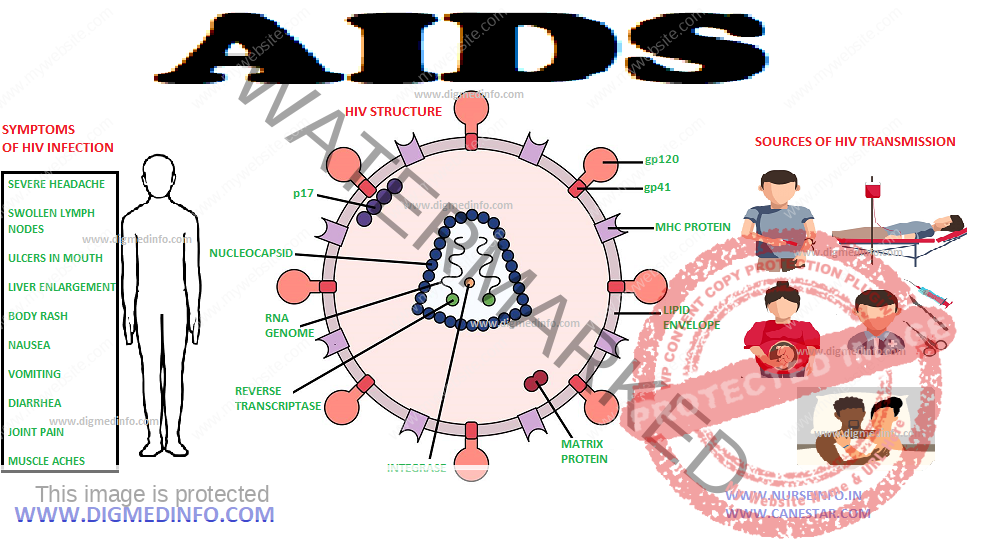
The disease is caused by infection with HIV which is a retrovirus and belongs to the family of lentiviruses. Infections with lentiviruses typically show a chronic course of disease, a long period of clinical latency, persistent viral replication and involvement of the central nervous system. There are many viruses which are classified under this name. HIV-1 and HIV-2 are the major ones. Using electron microscopy, HIV-1 and HIV-2 are almost similar. However, they differ with regard to the molecular weight of their proteins, as well as having differences in their accessory genes. Both HIV-1 and HIV-2 replicate in CD4+ T cells and are regarded as pathogenic, HIV-2 being less pathogenic. HIV-1 is subdivided into groups: M (for main) and O (for outlier), antigenically. Within group M are the vast majority of HIV-1 strains subdivided into subtypes (currently 10: AJ) based on genetic variation. HIV-1 subtype B is more prevalent in homosexuals and IV drug users. However most of the ongoing HIV-1 epidemic around the world is due to non-B subtypes, especially subtype C in sub-Saharan Africa and India. But almost all subtypes have been identified in all parts of the world. HIV viruses are RNA viruses. HIV-1 viral particles have a diameter of 100 nm and are surrounded by a lipoprotein membrane.

During the process of budding, the virus may incorporate, different host proteins, such as HLA class I and II proteins, or adhesion proteins from the membrane of the host cell into its lipoprotein layer.

HIV has greatest affinity towards CD4 receptor bearing T helper lymphocyte group. Two newly identified proteins found on immune cells, CCR5 and fusin (also known as CXCR4) are considered as co-receptors. Certain chemokines are also considered important in modulating the entry of virus into the CD4 cell. After HIV successfully attaches and fuses with the cell, the RNA strands are transcribed to DNA by the timely activation of reverse transcriptase, a viral enzyme. The DNA strands thus formed in the cytoplasm migrate to the nucleus and integrate with the human DNA(with the help of enzyme integrase). This is an irreversible bonding and leads to the beginning of a permanent HIV infection.

The integrated human CD4 cell may take various routes. Some of them are detected by the person’s immune system and are eliminated promptly. Some of them get activated against other antigens or allergens and start producing chemical mediators. When parts of the DNA correspond to that of the virus, the proteins so produced will contain the amino acid sequences needed for the virus replication too. These ‘viral’ proteins are cleaved into correct sequence by the enzyme protease. The newly synthesized viral proteins acquire their coating from the CD4 cell surface and ‘bud out’ damaging the cell membrane. This leads to significant damage to the cells and they are destroyed in large numbers. Some of the cells undergo fusion and form syncitia. Some may be destroyed by cell mediated, complement mediated or antibody dependent cytotoxic mechanisms. Some CD4 cells undergo apoptosis (programmed and premature cell death). Thus the virus infection over a period of years leads to fall in the number of CD4 cells. The virus can also produce direct effects on cells in the brain, heart and bowel and reticulo endothelial system. HIV can replicate aggressively and upto 10 billion virus particles may be produced in a day with an average half life of 6 days.

The CD4 count in a normal person is between 800 and 1200 cells per cmm in peripheral blood. The CD4 cell is responsible for the smooth and coordinated function of all arms of the immune system. Once the CD4 function is compromised, various abnormalities occur. Both physiologic and dysregulated activation contribute to the profound immune activation and accelerated cell death that characterizes HIV infection. In early HIV infection, CD8+ T-cell numbers tend to increase, reflecting expansion of memory CD8+ T cells, particularly HIV reactive cells. CD8 cell expansion persists until far advanced stages of HIV disease, when all T-cell numbers tend to fall. A number of immunological abnormalities have been described including:

1. leukopenia and lymphopenia.

2. Loss of T4 lymphocytes from the peripheral blood.

3. hypergammaglobulinemia.

4. Skin anergy.

5. Decrease in lymphocyte proliferation, cytotoxic T cell response and antibody production to new antigens.

6. elevated levels of immune complexes, interferon and Beta 2 microgobulin

Immunodeficiency manifest in three different patterns:

a. reactivation of dormant infections like tuberculosis and herpes infections

b. infections by opportunistic pathogens

c. atypical manifestations of common infections.

The immune dysregulation also leads to development of specific malignancies such as Kaposi’s sarcoma related to HIV infection

Route of Transmission

HIV is susceptible to destruction by many physical and chemical agents. Close contact and exchange of blood or body fluids is necessary for transmission. The most rampant route is sexual intercourse. Male homosexuals practicing anal sex have the highest risk. Heterosexual anal sex, heterosexual vaginal sex, oral sex and sex using condoms have been stratified in the decreasing order of risk involved. The infection is common amongst IV drug users in whom sharing of contaminated needles, syringes and drugs is the risky factor. The infection can also be transmitted from the mother to the child during pregnancy, at the time of labor or during breast feeding. The transmission is most effective following transfusion of infected blood. Occasionally needles and sharps used in hospitals can act as sources of infection to health care professionals if proper precautions are not taken. HIV does not spread through casual contact, furniture, touching, sharing the food, utensils, toilet or through air or water.

Transmission by sexual intercourse is increased in the presence of other sexually transmitted diseases leading to ulcerative or inflammatory lesions in the genitalia. HIV infected mothers transmit the disease to their babies. Efficiency of transmission depends upon the viral load and clinical stage of the mother, the nature of delivery and time spent in labor. It can vary from 14 to 40%. The risk of transmission by accidental needle pricks in hospitals is around 0.3%.

DIAGNOSIS

HIV infection is a laboratory diagnosis and is made by demonstration of

i. HIV antibodies by ELISA or solid state card/spot tests

ii. Circulating antigens (p24) or

iii. The viral RNA itself by PCR –qualitative and quantitative- in peripheral blood.

Since false positive tests are not uncommon, it is advisable to repeat the tests using different types of ELISAs or different antigens before labelling an asymptomatic person as positive. If clinical symptoms have manifested two positive tests are considered enough.

Fallacies of the tests:

1. The test become positive only after the ‘window’ period i.e. 4-6 weeks or more after infection, by which time only the antibodies appear.

2. In the late stage when antibodies are too low, the tests may be only weakly positive or even negative.

Note: Testing for HIV should be done after counseling the patient and getting his permission.

AIDS is defined as the presence of one of the AIDS defining conditions or a decline of CD4 cells to less than 200 per cmm in an HIV infected person.

CLINICAL FEATURES

The spectrum of diseases caused by HIV is quite wide.

The clinical patterns are grouped into four stages.

• Acute Retroviral syndrome

• Asymptomatic stage

• Early symptomatic stage

• Advanced immunodeficiency

Acute retroviral syndrome (also called Primary HIV infection or seroconversion illness) occurs 2-6 weeks after the entry of HIV into human body. The illness is associated with fever, papular eruptions, arthralgia, lymph node swelling and oral ulcers

The CD4 count falls and viral load increases during this period. The symptomatic phase of acute HIV-1 infection lasts between 7 and 10 days, and rarely longer than 14 days. The severity and duration of symptoms have prognostic implications. Severe and prolonged symptoms are associated with more rapid disease progression, which may be unnoticed in the majority of cases. The infected person recovers completely to an asymptomatic stage with the return of CD4 count to normal but becomes IV antibody positive thereafter.

In the next few years many changes take place in the immune system even though the person is grossly asymptomatic. Immune mediated events like lymph node enlargement, thrombocytopenia, demyelinative disorders of central nervous system, occur with increasing frequency. Most of these are because of misdirected immunologic activity. The occurrence of persistent generalized lymphadenopathy (defined as enlargement of two or more extra inguinal lymph nodes of size 2-3 cm persisting for more than a month) is common at some time in this stage.

As the CD4 count drops to below 500 cells per cmm the person experiences reactivation of dormant organisms like tuberculosis (pulmonary and extra pulmonary), herpes zoster, disseminated herpes, molluscum contagiosum etc. Fungal infections of the genital tract, extensive non genital warts, exaggerated insect bite reactions on the exposed skin etc. are seen in this stage.

As the CD4 count drops below 200 cells per cmm, the opportunistic infections appear. This is also the time when neoplasms like high grade B cell lymphoma, Kaposi’s sarcoma, cervical intra-epithelial neoplasia and primary CNS lymphoma appear. Many infections which remain localized in immunocompetent subjects tend to become disseminated (e.g. M.tuberculosis, Toxoplasma gondii, Cytomegalovirus, Cryptococcus neoformans and Histoplasma capsulatum).

Respiratory System in AIDS

Respiratory system gets involved in almost all patients at some stage. The most important among these are Pneumocystis carinii Pneumonia (now re-named as P. jiroveci) and tuberculosis

Cutaneous Manifestations

Cutaneous manifestations these are quite common in AIDS. A broad spectrum of cutaneous infections caused by viruses, bacteria, fungi, protozoa, and parasites as well as many unusual manifestations of common dermatoses is seen.

Acute primary HIV infection may lead to a transient, generalized, morbilliform eruption on the trunk and the arms. With the person developing immunosuppression, nonspecific skin changes occur. These include common disorders with atypical clinical features, including recurrent varicella zoster, numerous hyperkeratotic warts, treatment-resistant seborrheic dermatitis, and oral hairy leukoplakia.

Chronic Herpes simplex virus (HSV) and Cytomeglovirus (CMV) infections, mycobacterial infections and mucocutaneous candidiasis occur in late stages.

Kaposi’s sarcoma (KS).

This was the first malignancy detected to be associated with HIV infection. The worldwide prevalence of KS in patients with AIDS may approach 34%. Most of the patients are homosexual men. KS is due to proliferation of endothelial cells induced by Human herpes virus type 8. KS begins as pink macules that become disseminated and palpable. Purplish or brown macules and plaques may become nodular. Mucosal involvement is common. The clinical progression of KS in patients infected with HIV is more aggressive than the other clinical types of KS.

Other malignancies can also occur more commonly with HIV infection. AIDS-related B-cell non-Hodgkin’s lymphomas may lead to skin nodules. Anal carcinoma and cervical intraepithelial neoplasia are papillomavirus associated tumours. These tumours tend to be more progressive and aggressive. An increase in squamous cell carcinoma of the anal mucosa has been reported, especially in young homosexual men. Intraoral or multiple squamous cell carcinoma, Bowen disease, and metastatic basal cell carcinoma have occasionally been reported.

Malignant melanoma occuring in patients with HIV is more aggressive than in individuals without HIV. Children with AIDS have a higher risk of developing leiomyosarcoma, although the incidence is still low in this population.

Fungal infections occur extensively on the skin and mucous membranes. Recurrent and persistent mucocutaneous candidiasis is common. Recurrent vaginal candidiasis can occur in any stage of the disease. In adults, generalized dermatophytosis, or tinea capitis, which is typically caused by Trichophyton rubrum is common. Onychomycosis in HIV infected may continue for many years.

Deep fungal infections like cryptococcosis, histoplasmosis and coccidioidomycosis may disseminate to the skin, usually as hemorrhagic papules or nodules.

Other infections: Mycobacterium tuberculosis; Mycobacterium avium-intracellulare complex; and, rarely, Mycobacterium kansasii may present as acneiform papules and indurated crusted plaques. Impetigo and folliculitis may be recurrent and persistent in HIV disease, particularly in children. Disseminated furunculosis, gingivitis, gangrenous stomatitis, and abscess formation can occur. Bacillary angiomatosis, which is caused by Bartonella henselae and rarely by Bartonella quintana, usually manifests as red papules and nodules. Atypical or Norwegian scabies, which is characterized by widespread hyperkeratotic, scaly maculopapular eruptions or crusted plaques, can occur. Seborrheic dermatitis like eruptions are observed in 83% of patients with AIDS. Seborrheic dermatitis may be the initial cutaneous manifestation of HIV disease. The eruption, which is characterized by widespread inflammatory and hyperkeratotic lesions, may progress to erythroderma in some patients. Pruritic papular eruption and eosinophilic folliculitis also presents with papular eruptions.

Nail and hair changes (graying and other pigmentary changes), photosensitive eruptions, and diffuse alopecia are noticed. Among sexually transmitted diseases, chancroid, syphilis in homosexual men, and lymphogranuloma venereum, are more commonly associated with AIDS. Syphilis coexisting with HIV creates special problems.

Treatment: Almost all cutaneous manifestations in HIV can be managed by the same modalities as in seronegative persons.

Neurological Manifestations

1. AIDS encephalopathy Infection of the CNS by HIV leads to encephalopathy (HIVE) which is also known by terms such as AIDS dementia complex, AIDS dementia, and HIV associated cognitive motor complex. HIVE is a late manifestation when there is a profound immune suppression with CD4 counts below 200 per cmm. HIVE is a subcortical dementia, caused by leukoencephalopathy typically emerging over the course of weeks and months. Typical complaints are slowing of reasoning, forgetfulness, difficulties concentrating, lack of energy and drive, mild depressive symptoms and emotional blunting.

Magnetic resonance imaging often shows patchy, diffuse, hyperintense and relatively symmetrical lesions in the white matter. These changes indicate leukoencephalopathy. HIV-associated myelopathy whose histopathological hallmarks are vacuoles, most prominent in the cervical and thoracic parts of the spinal cord, hence called vacuolar myelopathy

2. Progressive multifocal leukoencephalopathy (PML) is a severe demyelinating disease of the central nervous system predisposed to by AIDS. It is caused by JC virus (JCV), which is a polyoma virus found worldwide. The main focus of disease is the white matter of the cerebral hemispheres, but the cerebellum and in some cases the grey matter may also be affected. The median interval between the onset of the first symptoms and death was between 3 and 6 months. Patients usually die of secondary complications after being bedridden for many weeks. In addition to cognitive disorders, which may range from mild impairment of concentration to dementia, focal neurological deficits are very typical of PML.

Mono- and hemiparesis are observed most frequently, as well as defects of speech and vision. MRI usually shows asymmetrical high signal intensity lesions in T2-weighted imaging, hypointense in T1-weighted images. Usually they do not show gadolinium enhancement or mass effect. Non-involvement of the grey matter is characteristic. The lesions are almost always asymmetrical.

3. Cerebral toxoplasmosis almost always results from the reactivation of a latent infection with Toxoplasma gondii, Patients may present with seizure, headache or focal neurological deficits. Cerebral toxoplasmosis is extremely rare above a CD4 T cell count of 100/cmm. It should always be expected when the CD4 T cell counts fall below 100/cmm. A CT or MRI scan of the head should be performed promptly in all cases of focal neurological deficit. Ring enhancing lesions and solitary or multiple abcesses should suggest the infection. Up to 97 % of patients with cerebral toxoplasmosis have IgG antibodies, and therefore absence of these antibodies help to rule out toxoplasmosis.

4. Cryptococcal meningitis is more common in advanced immunodeficiency when the CD4 count is less than 200 cells per cmm. C. neoformans is transmited by droplet infection.

5. Primary CNS lymphomas are late complications of HIV infection, occurring in up to 10 % of AIDS patients. Almost all cases are EBV- associated. Neurological deficits occur depending on their location.

6. Peripheral neuropathy may complicate all stages of HIV infection. Acute inflammatory demyelinating polyneuropathy (AIDP) and Guillain-Barré syndrome (GBS) usually occur during seroconversion or during the latent stages of HIV infection. Chronic inflammatory demyelinating neuropathy, vasculitic neuropathy, distal symmetrical sensory polyneuropathy and drug induced neuropathies may occur are all reported.

7. Reactivation of CMV infection: When the CD4 count falls below 50/cmm reactivation of CMV infection can lead to retinitis. Any visual impairment occurring subacutely or acutely, such as blurred vision or floaters especially unilaterally should prompt immediate ophthalmological examination. Oral and/or intravitreal gancyclovir or valacyclovir will be useful if started early. Primary prophylaxis is not effective against CMV retinitis.

Cardiovascular System Involvement

Cardiovascular involvement is common in HIV-infected patients.

Pericardial diseases: Pericardial effusion, Pericarditis (viral, bacterial, fungal), neoplasms (Kaposi’s sarcoma, lymphoma).

Myocardial involvement: HIV-associated dilated cardiomyopathy, acute or chronic myocarditis, Kaposi’s sarcoma or lymphoma and adverse effects of antiretroviral drugs.

Endocardial involvement: Infective endocarditis—bacterial or fungal and nonbacterial thrombotic endocarditis

Vascular diseases: Arteriosclerosis, vasculitis, perivasculitis, pulmonary artery hypertension.

Other Miscellaneous Infections

Oroesophageal candidiasis: Candidias takes the form of extensive and persistent superficial lesions over the oropharynx, the buccal mucosa, tonsillar ring, tongue and the oesophagus. Candida esophagitis usually occurs with oropharyngeal involvement, but in about one third of the cases there may not be oral lesions. Esophagitis presents with odynophagia and retrosternal pain. Fluconazole therapy rapidly clears the infection.

MANAGEMENT OF HIV INFECTION

General measures: HIV infection should be confirmed beyond doubt by appropriate investigations. The immunological status is assessed by CD4 estimation. Severity of infection can be assessed by estimating the viral load using PCR test or other methods. The coexistence of opportunistic infections should be confirmed by investigations. Regular repetition of CD4 T-cell count and RNA viral load helps to assess the progress of the disease.

Antiretroviral therapy aims at bringing down the virus levels to undetectable levels, i.e. below 20 copies per ml with the presently available tests. This will ensure immune reconstitution with the return of CD4 counts above 200 per cmm. Symptom free survival is also prolonged.

Different groups of drugs are used. These include reverse transcriptase inhibitors, (RTIs) protease inhibitors (PIs) and entry inhibitors. The RTIs belong to two groups, the nucleotide and nucleoside RTIs (NtRTIs and NRTIs) and nonnucleoside RTIs (NNRTIs). The reverse transcriptase inhibitors block the transcription of DNA from viral RNA, without which the genetic material cannot be incorporated into the human DNA. The Protease inhibitors block the protease enzyme, effectively preventing the formation and release of new virions. The newly added class of fusion inhibitors blocks the virus fusion with the CD4 and other receptors on the cell membrane, thus preventing the entry of the virus into a new cell

PREVENTION

AIDS is though a dreaded disease is preventable too. Sex with a regular uninfected partner is the safest way to prevent HIV infection through sex. However condoms, if properly used offer almost complete protection against acquiring infection during natural sexual intercourse.

Strict screening of blood products for transfusion reduces the risk considerably. Transmission in parenteral drug abuse groups is tackled by supply of sterile syringes by governmental and other agencies. Other measures to reduce illicit use of habituating drugs include counselling, group therapy and legal measures to prevent drug trafficking. Transmission in hospital settings can be reduced by proper practice of universal (standard) precautions.
AIDS (Acquired Immuno Deficiency Syndrome) – General Characteristics, Route of Transmission, Diagnosis, Clinical Features and Management

ADHD

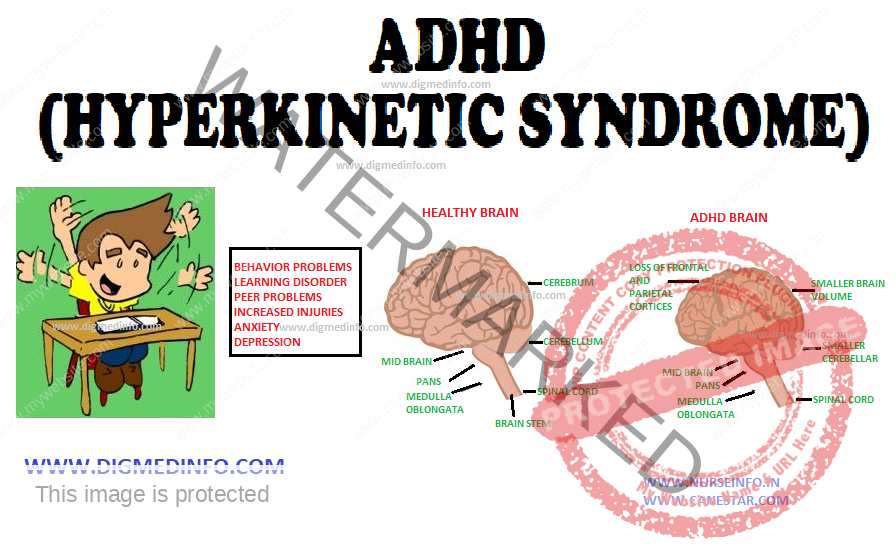
ATTENTION DEFICIT HYPERACTIVITY DISORDER – ADHD (HYPERKINETIC SYNDROME)

Attention Deficit Hyperactivity Disorder (ADHD)

This disorder is more common in boys. Persistent inattention, hyperactivity and impulsively are the cardinal features. These affect their scholastic performance.

Impulsive and reckless behavior is common. Brain damage due to birth trauma, allergy to food containing tartrazine, toxicity to lead and overactivity of peripheral adrenergic system are some of the recognized causes.

Treatment:

Stimulant drugs such as dexedrine 2.5-5 mg twice a day, clonidine, tricyclic antidepressants and monoamine oxidase inhibitors are beneficial. Many children become normal as they reach adolescence. Atomoxetine HCl is a recently introduced drug for this condition.

ATTENTION DEFICIT HYPERACTIVITY DISORDER – ADHD (HYPERKINETIC SYNDROME)

ACUTE POISONING

ACUTE POISONING – General Considerations, Clinical Presentation, General Management, Specific Measures, Forced Diuresis and Dialysis and Hemoperfusion

GENERAL CONSIDERATIONS

The high incidence of poisoning is attributed to the widespread use and free availability of insecticides, pesticides and other harmful chemicals for use in agriculture and industry. Depending upon the cost and local availability, varied substances are used. In the order of frequency, the toxic agents include organophosphorus compounds, barbiturates, benzodiazepines, vegetable poisons, phenothiazines, corrosive acids, and several others. The precipitating factors, which drive persons to commit suicide, are depressive illness, financial problems, domestic conflicts, and frustration in studies and jobs or incurable illness. Among epileptics and alcoholics the incidence of suicidal poisoning is high. Accidental poisoning is common in children. Persons engaged in the use of toxic chemicals in agriculture and in industry are liable to suffer if proper safety precautions are not adhered to.

CLINICAL PRESENTATION

Though poisoning by many chemicals lead to characteristic clinical features, in the majority of cases symptoms are non-specific and may be mistaken for other acute illnesses. The common presentations are coma, acute psychosis, convulsions, gastroenteritis, circulatory collapse, or pulmonary edema.

Corrosive poisons produce noticeable lesions at the points of maximum contact such as the mouth, esophagus and stomach. Other poisons affect specific organs maximally, e.g. liver damage in paracetamol poisoning, renal damage in copper sulphate poisoning, and cardiac dysfunction in Cerebera odollam poisoning. Poisons consumed on an empty stomach are absorbed more rapidly than if taken on full stomach. Also, if taken along with alcohol, many poisons are quickly absorbed and their damaging effects are cumulative.

Diagnosis

Diagnosis is rendered easy if proper history or evidence of the material is obtained, but in many cases such help is not available. A high index of suspicion on the part of the physician is absolutely necessary for arriving at an early diagnosis in such cases. Abrupt occurrence of acute illness in a person who is in good health should suggest acute poisoning as a possibility. Smell of alcohol or kerosene, severe respiratory depression, circulatory collapse, convulsions, constricted pupils, cardiac arrhythmias, dystonic postures, and muscle fasciculations add support to this diagnosis.

The outcome depends upon factors like:

1. The amount of poison and its mode of administration,

2. Presence of food in the stomach at the time of ingestion,

3. Delay in starting treatment,

4. Age,

5. General health and concurrent illness, and

6. Availability of specific antidotes.

Patients who are comatose due to acute poisoning face the twin dangers of the toxic-effects of the chemical and the grave consequences of an obstructed airway.

GENERAL MANAGEMENT

Acute poisoning is a medical emergency and is best treated in a well-equipped hospital with teams specially trained to handle such cases. Since in many cases the nature of the poison will not be evident at first, the aim of treatment is to keep the patient alive with support of vital functions, eliminate as much of the poison as possible from the body and prevent further absorption of poison. Specific antidotes are given as soon as the nature of the poison is known. Selective antidotes are available only for 2% of such poisons.

Emergency Management

Most important is to clear the airway and ensure adequate ventilation by positioning, suction, or by insertion of nasal or oropharyngeal airway. The respiration should be clinically assessed and if there is ventilatory impairment necessary support with supplemental oxygenation and mechanical ventilation should be instituted. Intermittent positive pressure respiration has to be started with endotracheal intubation, if conservative measures fail. The patient should be turned from side to side at four-hourly intervals to prevent aspiration and hypostatic pneumonia. Frequent bronchial suction helps to prevent atelectasis and aspiration pneumonia.

Shock is managed on the usual lines. Maintenance of fluid and electrolyte balance is of utmost importance in all cases.

Decontamination of skin

Pesticides and other chemicals which are present on the cloths and skin get absorbed through the skin and worsen the condition. Similarly corrosive agents rapidly injure the skin and eyes. In these situations washing the affected area with large quantities of water and soap prevents further systemic absorption of the toxin. Normal saline is preferred for irrigation of the eyes.

General Measures

An intake output chart should be maintained and a urine output of at least 1500 mL should be ensured. Replacement of electrolytes and correction of acidosis should be done with proper laboratory monitoring. Maintenance of nutrition is equally important. Diet containing 2000 calories should be given orally if the patient is conscious. In unconscious patients food has to be given through a nasogastric tube. Parenteral nutrition has to be started in severely affected patients.

Repeated examination of blood and urine for the level of the toxic agent helps to monitor the progress with treatment.

Specific Measures

a. Ingested poisons

In many cases of ingested poisons, considerable amounts remain in the gastrointestinal tract up to four hours; hence it is absolutely necessary to take appropriate measures for their removal. Induction of vomiting is safe in conscious patients. Vomiting is induced by tickling the pharynx or administration of gastric irritants such as concentrated common salt solution 200-400 mL. In the case of corrosive poisons and highly irritant substances like kerosene, emesis and gastric intubation are contraindicated. Gastric lavage by using a stomach tube is an effective method to empty gastric contents rapidly and this can be done even in unwilling patients. This is the method of choice in all conscious patients who have consumed noncorrosive poisons. However, it is risky in comatose patients due to the danger of aspiration into the respiratory tract and in such cases aspiration through Ryle’s tube is preferable. Gastric contents should be preserved in a sealed bottle for chemical examination and further medicolegal procedures. Use of activated charcoal, which adsorbs many toxins reduces gastric and intestinal absorption further. Dose is 50-200 g in 200 mL water initially and 50 g 6 hourly till recovery. The surface area of activated charcoal is increased several folds, compared to the parent substance and this large surface area adsorbs several substances non-specifically.

Purgatives such as magsulph. 15-30 g or sorbitol 1 g/kg bw (maximum of 150 g) orally followed by bowel wash 2 hours later help to eliminate the poison from the intestine.

b. Removal of absorbed poisons

Forced diuresis enhances the renal excretion of many poisons. Hemodialysis helps to eliminate many water soluble substances.

Forced Diuresis

The kidneys can be made to eliminate poisonous drugs at a rate consistent with the urine output. Contraindications include congestive cardiac failure, renal failure, rhabdomyolysis and cerebral edema. In an unconscious patient a Foley’s catheter should be introduced to facilitate uninterrupted flow of urine and for proper monitoring of output.

Dialysis and Hemoperfusion

Dialysis

Since most of the cases recover with forced diuresis, hemodialysis is indicated only in a few. Indications for hemodialysis are: (a) high blood levels of the drug, (b) renal failure, and (c) non-responsiveness to forced diuresis and (d) poisoning associated with deep coma, hypotension and fluid and electrolyte disturbances. In the absence of facilities for hemodialysis, peritoneal dialysis should be undertaken. Hemodialysis is 6-10 times more efficient than peritoneal dialysis.

Hemoperfusion is the process of passing the patient’s blood through cartridges packed with activated charcoal, which adsorbs drugs and toxins such as barbiturates, carbamazepine, glutethimide, meprobamate, methaqualone and several others.

Multiple dose activated charcoal Doses of activated charcoal 1-2g/kg bw repeated every 2-4 hours hasten elimination of drugs by adsorption of drugs excreted into the gut lumen (gut dialysis).

Antidotes

Antidotes are available for 2% of the poisonous substances. These may be chemical antidotes, which neutralize the action of the poison, or biological antidotes, which prevent their pharmacological response. They should be employed only after ascertaining the nature of the poison. In most cases, the antidote is indicated by the manufacturers on the packing of the toxic chemical

Many of the patients with suicidal poisoning attempt to repeat these episodes because of their psychiatric problems. Hence, it is necessary to instruct their relatives and also arrange for proper psychiatric treatment after the initial episode is treated.

FORCED DIURESIS

This is employed when the toxin is removable by the kidney and the metabolites are toxic to the system. A substantial proportion of the poison is excreted in the urine unchanged. The poison should be distributed mainly in the extracellular fluid and only minimally bound or not bound at all to proteins.

Rationale

Elimination of the toxic substance is enhanced by manipulation of the urine pH so as to render the toxin in the ionized form. Forced diuresis should be considered, and may be indicated, in poisoning due to the following substances.

Potential complications

1. Fluid overload

2. Pulmonary edema

3. Cerebral edema

4. Electrolyte and acid-base disturbances.

Diuresis is induced by giving 5% glucose continuously IV as drip and frusemide IV in dose of 20 mg 6th hourly depending on the response. Proper estimation of electrolytes and acid-base states should be undertaken during and after the procedure.

Forced acid diuresis

The urine pH is adjusted to 5.5-6.5 by giving: 10 g arginine or lysine hydrochloride intravenously over 30 minutes followed by ammonium chloride 4 g 2 hourly, by mouth.

Forced alkaline diuresis

The urine pH is adjusted to 7.5-8.5 by giving boluses of 50 mmol (approx 50 mL) of 7.5% sodium bicarbonate solution. Often 200-300 mmol is required in the first 1-2 hours. Since a large sodium load is being given with the bicarbonate cardiac failure may be precipitated in susceptible individuals.

DIALYSIS AND HEMOPERFUSION

In hemodialysis, materials, which are dialyzable including toxic materials, are dialyzed across a semipermeable membrane, using appropriate solutions, which will permit the removal of the toxic substance. Dialysis machines are available in several hospitals offering secondary care.

Hemoperfusion is the removal of the toxic material by perfusion of blood through a cartridge containing material, which will absorb the particular substance.

Requisites for Instituting Dialysis Procedures

1. The drug or toxic substance should diffuse easily through the peritoneum or dialysis membrane or be readily adsorbed to activated charcoal or uncharged resin.

2. A significant proportion of the poison should be present in plasma water or be capable of rapid equilibration with it.

3. The pharmacological effect of the substance should be directly related to the blood concentration.

4. Antidote is not easily available.

Depending on the situation any one of the procedures can be adopted. Compared to peritoneal dialysis, the other procedures are thrice more efficient.

Indications for Dialysis and Hemoperfusion

1. Severe clinical intoxication as shown by grade IV coma, hypotension, hypothermia and hypoventilation caused by hypnotic drugs

2. Progressive clinical deterioration, despite adequate supportive management.

3. High plasma concentration of the toxic agents. Drugs that can be effectively dialysed includes barbiturates, phenytoin, primidone, paraldehyde, chloral hydrate, amphetamine, alcohols, methanol, ethylene glycol, salicylates, paracetamol, several antibiotics, isoniazid, quinine, quinidine, metallic salts including lithium, bromide, iodide and potassium, ergotamine, carbon tetrachloride toxic principles of mushrooms and others.

Contraindications

1. The toxic substance is a rapid acting metabolic poison.

2. The effect of the substance is irreversible, e.g. organophosphorus compounds.

3. The drug is relatively non-toxic, e.g. benzodiazepines.

4. The drug has a very large volume of distribution.

5. Cardiogenic shock.

6. Coagulopathy.

Potential Complications

1. Thrombocytopenia (about 30% reduction)

2. Leucopenia (about 10% reduction)

3. Loss of clotting factors.

4. Lowering of calcium, glucose

5. Bleeding tendency due to heparinization

6. Patient may disconnect shunt lines

7. Air embolism

8. Infection

The choice of elimination technique should depend upon the plasma level of the substance.

ACUTE POISONING – General Considerations, Clinical Presentation, General Management, Specific Measures, Forced Diuresis and Dialysis and Hemoperfusion

Infection

INFECTION – GENERAL INFORMATION (Types, Sources and Pathogenesis), PATHOGENESIS, APPROACH TO PATIENT WITH FEVER, SYSTEMIC RESPONSES AND LAB INVESTIGATIONS

INTRODUCTION

Microbes are abundant in nature, the vast majority of them harmless to man and many of them essential to life. They are mostly commensals and a few are pathogens. The organisms capable of establishing themselves and multiplying in hosts are called parasites, which may be commensals or pathogens. All our body surfaces have an indigenous bacterial flora. This normal flora protects us from infection by multiple mechanisms 1, compete with pathogens in utilizing nutrients. 2, producing antibacterial substances inhibiting growth of pathogens. 3, inducing host immunity that is cross reactive and effective against pathogens.

Pathogens lead to adverse effects on hosts while commensals cause no harm to their hosts and exist in harmony. Commensals may cause disease when host resistance is lost or when transferred to an inappropriate site, e.g. oropharyngeal commensals aspirated into lung.

Infection:

Infection is defined as multiplication of microbes in the tissues of the host with or without producing disease. Infections without disease manifestations are called subclinical infections.

Infections remain one of the main causes of morbidity and mortality in man worldwide. Poverty and overcrowding in the underdeveloped countries increase this burden. Infectious agents include bacteria, viruses, fungi, protozoa, helminths and prions.

Types of Infections

1. Exogenous infections: Infection from external source.

2. Endogenous infection: Infection by organisms harbored by the individual.

3. Primary infection: Initial infection of a host by an organism.

4. Secondary infection: Host suffering from an infectious disease invaded by another organism.

5. Re-infection: Subsequent infection by same organism.

6. Focal infection: Infections confined to one area/organ e.g. Tonsillitis.

7. Nosocomial infection: Infection acquired after admission to hospital.

8. Super infection: Patient receiving broad spectrum antibiotics get colonized by resistant pathogens and infection produced by them.

9. Opportunistic infection: Organisms that ordinarily do not cause infection in healthy individuals but do so in individuals with markedly reduced resistance (Immunocompromised hosts).

10. Latent infection: Pathogen remains in the tissue without producing disease but may lead to disease when host resistance is lowered.

Source of infection:

Infection may be obtained from human, animal or other sources. When the source of infection is man, the infectious agent may originate from patients or carriers.

A carrier who harbours the pathogenic organism without developing any disease due to it, is called healthy carrier.

A convalescent carrier is one who harbours the organism for some period after recovering from the disease.

Zoonoses are infections transmitted from wild or domestic animals to man e.g. plague, rabies.

Some infections are transmitted by insect vectors e.g. Anopheles mosquito transmits malaria.

Direct contact is necessary for transmission of organism like Staphylococci. Respiratory diseases such as influenza, tuberculosis, pneumonia and others spread by air-borne droplets. Food or Water borne transmission occurs in typhoid, hepatitis A and E, cholera and others. Sexual transmission is the main route for syphilis, gonorrhea and HIV. Vertical transmission i.e. from mother to fetus occurs in diseases like rubella and syphilis.

PATHOGENESIS

The pathological lesions, symptoms and signs may be produced by several mechanisms:

1. Caused by the organism directly e.g. Boils, abscesses, pneumonia, dysentery, tuberculosis.

2. Organisms like C. diphtheriae and Cl. tetani multiply locally without entering the system and elaborate toxins (exotoxins) which are absorbed into the system producing the manifestations.

3. Vibrio cholerae elaborates an exotoxin having local effect on the intestinal mucosa producing secretory diarrhea.

4. Many gram negative bacteria produce endotoxins by disintegration in the tissues producing direct effect on tissues and liberation of chemical mediators of inflammation like cytokines which are mainly responsible for the manifestations.

5. Activation of immunological mechanism is one of the most important pathogenic mechanisms of tissue damage in several infections.

6. Infections like HIV and syphilis suppress the immune mechanism of the host by acting upon the lymphocytes.

7. Some infectious agents are oncogenic i.e. giving rise to tumours- e.g. HIV, EB virus, hepatitis B and others. Medical care itself increases the patient’s risk of acquiring infection in several ways:

1. Contact with pathogens in the hospital.

2. Breach of skin (e.g. incisions, IV devices) or mucous membranes (e.g. endotracheal tube, indwelling catheter).

3. Alteration of normal flora by antibiotics.

4. Reduction of immunity by immunosuppressive drugs.

The body’s mechanisms to prevent and overcome the infections are local defenses, phagocytic cells, antibodies (immunoglobulins), immunocytes and nonspecific defense aids such as lysozymes, complement and properdin.

Changing scenario of infection worldwide: The pattern of infectious agents and pathogenesis are changing due to seceral factors such as changes in environment, influence of polymicrobial therapy and alterations in host defences.

Newly recognized infections are AIDS, severe acute respiratory distress syndrome (SARS), avian influenza and others.

Rebound of diseases like, malaria, tuberculosis, rheumatic fever and others thought to have been eradicated from developed countries. Recognition of role of infectious agents in the causation of diseases previously thought to be non-infectious e.g. Helicobacter pylori in the causation of peptic ulcer, Human papilloma virus in carcinoma cervix.

Human Polymicrobial Infections

In the immunocompetent state, colonization by one organism inhibits colonization by another. This is known as microbial interference e.g. S. pneumonia and S. aureus. At present, due to the prevalence of different kinds of immunosuppressed states, polymicrobial disease caused by combination of viruses, bacteria, fungi and parasites are being recognized. In this situation, presence of one micro-organism causes a niche for the other pathogen to colonize and thrive e.g. measles, tuberculosis and S.aureus; EB virus and retrovirus; HBV and HIV; HIV and tuberculosis.

Immunodeficiency states may be congenital or acquired. The latter include malnutrition, extremes of age, loss of surface epithelium, diabetes mellitus, cancer, cancer chemotherapy, chronic renal failure, chronic hepatic failure, immunosuppressant drugs, HIV infection and others. The resultant degree of immune suppression is the total effect of all the contributory factors. Immunodeficiency may be general or specific towards specific pathogens. Neutropenia and reduction of other phagocyte cells predispose to infection by extra cellular bacterial pathogens, both endogenous and exogenous. Suppression of T-cell mediated immunity predisposes to viral infections. Multiple intubations, hospitalization and management in intensive care facilities predispose to infections.

Clinical features of infection in the immunocompromised host differ from those in immunocompetent hosts. Signs of infection in the immunocompromised hosts include:

1. confusion

2. faint erythematous rashes

3. lymphangiectatic streaks on the skin

4. pleurisy dyspnoea or cough with clear chest X-ray

5. minimal erythema with serosanguineous discharge at sites of insertion of catheters, surgical sites, abscess or drains

6. minimally elevated values of liver function tests, and serum levels of LDH (lactic dehydrogenase) and C K (Creatine kinase) and

7. unexplained rise or fall of leukocytes and platelet counts.

Antimicrobial resistance:

As we developed newer antimicrobial drugs, microbes developed the ability to elude our best weapon. Antibiotic resistance is developing at an alarming rate. Multidrug resistant pathogens such as E. coli, Klebsiella, Pseudomonas, Staph. aureus, M.tuberculosis, HIV, and others are extremely common. Especially in the ICUs these get disseminated.

Bioterorrism:

Use of biological infectious agents such as anthrax spores, plague, small pox and others may be resorted to as potential weapons for stealthy warfare. Eradication of infectious diseases like smallpox totally from the world and polio from most countries has been achieved.

PATHOGENESIS OF FEVER

PATHOGENESIS

Pyrogens are substances causing fever. These may be exogenous or endogenous. Exogenous pyrogens are molecules which interact with host cells to induce secretion of pyrogenic cytokines. Most of these are microbial products, microbial toxins or whole microorganisms.

The best example is the lipopolysaccharide endotoxin found in the cell wall of gram-negative bacteria. Enterotoxin of S. aureus and Group A and B streptococci are other examples. Endogenous pyrogens are cytokines which are small molecular weight proteins most important being interleukin.1 (IL-1), IL-2 and tumour necrosis factor alpha (TNF α). The synthesis and release of pyrogenic cytokines are induced by a wide spectrum of exogenous pyrogens most of which are of bacterial, fungal or viral origin. In addition, inflammation, trauma, tissue necrosis and antigen–antibody complexes induce production of pyrogenic cytokines. Main source of pyrogenic cytokines are monocytes and macrophages, and to a lesser extent neutrophils and lymphocytes.

Pyrogenic cytokines stimulate production of the prostaglandin – PGE2 from arachidonic acid near the hypothalamic thermoregulatory centre. Arachidonic acid is released from cell membrane by the enzyme –Phospholipase A2. PGE2 raises the set point in the thermoregulatory center. Pyrogenic cytokines also induce production of PGE2 in the periphery which is responsible for myalgia, arthralgia and malaise that accompany fever.

Fever as a Defense Adaptation

There is suggestive evidence that, for some microorganisms at least, a febrile host response may assist in curtailing infection and speedy recovery. Experimental data support the notion that raised body temperature interferes with growth and / or virulence factors of some bacterial and viral pathogens. Fever, slightly increases immune reaction and increases chemotactic, phagocytic and bactericidal activity of polymorphonuclear leukocytes.

In immunocompromised individuals and those at the extremes of age, a prompt febrile response may notdevelop even in the presence of severe infection. Such persons are at greater risk of succumbing to the infection.

INFECTION – APPROACH TO PATIENT WITH FEVER

APPROACH TO PATIENT WITH FEVER

In the diagnosis of the cause of fever, science and art of Medicine come together. History is most important.

History of travel to a malaria – endemic area may give a clue. Presence of nasal symptoms and sore throat suggest viral etiology. Severe myalgia may suggest Influenza, Dengue fever or Leptospirosis. Eye congestion, subconjunctival hemorrhage and muscle tenderness may suggest leptospirosis. Skin rashes and mucous membrane lesions give diagnostic clue. Erythematous blanching rash indicates viral exanthematous fever as the most likely cause. Palatal petechiae along with posterior cervical lymphadenopathy and grey white tonsillar exudates suggests infectious mononucleosis. Enlarged tender tonsillar lymph nodes with tonsillar exudate and neutrophilic leukocytosis suggest streptococcal tonsillitis. Koplik’s spots in the buccal mucosa indicate measles. Dysuria and loin pain with tenderness suggests pyelonephritis.

Duration of Fever: This is an important point which helps in clinical diagnosis. Regular recording of temperature, pulse rate and respiration rate are routinely done in all hospitals. Fever of more than 5 to 7 days with gastro intestinal symptoms with or without malena and just palpable soft spleen may suggest typhoid fever. Onset may be abrupt in infections like pneumonia or may show a step-ladder type of rise in typhoid. Fever with clubbing of fingers and splinter hemorrhages in the nail bed in a patient with congenital or rheumatic valvular heart disease should suggest infective endocarditis.

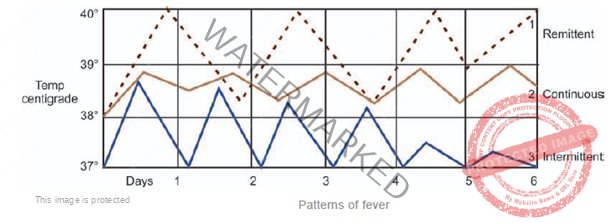
Patterns of Fever: Recording the pattern of temperature is an important clinical clue to diagnosis. In the ordinary febrile patient, temperature is recorded thrice daily, but in special cases where large fluctuations occur and in acute care settings temperature has to be recorded more frequently.

Continuous Fever Temperature is persistently elevated with diurnal variation of less than 1oC e.g. Typhoid in the 2nd week, typhus, viral infections and others.

Remittent Fever – Temperature is persistently elevated with diurnal variation more than 1oC – typhoid in 1st week, brucellosis, leptospirosis and others.

Intermittent Fever – Temperature is discontinuous, touching normal at least once in 24 hours. This may be seen in pyogenic infections,  lymphomas, tuberculosis, bacteremias, malaria and others.

Periodic Fever: These show a regular periodicity in their occurrence. Fever occurring on alternate days with one day interval in between is called tertian periodicity e.g. vivax malaria (benign tertian). Fever occurring every 4th day with 2 days’ afebrile period in between is known as quartan periodicity e.g. quartan malaria. Continuous and remittent fevers may be converted to intermittent fever by repeated doses of antipyretics.

Drug Induced Fever Several drugs can produce fever by various mechanisms. These include allergy, systemic metabolic effects and agranulocytosis. Drug induced fever becomes a diagnostic problem in patients receiving multiple drugs for long periods, especially in hospitals.

Patterns of Fever
Patterns of Fever

Of the medications that cause fever, antibiotics are the most frequent–especially penicillins and cephalosporins, sulfonamides, nitrofurantoin, antituberculosis agents and others. Antiepileptic drugs especially phenytoin are also known to cause fever. Drug induced fever does not have specific characteristic features. Most often, it occurs 5 to 10 days after starting the drug, but can occur even after the first dose itself.

INFECTION – SYSTEMIC RESPONSES IN FEVER

SYSTEMIC RESPONSES IN FEVER

• Increase in metabolic rate – Oxygen consumption increases by 13% for each 1oC rise of temperature. Hence fever may aggravate or precipitate pre-existing cardiac, cerebrovascular or pulmonary insufficiency.

• Increase in heart rate. For every 1oC rise of temperature above normal, the heart rate increases by 18/minute. In some fevers like pneumonia and rheumatic fever, heart rate may be disproportionately high (rapid pulse fever). In typhoid, some viral infections, meningitis, brucellosis, drug induced fever and many cases of leptospirosis; pulse rate may be disproportionately slow (slow pulse fever).

• Blood pressure may increase during the period of rise of temperature because of vasoconstriction and decrease during the period of defervescence because of vasodilation.

• Fluid loss increases due to evaporation and sweating–average of 360 mL excess fluid is required for 24 hours for 1oC rise in temperature.

• Increase in respiratory rate occurs with fever. The usual ratio of 1:4 with heart rate is maintained except in the case of primary respiratory diseases such as pneumonia and pleural effusion.

• Chills occur in the initial phase because of peripheral vasoconstriction.

• Rigors accompany rapid increase in temperature. They are due to vigorous muscle contractions. Repeated occurrence of rigor is most typically seen in malaria, filariasis, urinary tract Infections, and abscess formation anywhere in the body. Rigor may occur in many types of continuous fever treated intermittently with antipyretics. When the effect of the drug wanes off rigor occurs in an attempt on the part of the body to resume the high temperature.

• When the high temperature falls to normal or subnormal within a few hours, it is called Fall by Crisis, and when the temperature reaches normal slowly over several days, it is called Fall by Lysis.

• Headache may accompany any type of fever but severe headache and photophobia are characteristic prominent features of intracranial infections and sinusitis.

• Delirium – This is toxic confusional state. It is more common in the very young and very old. Fever may induce mental changes in those with organic brain syndrome. The cytokines TNFα and IL-1 cause release of endorphins in the brain and may precipitate delirium.

• Excessive sweating is the regular accompaniment of defervescence. Particular patterns of sweating like “night sweats” are characteristic of tuberculosis and lymphoma. In almost all fevers fall of temperature is accompanied by sweating.

• Muscle pain – (myalgia) is characteristic of infections such as influenza, enterovirus, dengue fever, leptospirosis and others.

• Herpes labialis – Fever may activate the latent viral infection Herpes simplex which causes vesicles at muco-cutaneous junctions of the nose and lips. Pneumonia and meningitis are common to produce Herpes labialis whereas typhoid is very rare to do so.

• Feverishness: This is a subjective feeling of fever which may be experienced even without rise in temperature. Feverishness has not got the same pathological importance of fever. Therefore it is essential to record the temperature to distinguish between the two conditions.

INFECTION – FEVER OR INFECTION DETECTION – LAB INVESTIGATIONS

FEVER OR INFECTION DETECTION – LAB INVESTIGATIONS

Leukocyte Patterns

Neutrophil Leukocytosis and presence of juvenile or band forms of neutrophils and toxic granulations in neutrophils usually suggest bacterial infections. The severity of leukocytosis may also indicate the severity of sepsis. Total leukocyte counts above 10,000/cmm with more than 70% as neutrophils are very suggestive of pyogenic infection. Leukemoid reaction may accompany severe leukocytosis.

Neutropenia, mild to moderate, is usually seen in many viral infections, about 25%, of typhoid, brucellosis, leishmaniasis, tuberculosis, histoplasmosis and others.

Leukopenia with relative or absolute lymphocytosis occurs in several viral infections. Many viral infections show moderate or even severe thrombocytopenia with or without bleeding manifestations.

Atypical lymphocytes – are seen in some viral infections especially Epstein–Barr virus, cytomegalo virus, HIV, dengue, rubella, viral hepatitis, varicella and others.      

Monocytosis is commonly seen in typhoid and tuberculosis.

Eosinophilia: Occurs in parasitic infections, filariasis, tropical pulmonary eosinophila and hypersensitivity to drugs.

1. Isolation or identification of the infective agent in blood/urine/body fluids/pus and tissues specimens

a. Culture: Proper collection of sample without contamination and transport to the lab is important e.g. blood culture in sepsis, urine culture in UTI, CSF in meningitis, sputum in pneumonia, pus in abscess.

b. Gram stain of specimen may help e.g. sputum, CSF, pus, urethral discharge and others. The findings on gram stain should correspond to the results of culture, to be diagnostic.

c. Demonstration of parasites like malaria and microfilaria in blood, leishmania in bone marrow and liver biopsy specimens, vegetative amoeba in stool or scrapings from abscess wall.

2. Demonstration of antibodies to specific pathogen e.g. Widal in typhoid, IgM antibodies against many viruses like hepatitis A, E and dengue virus.

3. Detection of bacterial/fungal/viral antigens in blood/body fluids even when cultures are negative or practically difficult e.g. HBsAg in virus B hepatitis.

4. Detection of very minute quantities of foreign nucleic acid by techniques such as PCR (polymerase chain reaction) that allow amplification of specific DNA/RNA sequences.

5. Histopathology: e.g. tuberculosis, histoplasmosis, sarcoidosis and others can be diagnosed by biopsy of lymph node, liver and other organs.

Hyperpyrexia - Fever, INFECTION – GENERAL INFORMATION (Types, Sources and Pathogenesis), PATHOGENESIS, APPROACH TO PATIENT WITH FEVER, SYSTEMIC RESPONSES AND LAB INVESTIGATIONS
Hyperpyrexia – Fever INFECTION – GENERAL INFORMATION (Types, Sources and Pathogenesis), PATHOGENESIS, APPROACH TO PATIENT WITH FEVER, SYSTEMIC RESPONSES AND LAB INVESTIGATIONS

New Zealand Nurse Jobs for Foreign Nurse

Steps to enter New Zealand for nurse jobs for Foreign Nurse

New Zealand is a beautiful island Country located in the southwestern Pacific Ocean. New Zealand is the favorite destination for health care professionals especially for foreign nurses as there is shortage of nurses for next 10 years of time. To enter New Zealand, foreign nurse need to follow steps to get entry for jobs and work permit.

STEPS TO BE FOLLOWED TO ENTER NEW ZEALAND FOR NURSE JOBS

  • Basic Requirement for Registration
  • Need To Obtain job offer in New Zealand
  • Register with New Zealand Nursing Council
  • Need to Obtain a police clearance and Medical Clearance
  • Need to Obtain Practicing certificate from the New Zealand Nursing Council
  • Obtain a working visa to work in New Zealand
  • Start working and settle

REGISTERED NURSE SALARY IN NEW ZEALAND

Registered Nurse can get good pay and their role to assess, treat and support people in hospitals, clinics and nursing homes. Enrolled nurses care for patients while a registered nurse or nurse practitioner supervises them

SALARY

Graduate registered nurses – $60 K per year

Senior registered nurses – $85K – 136 K per year

BASIC REQUIREMENT FOR REGISTRATION (Step 1)

Foreign nurse need to qualify to get registered in Nursing Council of New Zealand. For example, Enrolled Nurse should have or completed a Diploma of Enrolled Nursing (Level 5).

For Registered Nurse, the nurse should complete Bachelor of Nursing or other Level 7 or 8 qualification approved by the Nursing Council of New Zealand. Nurse need to get registered with the Nursing Council of New Zealand.

Working Experience

Foreign nurse need to have 2 years of experience or 2500 hours of nursing working experience within the last 5 years.

English Examination

Foreign nurse need to pass English Examination either OET (Occupational English Test) or the IELTS (International English Language Testing System.

For OET, the nurse need to have minimum score of 350 for each band, while for IELTS – the nurse need a score of 7 for each band as well. Foreign nurse need to take academic section in IETLS.

Exemption for Few Countries  

Foreign nurse can be exempt from the English Language proficiency test if nurse get nursing education and registered to practice in the United Kingdom, Ireland, Canada and USA

NEED TO OBTAIN JOB OFFER IN NEW ZEALAND (Step 2)

Foreign nurse need to apply for job through online website or through consultant. Once they get job offer, nurse can proceed for registration process in Nursing Council of New Zealand.

REGISTER WITH NEW ZEALAND NURSING COUNCIL (Step 3)

To start registration, the nurse needs to apply to CGFNS International Inc to verify documents of nursing candidates. Foreign Nurse has to request CGFN to send report to New Zealand Nursing Council. Once documents are verified, nurse can apply for nursing council for registration.

  1. Apply to CGFNS International INC. – The CGFNS is responsible for verifying documents.

Documents submitted

  • Identify documents
  • Employment history
  • Education history
  • License validation

2. Request CGFN to send report to the Nursing Council – within 3 working days after submitting your documents, nurse will get report. Nurse request CGFNS to send these documents to New Zealand’s Nursing Council

3.Apply to the Nursing Council – during registration, complete CAPs. Criminal History Check (ICHC is valid for six months)

4. After registration, the Nursing Council will ask to apply for an Annual Practicing Certificate. (certificate needed to practice the nursing profession in country)

REGISTRATION COSTS

  • CGFNS – $ 300 (US Dollars)
  • Nursing Council application and processing fee – $485 (New Zealand Dollars)
  • For international Criminal History Check – $149 (Australian Dollars)
  • Competency Assessment Programmes (CAPs) – 6000 to 11,000 NZD for CAPs

NEED TO OBTAIN A POLICE CLEARANCE AND MEDICAL CLEARANCE (Step 4)

Foreign nurse need to complete criminal history check and competent to practice who isn’t eligible to practice in New Zealand.

FITNESS TO PRACTICE

Nurse need to complete an ICHC (International Criminal History Check) – which can do through Fit 2 Work website

If nurse lived in New Zealand for at least 6 months, through partnership visa or working as healthcare assistant, nurse required to have Criminal History Check via the MOJ (Ministry of Justice)

COMPETENT TO PRACTICE

CAPs (Competence Assessment Programmes) – nurse need to take CAP to become competent to work in New Zealand.

CAPs take around 6 to 12 weeks to complete. Nurse need to find a school that offers CAPs. After complete CAPs, nurse can then apply for an annual practicing certificate.

List of Accredited Competency Assessment Programmes: (fee payment)

Ara Institute, Christchurch, New Zealand: from $6,750 NZD

Avatar Learning, New Plymouth, New Zealand: £10,000 NZD

Lonsdale Education Centre, Foxton, Palmerston North, New Zealand: $11,550 NZD

Manukau Institute of Technology College, Auckland, New Zealand:  $10,000 NZD

Nelson Marlborough Institute of Technology, New Zealand:  $9,840 NZD

Oceania Group, Auckland, New Zealand: $8,250 NZD

Otago Polytechnic, Dunedin, New Zealand: $9,035 NZD

Rannerdale Veterans’ Care, Christchurch, New Zealand: $10,500 NZD, $8,700 NZD

Toi Ohomai Institute of Technology, Rotarua, New Zealand:  $8,900 NZD

UCOL Universal College of Learning, Palmerston North, New Zealand: $10,000 NZD

Unitec, Auckland, New Zealand: $9,180 NZD

Waikato Institute of Technology, Hamilton, New Zealand:  $11,380

Western Institute of Technology, Taranaki, New Zealand: $15,000 NZD

Need to obtain practicing certificate from the New Zealand Nursing Council (Step 5)

After registration, Nursing Council of New Zealand will ask nurse to apply for practicing certificate to work in New Zealand. After Nursing Council approves issuing practicing certificate, nurse is eligible to work in New Zealand.

Obtain a working visa to work in New Zealand (Step 6)

Foreign nurse can apply for working visa to start work in New Zealand. There are several visas is available, notably Skilled Migrant Category Resident Visas, Long Term Skill Shortage List Work Visa, Silver Fern Visas, Working Holiday Visa and Temporary Work Visa.

APPLYING FOR VISAS FOR NEW ZEALAND

Skilled Migrant Category Resident Visas – grant to people who are 55 or under in good health, of good character and proficient in the English language. A point-based system is used to determine who qualifies for such visas.

Long Term Skill Shortage List Work Visas – these visas is to apply for residency after working for two years. It can be applied through post or online and processed within 25 days. Employer in New Zealand would also need to complete a form for you to get this visa

Silver Fern Visas – skilled workers between 18 and 35 years old.

Working Holiday Visa – people between 18 and 30 and it allows them to stay in New Zealand for up to 23 months. It is only available to people who are citizens of certain countries (UK, the USA and Canada)

Temporary Work Visa – available to people who have firm job offer in New Zealand, are looking for work experience, or are going to New Zealand to join a partner and would like to find work

NURSES REGISTERED IN AUSTRALIA

Nurses registered in Australia may apply to work in nursing jobs in New Zealand under the Trans-Tasman Mutual Recognition Act (TTMR).

  • Complete the TTMR application form. This can be found on New Zealand Nursing Council (NZNC) website
  • When you submit your application, attach certified copies of your passport, registration certificate and current practicing certificate
  • Pay the application fee
  • Undergo an Australian Criminal History Check.
  • After receiving registration, nurse need to apply for New Zealand Annual Practicing Certificate.

Before receiving full registration, nurse can begin to work in nursing job in New Zealand. When nurse submitted registration application and paid the fee, they given reference number. Use this number to work, while you are waiting for your application to be processed.

Steps to enter New Zealand for nurse jobs for Foreign Nurse

NURSE JOB AUSTRALIA

HOW FOREIGN NURSE CAN GO AUSTRALIA FOR NURSE JOB?

Australia is the country with plenty of opportunities for foreign nurses and its favorite destination for nurses. The entry for foreign nurses has complex steps and nurse need to be aware of the procedure to enter Australia for nursing jobs.

Steps Involved in employment in Australia for International qualified nurses and midwives

IQNM (International Qualified Nurses and Midwives) should follow few steps to get jobs in Australia. Foreign nurse need to assess ability to meet registration and immigration requirements. There is an option of Complete Self-check need to be completed that includes Stream A (include Orientation Part 1) and Stream B (include Orientation Part 1 and Outcomes-based assessment (OBA)). After this step, nurse need to fill application form and provide documentation to Ahpra. Next, NMBA will assess nurse requirements for registration. Finally, foreign nurse will get registration and can apply for immigration to Australia. Final and last step, nurse can find jobs and immigrate to Australia.

  1. Assess nurse ability to meet the registration requirements
  2. Assess nurse ability to meet the immigration requirements
  3. Complete self-check
    • If Stream A, successfully complete Orientation Part 1
    • If Stream B, successfully complete Orientation Part 1 and the outcomes-based assessment (OBA)
  4. Fill in application form and provide all documentation to Ahpra
  5. NMBA will assess whether you meet the requirements for registration
  6. Receive registration
  7. Apply for immigration to Australia
  8. Obtain employment
  9. Emigrate to Australia
  10. Begin working

STEPS INVOLVED TO GET JOBS IN AUSTRALIA

QUALIFICATION (FIRST STEP)

This is the first step for foreign nurse, nurse need to be qualified to apply and registered in NMBA.

  1. Foreign nurse need to apply and registered with the Nursing and Midwifery Board of Australia (NMBA).
  2. Nurse need to apply for visa issued by the Australian Department of Home Affairs
  3. Both application processes are entirely separate and success in one does not automatically guarantee success in other and with one clearance nurse will not get permit to work in Australia.

ANMAC (Immigration) and NMBA (Registration) ASSESSMENTS (SECOND STEP)

ANMAC

Australian Nursing and Midwifery Accreditation Council is independent organization gazette by the Minister for Immigration to perform skills assessment for migration purposes.

ANMAC assesses the skills of IQNMS who want to migrate to Australia under the General Skilled Migration program

ANMAC – Work experience verification process (takes approximately 6 weeks). Processing times will vary depending on the number of professional references submitted in nurse application and the time taken to verify all documentation.

NMBA (Nurses and Midwifery Board of Australia)

Nurses and midwives must be registered with the Nursing and Midwifery Board of Australia (NMBA), and meet the NMBA’s professional standards in order to practise in Australia.

Ahpra

The Australian Health Practitioner Regulation Agency (Ahpra) assesses application for registration from internationally qualified nurses and midwives of behalf of the NMBA.

EMPLOYMENT (THIRD STEP)

Neither Ahpra nor the NMBA are involved in employment matters. Health practitioner must hold registration with the relevant National Board prior to taking up employment in Australia. First foreign nurse need to get registration and apply for work.

SELF-CHECK AND PORTFOLIO (FOURTH STEP)

Before applying for registration, foreign nurse need to complete self-check

Upon completion of the Self-check, each IQNM applicant will be assigned to a “Stream” which is dependent on which qualification assessment criteria a foreign nurse meet.

Foreign nurse who wish to register and work in Australia as a registered nurse, enrolled nurse, or midwife must complete an orientation to the Australian healthcare setting. There are two parts to the orientation.

Orientation Part 1 – It must be completed before registration

Orientation Part 2 – It must be completed after registration

The information provided by candidates during the Self-check is checked by Ahpra at the Portfolio stage. At this stage, candidates must provide additional personal and contact information as well as identification and qualification documentation  

Completing the self-check – Three Streams (Stream A, B and C)

Stream A – Nurse who holds a qualification considered to be substantially equivalent, or based on similar competencies, to an approved qualification

Stream B – Nurse who hold a qualification that is relevant to the profession, but is not substantially equivalent, nor based on similar competencies to an approved qualification

Stream C – Nurse who holds a qualification that is not substantially equivalent or relevant to an approved qualification

Stream A

Stream A candidates must first pay the IQNM assessment fee in order proceed in the IQNM assessment process.

Orientation Part 1 – an online learning course providing an introduction to Australia and the Australian healthcare

Stream B (Outcomes-based assessment)

Stream B candidates – nurse pay assessment fee for IQNM assessment process

Portfolio – provision of qualification and identification details and documentation

Outcomes-based assessment (OBA) comprising:

  • Multiple-choice question (MCQ) exam related to the profession/division in which they intend to register in Australia
  • Objective Structured Clinical Examination (OSCE) related to the profession/division in which they intend to register in Australia

Stream C

IQNMs assigned to Stream C after completing the Self-check will be advised that the only way to proceed in the assessment process to upgrade their qualification

  • Nurse should have a midwifery or nursing Bachelor degree (AQF level 7 or comparable)
  • An enrolled nursing Diploma (AQF level 5 or comparable)

STEPS AFTER SELF-CHECK (ASSESSMENT STAGES) (FIFTH STEP)

Orientation Part 1 – online learning course

Candidates must complete Orientation Part 1 within 90 days from creating their account after completing Self-check in order to progress to:

  • Apply for registration (for Stream A candidates), or
  • The Portfolio stage (for Stream B candidates and IQNMs whose qualification(s) need to be assessed)

PORTFOLIO (SIXTH STEP)

The information provided by candidates during the Self-check is checked by Ahpra at the Portfolio stage. At this stage, candidates must provide additional personal and contact information as well as identification and qualification documentation

Who needs to complete the Portfolio Stage?

– Stream B candidates

– IQNMs with qualifications requiring assessment

EXAMINATION (SEVENTH STEP)

  • Multiple choice question exam (MCQ)
  • Exam assesses the candidate’s professional knowledge.
  • Objective Structured clinical exam (OSCE)

OSCE is a clinical exam to assess whether candidates demonstrate the knowledge, skills and competence of a graduate-level nurse or midwife from an Australian NMBA-approved program of study

REGISTRATION (EIGHTH STEP)

Once IQNMs successfully complete the Self-check and any required assessment stages, they are eligible to apply for registration.

  • Applying for registration
  • Registration application stages
  • Registration application outcome

ORIENTATION TO HEALTHCARE IN AUSTRALIA (NINTH STEP)

The NMBA’s (The Nursing and Midwifery Board of Australia) orientation program has two parts:

  • Orientation Part 1 – online learning before registration
  • Orientation Part 2 – online learning after registration

FIND EMPLOYMENT OR JOBS IN AUSTRALIA (TENTH AND FINAL STEP)

After registration and orientation program is over, foreign nurse can find jobs in Australia. Finally, nurse can immigrate to Australia and Start work as nurse in Australia.

HOW FOREIGN NURSE CAN GO AUSTRALIA FOR NURSE JOB?

NEW LIST OF GNM COLLEGES IN KARNATAKA APPROVED BY INC, KNC AND KSDNEB

NEW LIST OF GNM (GENERAL NURSING & MIDWIFERY) COLLEGES IN KARNATAKA APPROVED BY INC & KNC AND KSDNEB

GNM (General Nursing and Midwifery) colleges approved by INC (Indian Nursing Council) and KNC (Karnataka Nursing Council) are listed below with address details. The Management details of each college that is the college belongs to government or private is also mentioned. Students can check the list and apply to the colleges they wish.

No NAME OF INSTITUTIONMANAGEMENT
1Dr Ajay School Of Nursing Opp. Veerender Patel ayout, University
Road, Gulbarga Gulbarga , Karnataka
Private
2Vishnu School Of Nursing Hunasanahalli Extention, Tekal Road
Bangarpet Kolar  Dist. Kolar, Karnataka
Private
3AE C S Maaruti School Of Nursing #99,Near Maaruti Dental College,
Off Bannerghatta Road,Kammanahalli, Bangalore   Dist. Bangalore,
Karnataka
Private
4A E T School Of Nursing Opp.Suresh Petrol Bunk M.C.Road,
Swarnasandra  Mandya Dist. Mandya, Karnataka
Private
5A Shama Rao Nursing School Valachil Padavu, Arkula, Farangipete
Post, Mangalore Post – Farangipete Mangalore  Dist. Dakshina
Kannada, Karnataka
Private
6A V K School Of Nursing No.8/9,27th Cross,Opp Monotype Busstand,Banashanakri Iind Stage B S K 2nd Stage Bangalore  Dist.
Bangalore, Karnataka
Private
7Abhaya School Of Nursing Kumbalagodu Main Road. Off Kanakapura Road, Thathaguni Post, Kengeri Hobli,  Thathaguni, Kengeri
Bangalore  Dist. Bangalore, Karnataka
Private
8Abu Karnataka School Of Nursing, Shaikh Roza Near Aland
Check-Post Gulbarga-585101 Gulbarga , Karnataka
Private
9Adichunchanagiri Institute Of Nursing B.G.Nagara Nagamangala Taluk B.G.Nagara Dist. Mandya, KarnatakaPrivate
10Aditya College Of Nursing No-12, Kogilu Main Road, Behind Shree Annapoorneshwari Temple, Maruthi Nagar, Yelahanka, Bengaluru
Yelahanka Bengaluru  Dist. Bangalore, Karnataka
Private
11Adwika Institute Of Nursing  No.32hmr Layout,80ft Road,
Jnanajyothinagar, Bangalore Bangalore , Karnataka
Private
12Aishwarya Institute Of Nursing Sciences. Survey No: 146 & 147, B.M.Road, Marakada Doddi, Near H.K.V Nagar, Maddur.  Maddur ,
Karnataka
Private
13Akshaya School Of Nursing  2nd Cross, Ashoka Nagar Ashoka Nagar Tumkur Dist. Tumkur, KarnatakaPrivate
14Al – Qamar Institute Of Nursing 5- 470/94/1,Hagarga Cross,
Near: Sonia Gandhi Colony,Malgatti Road, Gulbarga Near Sonia Gandhi Nagar, Malgathi Road Gulbarga  Dist. Gulbarga, Karnataka
Private
15Al-Ameen Fatima School Of Nursing Al- Ameen Medical College Campus, Athani Road  Bijapur  Dist. Bijapur, KarnatakaPrivate
16Al-Kareem School Of Nursing  Plot No.3 Sy. No.123, Badepur,
Darshanapur Guda Layout, Near Masjid-E-Umra, Behind
Sangtrashwadi City Bus Stand, Darga Road  Near Adarsh Nagar,
Ring Road Gulbarga  Dist. Gulbarga, Karnataka
Private
17Allama Prabhu Institute Of Nursing Science, Basavashree Nursing
Home Sharanabasaveshvara Complex Bengaluru By-Pass Road
Bangalore By Pass Road, Lingasugur-584122, Dist. Raichur
Lingasugur , Karnataka
Private
18Alva’s Institute  Of Nursing Sciences Alvas Health Centre Complex, Near New Bus Stand Moodbidri Moodbidri , KarnatakaPrivate
19Ambika School Of Nursing Thymagundlu Road T. Begur
Nelamangala ( Taluk )bangalore Rural Karnataka  Nelamangala
Taluk  T. Begur  Dist.  Bangalore, Karnataka
Private
20Amrutha School Of Nursing Behind Onake Obavva Stadium   Chitradurga Dist. Chitradurga, KarnatakaPrivate
21Anupama School Of Nurisng West Of Chord Road, 2nd Stage, Mahalakshmipuram Bangalore  Dist. Bangalore, KarnatakaPrivate
22Anuradha School Of Nursing Sy.No78/5, Sreegandhakaval,
Hegganahalicross, Sunkadakatte Vishwaneedam Post,
Bangalore – 560091 Bangalore  Dist. Bangalore, Karnataka
Private
23Apollo Nursing School O 71, Mariyappana Palya, Gnanabharathi
Post, Kengeri Hobli,  Post – Gnanabharathi, Kengeri Hobli
Bangalore  Dist. Bangalore, Karnataka
Private
24Aristotle School Of Nursing, Andersonpet Karnataka-563113 Kolar Gold Fields , KarnatakaPrivate
25Aruna School Of Nursing Ring Road, Maralur Tumkur   Dist.
Tumkur, Karnataka
Private
26Ashrith School Of Nursing Nh66, Kota, Tq – Udupi Udupi  Dist.
Udupi, Karnataka
Private
27Ashwini School Of Nursing Shri Vinayaka No.1656/2-2a S.S. Layout A Block Shamanur Road Davangere 577004  Davangere , KarnatakaPrivate
28Athena School Of Nursing Falnir Road, Mangaluru Falnir Road
Mangaluru  Dist. Mangalore, Karnataka
Private
29Ayesha College Of Nursing Okaly Complex University Road, University Road Gulbarga  Dist. Gulbarga, KarnatakaPrivate
30B G S College Of Nursing Apollo Bgs Hospital Adichunchanagiri
Road  Kuvempunagar Kuvempunagar Mysore Dist. Mysore,
Karnataka
Private
31B L D E A’s Shri B M Patil Institute Of Nursing Sciences 
Smt. Bangaramma Sajjan Campus, Solapur Road, Bijapur Bijapur 
Dist. Bijapur, Karnataka
Private
32B L S School Of Nursing Kuvempu Nagar, Near Ambujamma Park
Mandya-571401 Mandya , Karnataka
Private
33B T L School Of Nursing, No.259b,Bommasandra Industrial Area,
Hosur Road Hosur Road, Bangalore-560 099 Bangalore , Karnataka
Private
34Bajaj School Of Nursing Al-Ameen Colony H.No. 14-5-237 Bagnam 147 Halladkeri(K) Hyderabad Road Hyderabad Rd, Bidar- 585401,
Karnataka Bidar , Karnataka
Private
35Bangalore Institute Of Nursing 33/1 Byrathi Extension Opp. To Bible College  Opp. Bible College, Hennur Main Road, Po – Kothanur
Bangalore Dist. Bangalore, Karnataka
Private
36Bapuji School Of Nursing S.S.Genaral Hospital,K.R.Road K R Road
Davangere Karnataka-577001 Davangere  Dist. Davangere,
Karnataka
Private
37Best School Of Nursing 3rd Cross, 2nd Main, Vidyanagar
(East), Bellary.  Bellary , Karnataka
Private
38Bharathi School Of Nursing Opp.Maraluru Amanikere Kunigal Road Kunigal Road, Gulur Post Tumkur  Dist. Tumkur, KarnatakaPrivate
39Blossom School And College Of Nursing No.1/5,Balagangadharnagar,Mallathahalli, Bangalore -560056, Karnataka Bangalore ,
Karnataka
Private
40Brite School Of Nursing Sy No 69,Bwssb Colony,Pipeline Road,
Chikkagollarahatti,Magadi Main Road,Vishwaneedam Post
Chikkagollarahatti, Magadi Main Road Bangalore  Dist. Bangalore,
Karnataka
Private
41C N Mugalkhod Institute Of Nursing, Mudalgi Tq. Gokak, Dist.
Belgaum Mudalgi , Karnataka
Private
42C S I Hospital, School Of Nursing P.B.No. 42 Hazabatg Janbak Road Dist. Bangalore, KarnatakaPrivate
43C.S.I.Lombard Memorial College Of Nursing Lombard Memorial
Hospital (C S I  Hosp.) P.B.No. 5, Mission Road, Udupi Post Box No. 5 Udupi  Dist. Dakshina Kannada, Karnataka
Private
44Cambridge School Of Nursing, Journalist Colony Hyd. Road
Hyderabad Road Bidar  Dist. Bidar, Karnataka
Private
45Chinai College Of Nursing, No.9, Sapthagiri Mansion, Bhannu
Nursing Home Road,Bommanahalli,Bangalore Bommanahalli
Bangalore  Dist. Bangalore, Karnataka
Private
46Christian School Of Nursing No.150/6,Horamavu Agara, Hennur Main Road, Horamavu Post, Bangalore – 43  Bangalore , KarnatakaPrivate
47City College Of Nursing, Instt. Of Nursing City Enclave Shakti Nagar Shakti Nagar Mangalore  Dist. Mangalore, KarnatakaPrivate
48Divine Grace School Of Nursing B M Road,Archakarahalli B M Road Ramanagara  Dist. Ramanagaram, KarnatakaPrivate
49Divine Institute Of Nursing Science 1- 1279/06/109 Near Ddpi
Office, Mazjid- E-Almarif Road, Kalaburagi Vasanth Nagar, Gulbarga, Karnataka – 585103 Gulbarga , Karnataka
Private
50Dmj Institute Of Nursing Science Yelachanahalli, Near Metro Station, Off Kanakapura Road, Bangalore 560111 Bangalore , KarnatakaPrivate
51Dr  M V Shetty School Of Nursing, Dr M V Shetty College Of
Nursing, Vidyanagar Panjimogaru Post, Mangaluru Mangaluru 
Dist. Mangalore, Karnataka
Private
52Dr L Padmavathi Institute Of Nursing Sciences Near Jain Mandir,
Jayaraj Complex (Address Change In 2017-18 Frstly Check In File Then Update Sedum Road   Dist. Gulbarga, Karnataka
Private
53Dr S R K School Of Nursing Katthalli Road Humnabad Humnabad 
Dist. Bidar, Karnataka
Private
54Dr Sir M  Visweswaraiah Vidya Samsthe Institute Of Nursing #730
Arale Sangappa Building Behind Railway Station Road,  Behind
Railway Station  Road Mandya  Dist. Mandya, Karnataka
Private
55Dr Vijaya Kumari School Of Nursing Ca 10 33rd Main 6th Phase J.P.Nagar  J P Nagar, Bangalore-560078 Bangalore , KarnatakaPrivate
56Dr. B R Ambedkar Institute Of Nursing No.24, Dr.B.R.Amc Campus, K.G.Halli Kadugondanahalli Bangalore  Dist. Bengaluru, KarnatakaPrivate
57Dr. Lydia Colaco School Of Nursing Bypass Road, Kankanady 
Mangalore Dist. Dakshina Kannada, Karnataka
Private
58East Point School Of Nursing Jnana Prabha Campus # 147 Bidarahalli
Virgonagar Post Bidhrahalli Bangalore Dist. Bangalore, Karnataka
Private
59East West School Of Nursing, 1#63, Bel Layout, Off Magadi Road, Vishwaneedam Post  2nd Stage, Rajajinagar Bangalore 
Dist. Bangalore, Karnataka
Private
60Ellen Thoburn Cowen Memorial Hospital Of Ellen Thoburn Cowen Memorial (Etcm) Hospital, P. O. Box No. 4, Kolar, Karnataka  Box
No. 4 Kolar  Dist. Kolar, Karnataka
Private
61Faith Institute Of Nursing Sciences, G B Munikrishnappa & Sons Complex, Ramachandra Vidyaranyapura Main Rd, Bangalore
Bangalore , Karnataka
Private
62Florence Nightingale School Of Nursing, Building No 1-1279/06/109, Behind Chandrashekar Patil Stadium Guilistan-E-Shahi, Gulbarga, Karnataka Gulbarga , KarnatakaPrivate
63Florida School Of Nursing No. 507, 1 ” D” Main, 3rd Block, Kalyan
Nagar H R B R Layout   Dist. Bangalore, Karnataka
Private
64Fr  Mullers College Of Nursing Father Muller Road Kankanady Post Mangalore-575002, Karnataka Mangalore , KarnatakaPrivate
65Gangothri Academy Of Nursing Education  Venkateshwara Farm,
Rajivgandhi Nagar, Vishwaneedam Post, Sunkadakatte Bangalore 
Dist. Bangalore, Karnataka
Private
66Gayathri College Of Nursing Kottigepalya, Off – Magadi Main Road Magadi Main Road Bangalore –   Dist. Bangalore, KarnatakaPrivate
67Global School Of Nursing Gat Campus, Ideal Homes Township,
Bangarappa Nagar Rajarajeshwari Nagar Banagalore  Dist.
Bangalore, Karnataka
Private
68Goldfinch School Of Nursing Sy No. 63, Kadamba Layout,
Malathahalli Malathahalli Bangalore  Dist. Bangalore, Karnataka
Private
69Gopala Gowda Shanthaveri Memorial School Of Nursing Gopala
Gowda Shanthaveri Memorial Hospital Trust T Narasipura Road,
Nazarbad, Mysore Nazarbad Mysore  Dist. Mysore, Karnataka
Private
70Goutham Institute Of Nursing Science And Research Centre No.258, 5th Main Road, Manjunath Nagar, Ist Stage Rajajinagar Ist Stage,
Rajajinagar Bangalore  Dist. Bangalore, Karnataka
Private
71Goutham School Of Nurwing  Khb Colony Mysore-Calicut Road
Chamrajnagar Dist., Karnataka Gundlupet , Karnataka
Private
72Gouthami School Of Nursing #1457, Shankar Mutt Road, Mahalakshmi Puram Manjunathnagar Bangalore Dist. Bangalore, KarnatakaPrivate
73Government Nursing School Wenlock District Hospital Hampankatta, Mangaluru   Mangaluru  Dist. Mangaluru, KarnatakaGovernment
74Government School Of Nursing Chitageri Government District
Hospital Davangere  Dist. Davangere, Karnataka
Government
75Government School Of Nursing District Hospital Chitradurga  
Chitradurga  Dist. Chitradurga, Karnataka
Government
76Government School Of Nursing Bims Hospital, Dr.B.R.Ambedkar
Road Belgaum Institute Of Medical Sciences Belgaum   Dist.
Belgaum, Karnataka
Government
77Grv School Of Nursing #19, 2nd Cross, Ganganagar Near Shell
Petrol Bunk, Bangalore  Bangalore , Karnataka
Private
78H N S School Of Nursing No-1-760 Upper, Lane Near Old City Bus
Stand, Behind Vithal Mandir, Station Bazar Behind Vithal Mandir,
Station Bazar Gulbarga  Dist. Gulbarga, Karnataka
Private
79Halamma School Of Nursing  Opp Ib Joshi Galli Ilkal Hungund
Ilkal  Dist. Bagalkot, Karnataka
Private
80Hillside School Of Nursing No.9,Raghuvanahalli,Gubbalala Cross,
Kanakapuraa Main Road,Bangalore Kanakapura Main Road, 
Bangalore  Dist. Bangalore, Karnataka
Private
81Hina School Of Nursing # 31, Ist A Main, Near Hotel Sharavathi,
Yelahanka New Town Yelahanka New Town Bangalore  Dist.
Bangalore, Karnataka
Private
82Holy Cross School Of Nursing Holy Cross School Of Nursing
Kamagere, Kollegal Taluk Chamarajnagar District Karnataka Kollegal Taluk Kollegal  Dist. Chamrajnagar, Karnataka
Private
83Hpr Institution Of Nursing Sciences , Manipal  Hpr Institution Of
Nursing Sciences ,Mjc Campus Manipal Udupi Maniapl , Karnataka
Private
84Ikon Nursing School, No.32, Bheemanahalli, B M Main Road
Bangalore Rural District-562109 Bidadi, Karnataka
Private
85Indian Academy School Of Nursing, Hennur Main Road, Hennur
Cross, Kalyanagar Po Bangalore-560043 Bangalore , Karnataka
Private
86Indira Nursing School  Indira Hospital Annexe, Falnir Falnir,
Mangalore Mangalore  Dist. Dakshina Kannada, Karnataka
Private
87J S S School Of Nursing Ramanuja Road Mysore   Dist. Mysore,
Karnataka
Private
88J S S School Of Nursing Jss Women’s College Campus, B.R. Hills
Road, Chamarajanagar-571313 Chamaraja Nagara , Karnataka
Private
89J S S School Of Nursing, Kollegal, Dist. Chamaraja Nagar, KarnatakaPrivate
90Jahnavi School Of Nursing, 13/1, Ambha Bhavani Temple Road,
Vidyaranyapur Post Vidyaranyapur Post   Dist. Bangalore, Karnataka
Private
91Janhavi School Of Nursing No 1 Sathya Sagara Opp Jmit Circle
Davangere Road  Davangere Road, Chitradurga- 577 501, Karnataka
Chitradurga  , Karnataka
Private
92Jes Mother Teresa College Of Nursing Mes Ring Road, Jalahalli,
Bangalore Jalahalli Bangalore   Dist. Bangalore, Karnataka
Private
93Joshi School Of Nursing No 662/1027, Ullal Main Road, Muneshwara Nagar Mallathahalli Mallathahalli, Bangalore, Karnataka – 560056
Bangalore  , Karnataka
Private
94K L E Society’s Institute Of Nursing Sciences Kle Campus   Ankola  Dist. Uttar Kannada, KarnatakaPrivate
95K L E Society’s Institute Of Nursing Sciences Bvb Campus,
Vidyanagar, Hubballi  Hubballi   Dist. Hubli, Karnataka
Private
96K L E Society’s Institute Of Nursing Sciences Dandeli, Dess Bangur
Independent Pusc College Building Uttar Kannada, Karnataka
Dandeli , Karnataka
Private
97K L E University’s  Institute Of Nursing Sciences Nehru Nagar,
Belgaum Karnataka Belgaum , Karnataka
Private
98K N N School Of Nursing 23/B, Khb Satellite Town, Yelahanka New
Town, Yelahanka Bangalore  Dist. Bangalore, Karnataka
Private
99K R School Of Nursing Sy. No. 30/1 & 30/2, Opp. Chamundeshwari
Temple, Ravugodlu, Uttarahalli Hobli, Kanakapura Main Road,
Uttarahalli Hobli, Kanakapura Main Road Bengaluru  Dist. Bengaluru, Karnataka
Private
100K V G  Institute Of Nursing Sullia, D.K 574239   Sullia  Dist.
Dakshina Kannada, Karnataka
Private
101Kalpatharu School Of Nursing Halekote, Apmc Road Belthangady
Belthangady Dist. Dakshina Kannada, Karnataka
Private
102Karnatak Health Institute School Of Nursing Ghataprabha  Gokak
Gokak Dist. Belgaum, Karnataka
Private
103Karnataka Institute Of Medical Sciences School Of Nursing
Hubli-22   Dist. Dharwad, Karnataka
Government
104Karnataka School Of Nursing #33/2 Thirumenahalli, Hegde Nagar Main Road, Yelahanka Hobli Jakkur Post, Yelahanka Hobli Bangalore  Dist. Bangalore, KarnatakaPrivate
105Kaveri School Of Nursing, Aps School Premesis Hosur Road
Anekal  Anekal, Bangalore District Bangalore  , Karnataka
Private
106Kempegowda College Of Nursing K R Road V V Puram Bangalore 
V V Puram Bangalore  Dist. Bangalore, Karnataka
Private
107Khaja Banda Nawaz School Of Nursing Khaja Nagri Complex,
Station Road Gulbarga-585102, Karnataka Gulbarga , Karnataka
Private
108Kle Institute Of Nursing Sciences, Gokak Kle Society’s Hospital Main Road   Gokak , KarnatakaPrivate
109Kle Society’s Centenary Institute Of Nursing Sciences  Yallur Road,
Belagavi , Karnataka
Private
110Koshys School Of Nursing 31/1,Hennur,Bagalur Road,Kannur Post
Kadusonnappanahalli , Kannur P O Bangalore  Dist.  Bangalore,
Karnataka
Private
111Kripa School Of Nursing No. 98; Near Sub Post Office, Kodigehalli
Village, Kenchanapura  Bangalore , Karnataka
Private
112Kumuda School Of Nursing S.Nijalingappa Layout, Davangere
Davangere   Dist. Davangere, Karnataka
Private
113Lakshmi Devi School Of Nursing 128/1,Siddharth Nagar,Chintamani Road, Hoskote Town   Dist. Bangalore (Rural), KarnatakaPrivate
114Laxmi Memorial College And Institute Of Nursing  A.J. Towers
Balmatta Mangaluru  Balmatta Mangaluru  Dist. Mangalore,
Karnataka
Private
115Life Line School Of Nursing # 1127, 15th Cross, Anjaneya Temple
Street, R.K Hegde Nagar, Dr. S K Nagar Post, Bangalore Ext., 
R T Nagar  Dist. Bangalore, Karnataka
Private
116Lorven School Of Nursing No 84/1 Chandapura Anekal Road Anekal Road Bangalore  Dist. Bangalore, KarnatakaPrivate
117M J Adarsha Nursing School #42, Kengari Outer Ring Road,
Jnananganga Nagar, Mariyappanpalya St Thomas Town Post,
Bangaore- 560084 Bangalore , Karnataka
Private
118M S Ramaiah Institute Of Nursing M.S.Ramaiah Nagara, Msrit Post  M S R I T Road   Dist. Bangalore, KarnatakaPrivate
119M S School Of Nursing 149/96,Bommenahalli,Mandu Post,
Bengaluru-560049  Bengaluru , Karnataka
Private
120M V J College Of Nursing Nh-4, Dandupalya,Kolathur Post,
Post – Kolathur Hoskote  Dist. Bangalore, Karnataka
Private
121M V M Suma Institute Of Nursing Sciences  #1 1st A Main Road
Yelahanka New Town  Yelahanka New Town Bangalore 
Dist. Bangalore, Karnataka
Private
122Maa Vishwa Palani Trust, School Of Nursing Manhalli Road
Mannanalli Road, Bidar-585403, Karnataka Bidar , Karnataka
Private
123Madhu School of Nursing, #1954/55, 8th Main ‘E’ Block, Ii Stage,
Rajajinagara Rajajinagar, Bangalore-560010 Bengaluru , Karnataka
Private
124Mahatma Gandhi Professional School Of Nursing, 41/P2, Kanmanike, Kengeri, Mysore Road Kengeri, Bangalore-560 076 Bangalore ,
Karnataka
Private
125Mahatma Gandhi School Of Nursing No:27,2nd Cross, Adharsha
Nagar R.T Nagar Post,Bangalore R T Nagar Post Bangalore 
Dist. Bangalore, Karnataka
Private
126Mahima Institute Of Nursing Beside C.S.I Boys Boarding Home, Near Durgamma Temple,Parvathi Nagar Temple, Parvathi Nagar Bellary  Dist. Bellary, KarnatakaPrivate
127Manasa School Of Nursing Malur-Hosur Road Malur Malur  Dist.
Kolar, Karnataka
Private
128Mangala School Of Nursing Plot No Ia, Kiadb,Industrial Area,
B.Katihally, B.M.Road B M Road Hassan  Dist. Hassan, Karnataka
Private
129Mangala School Of Nursing Vidyanagar, P.O. Pedamale, Neermarga,  Neermarga Mangaluru Dist. Mangalore, KarnatakaPrivate
130Mangalore College Of Nursing Pilikumeri Road, Kudupu Mangalore- 575013 Mangalore , KarnatakaPrivate
131Manipal College Of Nursing A Constituent Of Manipal Academy Of Higher Education (Mahe), manipal Madhav Nagar Manipal Deemed University Udupi Dist. Manipal, KarnatakaPrivate
132Manjunatha School Of Nursing No.39/1, R R Layout, Chikkabanavara, Hesaraghatta Road Bangalore  Dist. Bangalore, KarnatakaPrivate
133Manjushree College Of Nursing #26, 3rd Main, Opp. Amc, Kavalbyrasandraa,, Rt Nagar Bangalore , KarnatakaPrivate
134Manonidhi Institute Of Nursing 13/54 1 Cross, Behind District
Hospital Double Road  Chamaraja Nagar- 571313, Karnataka
Chamarajanagar , Karnataka
Private
135Maria School Of Nursing, No 29/57, Chimney Hill, Pipe Line Road,
Chikkabanavara Post Chikkabanavara Post, Bangalore-560090
Bengaluru , Karnataka
Private
136Mariam School Of General Nursing & Midwifery Noor Education Trust  #5, N.M.C. Complex Devi Nagar, Near Rmv Cluster Near R M V Clester Bangalore Dist. Bangalore, KarnatakaPrivate
137Martinluther School Of Nursing Deenabandhu Colony, Karwar Road Karwar Road Hubli  Dist. Hubli, KarnatakaPrivate
138Masood School Of Nursing Door No. 3e-12-1084/1, Bikarnakatta,
Kulshekar Post  Falnir Mangaluru  Dist. Mangalore, Karnataka
Private
139Matru School Of Nursing No.4, Srigandhada Kaval, P.W.D Deviation Road, Hanumathanagar, Near Sunkadakatte,Bangalore Hanumanth Nagar, Near Sunkadakatte Bangalore Dist. Bangalore, KarnatakaPrivate
140Medi-Care Institute Of Nursing Sciences Survey No.3/8, Mylasandra, Kengeri,  Bangalore , KarnatakaPrivate
141Miranda College Of Nursing Ca-29,5th Phase,Khb Colony,Yelahanka New Town,  Yelahanka New Town, Bangalore Bangalore  , KarnatakaPrivate
142Mithra School Of Nursing St. Mary’s Church Campus, Parimalanagar, Dasanapura, Parimalanagar, Dasanapura Post, Tumkur Road
Bengaluru  Dist. Bangalore, Karnataka
Private
143Mitra School Of Nursing Mitra Hospital Building, Old Post Office
Road Udupi- 576 101, Karnataka Udupi  , Karnataka
Private
144Modern Institute Of Nursing, #161/2,2nd Cross,Satyadevi Palace,
Preethi Nagar, Laggere Bangalore-560058 Bellary Karnataka
Private
145Mother Teresa School Of Nursing #15-4 -343, Ganesh Nagar, Bidar
Near Siddharoodh Math   Dist. Bidar, Karnataka
Private
146Mother Theresa’s School Of Nursing K. B. Extension, Opposite Fort
Chitradurga  Dist. Chitradurga, Karnataka
Private
147Mount Shepherd School Of Nursing #489, Hesaraghatta Main Road, Near 8th Mile Circle, T. Dasarahalli T Dasarahalli,Bangalore KarnatakaPrivate
148Mythri School Of Nursing Nanjappa Layout ,By Pass Road By Pass
Road, Shimoga, Karnataka-577203 Shimoga  , Karnataka
Private
149Nagesh School Of Nursing, Bhagyashree Towers, Near Hemavathi
Office, B M Road,  B M Road, Channarayapatna-573116 Channarayapatna , Karnataka
Private
150Nandini School Of Nursing Nandini Hospital Campur, Uday Nagar,
Station Raod, Raichur Station Road Raichur  Dist. Raichur, Karnataka
Private
151Nanjappa Institute Of Nursing Sciences College Of Nursing # 5603&5619, Gadikoppa, Sagar Road Shimoga- 577201, Karnataka Shivamogga , KarnatakaPrivate
152Narayana Hrudayalaya School Of Nursing #258/A Bommasandra
Industrial Area, Anekal Taluk, Bangalore Anekal Taluk Bangalore
Dist. Bangalore, Karnataka
Private
153National School Of Nursing, Yeshwanthapura Hobli, Hegganahalli
Cross, Sunkadakatte Vishwaneedam Post Magadi Road, Bangalore
Sunkadakatte, Vishwaneedam Post, Bangalore Bangalore , Karnataka
Private
154Navodaya College Of Nursing  Pb No-26,Navodaya Nagar,
Mantralayam Road Navodaya Nagar,  Mantralaya Rd Raichur  Dist. Raichur, Karnataka
Private
155New City Hospital School Of Nursing Kadabettu, Udupi Karnataka – 576101  , KarnatakaPrivate
156New Navodaya Institute Of Nursing 290/290 Channappanadoddi
Cross, Mandya-Mallavalli Main Road, Guthalu Hamlet Mandya 
Mandya-Malavalli Main Road, Guthalu Hamlet Mandya  Dist.
Mandya, Karnataka
Private
157New Pragathi College / Institute Of Nursing No. 33/24, Byrathi
Extension, Hennur Bagalur Main Road, Kothanur Post.  Bengaluru , Karnataka
Private
158New Sarvodaya School Of Nursing # 11/2, Beside Raheja Park
Apartment, Magadi Main Road, Agrahara Dasarahalli  Agrahara
Dasarahalli   Dist. Bangalore, Karnataka
Private
159New Shushruti School Of Nursing No- 68,Shushruti Nagar,
Andhrahalli Main Road,Peenya 2nd Stage  Bangalore , Karnataka
Private
160Nida School Of Nursing H A Q Complex, Badruddin Colony
Manna – E – Khelli Road Bidar   Dist. Bidar, Karnataka
Private
161Nightingale School Of Nursing Guruvanna Devara Mutt, Near
Binnyston Garden,Magadi Road Magadi Road   Dist. Bangalore,
Karnataka
Private
162Nirmala School Of Nursing 132/1,Sante Circle,Chintamani Road,
Hoskote Hoskote-562114,  Bangalore (Rural) Hoskote , Karnataka
Private
163Nirmala School Of Nursing Nirmala Hospital, Old Town Bhadravathi
Tq Bhadravathi Dist. Shimoga, Karnataka
Private
164Nitte Usha Institute Of Nursing Sciences Kotekar Beeri Road, Paneer, Deralakatte  Mangalore  Dist. Mangalore, KarnatakaPrivate
165Noor School Of Nursing  Noor Colony Near Horticulture Center
Halladkeri K Hyderabad Road Haladkeri ( K), Hyderabad Rd Bidar 
Dist. Bidar, Karnataka
Private
166Noor School Of Nursing No 5 Noor Building Rmv 2nd Stage
Bhoopasandra Main Road Bhoopsandra Main Rd, Devinagar
Bangalore  Dist. Bangalore, Karnataka
Private
167Noorie College Of Nursing Andersonpet, K.G.F Kolar Dist., Karnataka  Kolar Gold Fields Kolar Gold Fields  Dist. Kolar, KarnatakaPrivate
168North Karnataka School Of Nursing Akkamahadevi Colony, Behind Smaskar Building,  Bidar-585401, Karnataka Bidar , KarnatakaPrivate
169Our Lady Of Lourdes School Of Nursing Lourdes Hospital Kelgeri
Road Dharwad  Dist. Dharwad, Karnataka
Private
170Oxford College Of Nursing 6/9, Ist Cross, Begur Main Road,
Hongasandra, Bangalore Hongasandra, Bangalore Dist. Bangalore, Karnataka
Private
171Oxford College Of Nursing Sciences Bommanahalli, Hosur Road
Hosur Main Road Bangalore   Dist. Bangalore, Karnataka
Private
172Oxford School Of Nursing Hyderbad Road  Yadgir Taluk, Yadgiri
Yadgir Dist. Gulbarga, Karnataka
Private
173P G School Of Nursing Plot 6 Ca Industrial Area B. Katihally 
Industrial Area Hassan   Dist. Hassan, Karnataka
Private
174Padmashree School Of Nursing #149 Padmashree Campus,
Kommaghatta Sulikere Kengeri Bangalore Kommagatta, Kangeri
Bangalore  Dist. Bangalore , Karnataka
Private
175Patanjali School Of Nursing Patanjali Education Society
Dharmashaala Road  Chitradurga  Dist. Chitradurga, Karnataka
Private
176Pavan School Of Nursing, Bangalore Chennai Byepass Road,
P.B.No15,Harohalli Garden Pavan Nagar Kolar  Dist. Kolar, Karnataka
Private
177Pragathi Institute Of Nursing, #33 Byrathi (Extn)hennur Bagalur Main Road Kothanur Post Bangalore  Near Ebenezer Hospital, Kothanur (Post), Bangalore Bangalore , KarnatakaPrivate
178Prasanna School Of Nursing Prasanna Educational Trust, Ujerei Belthangady Dist. Dakshina Kannada, KarnatakaPrivate
179Presidency School Of Nursing No.1, Aishwarya Comfort,
Hanumanthanagr, Bileshivale,Doddagubbi (P.O), Bangalore
Bileshvale, Dodagubbi Post Bangalore  Dist. Bangalore, Karnataka
Private
180Quality Healthcare School Of Nursing #4/5, P.P.Layout,
Subramanyapura Post, Uttarahalli- Kengeri Main Road, Uttarahalli,
Bangalore Uttarahalli Kengeri Main Road Bangalore Dist. Bangalore, Karnataka
Private
181R K M School Of Nursing, Darga Road, Manjunath Nagar Sy No 151a2b, Karpurmath Campus, 100 Mtr Road, Solapur Road, Bijapur-03 Bijapur , KarnatakaPrivate
182R R School Of Nursing No.40, R R Layout, Chikkabanavara
Hesaraghatta Road Bangalore  Dist. Bangalore, Karnataka
Private
183R T Nagar School Of Nursing Ca Site. No:14. Hmt Layout,Rt Nagar
R T Nagar Bangalore  Dist. Bangalore, Karnataka
Private
184Raghavendra School Of Nursing # 5148, S S Layout, ‘B’ Block
Davangere, Karnataka-577004 Davangere , Karnataka
Private
185Rajarajeswari School Of Nursing Kambipura,Mysore Road, 
Bangalore Dist. Bangalore, Karnataka
Private
186Rajeev College Of Nursing, Govt. Hospital Road, K R Puram, Hassan  Dist. Hassan, KarnatakaPrivate
187Rama Krishna School Of Nurisng No 98, Jai Maruthi Industrial Area, Peenya Second Stage,  Peerya – Ii Stage, Bangalore – 560058
Bengaluru , Karnataka
Private
188Raman School Of Nursing #134, Vishwabharathi Campus, Magadi
Road, Kamakshipalaya  Bangalore , Karnataka
Private
189Ramashree School Of Nursing Ist Phase, C A Site, No 1 G D A Layout Filterbed, Gokul Nagar, Gulberga – 585104  Gulbarga , KarnatakaPrivate
190Ravindranath Tagore School Of Nursing Virgo Nagar Post,
Medhahalli, Medhahalli Bangalore  Dist. Bangalore, Karnataka
Private
191Rebekah Ann Naylor School Of Nursing Baptist Hospital, Bellary Road Anandnagar, Hebbal Bangalore  Dist. Bangalore, KarnatakaPrivate
192Rev Noorunissa College Of Nursing Al- Hajma Noorunnissa Road
Andersonpet Kgf Andersonpet, K G F Kgf  Dist. Kolar, Karnataka
Private
193Rk College Of Nursing  K.Honnalgere, Maddur (Tq), Mandya (Dist), Karnataka State  K.Honnalgere , KarnatakaPrivate
194Royal Concorde School Of Nursing Byrathi Cross, Po – Kothanur
Hennur Bagalur Main Road   Dist. Bengaluru, Karnataka
Private
195Ruman School Of Nursing No.63, Chokkanahalli, Hegde Nagar Main Road Yelahanka Hobli   Dist. Bangalore, KarnatakaPrivate
196S B School Of Nursing Ca Site #21, Khb Colony, Near 5th Phase Bus Stop, Yelahanka, Bangalore  Yelahanka New Town Bangalore  Dist. Bangalore, KarnatakaPrivate
197S D M Institute Of Nursing Sciences Manjushree Nagar, Sattur Sattur Dharwar   Dist. Dharwad, KarnatakaPrivate
198S E A School Of Nursing Ekta Nagar , Basavanapura. Virgonagar Post Virgonagar Post Bangalore  Dist. Bangalore, KarnatakaPrivate
199S G V Institute Of Nursing, By Pass Road Behind Veerbhadreswar
Kalyan Mantap Moorsavirmath Bailhongal Taluk Bailhongal  
Bailhongal  Dist. Belgaum, Karnataka
Private
200S J E S School Of Nursing Sjes Campus, Medahalli, Virgo Nagar Post Old Madras Road, Virgo Nagar Post Bangalore  Dist. Bangalore,
Karnataka
Private
201S S Institute Of Nursing Sciences Nanashankara Ssims & Rc Campus,
Nh-4 Byapass Road Nh-4 Bypass Road Davangere  Dist. Davangere, Karnataka
Private
202Sagar Gangotri School Of Nursing, #823, Jog Road, Sagar- 577401, Shimoga District, Karnataka  , KarnatakaPrivate
203Sambhram Institute Of Nursing #36,D.K.Halli Plantation, Beml Nagar  B E M L Nagar K.G.F  Dist. Kolar, KarnatakaPrivate
204Sanjeevini Institute Of Nursing Sciences #1854/33,14th Cross,2nd Main,Anjeneya Badavane Anjaneya Layout Davanagere  Dist.
Davangere, Karnataka
Private
205Sapthagiri School Of Nursing No.15, Hesaraghatta Main Road
Chikkasandra , Karnataka
Private
206Saraswathi School Of Nursing Yaranaganahalli Road, Oorgaumpet
Bangarpet Taluk, Kolar District, Karnataka Kgf , Karnataka
Private
207Sarvodaya School Of Nursing # 9/180, Mahalakshmipuram Post,
Kurubarahalli, Mahalakshmi Puram Post  Bangalore Dist. Bangalore, Karnataka
Private
208School Of Nursing District Hospital Gulbarga  Dist. Gulbarga,
Karnataka
Government
209School Of Nursing C S I Holdsworth Memorial Hospital Post Box
No.38 Mysore  Dist. Mysore, Karnataka
Private
210Shekhar Institute Of Nursing #1357, 15th Cross, R K Hegde Nagar, Dr. S K Nagar Post Near Country Club, Bangalore-560083 Bangalore , KarnatakaPrivate
211Shree Siddaganga School Of Nursing B H  Road  Tumakuru  Dist.
Tumkur, Karnataka
Private
212Shree Virji Palan Gala School Of Nursing Gala Complex,Near
Veerashaiva Library,Gadag Near Veerashiva Library Gadag 
Dist. Gadag, Karnataka
Private
213Shreeya Institute Of Nursing Sciences Shreeya Institute Of Nursing Sciences, C/O Shreeya Hospital, Opp: Dist Court, P.B Road, Dharwad  Dharwad , KarnatakaPrivate
214Shri B V V Sangha’s Sajjalashree Institute F Nursing Sciences Shri.
B.V.V. Sangha’s, Sajjalashree Institute Of Nursing Sciences,
Navanagar, Bagalkot.   Bagalkot  Dist. Bagalkot, Karnataka
Private
215Shri Bahubali School Of Nursing Gommata Nagar Shravanabelagola Shravanabelagola  Dist. Hassan, KarnatakaPrivate
216Shri Data Sai Nursing School, Ankathattahalli Road Bethamangala
District Kolar, Pin- 563116, Karnataka Bethamangala  , Karnataka
Private
217Shri Gomatesh Education Society’s Instittute Of Nursing  A/P.Ankali-591213 Tq.Chikodi  Ankali   Ankali   Dist. Belgaum, KarnatakaPrivate
218Shri H D Devagowda Instt. Or Para Medical Sciences Sanjeevani Co-Op. Instt. Of Nursing  K R Puram   Dist. Hassan-, KarnatakaPrivate
219Shri J G Co-Operative Hospital & Research Dr. Gangadhar Nagar
Ghatprabha Ghataprabha  Dist. Belgaum, Karnataka
Private
220Shridevi School Of Nursing, N R Extension, Lingapura, Sira Road,
Tumkur  Tumkur  Dist. Tumkur, Karnataka, Karnataka
Private
221Shrinidhi Institute Of Nursing 93/2, Hommadevanahalli, Begur
Hobali Bangalore South Bangalore  Dist. Bangalore , Karnataka
Private
222Shrushti School Of Nursing No-19/6- 110 D-Jj  Fernandez Building Shivanagar Bidar-585401, Karnataka Bidar , KarnatakaPrivate
223Smt Nagarathnamma School Of Nursing 89/90, Soldevanahalli,
Hesarghatta Main Rd, Chikkabanavara Post Hesarughatta Road
Bangalore  Dist. Bangalore, Karnataka
Private
224Smt Narayani D R Karigowda College Of Nursing Bm Road  Hassan  Dist. Hassan, KarnatakaPrivate
225Sowrabha Institute Of Nursing Sciences Rajkiran Building, Near
Rural Police Station, General Kariyappa Road, K R Extension 
K R Extension Tumkur  Dist. Tumkur, Karnataka
Private
226Spurthy Institute Of Nursing No 328,Marasur Gate,Anekal Main
Road,Marasur Post,Anekal Taluk Post, Anekal Taluk,
Bangalore-562106 Anekal , Karnataka
Private
227Sree Basaveshwara School Of Nursing Khb Colony Tiptur Tiptur 
Dist. Tumkur, Karnataka
Private
228Sree Venkateshwara School Of Nursing 80 Ft Road, Near Bangalore University Mallathahalli   Dist. Bangalore, KarnatakaPrivate
229Sreenagar School Of Nursing No:855/56,Ramanjaneya Main Road, (Nr Bus Stand) Srinagar Srinagar Bangalore Dist. Bangalore,KarnatakaPrivate
230Sri Basavaraj School Of Nursing Ward No 4 Babbur Farm Channel
Road Channel Road, Hiriyur Hiriyur  Dist. Chitradurga, Karnataka
Private
231Sri Channegowda School Of Nursing Nh-4,Bypass,Near Railway
Gate,Kogilahalli Bye Pass Road Kolar Dist. Kolar, Karnataka
Private
232Sri Devraj Urs College Of Nursing Tamaka Karnataka Kolar  Dist.
Kolar, Karnataka
Private
233Sri Jgadeguru Murugarajendra Vidyapeeta Near Housing Board
Colony, Nh-4, By-Pass, Chitradurga- Bruharnmutt Chitradurga  Dist.
Chitradurg, Karnataka
Private
234Sri Lakshmi Venkateswara School Of Nursing, Thimmaiah Building
Babbur Road Hiriyur Hiriyur Hiriyur  Dist. Chitradurga, Karnataka
Private
235SriLepaksha Swamy School Of Nursing Bramhavidyanagara Holalkere Road Hosadurga P & T, Chitradurga, Karnataka – 577527 Hosadurga , KarnatakaPrivate
236Sri Mylaralingeshwara Swamy School Of Nursing Sudhama Complex,Stadium Road Sudhana Complex Chitradurga Dist. Chitradurga,
Karnataka
Private
237Sri Nirvanaswamy School Of Nursing, Sri Degula Mutt Campus,Kanakapura,Ramanagaram – Dist,Karnataka Bangalore Rural Distt.
Kanakapura , Karnataka
Private
238Sri Ramakrishna School Of Nursing Near Coffee Curing Works, Jyothinagar, Chockmagalur  Chickmagalur  Dist. Chickmagalur,
Karnataka
Private
239Sri Ramana Maharshi School Of Nursing Maralenahally , Sira Road
Sira Road Tumkur  Dist. Tumkur, Karnataka
Private
240Sri Ramusunashree School Of Nursing #258, 5th Main, 2nd Cross, Manjunath Nagar Manjunatha Nagar Bangalore Dist. Bangalore,
Karnataka
Private
241Sri Sadguru Kabeerananda Swamy School Of Nursing Challakere
Road Chitradurga  Dist. Chitradurga, Karnataka
Private
242Sri Shanthini School Of Nursing Sy No:18/318-319 Kuduregere
Colony, Dasanapura, Hobli, Alur Post, Bangalore North Taluk, Alur
Post Bangalore  Dist. Bangalore, Karnataka
Private
243Sri Siddhartha College Of Nursing Agalakote, B.H Road Agalakote
Tumkur Dist. Tumkur, Karnataka
Private
244Sri Siddhartha School Of Nursing, Siddhartha Nagar, Golhalli, B.H
Road, Tumkur, Karnataka Tumkur , Karnataka
Private
245Sri Vagdevi School Of Nursing #367 ,Knoweldge Village Thirumena
halli Jakkur Post, Yelahanka Hobli Jakkur Post, Hobli Bangalore  Dist. Bangalore, Karnataka
Private
246Sri Venkateshwara School Of Nursing Gg Farm,Nh4, Tumkur Road, Dasanapura Village Nh – 4, Tumkur Road Bangalore  Dist.
Bengaluru, Karnataka
Private
247Sri Vishnu School Of Nursing # 538 M.S. Ramaiah Enclave
Nagasandra Post, Tumkur Road  Nagasandra Post,
Bangalore – 560073 Bangalore , Karnataka
Private
248St Ann’ S School Of Nursing ” Vijaya Sannidhi”, Sunder Ram Shetty Road Mulki Mulki  Dist. Mangalore, KarnatakaPrivate
249St George College Of Nursing Ombr Layout , 4th Cross,3rd Main
Road Banaswadi,   Banaswadi  Dist. Bangalore, Karnataka
Private
250St Ignatius School Of Nursing Prabhathnagar Honavar  Honavar Mangalore  Dist. Uttar Kannada , KarnatakaPrivate
251St John’s College Of Nursing St. Johns National Academy Of Health Sciences, Sarjapura Road Sarjapur Road Bangalore  Dist.
Bangalore, Karnataka
Private
252St Johns School Of Nursing No,4 Papareddy Palya Nagarabhavi
2nd Stage Nagarbhavi 2nd Stage Bangalore  Dist. Bangalore,
Karnataka
Private
253St Martha’s Hospital College Of Nursing No 5 Nrupathunga Road 
Bangalore Dist. Bangalore, Karnataka
Private
254St Mary School Of Nursing, Anupama Educational Fort Road,
K.B.Extension Fort Road Chitradurga  Dist. Chitradurga, Karnataka
Private
255St Mother Teresa’s School Of Nursing Gummanahalli Gate, N H – 04, Sira, Sira Sira   Dist. Tumkur, KarnatakaPrivate
256St Philomina School Of Nursing Near Railway Track, Chellur Road,
Chintamani Chintamani Chintamani Dist. Kolar, Karnataka
Private
257St. Philomena’s Hospital School Of Nursing No. 1, Mother Teresa
Road Viveknagar Post   Dist. Bangalore, Karnataka
Private
258Subash School Of Nursing #1790/860, B.M.Road, Bidadi,Ramanagara Dist Karnataka  Bidadi Bidadi  Dist. Ramanagar, KarnatakaPrivate
259Suguna School Of Nursing Suguna Nursing Home Building (Address Change In 2017-18 Renewal) Opp. Ksrtc Bus Stand Tamaka  Kolar  Dist. Kolar, KarnatakaPrivate
260Supraja College Of Nursing/Supraja School Of Nursing No: 25,26 & 27, 80 Feet Road, Kempamma Layout, Mariyappanapalya,  
Bangalore , Karnataka
Private
261Surya Nursing School No 96 Bommenahalli Village , Old Madras
Road Mandur Post, Budigere Cross. Budigere Cross, Mandur Post,
Bangalore  Dist. Bangalore, Karnataka
Private
262Suvarna Institute Of Nursing No. 36, Henry’s Drivers Lane Oorgaum Post – K.G.F. Kolar Gold Field Kolar  Dist. Kolar, KarnatakaPrivate
263Swabhimaan School Of Nursing Survey No 81,Machohalli,Magadi Main Road Main Road Bangalore  Dist. Bangalore, KarnatakaPrivate
264T John School Of Nursing 88/1 Kammanahalli Gottigere
Bannerghatta Road Bannerghatta Road Bangalore  Dist. Bangalore, Karnataka
Private
265T M A E S School Of Nursing Anklapur Tanda, Kariganoor Post P.B. No.54,Bellary Road Hospet Hosapete Dist. Bellary, KarnatakaPrivate
266T. John School Of Nursing No. 5- 470/15/71d, Ringh Road, Buland Darwaza Colony, Gulbarga  Gulbarga , KarnatakaPrivate
267Tadikela Subbaiah School Of Nursing Subbaiah Hospital Complex,
Jail Road Jail Road Shimoga  Dist. Shimoga, Karnataka
Private
268Tapovana Institute Of Nursing Doddabathi,  Davangere Taluk,
Doddabathi   Dist. Davangere, Karnataka
Private
269Tejasvini Nursing Institute Opp Anantha PadmanabhaTemple Kudupu Post Kudupu  Kudupu Mangalore  Dist. Mangalore, KarnatakaPrivate
270The Capitol School Of Nursing No 1 9th Block,R.K.Road,J.P.Nagar,
7th Phase,R.B.I.Layout, J P Nagar, 7th Phase, Rbi Layout Bangalore  Dist. Bangalore, Karnataka
Private
271The Unity Institute Of Nursing Sciences Vijaya Samrat Building Near Ayyapa Swamy Temple Medhehalli Road Chitradurga  Medehally
Road Chitrdurga  Dist. Chitradurga, Karnataka
Private
272Tukkar School Of Nurisng Plot No R-12 Kssdic Behind Laxmi Temple Near Bsnl Exchange Near Bsnl Exchange Gokak Dist. Belgaum,
Karnataka
Private
273Udupi Dhanwantri School Of Nursing Vasundara Nagar, Malpe-Ashirvad Road, Santhekatte  N H 17, Ambalpady, Udupi-576103 Udupi , KarnatakaPrivate
274Vagdevi School Of Nursing Opp. Jindal Govt High School, Pipe Line Road, Hesaraghatta Main Road, Chikkabanavara Navara,
Hesaraghatta Rd Bangalore  Dist. Bangalore, Karnataka
Private
275Vaidya School Of Nursing,First Floor, Vijaya Bank Building, B M Road Channarayapatna-573116, Hasan Dist Channarayapatna , KarnatakaPrivate
276Vaishno School Of Nursing 117/1, Sante Circle, Chintamani Road
P C Extension Hoskote  Dist. Kolar, Karnataka
Private
277Valley School Of Nursing Bethel Medical Mission Campus Preethi
Nagar Laggere Ring Road Bridge Bangalore Preethi Nagar Near
Laggere Ring Road Bridge Bangalore  Dist. Bangalore, Karnataka
Private
278Varadaraja School Of Nursing Sheetihalli Ring Road Tuda Layout
Tumkur  Tuda Layout, Shettihalli Ring Road Tumkur  Dist. Tumkur,
Karnataka
Private
279Vidya Kirana School Of Nursing No- 7, 7th Cross, Venkateshwara
Layout, Kothnoor Dinne (Near Bk Circle), 8th Phase J. P. Nagar
Dinee, 8th Phase, J P Nagar  Jamboosavari Dinne Dist. Bangalore,
Karnataka
Private
280Vidya School Of Nursing Main Road Kaup   Dist. Udupi, KarnatakaPrivate
281Vidyarathna School Of Nursing City Hospital Complex, Vidyaranya
Marg, Behind Alankar Theatre Udupi  Dist. Udupi, Karnataka
Private
282Vijaya Institute Of Nursing Sciences Vijaya Road Near Excise Office Belgaum  Belgaum , KarnatakaPrivate
283Vikram School Of Nursing # 7, Paramahamsa Road, Yadvagiri
Yadavagiri Mysore  Dist. Mysore, Karnataka
Private
284Vishwa Darshana School Of Nursing Honnikeri Ankola Ankola  Dist. Uttara Kannada, KarnatakaPrivate
NEW LIST OF GNM (GENERAL NURSING & MIDWIFERY) COLLEGES IN KARNATAKA APPROVED BY INC, KNC AND KSDNEB
NEW LIST OF GNM (GENERAL NURSING & MIDWIFERY) COLLEGES IN KARNATAKA APPROVED BY INC & KNC and KSDNEB

JOB IN UK FOR FOREIGN NURSE

HOW TO GET JOB IN UK FOR FOREIGN NURSE

UK or United Kingdom is the island country located in northwestern coast of mainland Europe. For foreign nurse, UK is the dream destination, plenty of opportunities and there is shortage of healthcare of staff. Foreign Nurse has to follow the steps to get job or immigrate to UK.

STEPS TO GET JOB IN UK FOR FOREIGN NURSE

  1. Basic Educational Qualification
  2. English Language Qualification
  3. Attend Job Interview
  4. Total Cost of Application for NMC Registration
  5. Registration in NMC
  6. List of Documents to be Submitted
  7. Certificate of Sponsorship
  8. Visa Application
  9. Objective Structured Clinical Examination (OSCE)
  10. Receive NMC Pin
  11. Immigrate to Work in UK

BASIC EDUCATIONAL QUALIFICATION

Foreign nurse need to have nursing degree (BSN) or diploma as minimum educational qualification. Nurse should have one year working experience and has to register and get license in home country.

  • Nursing degree or diploma
  • 1 year of working experience
  • Registered and get nurse license in home country

ENGLISH LANGUAGE QUALIFICATION

Foreign nurse from non native English speaking countries has to clear English Language Examination to qualify to work in UK. Foreign nurse need to take either IELTS or OET and get eligibility to work in UK.

IELTS OR OET

  • Academic IELTS with 6.5 in Writing and 7 in Reading, Listening and Speaking
  • OET with C+ in writing and B in remaining areas

ATTEND JOB INTERVIEW

Once foreign nurse has minimum qualification (education) to be eligible for UK immigration, nurse can apply nurse job in UK. After IELTS or OET with the required scores, nurse can find job (interview via video platform). After that Nurse can get job offer and can start to register in NMC (Nursing and Midwifery Council)

NMC Self-Assessment

Nurse need to complete an online self-assessment to confirm nurse eligible to apply for NMC registration.

TOTAL COST OF APPLICATION FOR NMC REGISTRATION

Total cost of fees and tests is 1,170 Pounds.

  • Qualification evaluation fee – 140 Pounds
  • (Paid to NMC on submission of eligibility and qualification application) (Non-refundable)
  • Computer based test (CBT) cost – 83 Pounds
  • (Paid to test provider)
  • Objective Structured Clinical Examination (OSCE) cost – 794 Pounds
  • (Paid to Test Provider)
  • Objective Structured Clinical Examination (OSCE) full resit cost – 794 Pounds
  • (Paid to Test Provider) (Payable if candidate fails more than 4 stations)
  • Objective Structured Clinical Examination (OSCE) Partial resit cost – 397 Pounds
  • (Paid to test provider) (Payable if candidate fails less than 4 stations)
  • Registration Fee – 153 Pounds
  • (Paid to NMC on submission of registration application) (Fee is refundable in certain circumstances)

REGISTRATION IN NMC

After getting job offer from UK, foreign nurse need to register in NMC and follow the steps given below:

Steps to Register in NMC

  1. Create your NMC Online Account
  2. Provide identity Evidence (Passport Details, Copy of Passport)
  3. Provide Qualification and Registration Information
  4. Pay the Evaluation Fee (140 Pounds)
  5. Await the Evaluation Outcome
  6. Nominating a third party to View the Application Status
  7. Take the Test of Competence
  8. Complete Registration Application (Provide health evidence, character evidence, language evidence, Confirm professional indemnity arrangement and Pay registration fee)
  9. Evaluating your application (NMC contact referees to verify your information) (Verify your information)
  10. Await for NMC decision

Nurse need to get registered with Nursing and Midwifery Council (NMC). Registration process involves Computer Based Test (CBT) – Test contain 120 multiple-choice questions (four hours to complete test). NMC takes 60 days to process the nurse application

LIST OF DOCUMENTS TO BE SUBMITTED

  • Valid Passport
  • Change of Name Certificate
  • Professional Healthcare License
  • Diploma or Degree Certificate
  • Medical Certificate
  • Police Clearance
  • Certificate of Good Standing
  • IELTS Results
  • NHS application form
  • Proof of address documents
  • References

CERTIFICATE OF SPONSORSHIP (COS)

For UK work visa, nurse need to submit Certificate of Sponsorship (COS). NHS Trust acts as sponsor and will apply on behalf of nurse.

COS is valid for 3 years, after that nurse can be re-sponsored. After living in the UK for 5 years, nurse can apply for permanent residency

VISA APPLICATION

International nurses need to apply for a Tier 2 Visa. Visa cost will be paid by client or reimburse the cost of visa

OBJECTIVE STRUCTURED CLINICAL EXAMINATION (OSCE)

This is the exam needed for NMC registration. OSCE will assess clinical knowledge (OSCE simulates a clinical environment and patient scenarios)

RECEIVE NMC PIN

After passing OSCE, nurse will be registered with Nursing and Midwifery Council and receive NMC Personal Identification Number (PIN)

IMMIGRATE TO WORK IN UK  

After NMC registration, the nurse can start work and can immigrate in UK

HOW TO GET JOB IN UK FOR FOREIGN NURSE

NURSE JOB IN MALAYSIA FOR FOREIGN NURSE

STEP BY STEP TO GET NURSE JOB IN MALAYSIA FOR FOREIGN NURSE

Malaysia is situated in Southeast Asia, consists of thirteen states and three federal territories. Malaysia and Singapore is the most desirable destination for nurses residing in Asia. Foreign Nurse has great opportunities in Malaysia and they avail good benefits for work.

To work in Malaysia, foreign nurse need to have basic qualifications, work experience and need to be registered in Malaysian Nursing Board.

STEP BY STEP TO GET JOB IN MALAYSIA FOR FOREIGN NURSE

  • Basic Educational Qualification
  • Minimum Three Years of Work Experience
  • Find Out Credible Recruitment Agencies
  • Attend Exam and Interview to be Selected for Nurse Job
  • Transcript Verification
  • Register in Malaysian Nursing Board
  • Get APC (Annual Practice Certificate) to Work in Malaysia
  • Get Work Visa
  • Start Work in Malaysia

Requirements for Foreign Nurses

Foreign nurse need to have diploma in Nursing or Post Basic Nursing or Bachelor of Nursing with minimum 2 to 3 years of experience. To work in Malaysia, the nurse need to get valid APC (Annual Practicing Certificate), each year APC certificate has to be renewed.

Educational/Professional Requirement

  • Nurse should have current nursing registration/licensure from country of origin
  • Nurse should have either 3-year diploma in nursing or a Bachelor’s degree in nursing
  • Nurse need to have clinical practice experience of minimum three years
  • Credentials should be verified both transcript and training from a recognized nursing body in country of origin
  • Nurse must abide by domestic laws and regulations and the Nurses act of 1950

Nursing Position Available in Malaysia

Several nurse positions is available in Malaysia, few positions are

  • Staff Nurse
  • Registered Nurse
  • Assistant Nurse
  • Clinic Assistant

Staff Nurse/Registered Nurse with Post Basic can Work (Department) in

Oncology

Ophthalmology

NICU

ICU

Staff Nurse/Registered Nurse with Post Basic can Work in or as

OT

Midwife

Diabetes Care

ER

Medical/Surgical


Pediatrics

CICU


L&D


Endoscopy


Day Surgery


OPD


CCL

Employment Criteria for Foreign-trained Nurses in Clinical Field

  • Nurse must be 27 to 50 years old
  • Nurse should possess minimum 3 years of clinical experience after studies and must have specialization in nursing.
  • Nurse need have evidence of certification from an authorized body of country of origin
  • Nurse work period shouldn’t exceed 5 years after that they need to leave the country and have cooling period of 3 months
  • Nurse should have registered under the country of origin’s nursing board or council, should possess verification of transcript or verification of training to be considered
  • The quota for employment of foreign-trained nurses is 40%, rest of the work belong to local nurses in that particular institution
  • Foreign-trained nurses shall not be practice obstetrics or become a clinical instructor in all clinical areas
  • Foreign nurse need to get approval from Selection Committee for Recruitment of Foreign-Trained Nurses
  • Only Malaysian citizens can hold the highest nursing positions in the country
  • Foreign need to possess Temporary Practice Certificate (TPC), approval of Work Permit and Multiple Entry Visa from the Immigration Department and Ministry of Internal Affairs, Malaysia
  • Foreign need to be fluent in both spoken and written English
  • Foreign Nurse need to renew Temporary Practice Certificate (TPC) issued by the Nursing Board Malaysia
  • Nurse need to abide by domestic laws and regulations and the Nurses act of 1950

SALARY SCALE

Total Salary Package:
– Fresh Graduates: RM 2,200-2,450
-Staff Nurse: RM 2,500-4,500 based on qualifications and experiences

STEP BY STEP TO GET NURSE JOB IN MALAYSIA FOR FOREIGN NURSE
Nurse Info