Home Blog Page 34

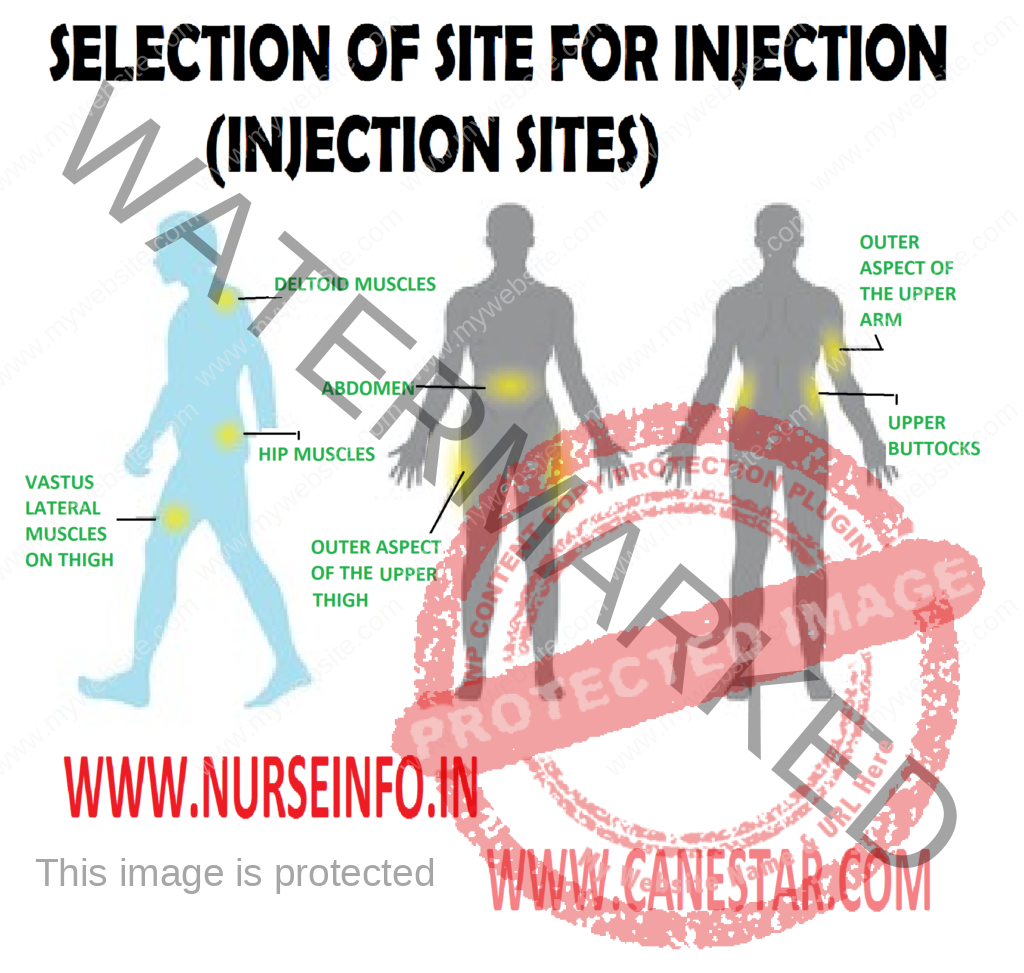
SELECTION OF SITE FOR INJECTION

SELECTION OF SITE FOR INJECTION

Selection depends upon the following:

  • Route of administration ordered by doctor
  • Quantity of the drugs
  • Condition of the patient
  • Muscular development
  • Knowledge of anatomical position of the nerves
  • Rotation of the site is necessary to avoid tissue trauma

Technical Skill Needed

  • Arrange the required equipment for the procedure
  • Nurse must be very skillful while giving the injection according to the route ordered
  • Select correct site for injection
  • Prepare the medication dose accurately

Criteria for Selection of Syringes and Needles

  • Intradermal: tuberculin syringe or 1 ml calibrated in 0.01 ml units. 26 or 27 gauge diameter and 3/8 to 5/8 length size of needle used
  • Subcutaneous: insulin syringe or 1 ml calibrated in 40 or 80 unites syringe. 25 gauge and ½ to 5/8 inches syringe is used
  • Intramuscular: 2.5 ml syringe is used it calibrated in 0.2 ml. 21, 22, 23 gauge 1 to 2 inches in length needles are used
  • Intravenous: the size depends upon the amount of fluids to be injected, 18 to 20 gauge 1 to 2 inches needles use

Golden Rules of Giving Injections

Administer the right drug: to prevent mistakes, take time to check the name and spelling of each drug you administer against the patient’s medicine card. Check a drug, at least, twice before giving it. First, when you remove it from the stock cupboard and, second time, before administering it to the patient. Avoid distractions. If you are unfamiliar with the ordered drug, learn about the drug from the pharmacist and the doctor. When in doubt, clear the doubt from the doctor.

Administer the drug to the right patient: make sure that the name of the patient is correct before you give the medicines. Check the name, diagnosis, and IP number. Adopt as a practice to confirm the right patient each time you administer the drug. Never leave a drug at the patient’s bedside

Administer the right dose: you must check and double check the drug dose ordered against the dose you are about to give. Be especially careful when you are administering toxic medications, such as antineoplastic drugs. With these, the margin between a therapeutic and a potentially lethal dose is slim. Use an infusion as indicated and monitor the patient closely especially after an initial or loading dose is given or any time a close is increased

Administer the drug by the right route: the parenteral route demands more vigilance. Parenteral drugs act so rapidly that a medication error may be very harmful – even fatal. If the order doesn’t specify a route, call the doctor immediately for a clarification

Administer the drug at the right time: therapeutic blood levels of many drugs depend on consistent, regular administration times. Never give a drug more than half an hour before or after the scheduled time, without checking with the doctor

A hospital drug policy manual is one way to prevent errors associated with administration times. Make sure you coordinate drug administration with the laboratory schedule

Educate your patient about the drug he is receiving: take advantage of every opportunity to teach your patient and his family about his prescribed medication. Stress the need for consistent and timely administration. Make sure they understand the importance of taking the medications for the entire prescribed course. Many patients, who begin to feel better after the first few doses, stop taking the drug

Take patient’s complete drug history: it is necessary to know all the drugs your patient has been receiving and all the help he wants. By doing this you ensure his safety. The risk of adverse drug reactions and interactions, of course, rises with the member of drugs being taken

Find out if the patient has any drug allergies: no drug is completely safe. Any drug may cause an unpredictable reaction producing many different adverse effects – some appearing immediately, others developing over a period of time. Stay alert as you assess your patient’s reaction to any drug you give him. Warm him that he should avoid drugs that have caused even a mild allergic response

Be aware of potential drug/drug or drug/food interactions

Document each drug you administer: never document a drug before administering it but document you must after it is administered
SELECTION OF SITE FOR INJECTION - Technical Skills, Criteria, Golden Rules
SELECTION OF SITE FOR INJECTION – Technical Skills, Criteria, Golden Rules

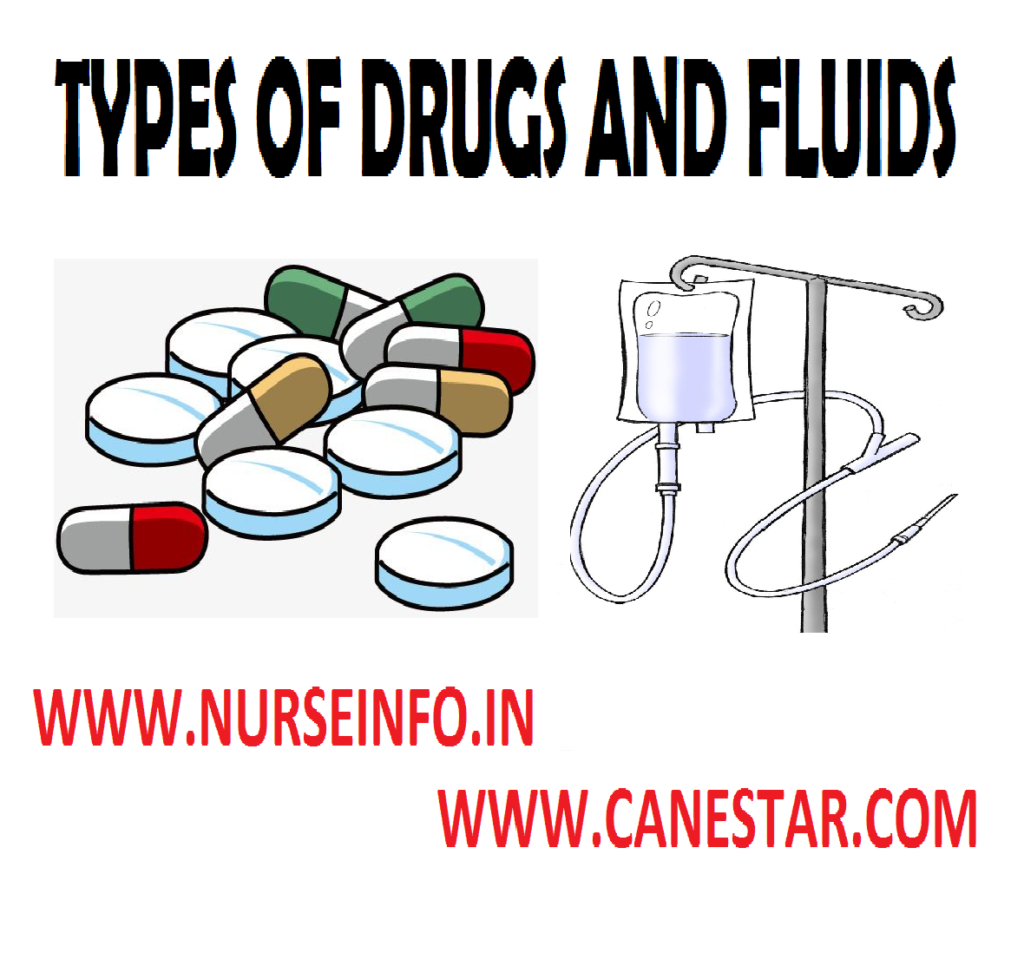
TYPES OF DRUGS AND FLUIDS

TYPES OF DRUGS AND FLUIDS

Administered Drugs

  • Preventive action: antitoxins, toxoids, vaccines and antibiotics
  • Diagnostic acids: dyes and histamines
  • Remedial action: antibiotics and quinine
  • Palliative action: narcotics, sedatives, local anesthetics and general anesthetics
  • Substitution: hormones, fluids, minerals and vitamins

Fluids

  • D5W – Each 100 ml contains 5 g of glucose
  • D10 W, D25 W, D50 W
  • DNS – Dextrose 5% saline
  • NS – Each 100 ml contains 0.9 g sodium chloride. Sodium lactate – each 100 ml contains 1.866 sodium ringer lactate
  • Ringer’s solution or Hartmann’s solution
TYPES OF DRUGS AND FLUIDS - Administered Drugs and Fluids
TYPES OF DRUGS AND FLUIDS – Administered Drugs and Fluids

INJECTIONS

INJECTIONS

Injections are parenteral therapy. It means giving of therapeutic agents including food outside the alimentary tract.

An injection is the forcing of a fluid into a cavity, a blood vessel or body tissue through a hollow tube or needle

Purpose

  • To get a rapid and systemic effect of the drug
  • To provide the needed effect even when the patient is unconscious
  • Assures that the total dosage will be administered and the same will be absorbed for the systemic action of the drug
  • Provides the only means of administration for medications that cannot be given orally
  • To obtain a local effect at the sight of the injection
  • To restore blood volume by replacing the fluid, e.g. in shock conditions
  • To give nourishment when it cannot be taken by

Types of Injections

  • Intradermal: drug introduced into the dermis
  • Subcutaneous: drug introduced into the subcutaneous tissue
  • Intramuscular: injected into the muscles
  • Intravenous: introduced into the vein
  • Intraspinal: introduced into the spinal cavity
  • Intra-osseous: introduced into the peritoneal cavity
  • Venesection: opening a vein and introducing a tube or wide bore needle and introducing medicines an fluids or taking out blood
  • Infusions: when a large quantity of medicines as fluids are to be introduced into the body
  • Transfusions: it is the introduction of whole blood or plasma into a vein or artery

Factors that Favors Absorption

  • Blood supply to the area: fluids injected into the blood stream will act quicker than any other methods used
  • The composition of the fluid injected: solubility and diffusibility of the fluid
  • Application of heat: heat dilates the blood vessels; therefore the heat applied over the site of injection increases the rate of absorption
  • Massage: it stimulates the local blood supply and increases the rate of absorption
  • Circulation time of the blood: absorption of medicines and fluids injected to the body will diminished in a person who has venous congestion (edema)
  • Physical condition: the local disease condition of the skin and underlying tissues such as skin lesions, inflammations, etc. delays the absorption of the drug
  • Addition of the substances: that tends to breakdown the natural resistance of the tissues can increase the rate of absorption

Complication of Injections

  • Allergic reactions for certain drugs, e.g. penicillin
  • Infections (abscess formation)
  • Pyrogenic reactions (producing fever)
  • Tissue trauma
  • Psychic trauma
  • Pain
  • Accidental intravascular injections
  • Foot drop and persistent paralysis of the limb
  • Air embolism
  • Over dose and under dose of the medication
  • Errors in the administration of the medications
  • Infectious hepatitis
  • Circulatory overload
INJECTIONS - Purpose, Types, Factors, Complications
INJECTIONS – Purpose, Types, Factors, Complications

ORAL MEDICATION

ORAL MEDICATION

NURSING PROCEDURES LIST CLICK HERE

Oral medication are defined as the administration of medication by mouth and ensuring that patient swallows the medicine

Purpose

  • To prevent the disease
  • To cure the disease
  • To promote the health
  • To give palliative treatment
  • To give as a symptomatic treatment

Nurses Responsibility in Administration of Oral Medication

  • Check the diagnosis and age of the patient
  • Check the purpose of medication
  • Check the identification of the patient, the name and bed number
  • Check the physician’s orders for the correct name of the drug, dosage and method of administration
  • Check the nurse record for the time at which the last dose was given
  • Check for any contraindications present in the patient for an oral intake of the medicines such as nausea, vomiting, unconsciousness etc
  • Check the character of the drug – whether it can be taken safely by the oral method
  • Check the form of the drug available and the correct method of administration
  • Check the level of consciousness of the patient and ability to follow instructions
  • Check the abilities and limitations in swallowing the medications

Equipment

A trolley containing

  •  A bowel of clean water
  • Ounce glass, medicine glass, dropper teaspoon to measure the medicine
  • Drinking water in a feeding cup
  • Mortar and pestle to crush and powder the table if necessary
  • Duster/towel to wipe the outside the bottle after pouring the medicine ordered
  • Kidney tray and paper bag to discard the waste
  • Medicine cards to write the medication order from patients order sheet

Preparation of the Patient

  • Explain the procedure to the patient. Tell the advantages needs of medication
  • If patient is allowed to sit assist him to sit
  • Never give medication in flat position as there is a danger of aspiration of drug and fluid when swallowed.
  • Give a mouth wash, if necessary
  • If medication is ill tasting, prepare a drink to mask the taste of the medication
  • Protect the bed clothes and garments with the towel placed under the chin across the chest

Procedure

  • Keep the patient comfortable in bed
  • Arrange the articles at the bed side
  • Identify patient by name and check the name board at bed side
  • Check the nurse’s record to find out when drug was last administered
  • Check for special instructions  and check vital signs if needed
  • Select medicine from patient’s locker and check medication label thrice
  • Encourage patient to sit-up and make sure medicines are swallowed
  • First give little water to moisten the mouth and then give medicine one at a time
  • Stay with the patient until the medicine has been swallowed; give him a drink of water after it

After Care of the Patient and Articles

  • Remove the towel and wipe the face with it
  • Position the patient for good body alignment
  • Take all articles to the utility room. Wash and dry all articles and replace them in their proper place
  • Wash hands
  • Record medications given in medication sheet and also nurses record
  • Record any reaction observed after the administration of the drug
  • Report any reaction to the ward sister and doctor-in-charge

Contraindications

  • Continuous vomiting
  • Gastric or intestinal suction
  • Unconscious patient
  • Patient who are unable to swallow
  • Patient on nil per oral

Advantages

  • This method is safe and convenient
  • It is effective method
  • There is no pain while administering the drug
  • Allergic reactions are very less

Disadvantages

  • Sometimes the patient may not swallow the medicine
  • The drug may only be partially observed
  • It may irritate the gastric mucosa and can cause vomiting or diarrhea and the effect is lost
ORAL MEDICATION - Purpose, Equipment, Nurse Responsibility, Advantage, Disadvantage, Patient Preparation
ORAL MEDICATION – Purpose, Equipment, Nurse Responsibility, Advantage, Disadvantage, Patient Preparation

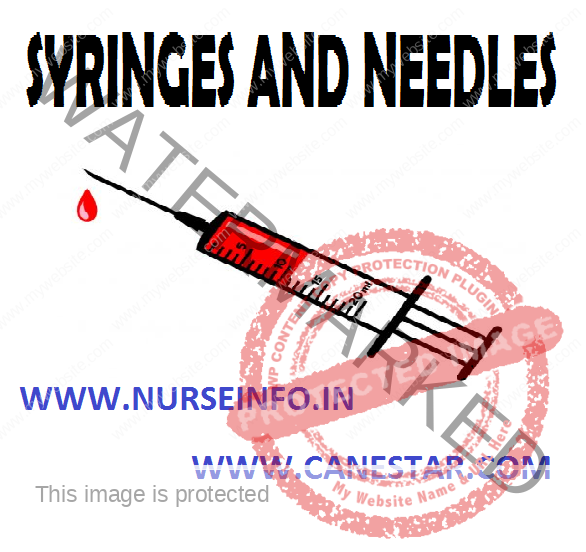
SYRINGES AND NEEDLES

SYRINGES AND NEEDLES

Drugs are administered as injections using a needle and a syringe. A syringe consists of a barrel and a plunger (piston). A type of syringe known as Luer-Lock syringe has the advantage that the needle can be locked in position. ‘Intravenous injections are given with the help of an infusion set’

Sizes: syringes are available in various sizes 1, 2, 5, 10, 20 and 50 ml. syringes may be of two materials – Glass and plastic

Glass Syringes

Advantages

  • The markings are accurate and therefore exact quantity can be drawn
  • The fluid level can be clearly seen as the glass is more transparent
  • They can be easily sterilized by boiling and reused
  • Glass syringe are resistant to punctures

Disadvantages

  • Glass syringes do not break easily
  • They carry a greater risk of air embolism because they are rigid
  • They are more expensive. Glass syringes are no more preferred because of the risk of spreading dangerous diseases like AIDS when not properly sterilized

Plastic Syringes

Advantages

  • Plastic syringes do not break easily
  • Because they are collapsible, they allow proper emptying of the syringe – hence less risk of air embolism
  • They are cheaper
  • They are disposable

Disadvantages

  • Plastic syringes are not very accurate in scale
  • They cannot be easily sterilized
  • They cannot be reused

Special Syringes

Insulin syringes has markings in units – (40 in 1 ml (red) or 80 in 1 ml (green) are suitable for administration of insulin

Tuberculin syringe is a syringe of 1 ml capacity with 0.01 ml markings. It is useful for administration of very small volumes

Disposable Syringes and Needles

Sterile disposable syringes are made of plastic and are packed with a needle to be fixed at the time of use

Advantages

They have the following advantages:

  • Need no sterilization
  • Injections are less painful as needle is sharp
  • Convenient to use

Disadvantages

Works out costlier as they are not reusable

Needles

Needles are made of stainless steel, which is rust proof. The tip which is at the end of the shaft is beveled. The beveling may be short, very short or regular. Needle is available in different gauge thickness and length. The gauge numbness is from 13 (thickest) to 27 (finest). Depending on the route of administration, size of the patient and the thickness of the solution to be injected, the needle is selected

SYRINGES AND NEEDLES - Types of Syringes and Needles used
SYRINGES AND NEEDLES – Types of Syringes and Needles used

SOURCES OF DRUG

TERMINOLOGY

  • Pharmacotherapeutics: it deals with the relative effects of drugs in human systems for various disorders
  • Pharmacokinetics: it is the study of genetically induced drug responses that are often responsible for some idiosyncratic (unexplainable) responses
  • Pharmacodynamics: it deals with experimental science pertaining to theories of drug action
  • Pharmacokinetics: it is the study of how drugs enter the body, reach their site of action, are metabolized and eliminated from the body
  • Absorption: it is the passage of drug molecules into the blood. To exert therapeutic effect the drugs must depend on the physical properties of the drug, route of administration, presence or absence of food in the stomach and interaction with the drugs
  • Distribution: after a drug is absorbed, it is distributed within the body, to tissues and organs and ultimately to its specific site of action
  • Metabolism: after a drug reaches its site of action, it is metabolized into an inactive form, detoxified and degraded chiefly by liver. Also the lungs, kidneys, blood and intestines metabolize drugs
  • Excretion/Elimination: when drugs are metabolized they exit the body through the kidneys, liver, bowels and exocrine glands
  • Drug: it is a substance used in the diagnosis, treatment, cure, relief or prevention of a disease. The terms “medication”, medicine, medicinal are used synonymously with the term “drug”. A drug cannot repair diseased tissues or organs. It can only facilitate normal cellular function. Drugs are given to produce a “therapeutic effect” but these may also cause secondary effects and lethal effects. A single medication may have many therapeutic effects. For example, aspirin is an analgesic, antipyretic and anti-inflammatory drug. It reduces platelet count
  • Side-effects: unintended but anticipated secondary effects, which may be harmless or injurious
  • Adverse reaction: it is the secondary effect which reflects the drug’s action on other areas of the body
  • Toxic effects: usually develop after a prolonged intake of high doses of medication due to accumulation of drug in the blood because of impaired metabolism or excretion
  • Lethal effects: excess amount of drugs within the body may have a lethal effect
  • Iatrogenic disease: disease caused unintentionally by drug therapy. Hepatic toxicity resulting in biliary obstruction
  • Idiosyncratic reaction: when the client over-reacts or under-reacts to a drug or has a reaction different from normal
  • Allergic reaction: it is an unpredictable immunological response after exposure to an initial dose of medication. A drug allergy may be mild or severe (anaphylactic reaction). Common allergy symptoms are utricaria, eczema, pruritus and rhinitis
  • Drug abuse: it is inappropriate intake of a substance either continually or periodically. It has two main facets: drug dependence and drug habituation
  • Drug dependence: it is an individual’s physiological or psychological reliance on or need to take a drug or substance
  • Drug habituation: it denotes a mild form of psychological dependence. The habituated individual develops the habit of taking the substance and feels better after taking it
  • Drug tolerance: an increase in dosage may be needed to cause a therapeutic effect in persons with low metabolism in response to a drug
  • Drug interaction: when one drug modifies the action of another drug interaction occurs
  • Synergistic effect: when the physiological action of two drugs in combination is greater than the effect of the drugs when given separately. For example, diuretics and vasodilators act together to keep the blood pressure at a desirable level
  • Antagonist: drugs that have no special pharmacological action of their own but inhibit or prevent the action of a drug to produce a response
  • Bioavailability: the proportion of the administered dose of a drug, which reaches the circulation
  • Pharmacological/Chemical name: it provides an exact description of the drug’s composition. An example of its chemical name is acetylsalicylic acid (ASA), which is commonly known as aspirin
  • Trade name/Brand name: the name under which a manufacturer markets a drug. A drug may have many different trade names
  • Generic name: the name that is proposed by the company that first develops the drug
  • Material Media: it is a record/book which deal with source, physical and chemical properties, preparations and uses of drugs
  • Pharmacopeias: it is an official document containing a list of drugs which have established their use. It contains a description of physical properties and tests for identification, purification and potency of drugs
  • Monthly Index of Medical Specialties (MIMS): it is published every month. It contains information on drugs, their trade names, along with the name of the manufacturing company with indications and contraindications of the drug, cost of the product
  • Formulary: it is a collection of formulas and prescriptions

DEFINITIONS

  • Drug (Drogue means a dry herb in French) is a substance used in the diagnosis, prevention or treatment of a disease. WHO definition “A drug is any substance or product that is used or intended to be used to modify or explore physiological systems or pathological states for the benefit of the recipient”
  • Pharmacokinetics is the study of the absorption, distribution, metabolism and excretion of drugs, i.e. what the body does to the drug (in Greek Kinesis = movement)
  • Pharmacodynamics is the study of the effects of the drugs on the body and their mechanism of action, i.e. what the drug does to the body. Therapeutics deals with the use of drugs in the prevention and treatment of disease
  • Toxicology deals with the adverse effects of drugs and also the study of poisons, i.e. detection, prevention and treatment of poisonings. (toxicon = poison in Greek)
  • Chemotherapy is the use of chemicals for the treatments of infections. The term now also includes the use of chemical compounds to treat malignancies

Pharmacy is the science of identification, compounding and dispensing of drugs. It also includes collection, isolation, purification, synthesis and standardization of medicinal substances

SOURCES OF DRUGS

The source of drugs could be natural or synthetic

  • Natural sources: drugs can be obtained from

         Plants, e.g. atropine, morphine, quinine, digoxin, pilocarpine, physostigmine

Animals, e.g. insulin, heparin, gonadotropin and antitoxic sera

Minerals, e.g. magnesium sulfate, aluminium hydroxide, iron, sulfur, and radioactive isotopes

Microorganisms: antibacterial agents are obtained from some bacteria and fungi. We thus have penicillin’s, cephalosporins, tetracyclines and other antibiotics

Human: some drugs are obtained from man, e.g. immunoglobulin from blood, growth hormone from anterior pituitary and chorionic gonadotropins from the urine of pregnant women

  • Synthetic, most drugs are now synthesized, e.g. quinolones, omeprazole, sulfonamides, pancuronium, neostigmine
  • Many drugs are obtained by cell cultures, e.g. urokinase from cultured human kidney cells. Some are now produced by recombinant DNA technology, e.g. human insulin, tissue plasminogen activator and some drugs by hybridoma technique, e.g. monoclonal antibodies

DRUG INFORMATION SOURCES

Official Compendia

Official compendia include information sources (or books) on drugs which are recognized by the government of that country as ‘legal standard’. Thus Indian Pharmacopoeia, National Formulary, British Pharmacopoeia, Codex, Pharmaceutical Codex, United States Pharmacopoeia and such other Pharmacopeias are official compendia

  • Pharmacopeia: it is the official publication containing a list of drugs and medical preparations. In Greek ‘Pharmacon’ means drug and ‘poeia’ is to make. It contains list of drugs and related substances that are proved for use, their source, formulae and other information needed to prepare the drugs, their physical properties, tests for their identity, purity and potency
  • Each country may follow its own pharmacopoeia. We thus have Indian pharmacopoeia, British Pharmacopoeia, United States Pharmacopoeia, USSR and Japan Pharmacopeia. The European Pharmacopoeia was published by the Public Health Committee and the European Pharmacopoeia Commission. The international Pharmacopoeia is published by WHO in many languages like English, French, Spanish, and Russian
  • The first pharmacopoeia of India was published in 1868. But later under the British rule, the British Pharmacopoeia was followed. After independence, a committee was set up and Indian Pharmacopoeia was released in 1955. Experts from pharmaceutical industry, drug control laboratories and research and teaching institutions helped the committee. All pharmacopoeia are revised at regular periods to delete old useful drugs and to include newly introduced ones
  • Drug formulary also provides information on drugs. The National formulary is a smaller book that contains information on formulations which are used therapeutically. It is prepared by the National Formulary Committee set up by the Ministry of Health Government of India. Expert opinion is also taken from medical associations, hospitals, teaching institutions and pharmaceutical industry in preparing this book

Non-official Compendia

The books other than the official compendia which provide information on drugs are known as non-official drug compendia

Textbook: these include the textbooks of pharmacology, journals and periodicals. Textbooks like-The Pharmacological basis of therapeutics by Goodman and Gilman, Merck Index, the United States Dispensary, Remington’s Pharmaceutical Sciences and others are quite informative. Many Indian textbooks are also available.

Journals: several journals are published by local, national, international medical organizations. They provide updated information on drugs with research and review articles

Local: several regional (e.g. southern, northern) and state level medical societies release journals at regular intervals

National: Indian Pharmacological Society, Indian Society of Clinical Pharmacology and other similar national level organizations bring out journals at regular intervals

SOURCES OF DRUG - Definition, Terminology, Information
SOURCES OF DRUG – Definition, Terminology, Information

NURSES SALARY IN UNITED ARAB EMIRATES (UAE)

NURSES SALARY IN UNITED ARAB EMIRATES (UAE)

NURSING PROCEDURES LIST CLICK HERE

UNITED ARAB EMIRATES

In U.A.E, the nurse an average earns 14,200 AED per month. Depending on location, education, experience, job title; the nurse will get good salary.

Nurse Salary by City

In Abu Dhabi, the staff nurse earns 17,200 AED per month, in Dubai, the nurse will get 16,400 AED per month and in Sharjah, the staff nurse earns about 15,500 AED per month.

Abu Dhabi – 17,200 AED per month

Ajman – 15,000 AED per month

Al Ain – 15,800 AED per month

Dubai – 16,400 AED per month

Fujairah – 14,000 AED per month

Ras Al Khaimah – 14,400 AED per month

Sharjah – 15,500 AED per month

Um Al Quiwain – 13,900 AED per month

Dubai

In Dubai, the staff nurse average salary is 20,800 AED per month, the lowest salary for nurses is about 13,000 AED per month and highest salary for nurses will be 40,800 AED per month.

Staff Nurse Salary (Average) – 20,800 AED, Lowest Nurse Salary – 13,000 AED and Highest Nurse Salary – 40,800 AED

ABU DHABI

The average staff nurse salary in Abu Dhabi is 17,200 AED per month, lowest salary is 8,430 per month and highest salary will get 26,800 AED per month.

Average Staff Nurse per Month – 17,200 AED, Lowest Staff Nurse Salary – 8,430 AED and Highest Staff Nurse Salary – 26,800 AED per month

Nurse Salary by Experience

The nurse with less than 2 year of experience will get 9,990 AED per month. With experience, the nurse earns more salary, for example – the nurse with 20 + year experience will get 25,100 AED per month.

Less than 2 years – 9,990 AED per month

2 to 5 years – 12,800 AED per month 

5 to 10 years – 17,700 AED per month

10 to 15 years – 21,900 AED per month

15 to 20 years – 23,500 AED per month

20 + years – 25,100 AED per month

Nurse Salary with Education

The nurse with bachelor degree earns 12,500 AED per month and with master degree will get 20,000 AED per month.

Nurse Salary with Bachelor’s Degree – 12,500 AED per month and Nurse Salary with Master’s Degree – 20,000 AED per month

SHARJAH

The staff nurse salary average earns 19,700 AED per month, the lowest salary is about 12,400 AED per month and the highest salary will be 38,700 AED per month.

Staff nurse salary average – 19,700 AED per month, lowest salary – 12,400 AED per month and highest salary – 38,700 AED per month

Nurse Salary by Job Title & Cities

Four factors will determine the salary for nurses in U.A.E. – job title, place of location, experience and education qualification. The nursing director will earn good salary with good experience. Job title “head nurse” will get around 19,250 AED per month.

JOB TITLE SALARY (AED per month)
  DUBAI ABU DHABI SHARJAH
Acute
Care Nurse
19200 19300 18700
Assistant
Director of Nursing
32700 30600 29200
Case
Manager
23700 23900 23400
Company
Nurse
13600 13300 13100
Critical
Care Nurse
19900 18500 17500
District
Nurse
16500 16500 15900
Head
Nurse
19500 20200 19400
Home
Nurse
16000 15000 15900
ICU
Registered Nurse
17700 17300 17000
Informatics
Nurse Specialist
19000 17400 17400
Licensed
Practical Nurse (LPN)
16300 17200 15800
MDS
Coordinator
18300 17600 18300
Mental
Health Nurse
18300 17200 16600
Neonatal
Nurse Practitioner
24700 24900 24400
Nurse 17500 16500 15900
Nurse
Midwife
19800 20500 19900
Nurse
Practitioner
21100 19900 19300
Nursing
Assistant
15600 14700 14300
Nursing
Coordinator
21200 20000 19600
Nursing
Director
40500 42300 37500
Nursing
Services Instructor
19500 18400 18200
Nursing
Supervisor
27000 25500 25200
Occupational
Health Advisor
32200 32700 32700
Occupational
Therapist
28400 26500 25300
Personal
Support Worker
13500 13200 12000
Psychiatric
Nurse
16900 16800 15800
Registered
Nurse
17600 17300 15700
Respiratory
Manager
34500 34700 34700
School
Nurse
16200 15400 15200
Staff
Nurse
16400 17200 15500
Theatre
Manager
28700 30100 27000
Utilization
Review Nurse
18000 17800 17900
NURSES SALARY IN UNITED ARAB EMIRATES (UAE)

SALARY IN SAUDI ARABIA

NURSES SALARY IN QATAR

NURSES SALARY IN KUWAIT

SALARY IN OMAN, IRAQ AND BAHRAIN

NURSES SALARY IN SAUDI ARABIA

NURSES SALARY IN SAUDI ARABIA

NURSING PROCEDURES LIST CLICK HERE

SAUDI ARABIA

In Saudi Arabia, the staff nurse earns about 12,200 SAR per month, lowest salary is 6,480 SAR per month and highest salary will be 18,600 SAR per month.

Staff Nurse – 12,200 SAR per Month. Salaries range from 6,480 SAR (lowest) to 18,600 SAR (highest) (for more details scroll below)

Nurse Salary by Cities

In Saudi Arabia, the cities will provide good salary as compared to the rural region of Saudi Arabia.  In Jeddhah, the nurse will earn 15,900 SAR per month and in Riyadh, the nurse earns about 17,000 per month.

Abha – 15,300 SAR per month

Dammam – 15,900 SAR per month

Jeddhah – 16,800 SAR per month

Khubar – 15,700 SAR per month

Mecca – 16,500 SAR per month

Medina – 16,200 SAR per month

Riyadh – 17,000 SAR per month

Tabuk – 14,700 SAR per month

Taif – 15,000 SAR per month

Nurse Salary by Experience

Depend on experience, the staff nurse will get good salary, the nurse with less than 2 years of experience earns 7,440 SAR per month and 20 + years experience earn 17,600 SAR per month.

Less than 2 years – 7,440 SAR per month

2 to 5 years – 9,140 SAR per month

5 to 10 years – 12,900 SAR per month

10 to 15 years – 15,100 SAR per month

15 to 20 years – 16,600 SAR per month

20 + years – 17,600 SAR per month

Nurse Salary by Qualification

Nurse with bachelor degree earns 8,410 SAR per month and nurse with master degree will get 16,300 SAR per month.

Nurse Salary with Bachelor’s Degree – 8,410 SAR per month

Nurse Salary with Master’s Degree – 16,300 SAR per month

JEDDAH

In Jeddah, the average salary for staff nurse is 16,800 SAR per month, lowest salary is about 10,800 SAR per month and highest salary for nurses earns 32,300 SAR per month.

Staff Nurse Average Salary – 16,800 SAR per month, lowest salary – 10,800 SAR and highest salary – 32,300 SAR per month

RIYADH

In Riyadh, the average staff nurse is 17,000 SAR per month, lowest salary earns 10,900 SAR per month and highest salary is 32,800 SAR per month.

Nurse Salary Average – 17,000 SAR per month, lowest salary – 10,900 SAR per month and highest salary – 32,800 per month

MEDINA

In Medina, the nurse earn average 16,200 SAR per month, lowest salary for nurses is about 10,400 SAR per month and highest salary is 31,100 SAR per month.

Nurse Salary Average – 16,200 SAR per month, lowest salary – 10,400 SAR per month and highest salary – 31,100 per month

Nurse Salary by Job Title & Cities

Good experience and job title will get more salary for nurses. Mostly, the nursing director, head nurse, staff nurse’s salary will be varied based on experience, title and location.

JOB TITLE SALARY(SAR per month)
  SAUDI ARABIA JEDDAH RIYADH MEDINA
Acute
Care Nurse
13800 15200 15000 15600
Assistant
Director of Nursing
22700 23500 24900 23200
Case
Manager
18500 20000 19700 18700
Company
Nurse
10400 11200 11400 10900
Critical
Care Nurse
14600 14600 15500 14200
District
Nurse
12300 14100 13900 13100
Head
Nurse
14700 16200 15500 15900
Home
Nurse
11700 12400 13100 12300
ICU
Registered Nurse
13800 14000 14200 13600
Informatics
Nurse Specialist
13500 15400 15100 14600
Licensed Practical
Nurse (LPN)
12800 13300 13800 13600
MDS
Coordinator
14600 14900 15300 14000
Mental
Health Nurse
12900 14500 13800 14400
Neonatal
Nurse Practitioner
18600 19300 19000 18100
Nurse 12000 12900 13700 12800
Nurse
Midwife
14300 16400 15600 16300
Nurse
Practitioner
16200 16200 17100 16200
Nursing
Assistant
11800 12500 11900 11300
Nursing
Coordinator
15200 15500 16300 15500
Nursing
Director
30400 32900 31200 29800
Nursing
Services Instructor
14500 15000 15800 15100
Nursing
Supervisor
19100 21100 20000 19200
Occupational
Health Advisor
23000 26900 26300 25600
Occupational
Therapist
20500 22100 21200 21700
Personal
Support Worker
9550 10300 10400 10100
Psychiatric
Nurse
11600 12800 12700 12900
Registered
Nurse
12300 13300 13400 13100
Respiratory
Manager
23400 27400 27100 25500
School
Nurse
11400 12000 12600 12100
Staff
Nurse
12200 13700 13000 12600
Theatre
Manager
20900 23500 22200 21500
Utilization
Review Nurse
13800 14600 14700 14400
NURSES SALARY IN SAUDI ARABIA

NURSES SALARY IN U.A.E

NURSES SALARY IN QATAR

NURSE SALARY IN KUWAIT

NURSE SALARY IN OMAN, IRAQ AND BAHRAIN

NURSE SALARY IN CANADA

NURSES SALARY IN QATAR

NURSES SALARY IN QATAR

NURSING PROCEDURES LIST CLICK HERE

NURSING IMPORTANT QUESTIONS – CLICK HERE

NURSE FUNDAMENTAL PROCEDURES

MEDICAL SURGICAL NURSING

QATAR

The average staff nurse salary is 15,100 QAR per month, lowest salary for nurses is 9,720 QAR per month and highest salary is 29,200 QAR per month. 

Staff Nurse Salary Average – 15,100 QAR per month, lowest salary – 9,720 QAR per month and highest salary – 29,200 QAR per month

Nurse Salary by Job Title

Job title with “head nurse” earn 13600 QAR per month, with good experience, the “nursing director” 27600 QAR per month and “home nurse” earns 11800 per month.

JOB TITLE SALARY (QAR per month)
Acute Care Nurse 13400
Assistant Director of Nursing 21300
Case Manager 17200
Company Nurse 10100
Critical Care Nurse 13200
District Nurse 12100
Head Nurse 13600
Home Nurse 11800
ICU Registered Nurse 12400
Informatics Nurse Specialist 12600
Licensed Practical Nurse (LPN) 12000
MDS Coordinator 13400
Mental Health Nurse 12800
Neonatal Nurse Practitioner 17000
Nurse 11700
Nurse Midwife 13700
Nurse Practitioner 15400
Nursing Assistant 11000
Nursing Coordinator 1610
Nursing Director 27600
Nursing Services Instructor 14300
Nursing Supervisor 18600
Occupational Health Advisor 23100
Occupational Therapist 19500
Personal Support Worker 9570
Psychiatric Nurse 11900
Registered Nurse 12300
Respiratory Manager 22400
School Nurse 10900
Staff Nurse 11500
Theatre Manager 19700
Utilization Review Nurse 13200
NURSES SALARY IN QATAR

NURSES SALARY IN U.A.E

NURSE SALARY IN SAUDI ARABIA

NURSE SALARY IN KUWAIT

NURSES SALARY IN OMAN, IRAQ AND BAHRAIN

NURSES SALARY IN KUWAIT

NURSES SALARY IN KUWAIT (Updated 2024)

KUWAIT

In Kuwait, the staff nurse earn about 1,040 KWD per month (average), lowest salary for nurses is 500 KWD per month and highest salary is about 1,630 KWD per month.

Staff Nurse Average Monthly Salary – 1,040 KWD, Lowest Monthly Salary – 500 KWD and Highest Monthly Salary – 1,630 KWD

Staff Nurse Salary by Experience

Nurse with less than 2 years experience earns 580 KWD per month and nurse with good experience about 20 + years experience will get 1,560 KWD per month.

Less than 2 years – 580 KWD per Month

2 to 5 years – 830 KWD per Month

5 to 10 years – 1,090 KWD per Month

10 to 15 years – 1,340 KWD per Month

15 to 20 years – 1,420 KWD per Month

20 + years – 1,560 KWD per Month

Nurse Salary by Education

Nurse with bachelor degree will get 920 KWD per month and nurse with master degree earn 1,310 KWD per month.

Nurse Salary with Bachelor’s Degree – 920 KWD per Month

Nurse Salary with Master’s Degree – 1,310 KWD per Month

Nurse Salary by Job Title

Nurse with job title “staff nurse” earn 970 KWD per month, “nursing director” with experience will get 2440 KWD per month.

JOB TITLE SALARY (KWD per month)
Acute Care Nurse 1200
Assistant Director of Nursing 1790
Case Manager 1430
Company Nurse 870
Critical Care Nurse 1160
District Nurse 1050
Head Nurse 1180
Home Nurse 970
ICU Registered Nurse 1120
Informatics Nurse Specialist 1080
Licensed Practical Nurse (LPN) 990
MDS Coordinator 1120
Mental Health Nurse 1090
Neonatal Nurse Practitioner 1470
Nurse 1040
Nurse Midwife 1270
Nurse Practitioner 1210
Nursing Assistant 900
Nursing Coordinator 1190
Nursing Director 2440
Nursing Services Instructor 1190
Nursing Supervisor 1610
Occupational Health Advisor 1940
Occupational Therapist 1570
Personal Support Worker 810
Psychiatric Nurse 970
Registered Nurse 1050
Respiratory Manager 2100
School Nurse 980
Staff Nurse 970
Theatre Manager 1670
Utilization Review Nurse 1140
NURSES SALARY IN KUWAIT  - Updated 2024
NURSES SALARY IN KUWAIT updated 2024

NURSES SALARY IN U.A.E

SALARY IN SAUDI ARABIA

NURSE SALARY IN QATAR

NURSES SALARY IN OMAN, IRAQ AND BAHRAIN

NURSING PROCEDURES LIST CLICK HERE

NURSING IMPORTANT QUESTIONS – CLICK HERE

NURSE FUNDAMENTAL PROCEDURES

MEDICAL SURGICAL NURSING

Salary and Benefits

  • The salary for nurses in Kuwait varies based on factors such as experience, qualifications, and the specific healthcare institution.
  • In addition to the base salary, nurses may receive benefits such as accommodation, transportation, and healthcare coverage.
Nurse Info