Home Blog Page 51

CERVICAL BIOPSY

CERVICAL BIOPSY – Indications, Types of Cervical Biopsy, General Instructions, Preliminary Assessment, Preparation of the Patient and Environment, Equipment, Procedure and Post-Procedure Care

A cervical biopsy is a surgical procedure in which a small amount of tissue is removed from the cervix. The cervix is the lower, narrow end of the uterus located at the end of the vagina.

INDICATIONS

  • Pap smear, Pap test yielded positive results
  • The cervical ectropion is diagnosed (bilateral cervical gap develops after giving birth, especially as a result of multiple micro-breaks)
  • The mucosal pathology of the cervix is detected (erosion, polyps, hypertrophy, suspected oncological-cervical tumor)
  • Cervical dysplasia stage of II-IV (should be diagnosed and treated in time, it will prevent the development of cancer cells)
  • There are serious gaps after childbirth; the cervix is deformed, visible severe scarring on the uterine tissue

TYPES OF CERVICAL BIOPSY

Punch biopsy: one or more small pieces of tissues are removed from the cervix with a punch biopsy forceps

Cervical conization: it is done by taking a cone-shaped section of the cervix with a scalpel or cervitone or by diathermy conization

GENERAL INSTRUCTIONS

  • These procedures are frequently performed on an outpatient basis
  • The biopsy is usually taken one week after the end of menstruation when the cervix is least vascular
  • The patient usually experiences no pain during the cervical biopsy because the cervix does not contain nerve endings for pain

PRELIMINARY ASSESSMENT

  • Doctor’s order for any specific instructions
  • Written informed consent of the patients or the relatives
  • General condition and diagnosis of the patient
  • Mental status of the patient to follow instructions
  • Articles available in the unit

PREPARATION OF THE PATIENT AND ENVIRONMENT

  • The patient is prepared as for routine gynecologic examination
  • Shave and clean the perineum
  • Explain the procedure to the patient
  • Obtain written consent from the patient
  • Maintain privacy with screen
  • Give lithotomic position to the patient
  • There should be good light in the room
  • Remain with the patient through the procedure

EQUIPMENT

A sterile tray containing:

  • Sponge holder
  • Vulsellum
  • Biopsy forceps
  • Sims vaginal speculum
  • Gali pot for lotion
  • Gloves, mask and gown
  • Leggings
  • Specimen bottles with formalin
  • Dressing material

An unsterile tray containing:

  • Mackintosh and draw sheet
  • Kidney tray
  • Cautery with its tips sterilized
  • Antiseptic for cleaning

PROCEDURE

  • Usually, it is done in outpatient department
  • The cervix is visualized in a good light and biopsy is taken with a cervical biopsy forceps
  • The bleeding from the site is controlled by cauterization
  • Patient may have foul smelling discharge for few days
  • The patient may be discharged on the same day

POST-PROCEDURE CARE

  • To avoid any strenuous activity for the next 24 hours
  • To report any bleeding immediately
  • To abstain from sexual activities and douching until the doctor gives the permission
  • To avoid using tampons until the doctor gives permission. Use clean pads
CERVICAL BIOPSY – Indications, Types of Cervical Biopsy, General Instructions, Preliminary Assessment, Preparation of the Patient and Environment, Equipment, Procedure and Post-Procedure Care

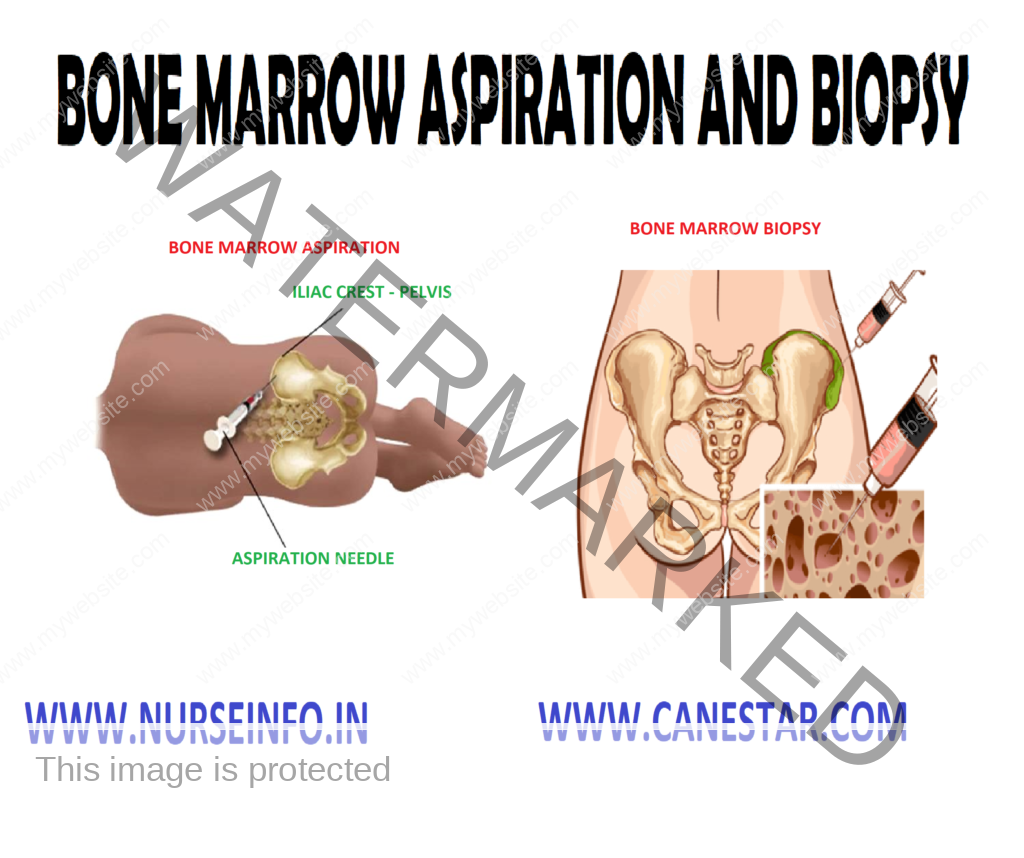
BONE MARROW BIOPSY AND ASPIRATION

BONE MARROW BIOPSY AND ASPIRATION – Purpose, Indications, Site and Position of the Patient, General Instructions, Preliminary Assessment, Preparation of the patient and Environment, Equipment, Procedure, Post-procedure care and Complications

Aspiration is defined as sucking a small amount of tissue in to the needle by applying suction with syringe.

Biopsy is defined cutting and removing a small amount of tissue from an area for examination.

Bone marrow aspiration is a diagnostic procedure performed in blood dyscrasias in which a specimen of bone marrow is taken from the sternum, iliac crest posterior superior iliac spine or tibia (children) by means of a hollow thick needle.

PURPOSE

  • To diagnose blood dyscrasia, such as aplastic anemia, leukemia, thrombocytopenia, etc
  • To diagnose metastatic neoplasm
  • To diagnose deficiency states of vit-bitz, folic acid, iron, pyridoxine, etc
  • To diagnose toxic states producing bone marrow depression or destruction
  • To determine the number, size and shape of red cells, white cells and platelets
  • To follow course of disease and patient’s response to treatment

INDICATIONS

Diagnostic: Bone marrow examination is essential for diagnose of a plastic, megaloblastic anemia, multiple myeloma, myelofibrosis, myelosclerosis and aleukemic leukemia.

Bone marrow examination is helpful but not essential for diagnosis of anemia, leukemia, thrombocytopenic purpura, agranulocytoma, tropical diseases; malaria, kala-azar, etc

Prognostic: agranulocytosis, leukemia and anemia

Therapeutic: bone marrow transplant

SITE AND POSITION OF THE PATIENT

Sternal puncture: the usual puncture site is either the manubrium sterni or the upper part of the body of sternum. The patient lies in the dorsal recumbent position (supine) with a pillow under the shoulders to raise the chest.

Iliac puncture: the bone marrow biopsy is taken from the iliac crest 2 cm posterior and 2 cm interior to the anterior superior iliac spine. Alternately, the posterior iliac spine is also used. For iliac puncture, the patient lies either on his side or abdomen.

Spinous process aspiration: in the spinous process of the lumbar vertebrae, usually L3 or L4 is the puncture site. The patient is placed in the lumbar puncture position.

Tibial puncture in children: in children up to the age of two years the proximal end of tibia, just below the tibial condyles and medial to the tibial tuberosity is selected.

GENERAL INSTRUCTIONS

  • The procedure should be done under very strict aseptic technique, since the infection can be introduced into the bone cavity through the puncture site
  • The penetration of the needle beyond the bone cavity is prevented by a guard attached

PRELIMINARY ASSESSMENT

Check

  • The doctors order for any specific instructions
  • General condition and diagnosis of the patient
  • Self-care ability of the patient
  • Mental status to follow instructions
  • Availability of articles in the unit
  • Location and type of insertion

PREPARATION OF THE PATIENT AND ENVIRONMENT

  • Explain the sequence procedure of the patient
  • Provide privacy
  • A thorough preparation of skin to prevent infection introduced in to the bone cavity
  • Place the patient in a correct position according to the site used
  • Sedation may be given to the patient
  • Arrange the articles at the bedside or in the treatment room
  • Check the vital signs of the patient and record it in the nurse’s record sheet
  • The nurse should remain with the patient to reassure him and to observe him during the procedure

EQUIPMENT

A sterile tray containing:

  • Sponge holding forceps – 1
  • Dissecting forceps – 2
  • The complications should be watched for injury to associate organs
  • The vital signs should be checked throughout the procedure and reassure the patient
  • The nurse should remain with the patient throughout the procedure and observe for signs of complications
  • Smear is made on 3-4 slides. Specimens are sent to the laboratory without delay
  • Marrow puncture needle with obturator – 1
  • Aspiration syringe – 1
  • Syringe for local anesthesia – 1, needle – 2,
  • Small bowls – 2, to take cleaning solutions
  • Cotton swabs, gauze pieces, cotton pads, etc. in containers
  • Dressing towels or slit to create a sterile field
  • BP handle with blade – 1, to make a small incision on the skin
  • Slides to make smears

An unsterile tray containing:

  • Mackintosh and towel
  • Lignocaine 2%
  • Adhesive tape and scissors
  • Kidney tray and paper bag
  • Spirit, iodine, tincture benzoin, etc

PROCEDURE

  • Transfer the patient from bed to treatment room
  • Position the patient and assess the doctor to locate and mark the site
  • Open small dressing pack and slides, syringes, needles and scalpel blade into pack
  • Assist the doctor to clean site with antiseptic solution and drape with sterile towels
  • A small incision may be made with scalpel blade. Bone marrow needle with stillete is introduced through incision and marrow is aspirated
  • Inform patient that a brief episode of sharp pain during aspiration will be experienced
  • Syringe with aspirated marrow is handed over to technician and collect into various containers as indicated
  • Collect bone marrow tissue in small bottle containing FAA solution
  • Apply pressure over punctured site until bleeding ceases
  • Assist doctor to seal punctured site with tincture benzoin and apply small from dressing

POST-PROCEDURE CARE

  • Keep the patient in supine or lateral position
  • Allow the patient to rest for few hours after the procedure
  • Check the vital signs and observe for signs and symptoms of complications
  • The puncture site should be treated as a surgical wound. The dressing should be done under strict aseptic techniques
  • Give mild analgesics if needed
  • Label specimen and send to laboratory
  • Replace the articles after cleaning
  • Wash hands
  • Record the procedure in the nurse’s record sheet

COMPLICATIONS

According to the site

  • Sterna puncture: injury to the pericardium, myocardium, lungs and to the large blood vessels of the mediastinum
  • Iliac site: injury to the sacroiliac ligament, dural sac and cauda equina
  • Vertebral site: injury to the dural sac and the spinal cord
  • Tibial sac: damage to the tibial collateral ligament of the knee

OTHER COMPLICATIONS

  •  Bleeding from puncture site. The causes are thrombocytopenia and bleeding diathesis. Bleeding can be prevented by local pressure
  • Perforation of aorta, due to penetration of posterior side of sternum if too much force is applied
  • Infection (osteomyelitis)
BONE MARROW BIOPSY AND ASPIRATION – Purpose, Indications, Site and Position of the Patient, General Instructions, Preliminary Assessment, Preparation of the patient and Environment, Equipment, Procedure, Post-procedure care and Complications

DIET (NUTRITION) FOR SICK PATIENTS

DIET (NUTRITION) FOR SICK PATIENTS (Diet in Sickness, Therapeutic Diet and Hospital Diet)

NUTRITION

Nutrition is all of the process of activities by which the human body receives and uses all the food necessary for its growth, development, regulation and repair.

TERMS

  • Anorexia: loss of appetite
  • Dyspepsia: indigestion, a feeling of fullness, discomfort, nausea and anorexia
  • Dysphagia: difficulty in swallowing
  • Nausea: a sensation of sickness with inclination to vomit
  • Nutrients: constituents of food, e.g. carbohydrate, protein, fat, minerals, vitamins and water
  • Regurgitation: back flow, e.g., back flow of partly digested food into the mouth from the stomach
  • Vomiting: expulsion of stomach contents via the esophagus and the mouth

FUNCTIONS OF FOOD

  • To supply heat and energy for work and play
  • For growth and repair of the body
  • For regulation or control of body process
  • For protection of body from diseases

BASIC FOOD KINDS

A well balanced diet contains food from the basic food groups:

  • Milk and milk products
  • Meat, fish and poultry
  • Bread and cereals
  • Fruits and vegetables

PURPOSE

  • Food gives nourishment to body
  • It gives a feeling a security
  • It is used to promote a feeling of social acceptance
  • It is vitally important for our physical well-being
  • Food is the fuel with which we run our bodies

ESSENTIAL NUTRIENTS

  • Carbohydrates: these are used as a source of energy. All cereals and root vegetables contain carbohydrate
  • Fats: they are also a source of energy. They are found in animals and plant seeds also in egg and milk
  • Proteins: the function of proteins in human body is the release of energy and building and repair of body tissues

DIET IN SICKNESS

Diet is an important as medicine in the treatment of diseases. A modification in the diet or in the nutrients can cure certain diseases.

Nutrition during illness should be adequate to prevent weight loss and weakness. An acutely ill or injured patient is in danger of malnutrition

Purpose

  • To meet the metabolic needs of human body
  • To prevent dehydration
  • To improve the appetite
  • To provide adequate nutrition
  • It is necessary for the growth and maintenances of bones and other tissues

General Rules of Treatment

  • The diet must be planned in relation to changes in metabolism occurring as a result of the disease
  • The diet must be planned to agree as nearly as possible with the patients food habits his likes and dislikes and the amount of exercise he takes
  • Changes should be made gradually adequate explanation must be when it is necessary to make dietary changes gradually
  • There should be plenty or variety in the diet hot food should be served hot and cold foods cold

Problems During Sickness

  • There will be disturbance of gastrointestinal function
  • Anorexia (loss of appetite)
  • Defective digestion and absorption
  • Lack of exercise decreases need for energy
  • The process of anabolism and catabolism are not normal in sickness
  • Vomiting and diarrhea are problems in which intravenous fluid administration is required
  • In some kinds of illness, protein requirements are more while in some others, both protein and carbohydrate are needed in large amounts

Modifications of Nutrients in Therapeutic Diet

  • Carbohydrates are usually well-tolerated and are necessary to maintain the stores of liver glycogen. Adequate intake of carbohydrates can prevent ketosis.
  • During sickness demand of protein is increased due to waist. So, easily digestible protein should be given.
  • The requirements of calcium and iron must be maintained during illness sodium and potassium may sometimes need to be restricted especially if there is edema, ascites and hypertension
  • Fat soluble vitamin, e.g. vitamin A and D need to be added if the patient is on fat-restricted diet for a long time
  • Vitamin B complex may not be adequately absorbed in pathological conditions of the gastrointestinal tract
  • Requirement of vitamin C is greatly increased in fevers and is especially necessary for the healing of wounds after surgery
  • Fluids are very important to prevent dehydration especially in conditions like high fevers, diarrhea and vomiting in such conditions the fluid intake within 24 hours should be 2,500 ml to 3000 ml
  • If adequate fluids cannot be given by mouth, they must be given intravenous maintain fluid balance by maintaining accurate intake output chart
  • Infants requires a higher amount of fluid compared to adult requirements they need 150 ml of fluid per kg of body weight

THERAPEUTIC DIET

Diet in disease must be planned as part of the complete care of the patient. Many modifications may have to be made according to the disease and the condition of the patient

Objective

  • To improve the general health
  • To meet the metabolic needs
  • To promote healing
  • To prevent dehydration
  • To facilitate tissue repair and growth

Principle Involved in Diet Therapy

  • The diet must be planned in relation to changes in metabolism occurring as a result of disease
  • The diet must be planned according to the habits of the patient based on culture, religion, socioeconomic status, personal preferences, physiological and psychological conditions
  • As far as possible, changes in the diet should be brought gradually and adequate explanations are given with the changes made, if any
  • In short and acute illness, the food should not be forced because his appetite is very poor but he may soon recover the normal appetite
  • Whatever the diet prescribed, there should be variety of for selection
  • Small and frequent feeds are preferred to the usual three meals
  • Hot foods should be served hot and cold foods should be served cold

Therapeutic Diet contain

Diabetic diet: low GI foods, high fiber

Heart diet: low fat, low cholesterol, low salt

Renal diet: low potassium, low protein

Bowel health: high fiber

Food intolerance: gluten, dairy

Food allergy: peanut, so, fish

Malnutrition: high energy, high protein

Wound management: high protein, energy

HOSPITAL DIET

Regular Diet

  • Full diet: it is a regular well-balanced diet. It is vegetarian or non-vegetarian this is for patients who do not need any special modification
  • Soft light diet: it is given to provide light and easily digestible food with minimum residue. It contains food which requires little chewing and contains no fiber or no seasoning
  • Bland diet: the foods are easily digestible, free from substances which might cause irritation of the gastrointestinal tract and generally or low roughage content, used mainly for patients with gastrointestinal conditions

Liquid Diets

  • Liquid Diets: must be used for patients who are unable to take or tolerate solid food. This diet is given usually to patient having hyperpyrexia, postoperative patients and patients having gastrointestinal disturbances
  • Clean fluids: used when there is a marked intolerance to food and roughage these include clear tea, weak black coffee, clear soups, whey water, strained fruits juices, clear fluid diet should be used only for a short time
  • Full liquid diet: it is given the total nutrition of the patient has to be maintained by fluids for considerable time. This is necessary when the patient is unable to swallow solid food or if the patient is fed by intragastric or gastrostomy tubes

Low Calorie Diet

  • The total calorie intake is reduced to less than the body’s requirements so that the remainder of the calories required  can be derived from the stored fat
  • The aim of this diet is to slow steady loss of weight over a period of several weeks or even months. This diet is advised to obese patients
  • The food stuffs are – ghee, butter, sugar, sweet bread, rice and potatoes are omitted from the diet. Use salads, fruits and boiled vegetables. The patient must have plenty of bulk in the diet by using high fiber foods and low calorie beverages

Low Protein Diet

  • Low protein diet is advised in kidney diseases such as nephritis, uremia. In these disease, the protein is avoided or given in low moderate type
  • This type of diet is given to give the rest to kidneys because excessive protein intake acts as an additional load to kidneys
  • The food stuff are – milk, eggs and meat, etc are omitted or restricted according to the prescribed protein intake

Low Fat Diet

  • Low fat diet is restricted from the diet patients with liver diseases and gall bladder diseases. Carbohydrate in the diet should be increased to supply the liver with glycogen to prevent the ketosis
  • No fried food – ghee or butter or other fat is allowed in the diet, only rice chapattis, bread, fruits, dahi and vegetables

Salt Free Diet

  • Sodium is totally or partially restricted the restriction of sodium depends on the severity of the condition of the patient
  • The patients with heart diseases hypertension, kidney diseases, etc. are given salt restricted diet or low salt diet. The necessity of the restriction should be carefully explained to the patient and relatives
  • The following foods are totally avoided – salt, baking powder pappads, canned foods, cheese, pickles, salted chips and biscuits, etc

High Protein Diet

  • High Protein Diet – the protein intake should be average from 75 to 100 g per day for adult. In protein energy malnutrition cases easily digestible and high nutritive value protein, e.g. milk protein should be given
  • High protein diet is given to the patients such as operated cases, tuberculosis accident, burns, nephritic syndrome and emacided cases
  • The food stuffs contains rich protein are milk and milk proteins, eggs, fish, meat, broth, dhal, dahi, beans, soyabean and groundnut

Diabetic Diet

  • Diabetes mellitus – the metabolism carbohydrate, fat and protein are affected. Diabetes is a lifelong disease which can be treated but not cured. The dietary treatment depends upon the severity of the condition
  • The purpose of diabetic diet is to keep the patient in good health to keep the blood sugar level within normal level and to keep urine free from sugar
  • The diet should be balanced but there should be restriction of carbohydrates, e.g. rice, biscuits, sugars, jams, sweets, honey, carrots, and sweet potatoes. The patient should have egg, milk, raw salads, and all types  of green leafy vegetables
  • The total calorie required 20-25% should be from protein, 40% from carbohydrate and 40% from fat

Diet in Anemia

  • This type of patient requires the diet which is high, in protein, high in iron, and high in vitamins. The diet should provide necessary nutrients for the formation of new red blood cells or hemoglobin
  • The main purpose are to provide necessary nutrients for blood cell formation and to remove the cause of anemia
  • The food stuffs recommended are liver, meat, eggs, spinach, drumstick leaves, ragi, jaggery, etc

FEEDING HELPLESS PATIENTS

FEEDING TYPES

DIET (NUTRITION) FOR SICK PATIENTS (Diet in Sickness, Therapeutic Diet and Hospital Diet)

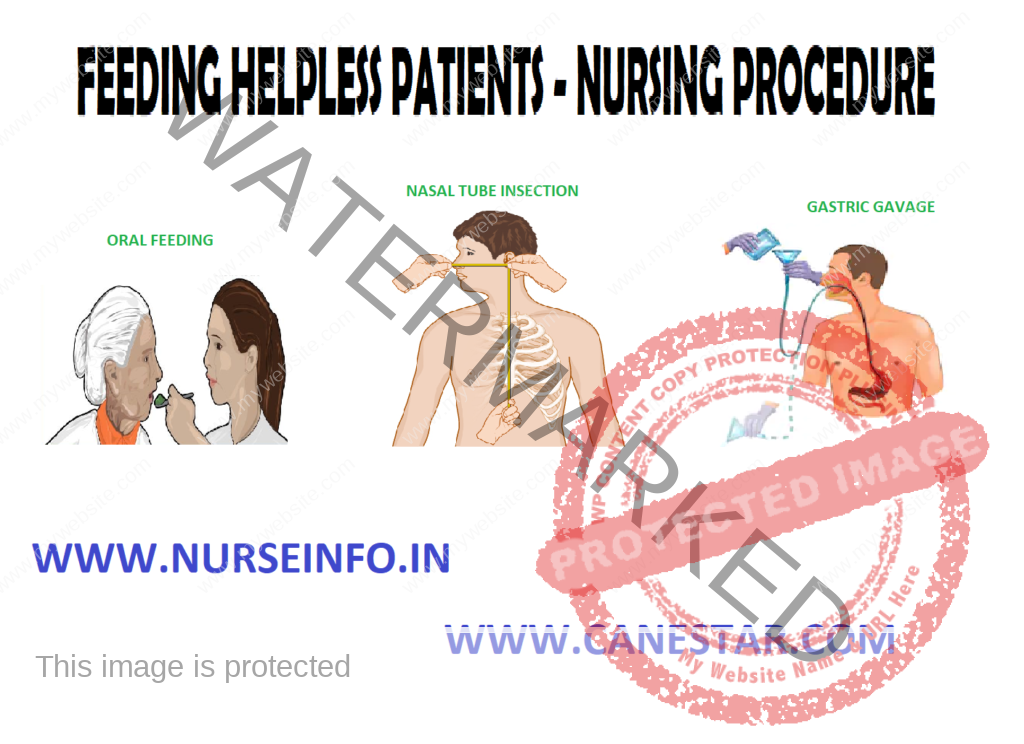
DIET FOR PATIENTS – FEEDING THE HELPLESS PATIENTS – NURSING PROCEDURE

NURSING PROCEDURE – DIET FOR PATIENTS (Feeding the Helpless Patient, Nasogastric Tube Insertion, Gastric Gavage)

A diet for patients varies based on their specific health condition, medical history, and dietary restrictions.

A variety of menus is needed in hospitals to cover the requirements of many different types of patients. It is important to emphasize that the national healthy eating guidelines are rarely appropriate for the hospitalized patient.

Guidelines are aimed at maintaining a healthy weight and helping to prevent long-term diseases such as heart diseases. But patients admitted to hospital generally have nutritional needs that would not be met by following such guidelines. They often have higher energy needs or small appetites than healthy people and many patients entering hospital have already lost weight due to their illness.

FEEDING THE HELPLESS PATIENT

It is assisting a dependent patient to take food and fluids.

Purpose

  • To assist the patient to eat meal
  • To meet the nutritional need
  • To promote health
  • To prevent dehydration
  • To improve appetite

General Instructions

  • The diet is prescribed by doctor planned by dietician and sewed by nurse
  • Food should be sewed at correct time in a pleasant manner and in a pleasant atmosphere
  • Small and frequent meals are preferable for a sick person
  • Maintain a chart for intake of food and fluids for seriously ill patients
  • The patient should be free from pain and other discomfort during meal time
  • Food should be sewed in an attractive manner so that the sight and smell of should increase his appetite
  • Food should not be too hot or too cold
  • Meals should be sewed in clean and covered vessels
  • Give enough time for the patient to enjoy his food
  • Encourage the patient to develop a taste to his therapeutic regimen of diet
  • Be careful not to spill food. Wipe the patient’s mouth and chin whenever necessary
  • Wash patient’s hand and make him brush his teeth after meals

Preliminary Assessment

Check

  • Doctors order for any specific precautions
  • Patient’s likes and dislikes and socioeconomic status
  • Find out the food habits of the patient
  • General condition and the ability for self-care
  • Patient’s ability to follows instructions
  • Ensure that the ordered diet is prepared properly and safety
  • The articles available in the patients unit

Preparation of the Patient and the Environment

  • Create a pleasant environment for the patient by well-ventilated, free from noise, odor and unpleasant sight
  • Send the visitors away tactfully
  • Give bed pan or urinal to patient if required before meals
  • If patient can sit help him to have flowers position with cardiac table or over bed table
  • Provide hand washing facilities to patient and if necessary help him, so that he will feel fresh
  • Place the towel over the chest and the under the chin to protect clothing

Equipment

A tray containing

  • A glass of water to give at the end of the meal
  • Napkin to wipe the face in between
  • Mackintosh and towel
  • Feeding cup or spoon
  • The required amount of feed in a mug at the right temperature
  • Kidney tray

Procedure

  • Wash hands thoroughly
  • Make sure that patient is not starving for any procedure
  • Explain procedure to patient
  • Make sure that therapeutic restriction are considered
  • Cover patient below chin with face towel
  • Feed the patient either by using spoon or fingers
  • Offer water as required
  • After meal, after water to rinse mouth and spit into K-basin
  • Complete feed and wipe mouth
  • Record the procedure in the nurse record sheet and intake output chart

After Care

  • Help the patient to wash his mouth and hands
  • Remove towel around the neck
  • Make the patient comfortable
  • Take all the articles to utility room discard the waste, clean the articles and replace it
  • Record the procedure in the nurse’s record sheet and intake output chart

NASOGASTRIC TUBE INSERTION

Nasogastric (NG) tube insertion is a method of introducing a tube through nose into stomach

Purpose

  • To feed patient with fluids when oral intake is not possible
  • To dilute and remove consumed position
  • To instill ice cold solution to control gastric bleeding
  • To prevent stress on operated site by decompressing
  • To relieve vomiting and distention
  • To collect gastric juice for diagnostic purposes

Equipment

A tray containing

  • Nasogastric tube of appropriate size
  • K-basin
  • Stethoscope
  • Bowl with water
  • Adhesive scissors
  • Syringe 20 cc or 10 cc

Preliminary Assessment

Check

  • Doctors order for any specific instruction
  • Patient’s ability to follow instructions
  • General condition of the patient
  • Articles available in the unit

Preparation of the Patient and Unit

  • Explain the sequence of procedure
  • Arrange the articles at the bedside
  • Provide privacy
  • Provide comfortable position
  • Place the Mackintosh and towel across the chest
  • Remove the dentures, if any and place it in a bowel of clean water
  • Give mouthwash and help him to clean the teeth
  • Clean the nostrils, if there are secretions or crust formation, using swab stick dipped in saline

Procedure

  • Wash hands thoroughly
  • Measure distance of tube from tip of patient’s ear lobe to nose to tip of xiphoid process
  • Mark the distance of the tube
  • Lubricate the tube for about 6 to 8 inches with the lubricant using a rag pieces or a paper square
  • Hold the tube coiled in the right hand and introduces the tip into the left nostril
  • Pass the tube gently but quickly backwards momentary resistance may occur as the tube is passed into the nasopharynx
  • When the tube reaches the pharynx the patient may gag. Allow him to rest for a movement
  • Have the patient take sips of water on command advance the tube 3 to 4 inches each time patient swallows
  • Make sure tube is in stomach
  • Once location of nasogastric tube insured close other end of tube with spigot, secure tube on nose using adhesive in “T” or butterfly

Methods to Confirm NG Tube in the Stomach

  • Aspirate: attach the syringe to the end of NG tube and aspirate small amount of gastric contents
  • Immerse distal end of tube into bowel of water and check for air bubbles. If the tube is in the trachea, air bubbles will coincide with the expiration of each breath
  • Auscultate: attach syringe to free end of NG tube, place diaphragm of stethoscope over left hypochondrium. Inject 10 ml of air and auscultate abdomen for gushing sound

After Care

  • Offer a mouthwash. Clean the face and hands and try them
  • Remove the Mackintosh and towel
  • Make the patient comfortable in bed
  • Take all the articles to the utility room discard the waste, clean it and replace it in a proper place
  • Wash hands
  • Record the procedure in the nurse’s record sheet

GASTRIC GAVAGE

Gastric gavage or nasogastric tube feeding is given through tube which is inserted through patient’s nose into stomach, when patient is unable to take food orally

It is the administration of fluid food by means of tube passed into the stomach which is also called the gastric gavage

Purpose

  • To provide adequate nutrition
  • To give large amounts of fluids for therapeutic purpose
  • To assess tolerance of feeds in postoperative patients
  • To introduce food into stomach when the patient is not able to take food in the usual manner
  • When the condition of mouth or esophagus makes swallowing difficult

Indication for Tube Feeding

  • Unconscious patient or semiconscious
  • After certain surgeries of the mouth and throat
  • Patient’s unable to swallow
  • Premature babies
  • When the patient is unable to retain the food, e.g. anorexia nervosa

General Instructions

  • Give mouthwash frequently to avoid complications of a neglected mouth
  • Maintain intake and output chart accurate
  • Measure and drain the feed (fluid) to avoid blockage in the tube
  • Avoid introducing air into the stomach during each feed. Pinch the tube before the fluid run into the stomach completely forms the tube
  • Feeding may be given at intervals of 2, 3 or 4 hours and the amount is not exceeding 150 to 300 ml per feed
  • Observe for complications such as nausea, vomiting, distension, diarrhea, aspiration pneumonia, asphyxia, fever, and water and electrolyte imbalance

Advantages of Tube Feeding

  • An adequate amount of all types of nutrients including distasteful foods and medication can be supplied
  • Large amount of fluids can be given safety
  • Tube feeding may be continued for weeks without any danger to the patient
  • The stomach may be aspirated at any time is desired
  • Over loading of the stomach can be prevented by a drip method

Principle Involved in Gastric Gavages

  • A thorough knowledge of the anatomy and physiology of the digestive tract and respiratory tract, ensures safe induction of the tube (avoid misplacement of the tube)
  • Tube feed is a process of giving liquid nutrients or medications through a tube into the stomach when the oral intake is inadequate or impossible
  • Microorganism enters the body through food and drink
  • Introduction of the tube into the mouth or nostrils is a frightening situation and the preparation of the patient facilitates introduction of the tube
  • Systemic ways of working adds to the comfort and safety of the patient and help in the economy of material, time and energy

Preliminary Assessment

  • Identify the correct patient
  • Check the doctor’s order for any specific precautions
  • Check the level of consciousness of the patient
  • Check whether the feed is ready at hand
  • Articles available in the unit

Preparation of the Patient and Environment

  • Explain the sequence of the procedure
  • Provide adequate privacy
  • Position the patient in sitting or semi fowlers
  • Place the Mackintosh and towel around the neck
  • Arrange the articles at the bedside lockers
  • Clean the mouth by providing mouthwash

Equipment

A tray containing

  • Mackintosh and towel
  • 20 cc syringe
  • Stethoscope
  • Bowel with water
  • Adhesive with scissors
  • Feeds and water
  • Ounce glass

Procedure

Syringe Method

  • Wash hands thoroughly
  • Place towels around neck in such a way that patients clothing and bed linen are protected
  • Make sure the tube is in stomach before giving feeds
  • Remove spigot. Pinch the tube to prevent air entry. Remove plunger from syringe and connect to tube
  • Keep syringe about 12 inches above patients head. Start feed with small measured amount of water and allow feed to follow slowly and steadily through tube in such a way, that air does not enter tube
  • Do not force fluid, allow to flow by gravity
  • At the end of feed flush tube by pouring small measured amount of water. Remove syringe and replace spigot

Siphon Method

  • Place towel around neck in such a way that patients clothing and bed linen are protected
  • Make sure that tube is in stomach before giving feeds
  • Immerse tip of tube is in stomach before giving feeds
  • Immerse tip of tube in prepared feed immediately by avoiding air entry into tube
  • Raise fluid container about 12 inches above patients head and observe flow of fluid
  • When feed is over flash tube with small quantity of water
  • Pinch tube and close with spigot

After Care

  • Remove the Mackintosh and towel
  • Place the patient in comfortable position
  • Replace the articles to utility room, clean it and replace it
  • Record the procedure in nurse’s record sheet and intake and output chart

FEEDING TYPES

DIET (NUTRITION) FOR SICK PATIENTS

NASOGASTRIC INSERTION

ENTERAL/NASOGASTRIC FEEDING

INSERTION OF SENGSTAKEN – BLAKEMORE

GASTRIC ANALYSIS

NURSING PROCEDURE - DIET FOR PATIENTS (Feeding the Helpless Patient, Nasogastric Tube Insertion, Gastric Gavage)
NURSING PROCEDURE – DIET FOR PATIENTS (Feeding the Helpless Patient, Nasogastric Tube Insertion, Gastric Gavage)

NURSING IMPORTANT QUESTIONS – CLICK HERE

NURSE FUNDAMENTAL PROCEDURES

MEDICAL SURGICAL NURSING

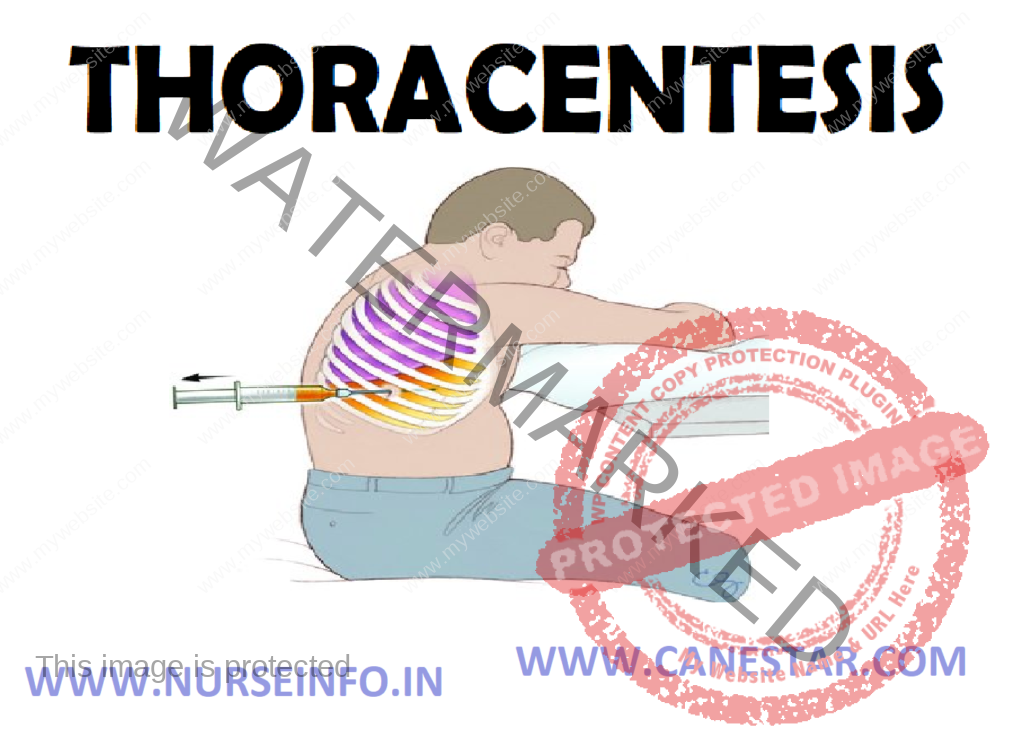
THORACENTESIS

THORACENTESIS – Definition, Purpose, General Instructions, Preliminary Assessment, preparation of the Patient and Environment, Equipment, Procedure, After Care and Complications

Thoracentesis is defined as introducing a hollow needle into pleural cavity and aspirating fluid or air, using aseptic technique.

Thoracentesis refer to the puncture by needle through the chest wall into the pleural space for the purpose of removing pleural fluid (blood, serous fluid, pus, etc) and or air (pneumothorax)

Thoracentesis or pleural aspiration or pleural tap is the insertion of needle into the pleural space through the chest wall to remove the pleural fluid or possibly air

DEFINITION

A thoracentesis is a surgical puncture of the chest wall to aspirate fluid or air from the pleural cavity. A pleural effusion is an abnormal accumulation of fluid in the pleural space.

PURPOSE

  • To remove excessive pleural fluid (serous fluid, blood or pus)
  • To drain fluid/air from pleural cavity for diagnostic or therapeutic purposes
  • To introduce medications
  • To aid in full expansion of lung
  • To obtain specimen for biopsy
  • To take pleural biopsy for diagnostic examination
  • To relieve pain
  • To relieve breathlessness caused by accumulation of fluid or air in the pleural space
  • To aid in diagnosis and treatment (chemical, bacteriological, cellular, composition and malignancy)

GENERAL INSTRUCTIONS

  • The patient should be prepared physically and psychologically for the procedure
  • Thoracentesis is indicated in case of pleural effusion due to infection, traumatic injury, cancer or cardiac diseases, etc
  • Common site for thoracentesis is just below the scapula at the seventh or eighth intercostals space
  • The patient should be warned that any sudden movements during the procedure may cause injury to the lungs, blood vessels, etc
  • The level of the aspiration needle should be short to prevent pricking of the lungs
  • Usually upright position is used during the procedure as it helps collect the pleural fluid at the base of the pleural cavity and hence facilitates to remove the fluid easily
  • Maintain strict aseptic technique to prevent introduction of infection into the pleural space
  • The 3 way adaptor should be fitted with the needle before it is introduced into the chest cavity. The adaptor should be in a closed position to prevent the entry of air into the pleural cavity
  • The nurse should check the syringes and needle for air-tightness. If these are not air-tight, air may be entering the pleural cavity and collapse
  • Remove the fluid slowly and not more than 1000 ml at the time, if the tap is therapeutic to prevent mediastinal shift
  • Use water: seal drainage system, if pleural fluid is purulent and difficult to drain
  • The specimen should be sent to the laboratory soon after it collected
  • The aspiration should be discontinued if any signs of complications are noted such as sharp pain, respiratory distress, excessive coughing, crepitus, haemoptysis, circulatory collapse, etc

PRELIMINARY ASSESSMENT

Check

  • Doctors order for any specific instructions
  • Written informed consent of the patient or relative
  • General condition and diagnosis of the patient
  • Review fresh erect chest X-ray
  • Confirm the diagnosis, location and extent of the pleural air/fluid/pus
  • Acute respiratory insufficiency (tension pneumothorax, rapidly developing effusion without dyspnea) may demand thoracentesis without X-ray
  • Mental status of the patient to follow instructions
  • Articles available in the unit

PREPARATION OF THE PATIENT AND ENVIRONMENT

  • Explain the sequence of the procedure
  • Provide privacy
  • Chest X-ray should be taken before thoracentesis is done to diagnose the location
  • Check the vital signs and record it on the nurse’s record for reference
  • A mild sedation may be given to the patient before starting the procedure
  • Maintain the desired position during the  procedure
  • The nurse should remain near the patient to observe him and to remind him not to move during the procedure
  • Arrange the articles at the bedside or in the treatment room
  • Premedication – inj. Atropine sulfate 0.65 mg intramuscularly or intravenously half an hour before procedure

EQUIPMENT

A sterile tray containing:

  • Sponge holding forceps – 1
  • Dissecting forceps – 1
  • Syringe (5 ml) and 2 needles for giving local anesthesia
  • 20 ml syringe with 1 leur lock to aspirate the fluid
  • Aspiration needle No. 16 (long and short)
  • 3 way stopcock
  • Small bowls – 2 to take the cleaning lotions
  • Specimen bottles and slides
  • Cotton swabs, gauze pieces and cotton pads
  • Gown, masks and gloves for the doctor
  • Sterile dressing towels/slit

An unsterile/clean tray containing:

  • Mackintosh and towel
  • Kidney tray and paper bag
  • Spirit, iodine, tincture benzoin
  • Lignocaine 2%
  • Suction apparatus with water seal drainage system

PROCEDURE

  • Position the patient in Fowler’s. bring patient to one side of bed with feet supported, arms and head leaning forward on cardiac table with pillows
  • Unite gown to expose site for aspiration
  • Instruct patient to avoid coughing and to remain immobile during procedure
  • Explain that a feeling of deep pressure will be experienced while fluid is being aspirated from pleural space
  • Provide sterile gloves to doctor
  • Open sterile set and assemble 20 ml, 50 ml syringes, 20-22 G needles and aspiration needles
  • Pour antiseptic solution to clean site
  • After showing label to doctor clean top of local anesthetic bottle and assist to withdraw mediation
  • Reassure patient and instruct to hold breath during insertion of aspiration needle
  • As physician does procedure, observe for signs and symptoms of complications
  • After fluid is withdrawn from pleural space, transfer to specimen container
  • After needle is withdrawn, apply pressure over puncture site. Assist in sealing site with tincture benzoin swab

AFTER CARE

  • Instruct patient to lie on on-affected site for 1 hour. Ensure bed rest for 6-8 hours
  • Monitor vital signs every half hour until stable
  • Observe patient for signs and symptoms of hemothorax, tension penumothorax, subcutaneous emphysema, and air embolism
  • Administer analgesics and antibiotics as prescribed
  • Instruct patient to carry out deep breathing exercises
  • A chest X-ray may be taken to determine the effects of the procedure
  • The puncture site should be treated aseptically to prevent contamination of the wound
  • The container with aspirated fluid should be labeled and sent to the laboratory with requisition form
  • Replace the articles after cleaning
  • Wash hands thoroughly
  • Record the procedure in the nurse’s record sheet

COMPLICATIONS

  • Pneumothorax and hemothorax: sudden rise of sharp pain  in the chest, persistent cough, shortness of breath, fall in blood pressure, rapid pulse, anxiety, restlessness, and faintness, profuse sweating, pallor and cyanosis
  • Tension pneumothorax: marked dyspnea, cyanosis, reduced or absence of breath sounds and decreased movement of chest on respiration on the affected site. Acute chest pain, increased pulse and respiratory rates. Shifting of the trachea to the unaffected side
  • Mediastinal shift: cyanosis, severe dyspnea, deviation of larynx and trachea from their normal midline position towards the unaffected side, shifting of the heart heat position of maximum impulse and distended neck veins
  • Pulmonary edema: blood tinged frothy sputum

Cough, wheezing, severe dyspnea

Cyanosis, tachycardia, tachypnea, distended neck

Veins, signs of heart failure, peripheral edema

Altered level of consciousness

THORACENTESIS – Definition, Purpose, General Instructions, Preliminary Assessment, preparation of the Patient and Environment, Equipment, Procedure, After Care and Complications

LUMBAR PUNCTURE

LUMBAR PUNCTURE – Purpose, Indications, Contraindications, General Instructions, CSF Analysis, Preliminary Assessment, Preparation of the Patient and Environment, Equipment, Procedure, Post-Procedure Care and Complications

Lumbar puncture is the insertion of a needle into the subarachnoid space of the spinal canal to withdraw cerebrospinal fluid.

Lumbar puncture or spinal tap or spinal puncture is the insertion of a needle into the lumbar region of the spine for removal of cerebrospinal fluid.

Lumbar puncture is an aspiration of cerebrospinal fluid (CSF) from the subarachnoid space (lumbar cistern) by puncturing the space between the spinous process of L3/L4 or L4/L5.

PURPOSE

  • To test the pressure of CSF
  • To relieve pressure by removing CSF
  • To remove fluids such as CSF, blood, pus, etc. containing in the subarachnoid space, thereby reduce the intracranial pressure
  • To remove a sample of CSF for laboratory examination in order to diagnose disease
  • To inject a spinal anesthetic, dye or air into the spinal cord
  • To detect spinal subarachnoid block
  • To introduce medication into the spinal fluid in treating neurological illness, e.g. meningitis

INDICATIONS

  • Diagnostic: to obtain pressure, suspected intracranial infections, suspected subarachnoid hemorrhage, peripheral none diseases (Guillain-Barre Syndrome) and peripheral vascular diseases
  • Therapeutic: intrathecal drug administration – Inj. Hydrocortisone 50-100 mg in spinal arachnoiditis, tuberculosis meningitis to prevent late fibrotic strictures. Inj. Crystalline penicillin in pyogenic meningitis. Inj. Methotrexate in acute lymphatic leukemic (NS) prophylaxis
  • Anesthetic: Inj. Lignocaine 50 mg and inj. Bupivacaine 1% in spinal anesthesia.
  • Radiological: to do a myelogram/myelography/myodil dye injection

CONTRAINDICATIONS

  • Gross spinal tension with obvious neurological damage because of danger of complete transverse lesion
  • Sepsis in skin at or near the proposed puncture site or osteomyelitis
  • Papilledema or other signs of raised intracranial pressure or focal neurological signs, until intracranial mass is ruled out
  • Bleeding diathesis or anticoagulant therapy

GENERAL INSTRUCTIONS

  • Site used for lumbar puncture is between third and fourth or between fourth and fifth lumbar vertebrae in adults and still lower in children
  • Strict aseptic techniques are to be followed. Since any infection introduced into the spinal cavity would be fatal for the patient
  • The position used is side-lying position with the knees drawn to the chin or a sitting position with the head and neck flexed is maintained during the procedure
  • The patient should be placed near the edge of the bed or table for the convenience of the doctor
  • The lumbar puncture needles should be sharp, small in size and not curved
  • The pressure reading of the CSF is taken with the patient is relaxed and the fluid level remains fairly constant in the manometer
  • The flow of CSF varies in different conditions, when the intracranial pressure is high, the fluid may spurt out in jets, when the tension is low as in case of dehydration
  • The patient’s vital sign should be checked frequently during and after the procedure to detect the early signs of complications
  • Drug to be injected must be warmed to body temperature and it should be injected very slowly
  • The amount of CSF withdrawn is equal to the volume of fluid to be introduced or is sufficient for the laboratory investigations planned
  • If a ‘Queckenstedt’s test’ is to be carried out during the procedure. The nurse is asked to compress the jugular vein first on one side, then on the other side and finally on both sides at the same time.
  • When the ‘Queckenstedt’s test’ is normal, there is a sharp rise in the pressure followed by a full as the compression is released. If the test is negative, one must conclude, that a block exists between the ventricles of the brain and the spinal canal which might be caused by spinal tumor, dislocation or fracture of the vertebrae, etc
  • Queckenstedt’s test is control indicated in the presence of intracranial diseases particularly in the presence of intracranial pressure and intracranial hemorrhage
  • At the end of the procedure, the puncture site is sealed to prevent leakage of fluid from the spinal cavity and infection, entering into the spinal cavity
  • After the lumbar puncture, the patient should lie flat on the bed

CSF ANALYSIS

CSF analysis is done to detect the followings:

  • Physical findings: color and appearance – normally, the CSF is crystal clear. Turbulence indicate infection, blood indicates hemorrhage
  • Cell count: normally there is no RBC found in CSF. Presence of RBC indicates hemorrhage in the CNS. Increased number of WBC indicates infection somewhere in the CNS
  • Sugar count: bacterial infections, such as tuberculosis meningitis often lower the sugar content from the normal level of 40-60 mg per 100 ml
  • Chloride level: bacterial infection also reduces the chloride level from the normal 720-750 mg per 100 ml
  • Protein level: in the presence of degenerative diseases and brain tumors, the protein content is increased from the normal level of 30-50 mg per 100 ml
  • Serological test: serological test for syphilis may be positive in the CSF even when the blood serology is negative

PRELIMINARY ASSESSMENT

  • The doctor’s order for specific instructions
  • General condition and diagnosis of the patient
  • Self-care ability of the patient
  • Mental status to follow directions or instructions
  • Specimen bottles available to collect sample
  • Equipment available in the unit

PREPARATION OF THE PATIENT AND ENVIRONMENT

  • Explain the sequences of the procedure
  • Provide privacy
  • Warn the patient that any movement
  • Monitor the vital signs before the procedure starts
  • Prepare the skin as for as a surgical procedure
  • Arrange the articles that are necessary for lumbar puncture at the bedside
  • Protect the bed with Mackintosh and towel
  • The nurse should stand near the patient throughout the procedure observing the general condition and helping him to maintain the desired position
  • Provide a stool for the doctor to sit comfortably during the procedure

EQUIPMENT

An unsterile tray containing:

  • Mackintosh drapes and towel
  • Cleaning articles, tincture, iodine, spirit
  • Local anesthetic 2% Xylocaine
  • Tincture benzoin
  • Mask apron
  • Kidney tray or plastic bag
  • Manometers, specimen container, laboratory requisition forms

A sterile tray containing:

  • LP needles – 2 sizes with their stilette
  • Sponge holding forceps
  • Syringe (5ml) with needles to give local anesthesia
  • Small bowl to take cleaning lotion
  • Specimen bottles
  • Cotton balls, gauze pieces and cotton pads
  • Gloves, gown and masks
  • Dressing towels or slit
  • The 3-way adapter, manometer, and tubing to measure the pressure of CSF

PROCEDURE

Positioning —- landmark LP site —- marking LP site —- tray opening and set-up —- prep and drape —- cutaneous anesthesia —- deep anesthesia —- lumbar puncture —– attach manometer and obtain opening pressure —– collect CSF —- finishing up

  • Position patient on left side with pillow under head and between legs
  • Make the patient to lie on firm surface with spine parallel to edge of bed
  • Place the patient in fetal position to that chin touches knee and assist patient to maintain this posture throughout procedure
  • Cover the patient with top sheet and expose back
  • Wash hands thoroughly
  • Provide sterile gloves to doctor
  • Open a LP set and assists in preparing site
  • Open 5 ml, Ro 2 ml syringe, 20 or 22 G needles and place one by one into sterile tray
  • After showing label to doctor, clean top of local anesthetic bottle and assist to withdraw medication
  • Specimen is collected in respective container and pressure reading is obtained
  • After collecting specimens, needle is withdrawn. Assist physician to seal site with tincture swab

POST-PROCEDURE CARE

  • Instruct patient to lie in supine position for 6 – 24 hours
  • Maintain every half hourly pulse and respiration for 4 to 5 hours till stable
  • Encourage liberal fluid intake
  • Label specimens and send to lab with investigation slip
  • Wash hands
  • Replace the articles after cleaning
  • Record the procedure in the nurse’s record sheet
  • Observe for any complication
  • Check the puncture site frequently for CSF leak

COMPLICATIONS

  • Injury to the spinal cord and spinal nerves
  • Infection introduced into  the spinal cavity which may rise to meningitis
  • Leakage of CSF through the puncture site and lowering the intracranial pressure and cause post puncture headaches
  • Damage to intervertebral discs
  • Pain radiating to the things due to tumor of the spinal nerves
  • Herniation of the brain structures into the foramen magnum due to sudden reduction in the intracranial pressure (transtentorial herniation)
  • Temperature elevation
  • Local pain, edema, and hematoma at the puncture site
  • Sixth cranial nerve palsy caused by removal of large volume of CSF with traction on the sixth nerve
LUMBAR PUNCTURE – Purpose, Indications, Contraindications, General Instructions, CSF Analysis, Preliminary Assessment, Preparation of the Patient and Environment, Equipment, Procedure, Post-Procedure Care and Complications

ABDOMINAL PARACENTESIS

ABDOMINAL PARACENTESIS – Purpose, Indications, Contraindications, General Instructions, Routine Investigations, Preliminary Assessment, preparation of the Patient and Environment, Site and Position, Equipment, Procedure, Post-procedure Care and Complications

Abdominal paracentesis is defined as the removal of fluid from the peritoneal cavity.

Abdominal paracentesis or peritoneal tap is defined as the insertion of needle or cannula with trocar into the peritoneal space through the abdominal wall to remove peritoneal fluid.

PURPOSE

  • To relieve pressure on the abdominal and chest organs if a transudate collects as a result of renal, cardiac, or liver diseases
  • To study chemical, bacteriological and cellular composition of the peritoneal fluid for the diagnosis of diseases
  • To drain an exudates in peritonitis
  • To remove fluid and instill air to create artificial pneumoperitoneum as a treatment for pulmonary tuberculosis affecting the base of the lungs
  • To remove blood or pus
  • To use as a prelude to other procedures like X-ray, peritoneal dialysis or surgery

INDICATIONS

Diagnostic: to diagnose the nature of fluid, transudate or exudates, Koch’s ascites, spontaneous bacterial peritonitis and malignancy

Therapeutic: ascites with cardiopulmonary embarrassment, ascites refractory to medical line of treatment and ascites causing abdominal discomfort

CONTRAINDICATIONS

Primary: bleeding diathesis and severe jaundice with impending hepatic coma because tapping may precipitate hepatic coma

Secondary: multiple previous abdominal operations but can be done under ultrasound guidance and presence of dilated bowel

GENERAL INSTRUCTIONS

  • Abdominal paracentesis should be done with strict aseptic technique to prevent introduction of infection into the peritoneal cavity
  • Ask the patient to void 5 minutes before the procedure to prevent injury to the bladder
  • Keep the patient warm and comfortable to prevent chills
  • Withdrawing fluid should be done slowly and small quantity at a time
  • Use a tapping needle or trocar of smaller gauge possible. This will reduce the puncture wound as small as possible and thereby reduce the chance of fluid leaking from the peritoneal cavity after the procedure is over
  • The flow of fluid can be controlled by the application of clamps on the tubing
  • The nurse should remain with the patient throughout the procedure to observe the patient’s general condition
  • The puncture wound should be sealed immediately after the procedure to prevent infection and leakage of peritoneal fluid
  • The specimens collected should be sent to the laboratory without delay

ROUTINE INVESTIGATIONS

  • Specific gravity, cell count, bacterial count, protein concentrations, culture and acid test strain
  • In most disorders, the fluid is clear and straw colored. Turbidity suggests infection
  • Sanguineous fluid usually signals neoplasm or tuberculosis
  • A protein concentration less than 3 g/100 ml suggests liver diseases or systemic disorders
  • Higher protein content suggests an exudates cause such as tumor or an infection

PRELIMINARY ASSESSMENT

Check

  • The doctors order for any specific precautions
  • The general condition and diagnosis of the patient
  • Self-care ability of the patient
  • Condition of the abdomen
  • Articles available in the unit

PREPARATION OF THE PATIENT AND ENVIRONMENT

  • Explain the procedure to the patient and his relatives
  • Obtain a written consent from the patient or relatives
  • Prepare the skin as for a surgical procedure
  • Empty the bladder just before the procedure
  • Maintain privacy with screens
  • Protect the bedding with a mackintosh and towel
  • Arrange the article at the bedside

SITE AND POSITION

  • Premediation: inj. Atropine sulfate 0.65 mg, intramuscularly half an hour procedure is given to the patient
  • Selecting a site: the primary object of selecting a site is to avoid injury to the urinary bladder and other abdominal organs. In the flank at midpoint below anterior superior iliac spine and umbilicus
  • Position: the patient is positioned in Fowler’s position supported by back rest and pillow near the edge of the bed

EQUIPMENT

An unsterile tray containing:

  • Mackintosh and towel
  • Sterile gloves and masks
  • Tincture iodine, spirit and tincture benzoin
  • Novocaine 1-2%/xylocaine 2%
  • Adhesive tape and scissors
  • Kidney basins, pint measure, bucket
  • IV bottles, back rest and abdominal binder

A sterile tray containing:

  • Sponge holding forceps
  • Window towel, small bowels: 2, sponge
  • Swabs, cotton and 2 ml syringe
  • Subcutaneous needle
  • Scalpel blade
  • Trocar and cannula (Thompson’s ascites brocar and cannula)
  • Suture materials: suture and skin needles, suture scissors, tissue forceps and artery forceps

PROCEDURE

  • Wash hands thoroughly
  • Position in Fowlers: this causes the fluid in the abdominal cavity to accumulate in the lower abdomen through gravity pull
  • Assist the doctor in cleaning the site and giving local anesthesia
  • Local anesthesia: 2% lignocaine is infiltrated into the skin, subcutaneous tissue, muscles and peritoneum
  • Assist the doctor by providing towels and other required items
  • Watch the vital signs and condition of the patient
  • Wrap the binder tightly around the waist as fluid escapes. This prevents sudden change in pressure. Rapid change in pressure causes distention of abdominal veins, reducing blood in the heart. This may cause heart failure
  • Collect the required amount in a pint measure or bucket
  • Usually a pint to one filter of fluid is removed. Avoid rapid removal of fluid. Sudden withdrawal of a large quantity of fluid at one setting may change the intra-abdominal pressure
  • After finishing withdrawal of fluid, seal the puncture wound with tincture benzoin and cover with a pad to prevent leakage of fluid

POST-PROCEDURE CARE

  • Apply abdominal binder tightly from top to bottom. It helps maintain intra-abdominal pressure
  • Monitor the patient’s general condition. Any change in the color, pulse, respiration and blood pressure should be reported immediately
  • Examine the dressing at the puncture site frequently for any leakage, reinforce the dressing if leakage is present
  • Provide analgesics, if there is pain
  • The specimen collected should be sent in laboratory with labels and a requisition form
  • Replace the articles after cleaning
  • Wash hands thoroughly
  • Record the procedure in the nurse’s record sheet

COMPLICATIONS

  • Precipitation of hepatic coma
  • Fainting, if large amount of fluid is removed too rapidly. This can be prevented by applying abdominal binder
  • Peritonitis
  • Perforation of viscous
  • Depletion of proteins
ABDOMINAL PARACENTESIS – Purpose, Indications, Contraindications, General Instructions, Routine Investigations, Preliminary Assessment, preparation of the Patient and Environment, Site and Position, Equipment, Procedure, Post-procedure Care and Complications

PHYSICAL EXAMINATION

PHYSICAL EXAMINATION (Introduction, Definition, Purpose and Methods of Examination)

INTRODUCTION

Assessment of physical findings should confirm data obtained in nursing history. Baseline information is obtained on admission. The proper examination proceeds logically from head to be starting with general appearance, blood pressure, pulse, hands and neck, heart, lungs, abdomen, feet and legs

DEFINITION

Physical examination is defined as a complete assessment of patient’s physical and mental status

PURPOSE

  • To understand the physical and mental well being of the patient
  • To detect disease in its early stage
  • To determine the cause and the extent of disease
  • To understand any changes in the condition of diseases, any improvement or regression
  • To determine the nature of the treatment or nursing care needed for the patient
  • To safeguard the patient and his family by noting the early signs especially in case of a communicable disease
  • To contribute to the medical research
  • To find out whether the person is medically fit or not for a particular task

METHODS OF EXAMINATION

Inspection

Visual examination of the body is called inspection. It is the observation with the naked eyes to determine the structure and functions of the body. It means looking with eyes. It reveals any rash, scar, color, size, shape, contour or symmetry of body parts. The quality of inspection depends on the time spent by the nurse to be thorough and systematic. In a hurry, we may overlook significant findings and make an incorrect conclusion. The following principles should be kept in mind for making accurate inspections.

  • Good lighting and exposure are essential
  • Inspect each area for size, shape, color, symmetry and proposition and find out any deviations from normal
  • Use additional lights for examining body cavities, e.g. oral
  • Use sense of olfaction along with visual to detect abnormalities e.g. bad breath indicates unhygienic mouth conditions. Acidic smell is significant of diabetic acidosis

PALPATION

It is feeling of the body or a part with the hands to note the size and positions of the organs. In palpation, the finger pads and not the fingertips are used. Palpation is an assessment technique in which the examiner feels with his/her fingers and one or both hands. Skill and gentleness are important. The degree of pressure applied during palpation varies, depending on, e.g. tenderness of the area and the depth of palpation required. It reveals may swelling, coldness, hotness, stiffness, hardness, smoothness, roughness, pain, vibration, firmness and flaccidity

The following points are to be kept in mind while doing palpation:

  • The client should be relaxed and comfortable. Observe non-verbal signs of discomfort during palpation
  • Palpation to be done with warm hands, short fingernails and a gentle approach
  • Palpation to be done slowly and gently
  • For light palpation the hand is depressed about 1 cm (1/2 inch) and for deeper palpation it should be approximately 2.5 cm ( 1 inch)
  • Use appropriate parts of the hands for doing various palpations

PERCUSSION

It is the examination by tapping with the fingers on the body to determine the condition of the internal organs by the sounds that are produced. It is done by placing a finger of the left hand firmly against a part to be examined and tapping with the fingertips of the right hand. It means striking/tapping with fingers. It elicits sounds, which indicate whether the underlying tissues are solid or filled with air or fluid. The sounds may be:

Resonance: a low pitched and loud sound heard over the normal lung tissues

Hyperresonance: very loud, very low pitch sound longer than resonance and is of booming quality signifies emphysema

Tympany: a drum-like sound heard over the air-filled tissues such as gastric air bubble

Dull: a medium-pitched sound with a medium duration without resonance heard over solid tissues such as heart and liver

Flat: a high-pitched sound with a short duration without resonance heard over complete solid tissues such as hand, thigh

Method of percussion: the percussion can be done by two methods. These are:

  • Direct percussion: striking the body surface directly with one or two finger, e.g. ascitic thrill
  • Indirect percussion: placing the middle finger of the non-dominant hand firmly against the body surface and striking the distal joint of now-dominant finger with the middle fingers of the dominant hand

AUSCULTATION

It means listening with stethoscope/placing ear against the body. It reveals sounds produced within the body and the blood vessels such as heart beats, bowel sounds, while auscultation frequency loudness, quality and duration of the sound to be noted

MANIPULATIONS

It is the moving of a part of the body to note its flexibility. Limitation of movements is discovered by this method

Testing of reflexes: the response of the tissues to external stimuli is tested by: means of percussion hammer, safety pin, wisp of cotton, hot and cold water, etc

HEAD TO TOE PHYSICAL EXAMINATION

VARIOUS PREPARATIONS FOR PHYSICAL EXAMINATION

BOWEL ELIMINATION

HOT APPLICATION

PATIENT POSITIONING

PHYSICAL EXAMINATION (Introduction, Definition, Purpose and Methods of Examination)

VARIOUS PREPARATIONS FOR PHYSICAL EXAMINATION

VARIOUS PREPARATIONS FOR PHYSICAL EXAMINATION – PREPARATION OF THE ENVIRONMENT, PREPARATION OF THE EQUIPMENT, PREPARATION OF THE PATIENT, ASSISTANCE AND CARE OF AFTER EXAMINATION  

NURSING PROCEDURES LIST CLICK HERE

PREPARTION OF THE ENVIRONMENT

  • Maintenance of privacy
  • A separate examination room is needed
  • Keep the doors closed. The relatives are not allowed
  • Drape the patient according to the parts that are exposed
  • Lighting: as far as possible natural light should be available in the examination room, because if a patient is jaundiced, it may not be detected in the artificial light. There should be adequate lighting
  • Comfortable bed or examination table: the patient should be placed comfortably throughout the examination. There should be provision for the maintenance of a suitable person, e.g. a lithotomy position may be maintained when examining the genitalia. To maintain this position, a special examination table with stirrup rods is needed
  • The room should be warm and without draughts

PREPARATION OF THE EQUIPMENT

All the articles needed for the physical examination are kept ready for the examination at hand.

  • Sphygmomanometer
  • Stethoscope
  • Fetoscope
  • TPR tray
  • Tongue depressor
  • Pharyngeal retractor
  • Laryngoscope
  • Tape measure
  • Flash light
  • Weighing machine
  • Ophthalmoscope
  • Otoscope
  • Tuning fork
  • Nasal speculum
  • Percussion hammer, safety pins
  • Cotton wool, cold and hot water
  • Test tubes
  • Vaginal speculum
  • Proctoscope
  • Gloves
  • Sterile specimen bottles, slides
  • Cotton applicators

PREPARATION OF THE PATIENT

Physical Preparation

  • Keep the patient clean
  • Shave the part if necessary
  • Keep the patient in a comfortable position which is convenient for the doctor to examine the patient
  • Empty the bladder prior to the examination. Empty the bowels by an enema if required
  • Loosen the garments and change into the hospital dress, if it is the custom
  • Drape the patient with extra sheets and expose only the need areas
  • Avoid unnecessary exposure

Mental Preparation

  • The patient may be quite new to the hospital situation and he may be anxious about his illness
  • He may have false ideas about the medical examination
  • It is the duty of the nurse to allay his anxieties and fears by proper explanations
  • Explain the sequence of the procedure to gain his confidence and cooperation
  • As far as possible a nurse should remain with a female patient during the physical examination

ASSISTANCE IN THE EXAMINATION

To take Height and Weight

  • To measure the length of the baby who cannot stand, place the baby on a hard surface, with the soles of the feet supported in an upright position
  • The knees are extended and the measurement is taken from the soles of the feet to the vertex of the head
  • The head should be in such a position that the eyes are facing the ceiling
  • After a child can stand, the height can be measured, if the child with the heels back and head against a wall
  • A small flat board held from the top of the head to the wall, will give an accurate measure of the height that is the distance from the floor to the board
  • The weight of a person who can stand is generally measured by a standing scale
  • The patient stands on the platform and the weight is noted on the dial
  • Usually the weight is taken without shoes
  • To take the weight of the baby, a baby weighing scale is used, in which there is a container, where the baby can be laid
  • It is important to weigh a baby unclothed weigh the clothes separately and subtract this weight

To Measure the Skull Circumference

The skull is measured at its greatest diameter from above the eyes to the occipital protuberance

Examination of the Eyes

  • The examination is done in a lying or sitting position
  • The examiner frequently uses a head mirror that reflects light to the patient’s face
  • The first examination is one of inspection to determine the movements of the eyes, reaction to light, accommodation to near and far objects
  • For detailed examination of the internal parts of the eye an ophthalmoscope is used

Examination of the Ears

  • The patient  may be placed either in a lying or sitting position with the ear to be examined turned towards the examiner
  • Articles used for the examination are a head mirror, ear speculum of various sizes, cotton tipped applicators and autoscope
  • Tuning fork is used to test the hearing
  • A child needs to be carefully restrained
  • Young children sit on their mother’s lap with their legs restrained between the mother’s knees and their arms held against their back
  • The mother them holds the child’s head against the chest
  • Very small infants can be laid on the examination table

Examination of the Nose, Throat and Mouth

  • The patient is usually seated with the head resting against the back of the chair
  • For the examination of the throat, a tongue depressor and a good light are needed
  • For examination of the nose, a nasal speculum and a head mirror are used. Sometimes the autoscope is also used

Examination of the Neck

The neck need to be palpated for lymph nodes. In order to assess the thyroid glands, the patient is asked to swallow saliva.

Examination of the Chest

  • While examining the anterior chest, the patient is placed in a horizontal recumbent position
  • The chest is examined in several ways
  • It is percussed to determine the presence of fluid or congested areas
  • The physician listens to the sound within the chest by means of a stethoscope
  • To examine the posterior chest, the patient is placed in a sitting position
  • The heart and lungs are examined by percussion and auscultation
  • The breasts are examined by palpation for the presence of lumps or growths
  • The axillae are palpated for enlarged lymph nodes
  • During the examination, the patient’s face is turned away from the doctor

Examination of the Abdomen

  • Extremities are inspected, palpated and moved
  • A fine tremor suggestive of hyperthyroidism can be observed, if the patient is asked to hold the arms out in front of him for a few minutes

CARE OF AFTER EXAMINATION

  • Assist him to dress and help him to remain in a comfortable position in the bed
  • After-care of equipment: wash the equipment with soap and water, rinse, dry and sterilize, as needed
  • Replace the equipments in their usual places
  • Label specimens properly and send them to the laboratory immediately

NURSE’S RESPONSIBILITIES DURING PHYSICAL EXAMINATION

  •  A separate examination room is needed. Keep the doors closed, screen the patient and provide privacy if he is not in a separate room. Relatives are not allowed
  • Drape the patient according to the parts that are to be examined. Natural light should be available in the examination room
  • There should be adequate lighting in the room. The patient should be comfortable throughout the examination
  • There must be provision for the maintenance of a suitable position, e.g. lithotomy position. The room should be warm
  • The nurse must stay in the room at all times while the doctor examines a female patient
  • During the examination of a male patient’s genitals, the nurse must leave the room. Take the patient’s temperature, pulse, respiration and blood pressure, if recent readings are not available
  • Give health teaching to the patient as need arises

PHYSICAL EXAMINATION

HEAD TO TOE PHYSICAL EXAMINATION

COLD APPLICATION

COMFORT DEVICES

VARIOUS PREPARATIONS FOR PHYSICAL EXAMINATION - PREPARATION OF THE ENVIRONMENT, PREPARATION OF THE EQUIPMENT, PREPARATION OF THE PATIENT, ASSISTANCE AND CARE OF AFTER EXAMINATION
VARIOUS PREPARATIONS FOR PHYSICAL EXAMINATION – PREPARATION OF THE ENVIRONMENT, PREPARATION OF THE EQUIPMENT, PREPARATION OF THE PATIENT, ASSISTANCE AND CARE OF AFTER EXAMINATION  

HEAD TO TOE PHYSICAL EXAMINATION

HEAD TO TOE PHYSICAL EXAMINATION – General status, Mental status, Height and Weight, Skin Conditions, Head and Face, Eye, Ears, Nose, Mouth and Pharnyx, Neck, Chest, Abdomen, Neurological Tests.

NURSING PROCEDURES LIST CLICK HERE

The examination is carried out in an orderly manner focusing upon one area of the body at a time. The observation of the patient starts as the patient walks into the examination room, e.g. a limp may be noted as the patient walks in. the following observations are made:

GENERAL APPEARANCE

  • Nourishment: well nourished or under nourished
  • Body build: thin or obese
  • Health: healthy or unhealthy
  • Activity: active or dull (tired)

MENTAL STATUS

  • Consciousness: conscious, unconscious, delirious, talking incoherently
  • Look: anxious or worried, depressed, etc
  • Body curves: lordosis, kyphosis, and scoliosis
  • Movement: any limb

HEIGHT AND WEIGHT

Skin Conditions

  • Color: pallor, jaundice, cyanosis, flushing, etc
  • Texture: dryness, flaking, wrinkling or excessive moisture
  • Temperature: warm, cold and clammy
  • Lesions: macules, papules, vesicles, wounds, etc

HEAD AND FACE

  • Shape of the skull and fontanel
  • Skull circumference
  • Scalp: cleanliness, condition of the hair, dandruff, pediculi, infections like ringworm
  • Face: pale, flushed, puffiness, fatigue, pain, fear, anxiety, enlargement of parotid glands, etc

EYE

  • Eyebrows: normal or absent
  • Eyelashes: infection, sty
  • Eyelids: edema, lesions, ectropion, entropion
  • Eyeballs: sunken or protruded
  • Conjunctiva: pale, red, purulent
  • Sclera: jaundiced
  • Cornea and iris: irregularities and abrasions
  • Pupils: dilated, constricted reaction to light
  • Lens: opaque or transparent
  • Fundus: congestion, hemorrhagic spots
  • Eye muscles: strabismus (squint)
  • Vision: normal, myopia, hypermetropia

ARTICLES APPROPRIATE FOR SPECIFIC EXAMINATION

  • Eye: torch, ophthalmoscope, snellen chart, wisp of cotton
  • Ear: head mirror, light bulb fixed on the wall or a table lamp and a torch, a tuning fork
  • Nose: nasal speculum, forceps, a head mirror and a light bulb
  • Throat: tongue depressor, a laryngeal mirror, a kidney tray, a paper bag, throat swabs in a container. Torch, gauze pieces in a bowl
  • Chest and abdomen: stethoscope, tape measure
  • Vaginal: sterile vaginal speculum, gloves, a kidney tray, a bowl with swabs (sterile), an antiseptic lotion
  • Rectal: proctoscope, gloves, finger cots, a kidney tray, water-soluble jelly
  • Neurological: a percussion hammer, safety pins, a wisp of cotton, hot or cold water

EARS

  • External ear-discharges, cerumen obstructing the ear passage
  • Tympanic membrane: perforations, lesions, bulging
  • Hearing: hearing acuity

NOSE

  • External nares: crusts or discharges
  • Nostrils: inflammation of the mucus membrane, septal deviations

MOUTH AND PHARYNX

  • Lips: redness, swelling, crusts, cyanosis, angular stomatitis
  • Odor of the mouth: foul smelling
  • Teeth: discoloration and dental caries
  • Mucous membrane and gums: ulceration and bleeding, swelling, pus formation
  • Tongue: pale, dry, lesions, sores, furrows, tongue tie, etc.
  • Throat and pharynx: enlarged tonsils, redness and pus

NECK

  • Lymph nodes: enlarged, palpable
  • Thyroid gland: enlarged
  • Range of motion: flexion, extension and rotation

CHEST

  • Thorax: shape, symmetry of expansion, posture
  • Breath sounds: sigh, swish, rustle, wheezing, rales, crepitations, pleural rub, etc
  • Heart: size and location, cardiac murmurs
  • Breasts: enlarged lymph nodes

ABDOMEN

  • Obstruction: skin rashes, scars, hernia, ascites, distention, pregnancy, etc
  • Auscultation: bowel sounds, fetal heart sounds
  • Palpation: liver margin, palpable spleen, tenderness at the appendix, inguinal hernias
  • Percussion: presence of gas, fluid or masses

Extremities: movement of joints, tremors, clumbing of fingers, ankle edema, varicose veins, reflexes, etc

Back: spinal bifida curves

GENITAL AND RECTUM

  • Inguinal lymph glands: enlarged, palpable
  • Patency of urinary meatus and rectum (in infants)
  • Descent of the testes
  • Vaginal discharges
  • Presence of sexually transmitted diseases
  • Hemorrhoids
  • Enlargement of the prostate gland
  • Pelvic masses

NEUROLOGICAL TESTS

  • Coordination tests
  • Reflexes
  • Equilibrium tests
  • Tests for sensations
  • Role of the nurse in the physical examination

VARIOUS PREPARATIONS FOR PHYSICAL EXAMINATION

PHYSICAL EXAMINATION

COMFORT DEVICES

BOWEL ELIMINATION

HEAD TO TOE PHYSICAL EXAMINATION – General status, Mental status, Height and Weight, Skin Conditions, Head and Face, Eye, Ears, Nose, Mouth and Pharnyx, Neck, Chest, Abdomen, Neurological Tests.
Nurse Info