
Concurrent and Terminal Disinfection in Nursing: Definition, Purpose, Procedure, and Responsibilities
UPDATED 2026
Introduction
Infection prevention and control are essential components of nursing care. Disinfection helps reduce the spread of microorganisms and protects patients, healthcare workers, and visitors from infectious diseases. Two important methods used in healthcare settings are concurrent disinfection and terminal disinfection. Understanding these procedures is crucial for nursing students and healthcare professionals.
What is Disinfection?
Disinfection is the process of destroying or reducing harmful microorganisms on surfaces, equipment, and objects to prevent the spread of infection. Unlike sterilization, disinfection may not eliminate all bacterial spores but significantly reduces the risk of disease transmission.
Definition of Concurrent Disinfection
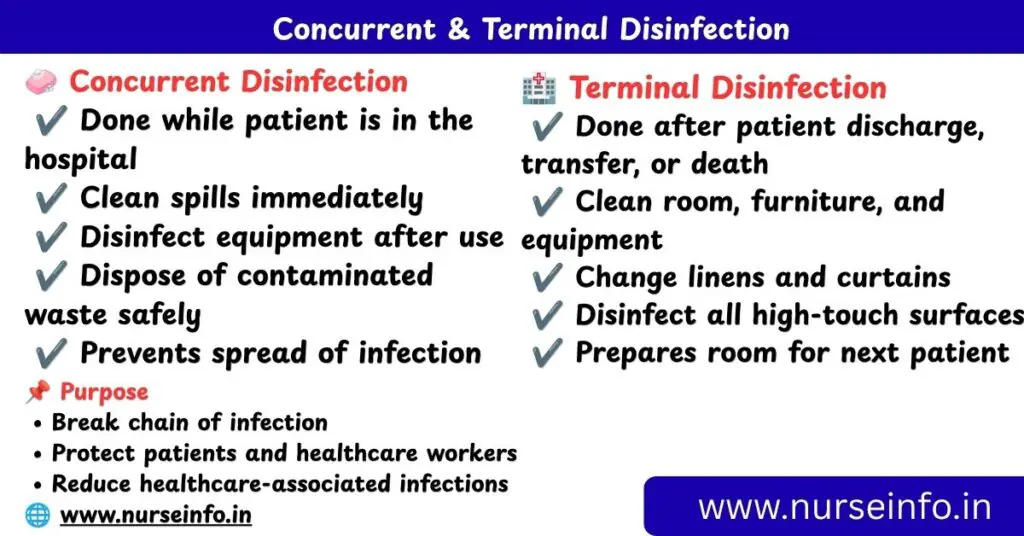
Concurrent disinfection refers to the immediate cleaning and disinfection of infectious materials, contaminated articles, and patient surroundings while the patient is still in the healthcare facility. It is carried out continuously throughout the patient’s stay to prevent the spread of infection.
Examples of Concurrent Disinfection
- Cleaning blood or body fluid spills immediately.
- Disinfecting patient-care equipment after use.
- Proper disposal of contaminated dressings and waste.
- Cleaning frequently touched surfaces such as bed rails and bedside tables.
Definition of Terminal Disinfection
Terminal disinfection is the thorough cleaning and disinfection of a patient’s room, furniture, equipment, and environment after the patient has been discharged, transferred, or has died. It ensures that the area is safe for the next patient.
Examples of Terminal Disinfection
- Cleaning walls, floors, and furniture after patient discharge.
- Disinfecting reusable medical equipment.
- Replacing bed linens and curtains.
- Disinfecting high-touch surfaces throughout the room.
Objectives of Concurrent and Terminal Disinfection
The primary objectives include:
- Preventing the spread of infectious diseases.
- Breaking the chain of infection.
- Protecting healthcare workers, patients, and visitors.
- Maintaining a safe healthcare environment.
- Reducing healthcare-associated infections (HAIs).
- Supporting quality patient care.
Importance of Concurrent Disinfection
Concurrent disinfection plays a vital role in infection control because it:
- Reduces the immediate risk of cross-contamination.
- Prevents the spread of pathogens within healthcare facilities.
- Maintains cleanliness around infected patients.
- Protects healthcare workers from occupational exposure.
- Supports standard infection prevention measures.
Importance of Terminal Disinfection
Terminal disinfection is important because it:
- Eliminates pathogens remaining in the patient’s environment.
- Reduces the risk of infection for future occupants.
- Ensures hospital rooms meet infection control standards.
- Prevents outbreaks caused by environmental contamination.
- Promotes patient safety and quality healthcare.
Principles of Concurrent Disinfection
The following principles should be followed:
- Perform cleaning immediately after contamination occurs.
- Use approved disinfectants according to guidelines.
- Wear appropriate personal protective equipment (PPE).
- Practice proper hand hygiene before and after procedures.
- Dispose of infectious waste safely.
- Follow standard precautions at all times.
- Ensure contaminated items are handled carefully.
Principles of Terminal Disinfection
Important principles include:
- Thoroughly clean all surfaces before disinfection.
- Remove visible dirt and organic matter.
- Disinfect all reusable equipment.
- Follow the recommended disinfectant contact time.
- Use appropriate PPE during cleaning.
- Properly dispose of waste materials.
- Ensure adequate ventilation when using disinfectants.
Procedure of Concurrent Disinfection
Preparation
- Gather necessary cleaning supplies and disinfectants.
- Perform hand hygiene.
- Wear gloves and other PPE as required.
During the Procedure
- Clean contaminated surfaces immediately.
- Disinfect reusable equipment after each use.
- Handle soiled linens carefully.
- Dispose of contaminated waste according to policy.
- Clean spills of blood and body fluids promptly.
After the Procedure
- Remove PPE safely.
- Dispose of waste appropriately.
- Perform hand hygiene.
- Document actions if required.
Procedure of Terminal Disinfection
Step 1: Preparation
- Wear appropriate PPE.
- Remove waste and used linens from the room.
Step 2: Cleaning
- Clean furniture, equipment, walls, and floors.
- Remove dust and visible dirt.
- Clean high-touch surfaces thoroughly.
Step 3: Disinfection
- Apply approved disinfectants to all surfaces.
- Follow the manufacturer’s recommended contact time.
- Disinfect reusable medical equipment.
Step 4: Final Inspection
- Check the cleanliness of the room.
- Replace clean linens and supplies.
- Prepare the room for the next patient.
Difference Between Concurrent and Terminal Disinfection
| Feature | Concurrent Disinfection | Terminal Disinfection |
|---|---|---|
| Timing | During patient stay | After discharge or transfer |
| Purpose | Prevent ongoing spread of infection | Eliminate remaining microorganisms |
| Frequency | Continuous | Performed after patient leaves |
| Area Covered | Contaminated items and surroundings | Entire room and equipment |
| Goal | Immediate infection control | Prepare environment for next patient |
Nursing Responsibilities
Nurses play a crucial role in maintaining infection control. Their responsibilities include:
- Following infection prevention protocols.
- Performing proper hand hygiene.
- Using PPE correctly.
- Educating patients and caregivers.
- Monitoring environmental cleanliness.
- Reporting infection control concerns.
- Ensuring safe disposal of biomedical waste.
- Documenting disinfection activities when required.
Advantages of Concurrent and Terminal Disinfection
- Reduces infection transmission.
- Prevents healthcare-associated infections.
- Improves patient safety.
- Protects healthcare workers.
- Maintains a clean healthcare environment.
- Supports quality healthcare services.
Conclusion
Concurrent and terminal disinfection are essential infection control measures in healthcare settings. Concurrent disinfection prevents the spread of infection during patient care, while terminal disinfection ensures that the environment is safe after the patient leaves. Proper implementation of these procedures helps protect patients, healthcare workers, and the community from infectious diseases.
Frequently Asked Questions (FAQs)
What is concurrent disinfection?
Concurrent disinfection is the immediate cleaning and disinfection of contaminated materials and surfaces while the patient is still receiving care.
What is terminal disinfection?
Terminal disinfection is the thorough cleaning and disinfection of a patient’s environment after discharge, transfer, or death.
Why is concurrent disinfection important?
It prevents the immediate spread of infectious microorganisms and reduces cross-contamination.
Why is terminal disinfection necessary?
It removes remaining pathogens from the environment and prepares the area for future use.
Who is responsible for disinfection in healthcare settings?
Nurses, infection control personnel, and environmental service staff share responsibility for maintaining effective disinfection practices.
Keywords: concurrent terminal disinfection, concurrent disinfection in nursing, terminal disinfection procedure, infection control nursing notes, nursing procedures, hospital infection prevention, healthcare disinfection methods, nursing education.