Home Blog Page 37

UTERINE MASSAGE

UTERINE MASSAGE – Steps Involved in Uterine Massage and Expel Clots (MATERNAL AND CHILD HEALTH NURSING)

The rapid changes that the postpartum woman experiences can be expedited and supported with massage therapy. Massage can be given both immediately after birth, to encourage complete expulsion of the placenta; and on an ongoing basis to help ease backaches, stress, fatigue, headaches and postpartum depression

Effects of labor: immediately after the placenta is delivered, postpartum recovery begins. For the new mother, this is an intense and dramatic period of physical and emotional adjustment. In additional societies, it was common to support the pregnant, laboring and postpartum woman with massage. However, applications were most important during the postpartum recovery period, to ensure that all remnants of the placenta were expelled and to encourage uterine involution (the return of the uterus to its pre-pregnant shape and size)

Just after birth, the mother’s abdomen is flaccid and the skin is loose. Stretch marks will prevent the skin from regaining its pre-pregnant firmness. Her intestines, bladder and other organs may be displaced

For several days after the birth of her baby, the new mother has an increase in urine output, hot flashes and heavy sweating, as her body rids itself of excess interstitial fluids and waste products. She will also lose anywhere from 10-12 pounds within hours of the birth, including 7-8 pounds of baby, 1-2 pounds of amniotic fluid and blood, and 1-2 pounds of placenta and other fluid

The uterus: after the placenta is delivered, the uterus continues to contract called “after pains”, these contractions are more common in women who have given birth before than in first-time mothers, and serve to restore the uterus to its prepregnant size and shape

Nursing mothers often complain about severe cramping because prolactin, the hormone of milk production, activates uterine contractions. These contractions serve an important purpose to expel any remaining clots and uterine tissue and control hemorrhages at the placental site

The day after the birth, the uterus is just above the umbilicus. Almost a week later, the top of the uterus is midway between the umbilicus and the symphysis pubis. After 10 days, the uterus has shrunk down behind the symphysis pubis

Abdominal massage immediately after the placenta is expelled can be painful, but it is very helpful in encouraging uterine involution and the flow of lochia, the natural postpartum discharge. The massage, which can be performed by the new mother on herself, is done on the abdomen in a clockwise direction using small, circular kneading strokes

The uterus should harden and contract with this treatment and the massage should be applied every four hours until the discharge is pale, for about 2-3 weeks. A woman who has had a cesarean (C-section) should take care to avoid direct pressure on her scar until it heals

STEPS INVOLVED IN UTERINE MASSAGE AND EXPEL CLOTS

  • This should be carried out in case heavy postpartum bleeding persists after the placenta is delivered, or the uterus is not well-contracted (is soft)
  • Place your cupped palm on the uterine fundus and feel for the state of contraction
  • Massage the uterine fundus in a circular motion with the cupped palm until the uterus is well-contracted
  • When well-contracted, place your fingers behind the fundus and push down in one swift action to expel clots
  • Collect the blood in a container or over a clean plastic sheet placed close to the vulva. Estimate and record the amount of blood lost
UTERINE MASSAGE – Steps Involved in Uterine Massage and Expel Clots (MATERNAL AND CHILD HEALTH NURSING)

HYSTEROSCOPY

HYSTEROSCOPY – Normal Finding, Purposes, Client Preparation, Procedure, Post-procedural Care, Abnormal Findings, Contraindication and Client Teaching (MATERNAL AND CHILD HEALTH NURSING)

Hysteroscopy allows visualization of the entire endometrial cavity of the uterus. This test is considered to be more effective for viewing and obtaining endometrial pathology than the D and C (dilatation and curettage) or hysterosalpingography). With D and C, scraping of the endometrial tissue is done without visualization, which may result in failure to harvest the pathologic tissue. With the use of the hysterioscopy, a biopsy could be taken and polyps removed

NORMAL FINDING

Normal uterine cavity; normal endometrial uterine tissue

PURPOSES

  • To visualize the uterine cavity
  • To obtain a biopsy of the endometrial of the uterus
  • To remove a uterine polyp

CLIENT PREPARATION

  • Obtain a signed consent form from the client
  • Explain the procedure to the client
  • Obtain a menstrual history. The test should be performed after menstruation and prior to ovulation
  • Explain that discomfort following the carbon dioxide instillation is possible, lower abdominal distension (uterus) and bloating can result.

PROCEDURE

  • a consent form should be signed
  • have the client void before the procedure
  • the client is placed in the lithotomy position
  • a hysteroscope is placed through the cervical into the endometrial cavity of the uterus. Carbon dioxide is usually instilled to distend the uterine cavity
  • biopsy of tissue can be obtained
  • the test takes approximately 30 minutes

POST-PROCEDURAL CARE

  • monitor vital signs
  • check for excessive bleeding or discharge

ABNORMAL FINDINGS

  • hyperplasia of the endometrial tissue in the uterus
  • endometrial cancer
  • polyps

CONTRAINDICATION

  • cervical or vaginal infections
  • pelvic inflammatory disease or purulent vaginal discharge
  • cervical surgery

CLIENT TEACHING

  • Inform the client that cramping may occur following the test. Use of mild analgesic decrease discomfort
  • Sexual intercourse of douching should be avoided for 2 weeks or as instructed by the healthcare provider
  • Instruct the client to report severe discomfort or shortness of breath immediately to the healthcare provider
HYSTEROSCOPY – Normal Finding, Purposes, Client Preparation, Procedure, Post-procedural Care, Abnormal Findings, Contraindication and Client Teaching (MATERNAL AND CHILD HEALTH NURSING)

HYSTEROSALPINGOGRAPHY (HYSTEROSALPINGOGRAM)

HYSTEROSALPINGOGRAPHY (HYSTEROSALPINGOGRAM) – Purposes, Abnormal Findings, Client Preparation, Procedure, Factors Affecting Diagnostic Results and Health Teaching (MATERNAL AND CHILD HEALTH NURSING)

Hysterosalpingography is a fluoroscopic examination and X-ray examination of the uterus and fallopian tubes. A contrast substance, either oil-base ethiodol or lipiodol or water soluble salpix is injected into the cervical canal. It flows through the ureter and in to the fallopian tubes and spills into the abdominal area, allowing visualization of the uterus, the fallopian tubes, and the body of the uterus. Usually the procedure is performed by the radiologist and the health care worker

The hysterosalpinogram should be done on the seventh to ninth day after the menstrual cycle. The client should not be pregnant or have active bleeding. Or an acute infection; if any of these conditions exits, the test should be canceled. There may be some abdominal cramping, and sometimes there are chills and transient dizziness as the contrast substance spills into abdominal area. Normally, the spillage is not harmful and is expected. The amount of radiation exposure is high because of the fluoroscopic examination. Today ultrasonography is replacing hysterosalpinogography; expect that the latter test is more effective in determining tubal potency

PURPOSES

  • To identify uterine fibroids, tumor or fistula
  • To identify fallopian occlusion
  • To evaluate repeated fetal losses

ABNORMAL FINDINGS

  • Uterine masses (i.e. fibroids, tumor)
  • Uterine fistulas
  • Fallopian tubal occlusion (i.e. adhesions, stricture)
  • Extrauterine pregnancy
  • Evaluation of repeated fetal losses

CLIENT PREPARATION

  • Explain to the client that the purpose of the test is to visualize the uterus and tubes for any abnormalities or to determine the patency of the fallopian tubes
  • Explain the procedure to the client. The procedure may slightly differ in your institution, so check before explaining to the client
  • Check to see that the consent form is signed. Ask the client when she had her last menstrual period. Record the information. If pregnancy is suspected, the procedure should not be done
  • Administer pre-testy orders-enema, douche or sedative. If the clients come from home, check that she has prepared herself as ordered
  • Inform the client that the test takes about 15-30 minutes
  • Encourage the client to ask questions and to express concerns. Be a good listener. Refer questions and concerns you cannot handle adequately to other appropriate health professionals
  • Check for signs and symptoms of infection following the test such as fever, increased pulse rate and pain

PROCEDURE

  • A consent form for hysterosalpingography should be signed by the client
  • Food and fluids are not restricted
  • A cleansing enema and douche may be ordered prior to the test
  • A mild sedative (e.g. diazepam (valium)) may be ordered prior to the test
  • The client lies on the examining table in the lithotomy position. The gynecological and the contrast substance are injected into the cervix under fluoroscopic control. X-ray is taken throughout the 15-30 minute procedure

FACTORS AFFECTING DIAGNOSTIC RESULTS

Tubal spasm may causes tubal stricture, which could give the appearance of a partial or complete tubal obstruction in a normal fallopian tube

HEALTH TEACHING

  • Inform the client that she may experience some abdominal cramping and some dizziness. Explain that this is normal but that if there is continuous and severe cramping, she should tell the examiners
  • Inform the client that there may be some bloody discharges for several days; she should notify her health care provider
  • Instruct client to call the healthcare provider if a high fever is present
HYSTEROSALPINGOGRAPHY (HYSTEROSALPINGOGRAM) – Purposes, Abnormal Findings, Client Preparation, Procedure, Factors Affecting Diagnostic Results and Health Teaching (MATERNAL AND CHILD HEALTH NURSING)

HEMOGLOBIN ESTIMATION

HEMOGLOBIN ESTIMATION – Instructions (MATERNAL AND CHILD HEALTH NURSING)

Estimation of the level of hemoglobin (HB) is essential for the following

  • To check for the presence of anemia and, if present, to what degree
  • For the further management, prevention and/or treatment of anemia, in so far as the administration of IFA tablets is concerned. If the anemia is severe, the woman may need referral for taking injectable iron preparations or undergo a blood transfusion
  • For the diagnosis of postpartum hemorrhage (PPH) in an anemic women, in whom a smaller amount of blood loss is taken as PPH

Estimate the Hb levels of pregnant women at the initial antenatal visit and again at 28 weeks. The initial Hb level will serve as a baseline to compare with the later results at 28-30 weeks. An Hb level below 11 g/dL at any time in pregnancy is considered to be anemia; an Hb level of 7-11 g/dL as moderate anemia, and less than 7 g/dL as severe anemia

If the woman is found to be anemic, start her on the therapeutic dose of. Estimate the Hb level again after 1 month. If there is no rise in the Hb level, refer the woman to a higher facility with a good laboratory infrastructure and trained personnel to find out the cause of anemia

How to measure hemoglobin: the level of hemoglobin is estimated by using a World Health Organization (WHO) – approved

Hemoglobin color scale: the hemoglobin color scale is a simple, reliable and inexpensive tool developed by WHO to screen for anemia in the absence of laboratory-based hemoglobinometry

The hemoglobin color scale comprises a small card with six shades of red that represent the Hb levels of 4, 6, 8, 10, 12 and 14 g/dL. The device is simple to use

FOLLOW THESE INSTRUCTIONS WHILE USING THE SCALE

  • Use only approved test strips
  • Add a drop of blood to one end of the test strip, just enough to cover an aperture in the color scale
  • Wait for about 30 seconds; then immediately read by comparing the blood stain with the color scale to find the best color match
  • If the bloodstain matches one of the shades of red exactly, record the Hb value. If the color lies between two shades, record the mid-value. If in doubt between two shades, record the lower value
  • Discard the test strip after use. Wipe the back surface of the scale at the end of each session, or if it becomes soiled during use
HEMOGLOBIN ESTIMATION – Instructions (MATERNAL AND CHILD HEALTH NURSING)

CONTROLLED CORD TRACTION

CONTROLLED CORD TRACTION – Steps Involved in Controlled Cord Traction (MATERNAL AND CHILD HEALTH NURSING)

STEPS INVOLVED IN CONTROLLED CORD TRACTION

  • Clamp the maternal end of the umbilical cord close to the perineum with a pair of forceps
  • Hold this clamped end and the forceps with one hand
  • Place the other hand just above the woman’s pubic bone. This is to stabilize the uterus by applying counteraction (pressure in the opposite/upward direction) on the uterine fundus during controlled cord traction (CCT)
  • Keep slight tension on the cord and wait for a strong uterine contraction
  • When the uterus contracts, as will be evidenced by the uterus becoming hard and globular, or when the extravulval portion of the cord lengthens, gently pull downward on the cord to deliver the placenta. Continue to apply counteraction on the uterus with the other hand
  • If the placenta does not descend within 30-40 seconds of CCT, i.e. there are no signs of placental separation, do not continue to pull on the cord
  • The signs of placental separation are:

The uterus becomes hard and globular (uterine contraction)

The extravulval portion of the cord lengthens

There is a sudden gush of blood when the placenta separates

If the fundus of the uterus is gently pushed up towards the umbilicus, the cord will not recede inot the vagina

  • Wait for the next uterine contraction and repeat CCT with counter traction
  • As the placenta delivers, hold it with both hands to prevent tearing of the membranes
  • If the membranes do not slip out spontaneously, gently turn the placenta so that the membranes are twisted into a rope and move them up and down to assist separation. If pulled at, thin membranes can tear off and get retained in the uterus
  • If the membranes tear, gently examine the upper vagina and cervix and use your fingers or a pair of sponge forceps to remove any pieces of membrane that might be present
  • Remember, you should never apply cord traction (pull) without applying countertraction (push) above the pubic bone with the other hand
CONTROLLED CORD TRACTION – Steps Involved in Controlled Cord Traction (MATERNAL AND CHILD HEALTH NURSING)

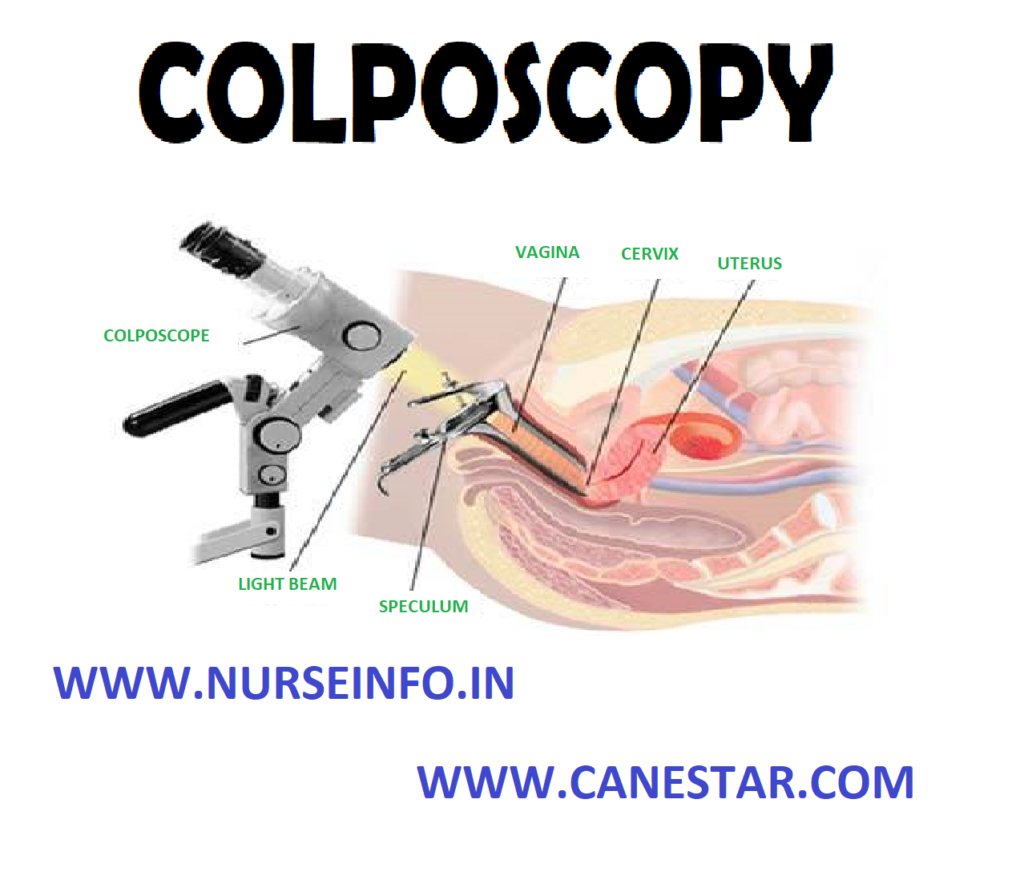
COLPOSCOPY

COLPOSCOPY – Purposes, Indications, Client Preparations, Procedure, Post-Procedural Care, Factors Affecting Diagnostic Results and Client Teaching (MATERNAL AND CHILD HEALTH NURSING)

Colposcopy is the examination of the vagina and cervix using a binocular instrument (colposcopy) that has a magnifying lens and a light. This test is for identifying precautions lesions of the cervix and can be performed in the gynecologist’s office or in the hospital. After a positive papanicolaou (pap) smear or a suspicious cervical lesion, colposcopy is indicated for examining the vagina and cervix more thoroughly.

Atypical epithelium, leukoplakia vulvae, and irregular blood vessels can be notified with this procedure, a photographs and a biopsy specimen can be obtained. Since this test has become more popular, there has been a decreased need for conization (surgical removal of a cone of tissue from the cervical). Colposcopy is also useful for monitoring women whose mothers received diethylstilbestrol during pregnancy; these women are prone to develop. Colposcopy is used to monitor female patients who have had cervical lesions removed

PURPOSES

To identify precancerous lesion of the cervix

INDICATIONS

  • Vaginal and cervical lesions
  • Abnormal cervical tissue after a positive Pap smear
  • Irregular blood vessels
  • Leukoplakia vulvae
  • Dysplasia
  • Cervical lesions
  • Vaginal and cervical tissue changes for women whose mother took diethylstilbestrol during pregnancy

CLIENT PREPARATIONS

  • Explain the purpose and procedure to the client
  • Encourage the client to ask questions and to express any concerns or fears. Reducing anxiety is important for the client and for the rest, remains with the client during the procedure
  • Place the biopsy tissue into a bottle containing preservation and place the cells, if obtained, on a slide and spray them with a fixative solution

PROCEDURE

  • A consent form should be signed
  • Food and fluids are not restricted
  • The client’s clothes should be removed, and the client should wear a gown and be properly draped
  • The client assumes a lithotomy position (legs in stirrups). A specimen is inserted into the vagina, and a long, dry cotton swab applicator is used to clear away any cervical secretions. Another long cotton-swab applicator with saline may be used to swab the cervix for visualizing vascular patterns
  • Acetic acid (3%) is applied to the vagina and cervix. This produces color changes in the cervical epithelium and helps in detecting abnormal changes a biopsy specimen of suspicious tissues and photographs may be taken. Pressure should be applied to control bleeding at the biopsy site, or cautery may be used
  • A biopsy specimen of suspicious tissues and photographs may be taken. Pressure should be applied to control bleeding at biopsy site, or cautery may be used
  • The  test takes approximately 15-20 minutes

POST-PROCEDURAL CARE

  • Inform the client that she may have some bleeding for a few hours because of the biopsy. Tell neither the client that she can use tempons and that if bleeding becomes heavy and it is nor her menstrual period, she should call the gynecologist
  • Instruct the client not to have intercourse for a week until the biopsy side is healed or as ordered by the healthcare provider
  • Inform the client that the doctor will notify her of the results, and tell her to call if she has not heard from the office in a week

FACTORS AFFECTING DIAGNOSTIC RESULTS

Mucous, cervical secretions, creams and medications can decrease visualization

CLIENT TEACHING

  • Inform the client that she should not experience pain but that there may be some discomfort with the insertion of the speculum or when the biopsy specimen is taken
  • Tell the client that the test takes 15-20 minutes
COLPOSCOPY – Purposes, Indications, Client Preparations, Procedure, Post-Procedural Care, Factors Affecting Diagnostic Results and Client Teaching (MATERNAL AND CHILD HEALTH NURSING)

CHORIONIC VILLI BIOPSY

CHORIONIC VILLI BIOPSY – Purposes, Indications, Client Preparation, Procedure, Factors Affecting Diagnostic Results and Client Teaching (Maternal and Child Health Nursing)

Chorionic villi biopsy (CVB) can detect early abnormalities. Fetal cells are obtained by section from finger like projections around the embryonic membrane, which eventually becomes the placenta. The test is performed between the eighth and tenth weeks of pregnancy. After the tenth week, maternal cells begin to grow over the villi. The advantages of CVB over amniocentesis are that CVB may be performed earlier, and results can be obtained in a few days and not weeks. CVB can diagnose chromosomal and bio-chemical fetal disorders

PURPOSES

To detect chromosomal discharges

INDICATIONS

  • Chromosomal disorders
  • Hemoglobinpathies, such as sickle cell anemia, lysosomal storage disorders, such as Tay-Sachs Disease

CLIENT PREPARATIONS

  • A consent form should be signed
  • There are no good and fluid restrictions
  • Place the client in the lithotomy position
  • Ultrasound is used to verify the placement of the catheter at the villi. Suction is applied, and tissue is removed from the villi
  • Test takes approximately 30 minutes

FACTORS AFFECTING DIAGNOSTIC RESULTS

Performing test after 10 weeks of gestation

CLIENT TEACHING

  • Explain to the client that she will be in a lithotomy position and that ultrasound is used during the procedure
  • Instruct the client to report if excessive bleeding or severe cramping occurs during procedure
CHORIONIC VILLI BIOPSY – Purposes, Indications, Client Preparation, Procedure, Factors Affecting Diagnostic Results and Client Teaching (Maternal and Child Health Nursing)

CERVICOGRAPHY (CERVIGRAM)

CERVICOGRAPHY (CERVIGRAM) – Abnormal Findings, Client Preparation, Procedure, Factors Affecting Diagnostic Results and Client Teaching (Maternal and Child Health Nursing)

Cervicography is a photographic method to record an image of the cervix. This test may be done in conjunction with a Pap smear, Colposcopy and/or routine gynecologic examination. The Pap smear detects cellular changes, whereas the cervigram is a more sensitive means to detect cervical cancer. It can identify more cancerous lesions that were missed by the Pap smear

Normal findings: normal cervical tissue, no abnormal cells found

Purpose: to detect cervical cancer

ABNORMAL FINDINGS

  • Cancer of the cervix
  • Invasive cervical

CLIENT PREPARATION

  • Obtain a signed consent form
  • Obtain a history of any gynecological health problems (e.g. discharge, abnormal bleeding)
  • Explain the procedure to the client. Explain that she may experience some discomfort due to the body position and the procedure
  • Be supportive of the client. Allow the client time to express her fear and concerns

PROCEDURE

  • Food and fluids are not restricted
  • The client is placed in the lithotomy position
  • Acetic acid (5%) is swabbed on the cervical area
  • Pathgraphs are taken of the cervix
  • Aqueous iodine is then swabbed on the cervix; photos follow
  • An endocervical smear is taken; tissue obtained is applied to a slide(s)

FACTORS AFFECTING DIAGNOSTIC RESULTS

Cervical mucus that was not removed from the cervix prior to the application of acetic acid and the photography

CLIENT TEACHING

  • Inform the client that she may experience a brown vaginal discharge following the procedure for few days. The brown discharge is most likely due to iodine swabbed on the cervix
  • Instruct the client that if great discomfort or heavy discharge occurs, the healthcare providers should be informed
CERVICOGRAPHY (CERVIGRAM) – Abnormal Findings, Client Preparation, Procedure, Factors Affecting Diagnostic Results and Client Teaching (Maternal and Child Health Nursing)

AMNIOTIC FLUID ANALYSIS

AMNIOTIC FLUID ANALYSIS – Purposes, Indications, General Instructions, Procedure, Factors Affecting Diagnostic Results, Nursing Implications, Client Teaching and Rare Complications (MATERNAL AND CHILD HEALTH NURSING)

Amniotic fluid analysis is useful for detecting chromosomal abnormalities, such as Down Syndrome or mongolism (trisomy 21); neural tube defects (spina bifida); and sex-linked disorders, such as hemophila; and for detecting fetal maturity. The amniotic fluid is obtained by amniocentesis. This procedure involves the insertion of a needle into the suprapubic area after the fetus has been located and manually elevated and the aspiration 5-15 ml of amniotic fluid

PURPOSES

  • To detect chromosomal abnormalities, neutral tube defects and sex-linked disorders
  • To determine fetal maturity

INDICATIONS

  • Chromosomal disorders (e.g. down syndrome)
  • Neural tube defects (e.g. spina bifida)
  • Hemolytic disease due to Rh incompatibility
  • Fetal sex (important for sex-linked disorders, e.g. hemophila)
  • Fetal maturity
  • Pulmonary maturity of the fetus (L/S ratio)

GENERAL INSTRUCTIONS

  • Ultrasound may be used to locate the placenta and to determine fetal positions so that needle contact can be avoided
  • Amniocentesis is performed during the 14th to 16th weeks of pregnancy. It usually is not done before the 16th week if a therapeutic abortion might be suggested
  • Analyses of the amniotic fluid may also include color, bilirubin (present in the fluid until the 28th week but absent at full term), meconium (present during stress, e.g. in breech presentation), creatinine, lecithin/sphingomyelin (L/S) ratio (a decreased ratio can indicate respiratory distress syndrome), glucose, lipids and alpha-fetoprotein (AFP)
  • Amnioscopy involves insertion of a fiberoptic lighted instrument (amnioscope) into the cervical canal to visualize the amniotic fluid. The color of a amniotic fluid can indicate fetal hypoxia. This test is normally performed close to full term, because it requires cervical dilatation. Because there is a risk of rupturing the amniotic membrane and of intrauterine infection, the test is rarely performed

PROCEDURE

  • A consent form should signed
  • Food and fluids are not restricted
  • Have a client to void before the procedure to prevent puncturing the bladder and aspirating urine
  • Cleanse the suprapubic area with an antiseptic such as povidone-iodine (betadine). A local anesthetic is injected at the site for amniocentesis
  • The placenta and fetus should be located by ultrasound or manually (fetus only). A 22 gauge spinal needle with stylet is inserted through the skin to the amniotic cavity
  • 5-15 ml amniotic fluid is aspirated. Apply a small dressing to the needle insertion site
  • The procedure takes approximately 30 minutes

FACTORS AFFECTING DIAGNOSTIC RESULTS

A traumatic amniotic tap may produce blood in the amniotic fluid

NURSING IMPLICATIONS

  • Recognize when amniocentesis for amniotic fluid analysis is indicated (e.g. with a familial history of sex-linked, genetic or chromosomal disorders; with a history of previous miscarriages; and in advanced maternal age (>35-years old). It is not a screening test
  • Be supportive of the women and her partner. Be a good listener. Allow them time to ask questions and to express any concerns. Refer questions you cannot answer to the appropriate health professionals
  • Be sure that the client urinates before the test and that the consent form is signed

CLIENT TEACHING

  • Inform the client that normal results do not guarantee a normal infant, nor do they always predict sex correctly. The health care provider should tell the woman of potential risks
  • Instruct the client to notify the healthcare provider immediately of any of the following; bleeding or leaking fluid from the vagina, abdominal pain or cramping, chills and fever or lack of fetal movement
  • Encourage the women and her partner to seek genetic counseling especially if a chromosomal abnormality has been detected

RARE COMPLICATIONS

  • Premature labor
  • Spontaneous abortion
  • Infection
  • Fetal or placental bleeding
AMNIOTIC FLUID ANALYSIS – Purposes, Indications, General Instructions, Procedure, Factors Affecting Diagnostic Results, Nursing Implications, Client Teaching and Rare Complications (MATERNAL AND CHILD HEALTH NURSING)

RELAXATION THERAPY

RELAXATION THERAPY (MENTAL HEALTH NURSING)

Stress is a part of our everyday lives. It can be positive or negative but it cannot be eliminated keeping stress at a manageable level is a lifelong process. Relaxation therapy is an effective means of reducing the stress response in some individuals. The degree of anxiety that an individual experiences in response to stress is related to certain predisposing factors, such as characteristics of temperament with which he or she was born, past experiences resulting in learned patterns of responding and existing conditions such as health status, coping strategies and adequate support systems. Various methods of relaxation therapy are presented

  • Deep breathing exercises: relaxation is accomplished by allowing the lungs to breathe in as much oxygen as possible. Air is breathed in slowly through the nose, held for a few seconds, and then exhaled slowly through the mouth. Breathing exercises have been found to be effective in reducing anxiety, depression, irritability, muscular tension and fatigue. An advantage of this type of exercise is that it can be accomplished anywhere at any time
  • Progressive relaxation: each muscle group is tensed for 5-7 seconds and then relaxed for 20-30 seconds during which time the individual concentrates on the difference in sensation between two conditions. Excellent results have been observed with this method in the treatment of muscular tension, anxiety, insomnia, depression, fatigue, muscle spasms, neck and back pain, high blood pressure, etc
  • Modified (or passive) progressive relaxation: relaxation is achieved with this method by passive/concentrating on the feeling of relaxation within the muscle groups
  • Meditation: the goal of meditation is to gain “mastery over attention”. The basic component of meditation includes – a quiet environment, a passive attitude, a comfortable position and a word or scene to focus on. It has been used successfully in the treatment of cardiovascular disease, obsessive thinking, anxiety, and depression
  • Mental imagery: this method of relaxation employs the imagination in an effort to reduce the body’s response to stress. The individual follows his or her imagination in selecting an environment considered to be relaxing, and then concentrates on this relaxing image in an effort to achieve relaxation. Some might select a scene at the seashore, a mountain atmosphere or floating through the air in a white fluffy cloud. Soft background music enhances the effect
  • Biofeedback: biofeedback uses a machine to reduce anxiety and modify behavioral responses. Small electrodes connected to the biofeedback equipment are attached to the patient’s forehead. Brain waves, muscle tension, body temperature, heart rate and blood pressure can be monitored for small changes. These changes are communicated to the patient by auditory and visual means. The more relaxed the patient becomes, the more pleasant are the sounds and sights presented. These pleasant sights and sounds stops when the patient stops relaxing and they resume when the patient reach the relaxed state. It has been used successfully in treating hypertension, migraine headaches, muscle spasms/pain, anxiety, phobias, stuttering and teeth grinding
  • Physical exercise: physical exercise provides a natural outlet for the tension produced by the body. Following exercise, physiological equilibrium is restored resulting in a feeling of relaxation and revitalization. It helps in strengthening cardiovascular system, prevent obesity, relieve muscular tension, and prevent muscle spasms. Reduces anxiety and depressions
RELAXATION THERAPY (MENTAL HEALTH NURSING)
Nurse Info