
Description
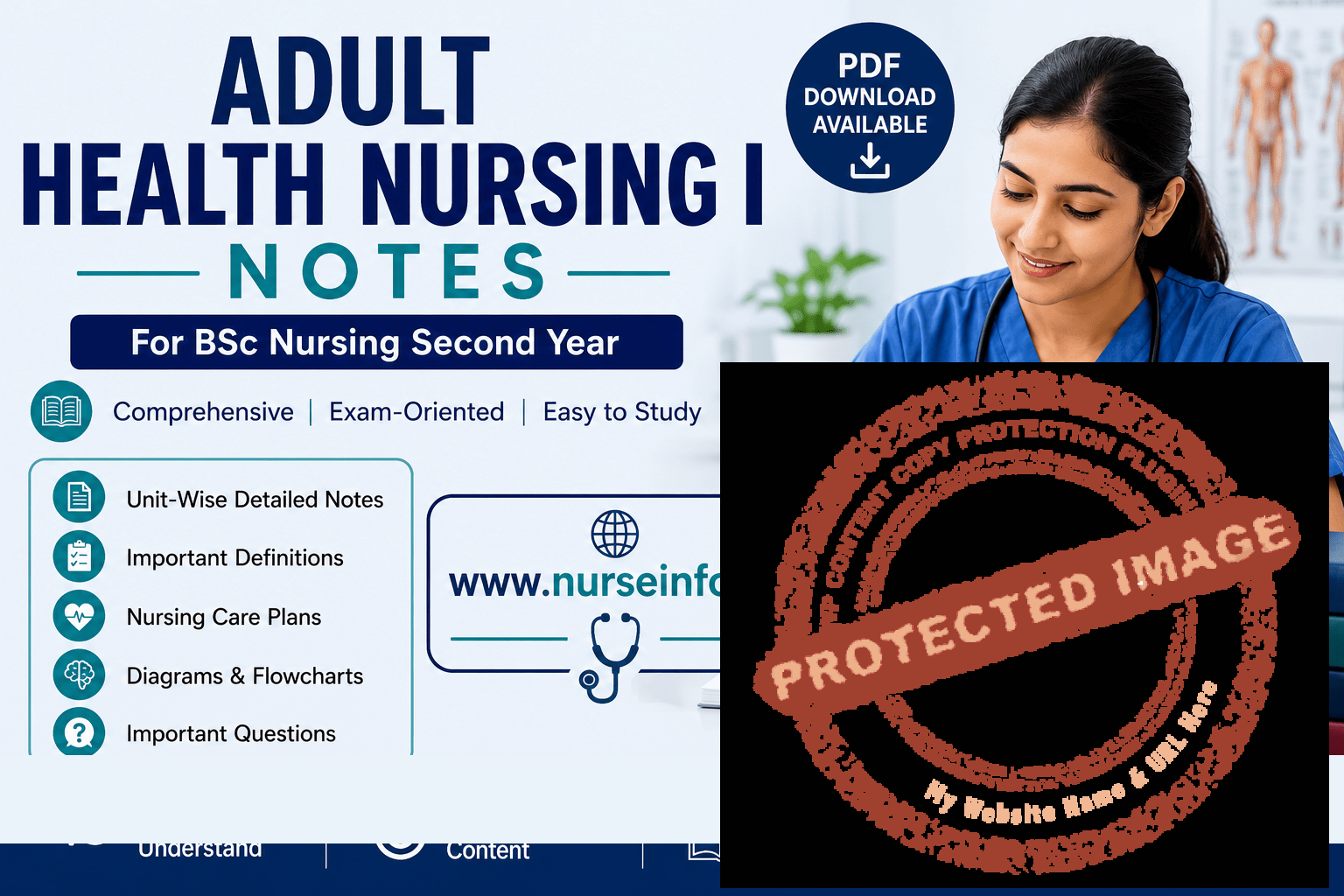
Adult Health Nursing I Notes PDF for BSc Nursing 2nd Year
Complete Unit-Wise Study Notes for Nursing Students
Are you searching for Adult Health Nursing I Notes PDF for BSc Nursing Second Year? These comprehensive notes are designed according to the latest nursing curriculum and help students understand important medical-surgical nursing concepts in a simple and exam-oriented format.
Adult Health Nursing I is one of the most important subjects in the second year of BSc Nursing. It focuses on the assessment, diagnosis, treatment, nursing management, and rehabilitation of adult patients suffering from various medical and surgical disorders. Well-organized notes can help students prepare effectively for university examinations, internal assessments, practical examinations, and competitive nursing exams.
Our Adult Health Nursing I notes provide concise explanations, important definitions, nursing care plans, diagrams, and frequently asked examination questions to make learning easier and more effective.
What is Adult Health Nursing I?
Adult Health Nursing I is a specialized branch of nursing that focuses on providing comprehensive care to adult patients with acute and chronic illnesses. The subject emphasizes health promotion, disease prevention, patient assessment, nursing interventions, and rehabilitation.
The course equips nursing students with the knowledge and skills required to care for patients suffering from medical and surgical conditions affecting various body systems. Students learn evidence-based nursing practices, patient safety principles, and holistic care approaches to improve patient outcomes.
Objectives of Adult Health Nursing I
After studying Adult Health Nursing I, students will be able to:
- Understand the principles of adult health nursing.
- Perform comprehensive patient assessments.
- Identify signs and symptoms of common medical disorders.
- Develop individualized nursing care plans.
- Provide effective nursing interventions.
- Educate patients and families regarding disease management.
- Promote health and prevent complications.
- Apply critical thinking in clinical settings.
- Maintain patient safety and quality care standards.
- Participate in multidisciplinary healthcare teams.
Importance of Adult Health Nursing in Clinical Practice
Adult Health Nursing plays a vital role in modern healthcare settings. Nurses are responsible for monitoring patients, administering medications, assisting with treatments, educating patients, and providing emotional support throughout recovery.
Knowledge gained from Adult Health Nursing I helps students work confidently in:
- Medical wards
- Surgical wards
- Intensive Care Units (ICU)
- Emergency departments
- Rehabilitation centers
- Community health settings
- Specialty hospitals
Strong understanding of adult health nursing concepts also helps students prepare for competitive nursing examinations and professional practice.
Topics Covered in Adult Health Nursing I Notes
Unit 1: Introduction to Adult Health Nursing
This unit introduces students to the concepts and principles of adult health nursing.
Topics include:
- Concepts of health and illness
- Nursing process
- Evidence-based nursing practice
- Holistic patient care
- Patient safety principles
- Documentation and reporting
- Ethical and legal aspects of nursing
Unit 2: Nursing Assessment
Patient assessment is the foundation of nursing care.
Important topics include:
- History taking
- Physical examination techniques
- Health assessment methods
- Vital signs monitoring
- Diagnostic investigations
- Laboratory test interpretation
- Patient observation skills
Students learn systematic approaches to collecting patient data and identifying health problems.
Unit 3: Respiratory System Disorders
This unit focuses on diseases affecting the respiratory system.
Common topics include:
- Bronchitis
- Asthma
- Pneumonia
- Tuberculosis
- Chronic Obstructive Pulmonary Disease (COPD)
- Pleural disorders
- Respiratory failure
Nursing management includes:
- Oxygen therapy
- Airway management
- Chest physiotherapy
- Patient education
- Respiratory assessment
Unit 4: Cardiovascular System Disorders
Students learn about cardiovascular diseases and nursing care.
Topics include:
- Hypertension
- Coronary artery disease
- Angina pectoris
- Myocardial infarction
- Heart failure
- Rheumatic heart disease
- Arrhythmias
Nursing interventions focus on:
- Monitoring cardiac status
- Medication administration
- Lifestyle modification education
- Prevention of complications
Unit 5: Gastrointestinal Disorders
This section covers diseases affecting the digestive system.
Topics include:
- Gastritis
- Peptic ulcer disease
- Gastroenteritis
- Hepatitis
- Cirrhosis of liver
- Pancreatitis
- Intestinal obstruction
Students learn assessment, diagnosis, treatment, and nursing management strategies.
Unit 6: Endocrine Disorders
Endocrine diseases significantly affect overall health.
Topics include:
- Diabetes Mellitus
- Hypoglycemia
- Hyperglycemia
- Thyroid disorders
- Adrenal gland disorders
- Pituitary disorders
Important nursing responsibilities include:
- Blood glucose monitoring
- Insulin administration
- Patient counseling
- Dietary management
Unit 7: Renal and Urinary Disorders
The urinary system plays a critical role in maintaining body homeostasis.
Topics include:
- Urinary tract infection
- Acute kidney injury
- Chronic kidney disease
- Nephrotic syndrome
- Glomerulonephritis
- Renal failure
Nursing care emphasizes:
- Fluid balance monitoring
- Electrolyte management
- Dialysis care
- Patient education
Unit 8: Neurological Disorders
Students study common neurological conditions and nursing interventions.
Topics include:
- Stroke
- Epilepsy
- Meningitis
- Parkinson’s disease
- Multiple sclerosis
- Head injuries
Key nursing responsibilities:
- Neurological assessment
- Seizure precautions
- Rehabilitation support
- Family education
Unit 9: Hematological Disorders
Blood disorders can affect multiple body systems.
Topics include:
- Anemia
- Leukemia
- Hemophilia
- Thrombocytopenia
- Blood transfusion therapy
Students learn assessment, treatment, and nursing management principles.
Unit 10: Oncology Nursing
Cancer care is an important component of adult health nursing.
Topics include:
- Introduction to cancer
- Risk factors
- Diagnosis and staging
- Chemotherapy
- Radiation therapy
- Palliative care
Nurses play a crucial role in symptom management and emotional support.
Features of These Adult Health Nursing I Notes
Easy-to-Understand Language
Concepts are explained using simple language suitable for nursing students.
Exam-Oriented Content
Important university examination topics are highlighted for quick revision.
Structured Format
Notes are organized chapter-wise and unit-wise for easy navigation.
Nursing Care Plans
Includes nursing diagnoses, goals, interventions, and evaluations.
Important Definitions
Key definitions frequently asked in examinations are provided.
Diagrams and Flowcharts
Visual learning aids improve understanding and retention.
Quick Revision Material
Ideal for last-minute exam preparation and revision.
Benefits for Nursing Students
Using high-quality Adult Health Nursing notes can help students:
- Improve academic performance
- Understand complex medical conditions easily
- Save study time
- Prepare for university examinations
- Revise important concepts quickly
- Enhance clinical knowledge
- Build confidence in practical settings
- Prepare for nursing competitive examinations
Examination Preparation Tips
To score well in Adult Health Nursing I examinations:
- Study each unit systematically.
- Understand disease processes thoroughly.
- Practice writing nursing care plans.
- Revise important definitions regularly.
- Focus on frequently asked questions.
- Use diagrams whenever possible.
- Practice previous year question papers.
- Review pharmacological management of common disorders.
- Learn nursing interventions and rationales.
- Allocate time for revision before examinations.
Frequently Asked Questions (FAQs)
What is Adult Health Nursing I?
Adult Health Nursing I is a nursing subject that focuses on caring for adult patients with medical and surgical conditions through assessment, treatment, nursing interventions, and rehabilitation.
Who can use these notes?
These notes are useful for BSc Nursing Second Year students, nursing educators, and students preparing for nursing competitive examinations.
Are these notes useful for exam preparation?
Yes. The notes are organized according to important examination topics and provide concise explanations suitable for revision and preparation.
Do the notes include nursing care plans?
Yes. Important nursing care plans and nursing management principles are included for various disorders.
Are these notes suitable for quick revision?
Absolutely. The content is structured to support both detailed study and quick revision before examinations.
Why is Adult Health Nursing important?
Adult Health Nursing helps nurses provide safe, effective, and evidence-based care to adult patients experiencing medical and surgical illnesses.
Download Adult Health Nursing I Notes Today
Build a strong foundation in medical-surgical nursing with comprehensive Adult Health Nursing I Notes for BSc Nursing Second Year. These notes are designed to simplify complex concepts, improve understanding, support examination preparation, and strengthen clinical knowledge for future nursing practice.
Start learning smarter, revise faster, and achieve better results in your nursing examinations with well-organized Adult Health Nursing I study notes.


Reviews
There are no reviews yet.